Explore Sarajevo Timeline
A local's guide spine · Edition 2026
Sarajevo, in order
From Isa-beg Ishaković's 1462 foundation to the present. Every entry dated, every claim sourced, every turning point cross-linked to the destination, gem, or story where the long version lives.
43.8563° N · 18.4131° E
The Ottoman city
1462 · 1878 · 416 years 7 entries
Four hundred and sixteen years of the empire that founded the city.
-
Foundation
Isa-beg Ishaković founds Sarajevo
The Ottoman governor of the Bosnian sanjak establishes the city's five core institutions on the floodplain of the Miljacka: a hammam, a mosque (later Careva džamija), a hostel for travellers, a market, and a bridge. The bazaar — Baščaršija — grows outward from the market.
-
Gazi Husrev-beg complex
The Gazi Husrev-beg Mosque is completed
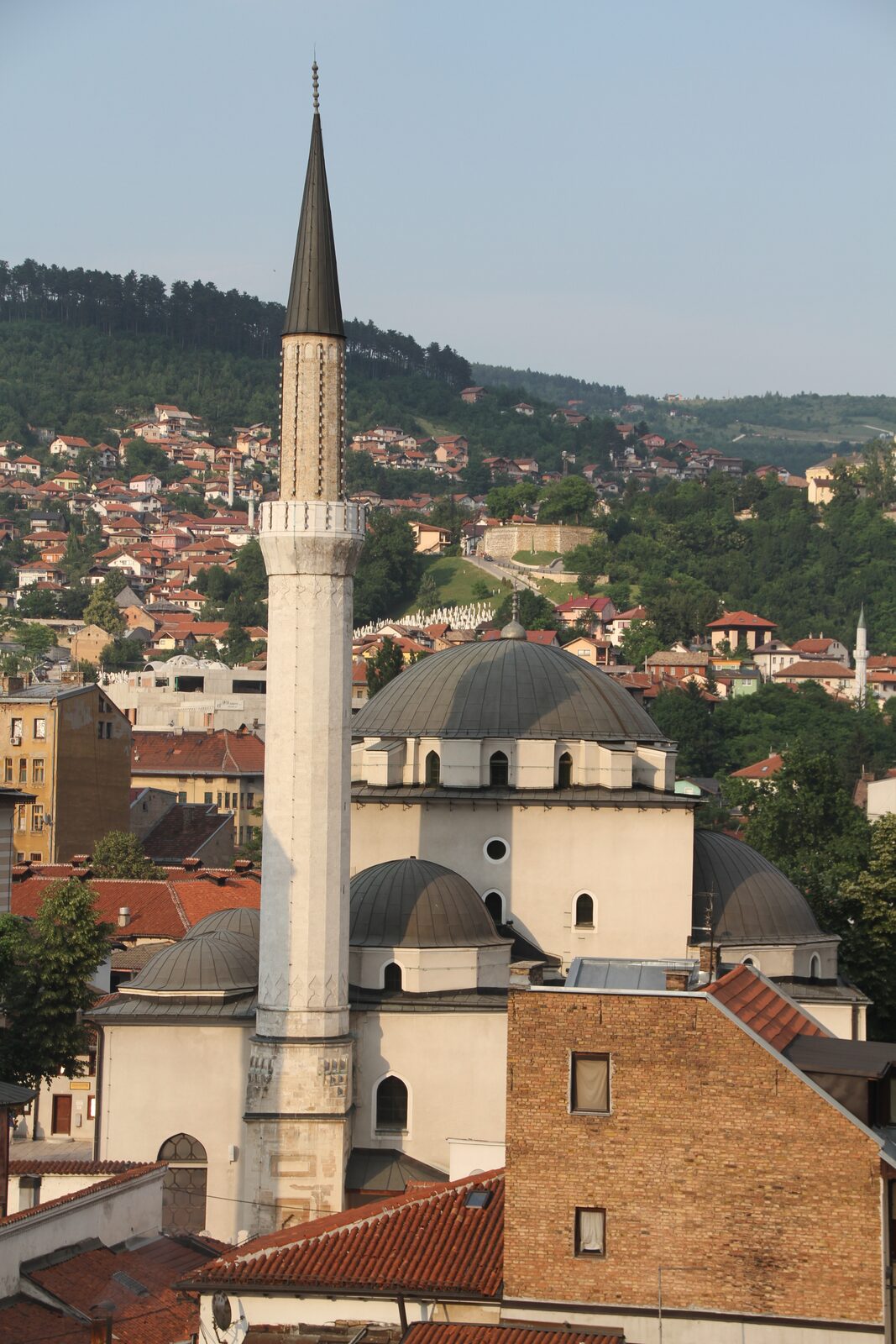
The largest Ottoman religious-civic complex in the western Balkans. Mosque, madrasa, public kitchen for the poor (imaret), clock tower, ablution fountain, founder's mausoleum, covered bezistan. The 45-metre minaret and the central dome are still the largest of their kind in Bosnia.
-
Trade infrastructure
Morića Han opens on Sarači
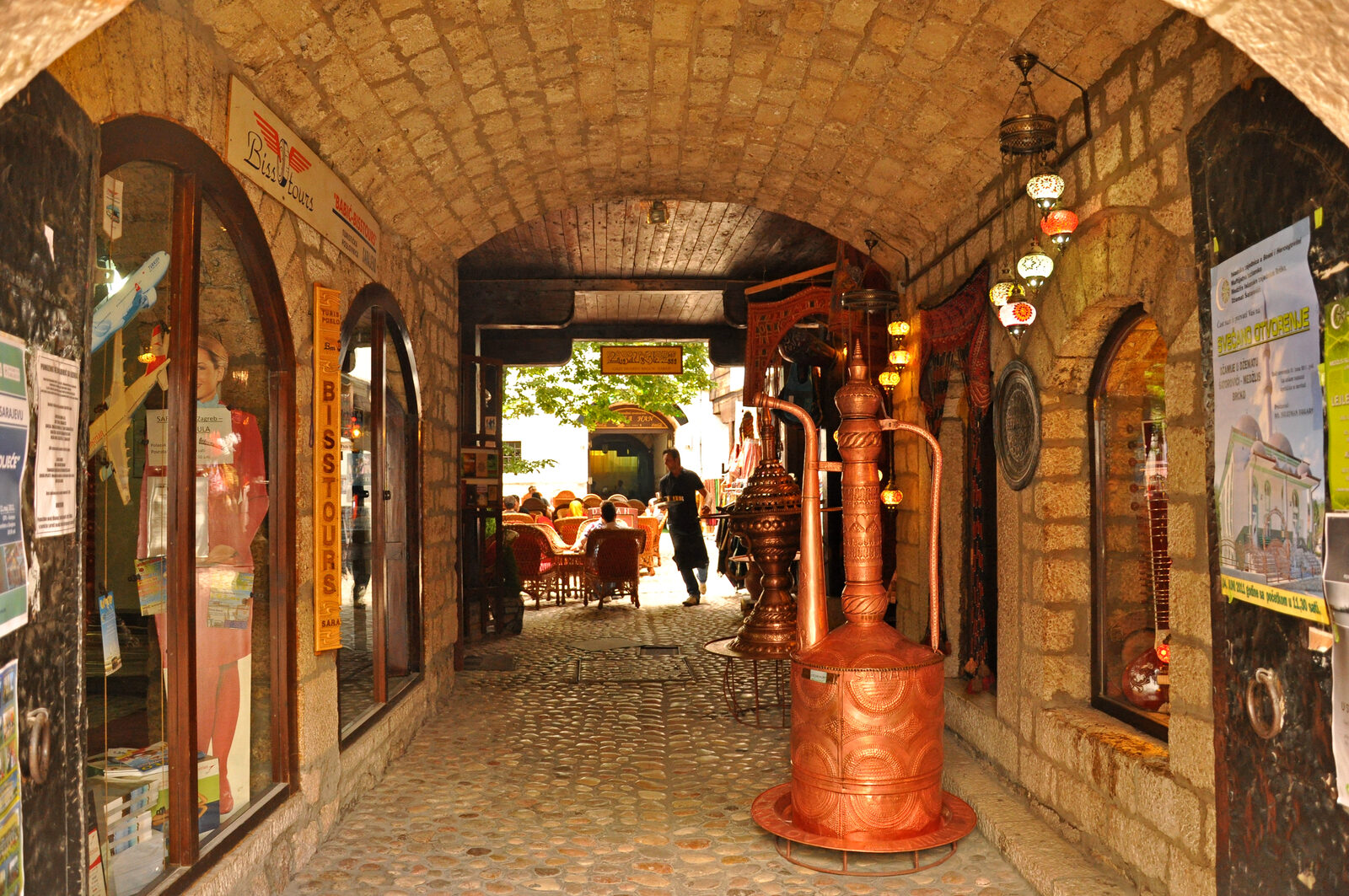
A caravanserai for travelling traders — stables on the ground floor, lodging on the upper floor. The single surviving Ottoman han of Baščaršija.
-
Sacked
Prince Eugene of Savoy burns Sarajevo
In the Great Turkish War, a Habsburg raid under Eugene of Savoy reaches the Ottoman city and destroys most of it in a single day. The rebuild takes decades. The event enters the Habsburg iconography of "liberation" that Peter von Radics' 1879 book cover will echo two centuries later.
-
Bazaar fountain
The Sebilj is built
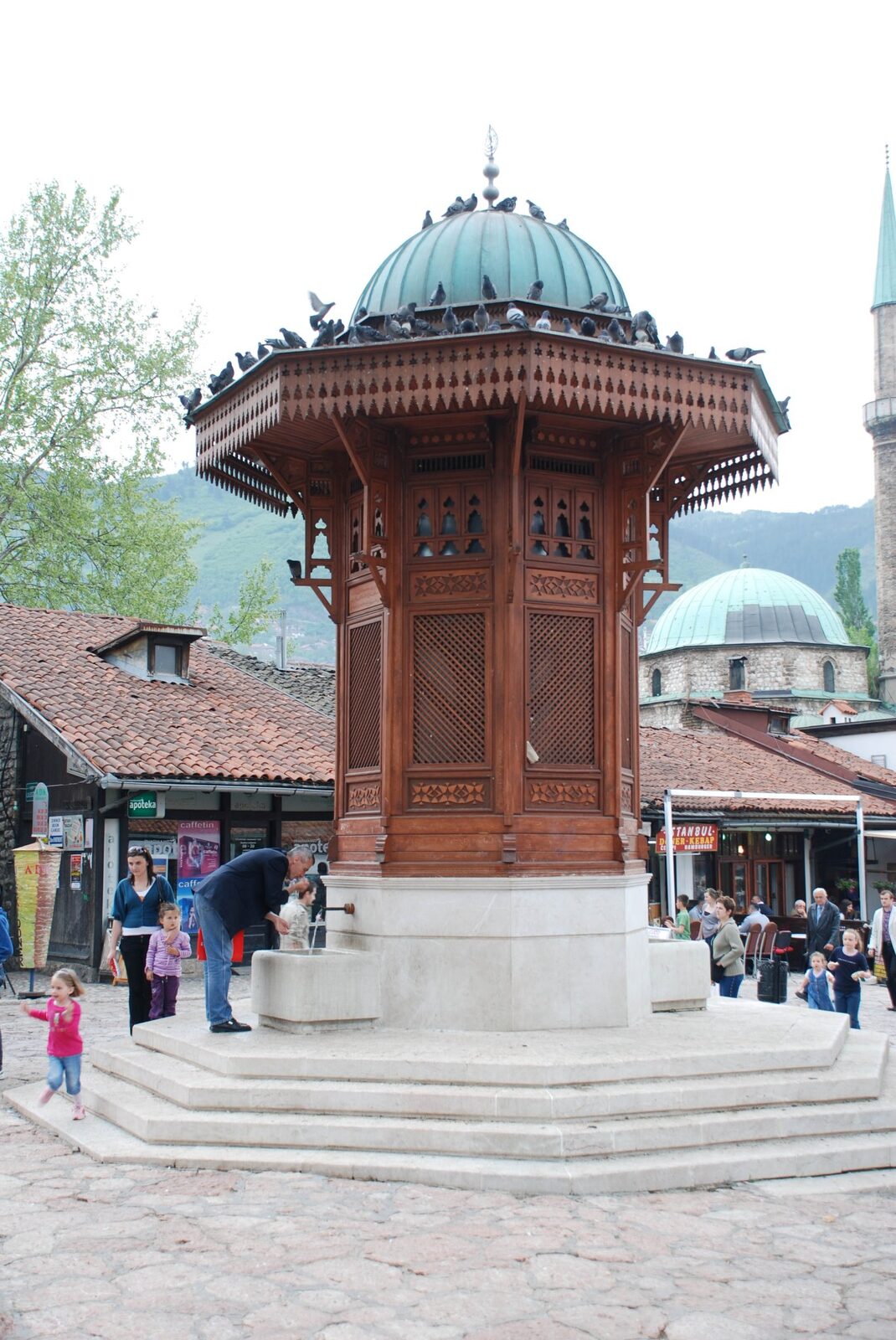
The Ottoman governor Mehmed Paša Kukavica commissions the wooden fountain at the centre of Baščaršija. Destroyed in the 1879 fire; rebuilt in 1891 by Alexander Wittek.
-
Master builder
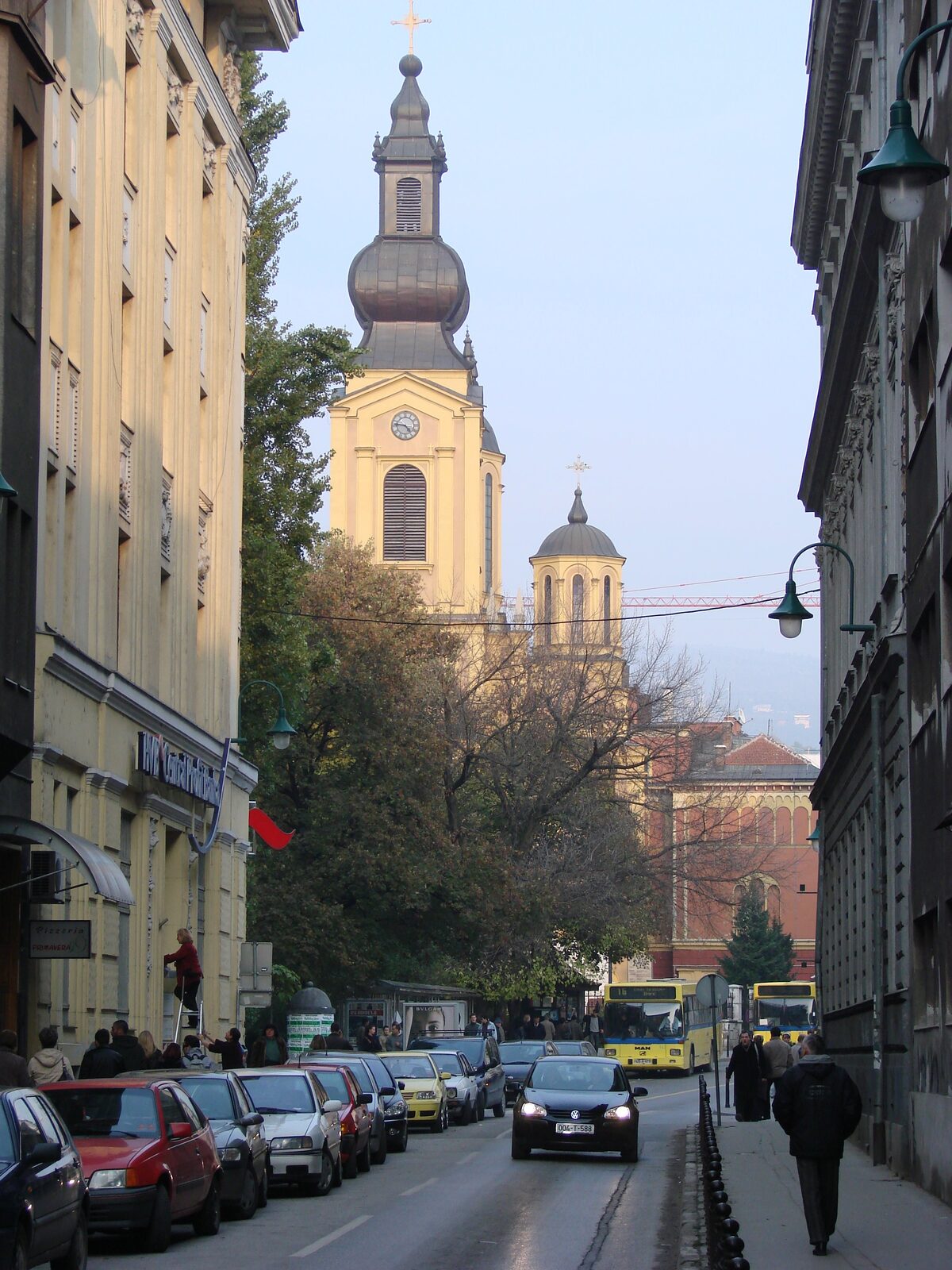
Andrija Damjanov builds the Serbian Orthodox Cathedral
The Macedonian master builder from Veles, working under Ottoman patronage and Vienna-influenced Byzantine-revival training, designs the largest Orthodox church ever built in Bosnia. In the same decade the same architect designs the enormous Medžidija (Kršla) military barracks on the south bank of the Miljacka.
-
Berlin Treaty
Article 25 authorises Habsburg occupation
The Congress of Berlin grants Austria-Hungary the right to "occupy and administer" Bosnia and Herzegovina. On paper the provinces remain Ottoman. In practice the empire treats the distinction as a technicality.
The Habsburg re-frame
1878 · 1918 · 40 years 14 entries
Forty years of the empire that surveyed it, mapped it, and built the buildings it is now photographed for.
-
Occupation
Habsburg troops enter Sarajevo
The 15th Corps under General Joseph Philippovich takes the city after a summer campaign that meets fierce local resistance — much of it Muslim landowner-led. Philippovich moves into the Ottoman governor's Konak; his troops occupy the Kršla.
-
Fire & photograph
The Sarajevo fire and the first panorama
A major fire destroys Tašlihan and much of the eastern bazaar. In the early months of the same year the Viennese soldier-photographer Anton Schädler takes the first panoramic photograph of Sarajevo from the Vratnik heights — the visual bookend of Ottoman Sarajevo.
-
Cartography
Die Cataster-Commission is established
The Common Ministry in Vienna sets up the special bureaucratic unit that will produce the first cadastral survey of Bosnia and Herzegovina. Every plot mapped, categorised, taxable. The base map on which every Habsburg building here will later be commissioned.
-
Building code
The Bau-Ordnung for Sarajevo takes effect
The first Habsburg building ordinance for the city, issued 1 October 1880 by the Landesregierung. It sets fire-resistant construction, plot geometry, and street widths — and dictates the yellow-plaster Neo-Baroque façades of the central grid.
-
Revolt
The Herzegovinian uprising
A November 1881 decree extending compulsory military service to the occupied provinces triggers a general revolt in eastern Herzegovina that spreads west into Bosnia. Roughly 30,000 imperial troops are sent in. Suppressed by June. The political lesson — that force alone will not hold the province — shapes the next thirty years of Habsburg building.
-
First European hotel
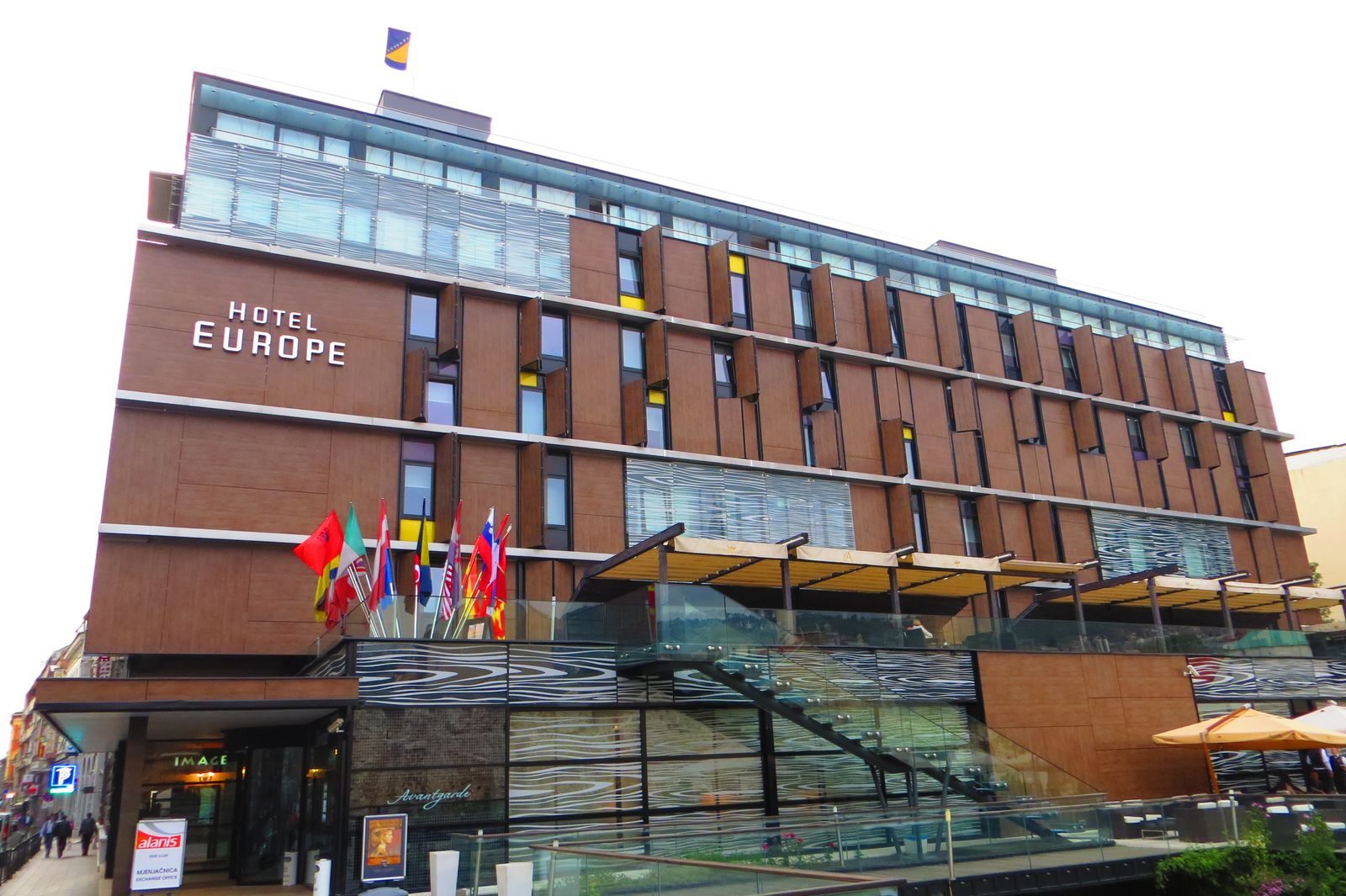
Hotel Europe opens
Karel Pařík's purpose-built imperial hotel opens on the geographical seam between Ottoman Baščaršija and the new Habsburg quarter. The building where the administration first stages Sarajevo as a European capital.
-
Kállay era begins
Béni Kállay takes the Bosnian portfolio
The Hungarian Balkanologist, fluent in Serbo-Croatian, becomes joint Minister of Finance and de facto governor of Bosnia and Herzegovina. His twenty-one-year tenure sets the architectural, cultural, and administrative programme that produces most of what today reads as "Habsburg Sarajevo".
-
National institution
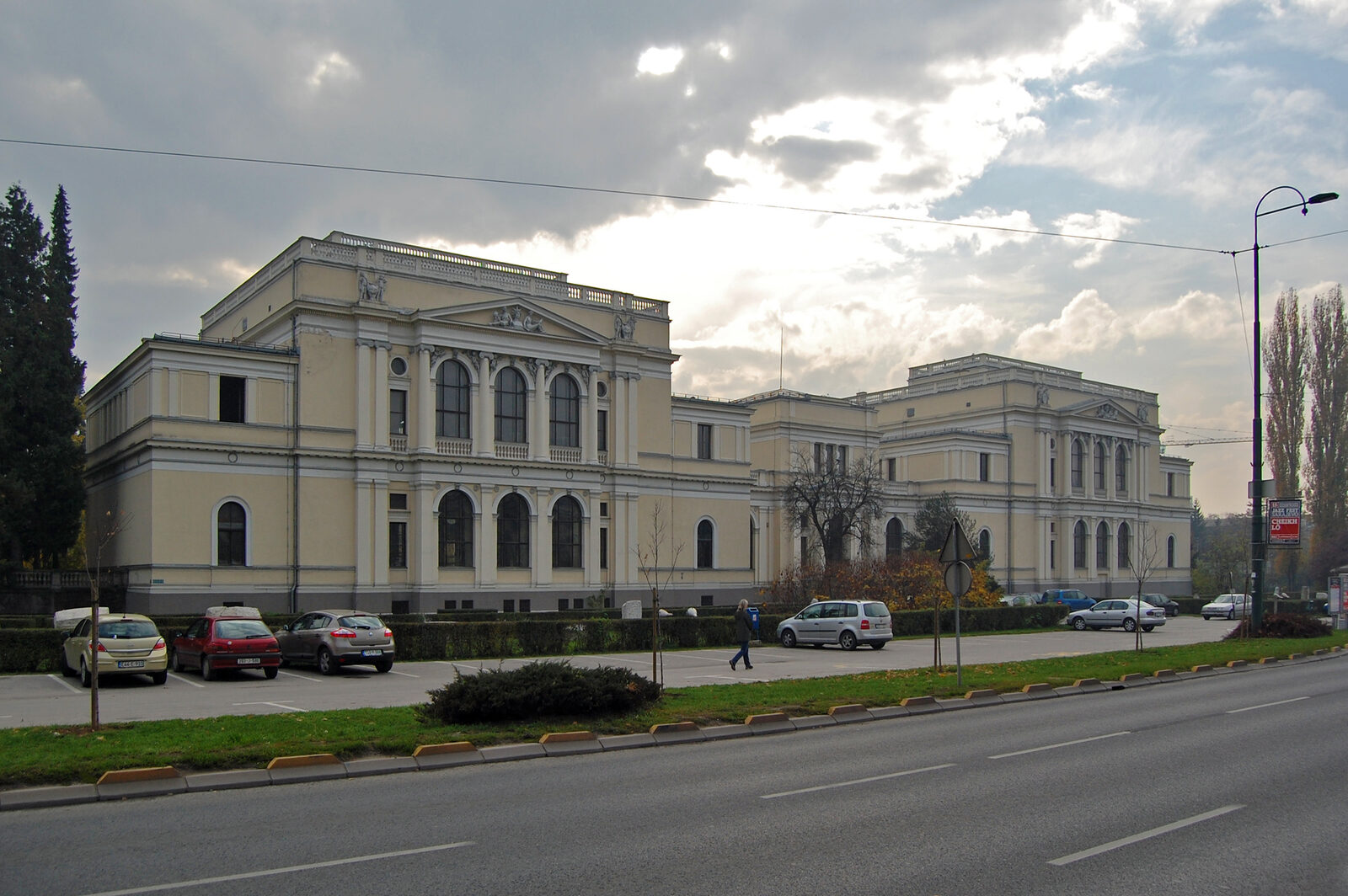
Zemaljski muzej — the National Museum — is founded
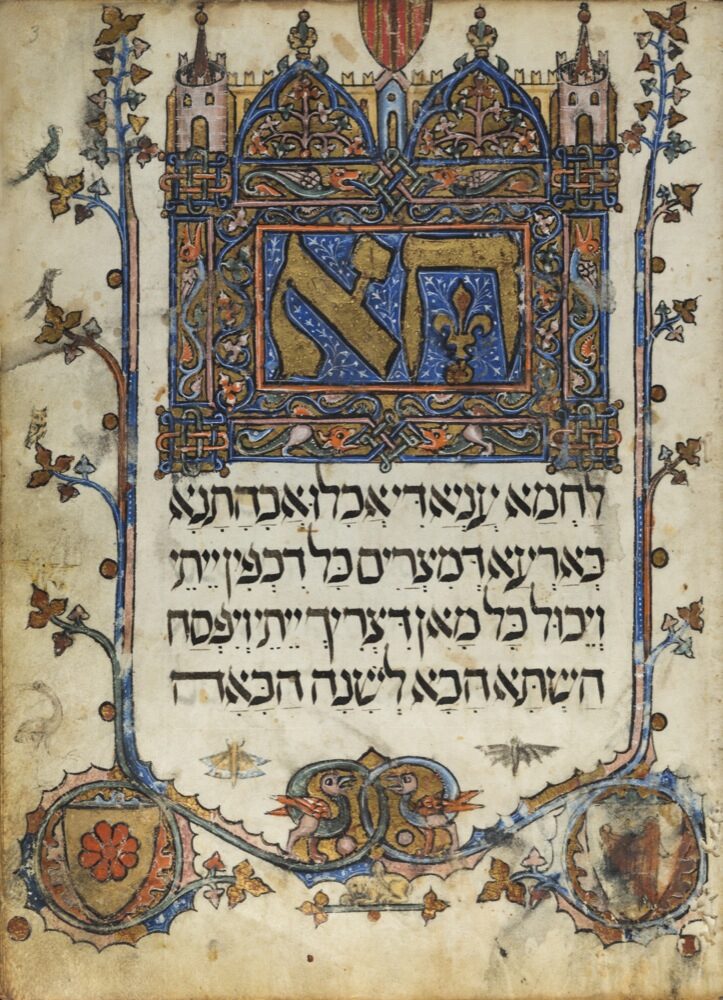
The country's oldest museum opens in temporary quarters. In 1894 it acquires the Sarajevo Haggadah from a local family in a purchase that will become one of the most consequential in the region's cultural history.
-
Cathedral
The Sacred Heart Cathedral is consecrated
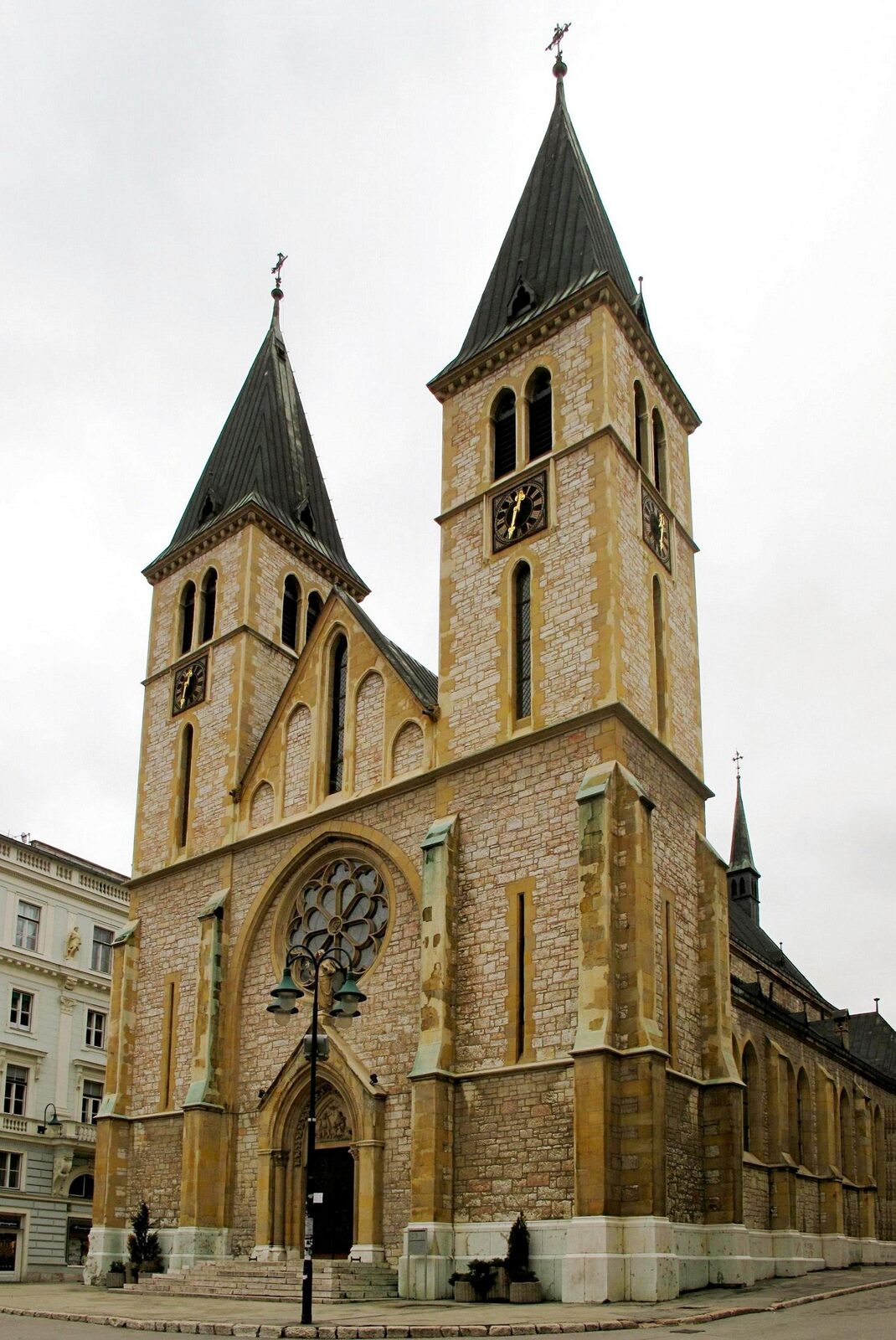
Josip Vancaš's Neo-Gothic cathedral — the seat of the Vrhbosna Catholic archdiocese — opens three minutes north of the Orthodox cathedral. The two cathedrals face each other across the same central grid.
-
Rebuild
The Sebilj is rebuilt in stone
After the 1879 fire destroys the wooden Ottoman fountain, the Czech Habsburg architect Alexander Wittek designs the current stone-and-copper Sebilj. Replicas are later built in Belgrade, Sofia, and other Balkan capitals. The original is here.
-
City hall
Vijećnica opens as the Sarajevo City Hall
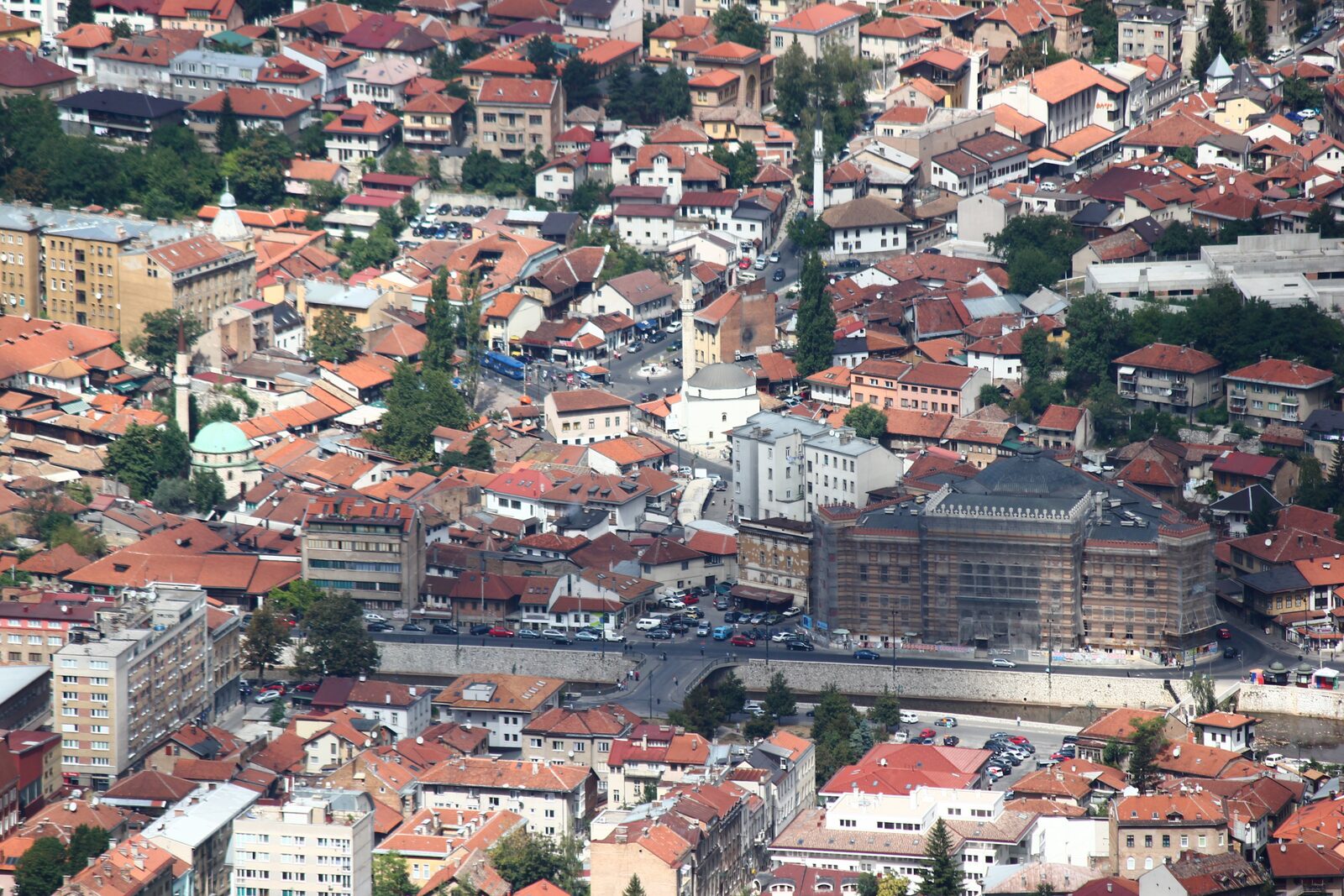
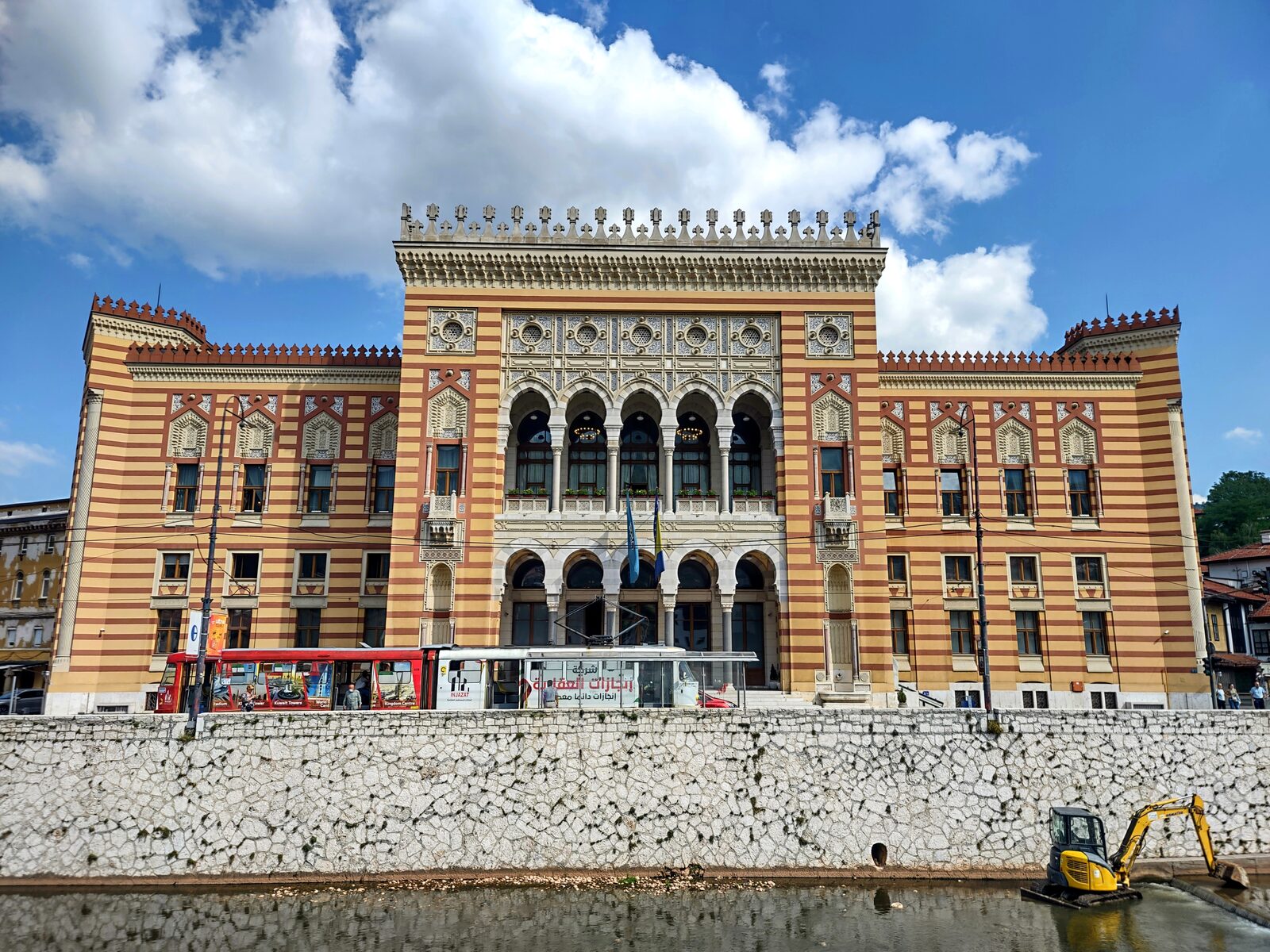
The most-photographed Habsburg building in Sarajevo, in Pseudo-Moorish style — a deliberate architectural gesture to the city's Muslim majority. Concept by Karel Pařík; developed by Alexander Wittek (who died in 1894 before completion); finished by Ćiril Iveković.
-
Synagogue & tram
The Ashkenazi Synagogue and Europe's first full-service electric tram
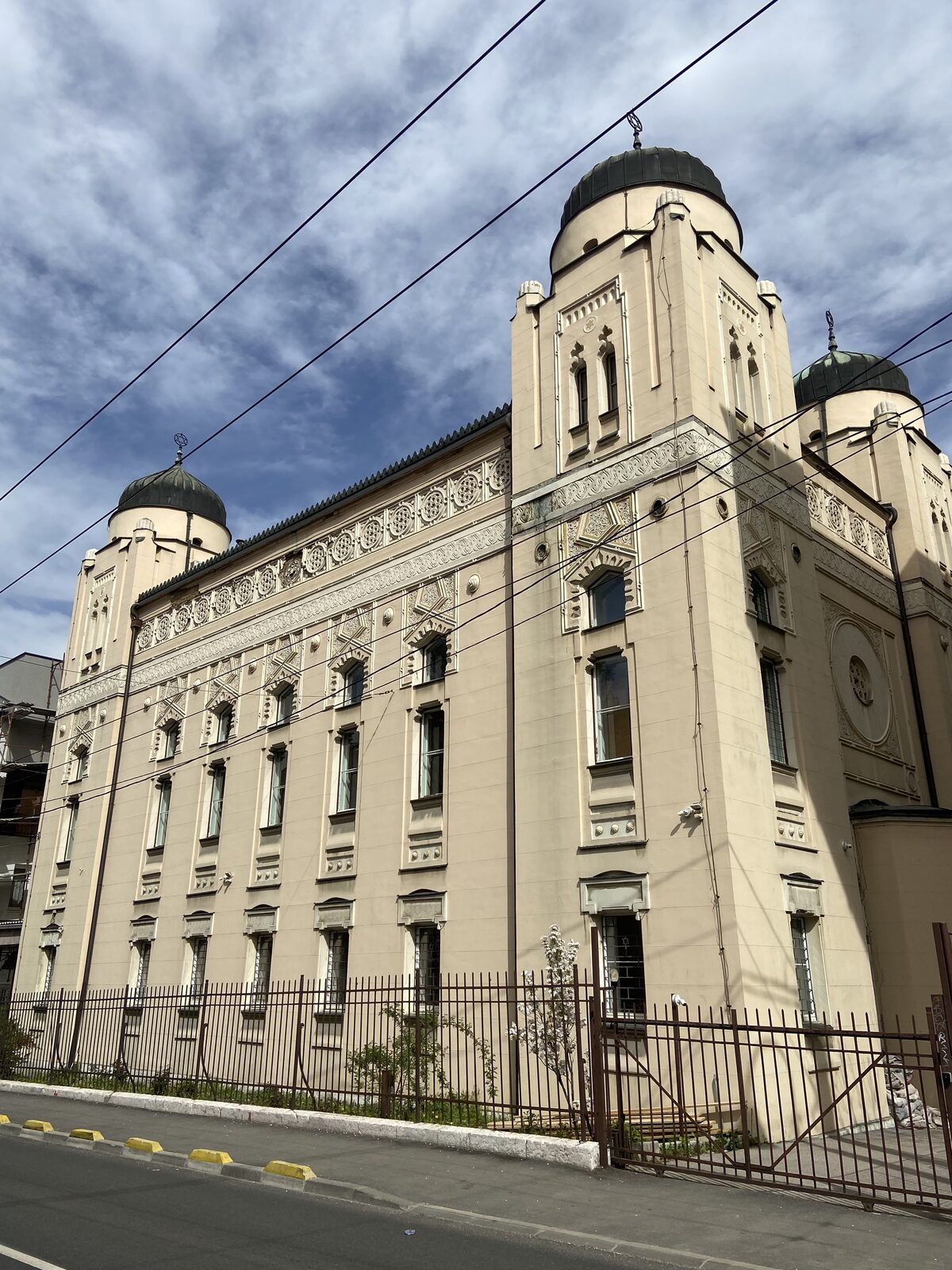
Two milestones in the same year. Karel Pařík's pseudo-Moorish Ashkenazi Synagogue opens for the central-European Jewish community that has arrived under Habsburg rule. And Sarajevo replaces its horse-drawn tram (running since 1885 as a testbed) with a full electric line along the Miljacka embankment — the first electric tram in service in the Habsburg Empire.
-
Museum complex
The National Museum's four-pavilion complex is completed
Karel Pařík's neoclassical museum quadrangle in Marijin Dvor — four pavilions around a central botanical courtyard — is inaugurated. Also the year Josip Vancaš's Main Post Office (1907–1913) is completed at the western end of Ferhadija.
-
Assassination
Archduke Franz Ferdinand is shot at the Latin Bridge
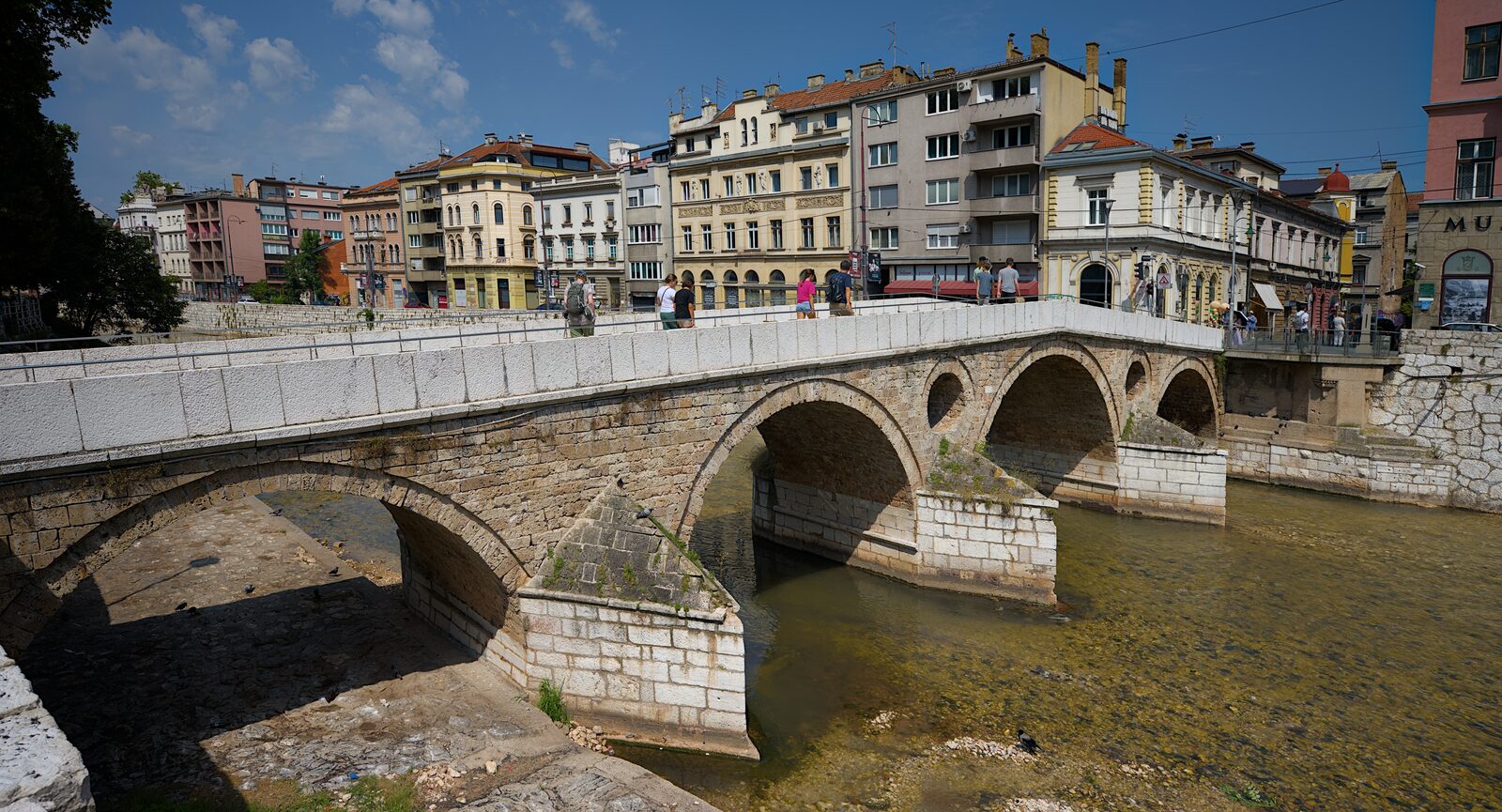
Gavrilo Princip, a nineteen-year-old member of Young Bosnia, kills Archduke Franz Ferdinand and Sophie on the corner opposite the Latin Bridge. Within five weeks, the First World War begins. Sarajevo enters the 20th century as its opening scene.
Between the empires and the siege
1918 · 1992 · 74 years 5 entries
Seven decades of two Yugoslavias and one occupation.
-
Kingdom
Habsburg rule ends; Sarajevo joins the Kingdom of Yugoslavia
The Kingdom of Serbs, Croats and Slovenes (renamed Yugoslavia in 1929) absorbs Bosnia and Herzegovina. Sarajevo becomes a provincial capital of a new state.
-
Occupation & resistance
Sarajevo under the NDH
The Independent State of Croatia (NDH), an Axis client, incorporates Bosnia; Sarajevo's Jewish community is largely destroyed. The Partisan movement operates in the surrounding mountains. In 1942, the museum librarian Derviš Korkut hides the Sarajevo Haggadah from the occupying authorities — an act for which Yad Vashem recognises him in 1994.
-
Liberation
Sarajevo is liberated by the Yugoslav Partisans
The Fourth Corps of the National Liberation Army enters the city. Post-war Yugoslavia — the Socialist Federative Republic — will make Sarajevo the capital of the People's Republic of Bosnia and Herzegovina.
-
Infrastructure
The Trebević cable car opens
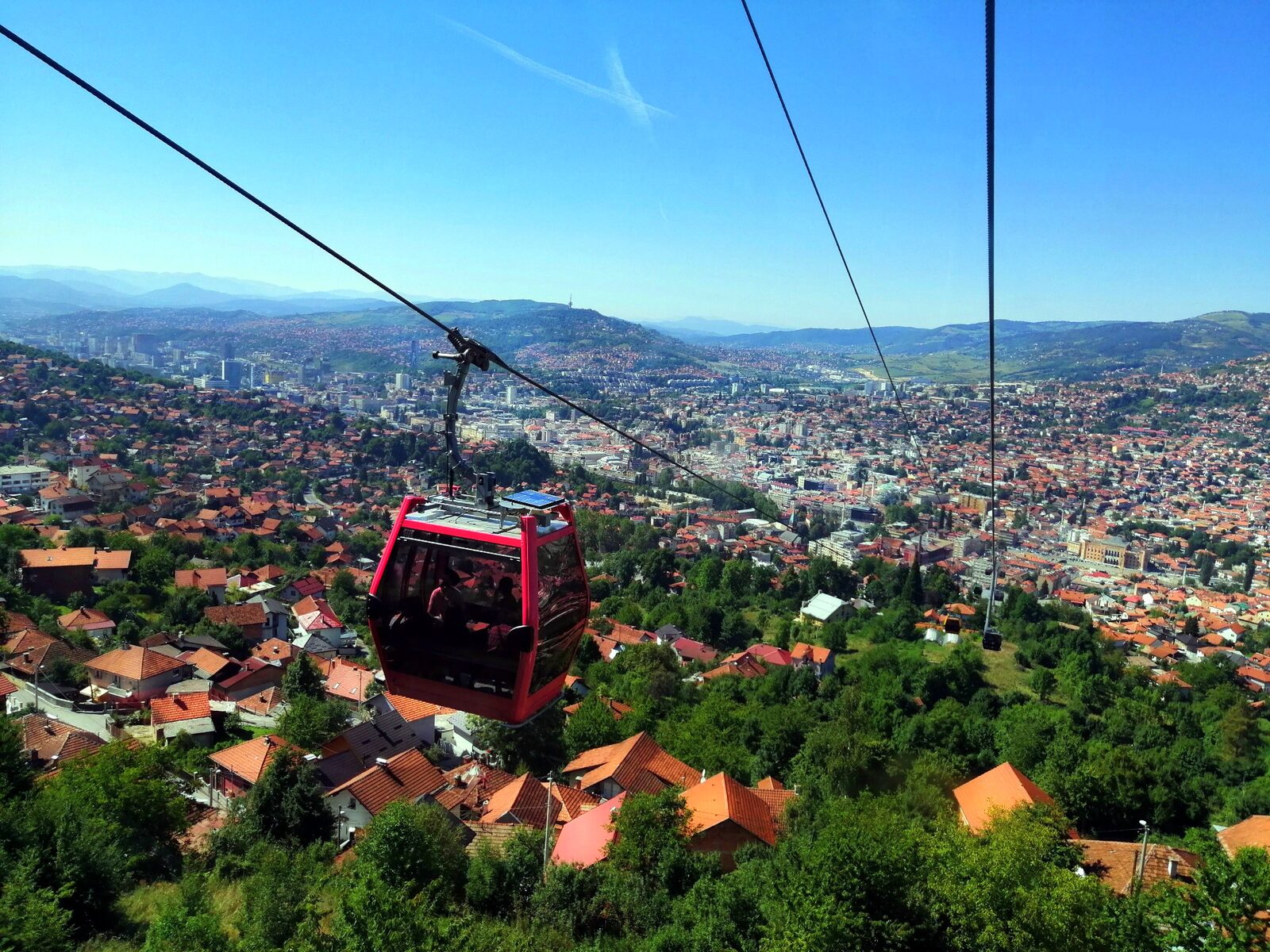
The 2,087-metre cable car from Bistrik to the ridge of Trebević carries the city's residents to the mountain in nine minutes. It runs until 1992, when the siege destroys it. Rebuilt and reopened in 2018.
-
Olympics
The XIV Winter Olympic Games
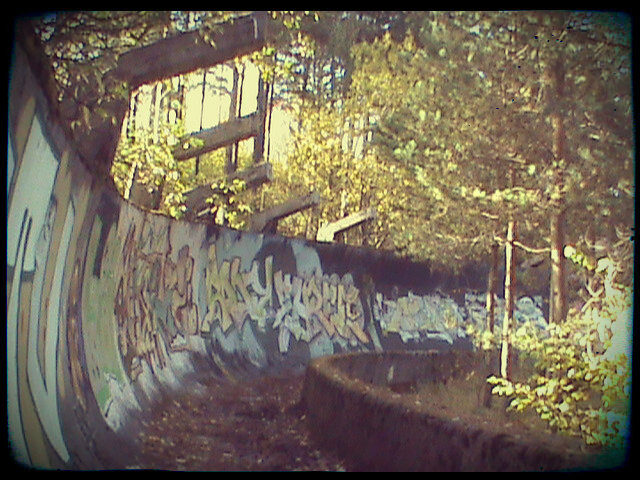
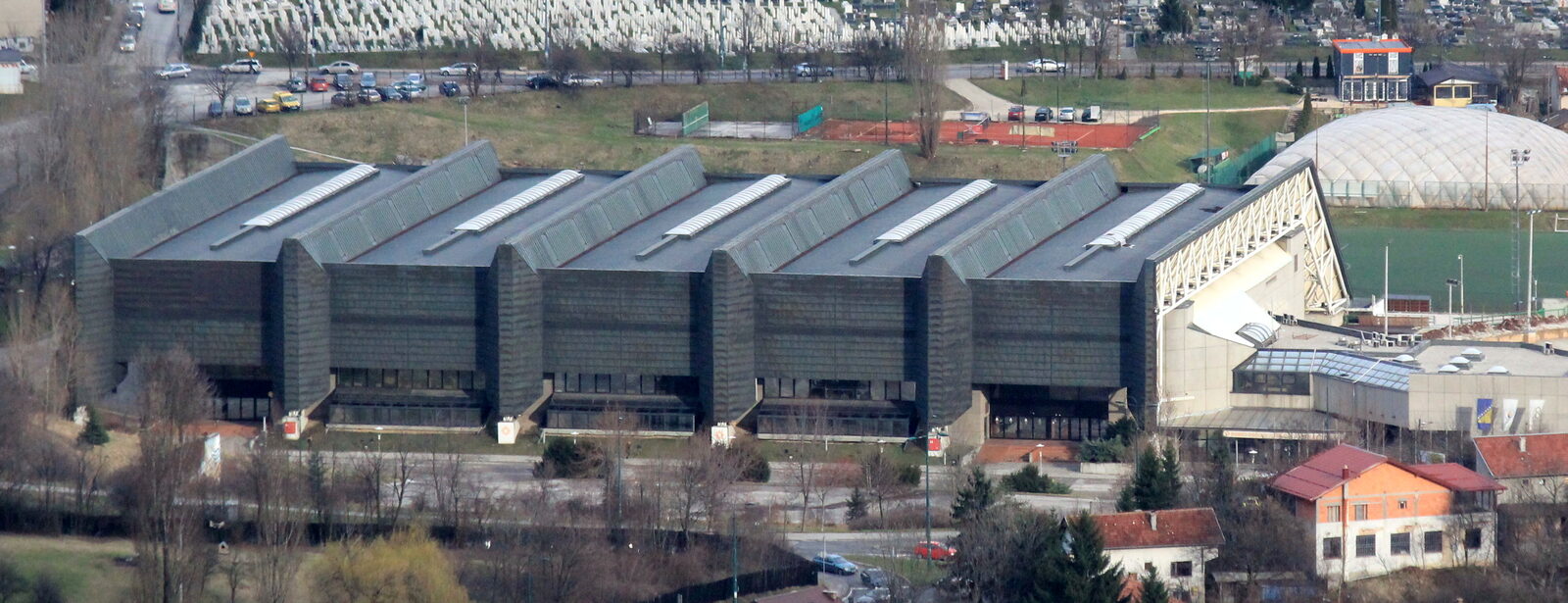
Sarajevo hosts the first Winter Olympics staged in a socialist country. Competition venues on Bjelašnica, Jahorina, Igman, and Trebević. Yugoslavia's first and last Games. The bobsled track on Trebević survives as a ruin.
The siege
5 Apr 1992 · 29 Feb 1996 · 1,425 days 7 entries
One thousand four hundred and twenty-five days of siege.
-
Independence
Bosnia and Herzegovina declares independence
Following a referendum boycotted by Bosnian Serb political leaders, the republic declares independence from Yugoslavia. International recognition follows on 6 April.
-
Siege begins
First deaths on the Vrbanja Bridge
Suada Dilberović and Olga Sučić are shot during a peace demonstration on the Vrbanja Bridge. The date becomes the formal start of the longest siege of a capital city in modern warfare.
-
Cultural loss
The Vijećnica is shelled and burns
The National Library, housed in Vijećnica since 1949, is destroyed. Two million books burn. The most-photographed building of Habsburg Sarajevo becomes the most-photographed ruin.
-
Lifeline
The Tunnel of Hope opens beneath the airport runway
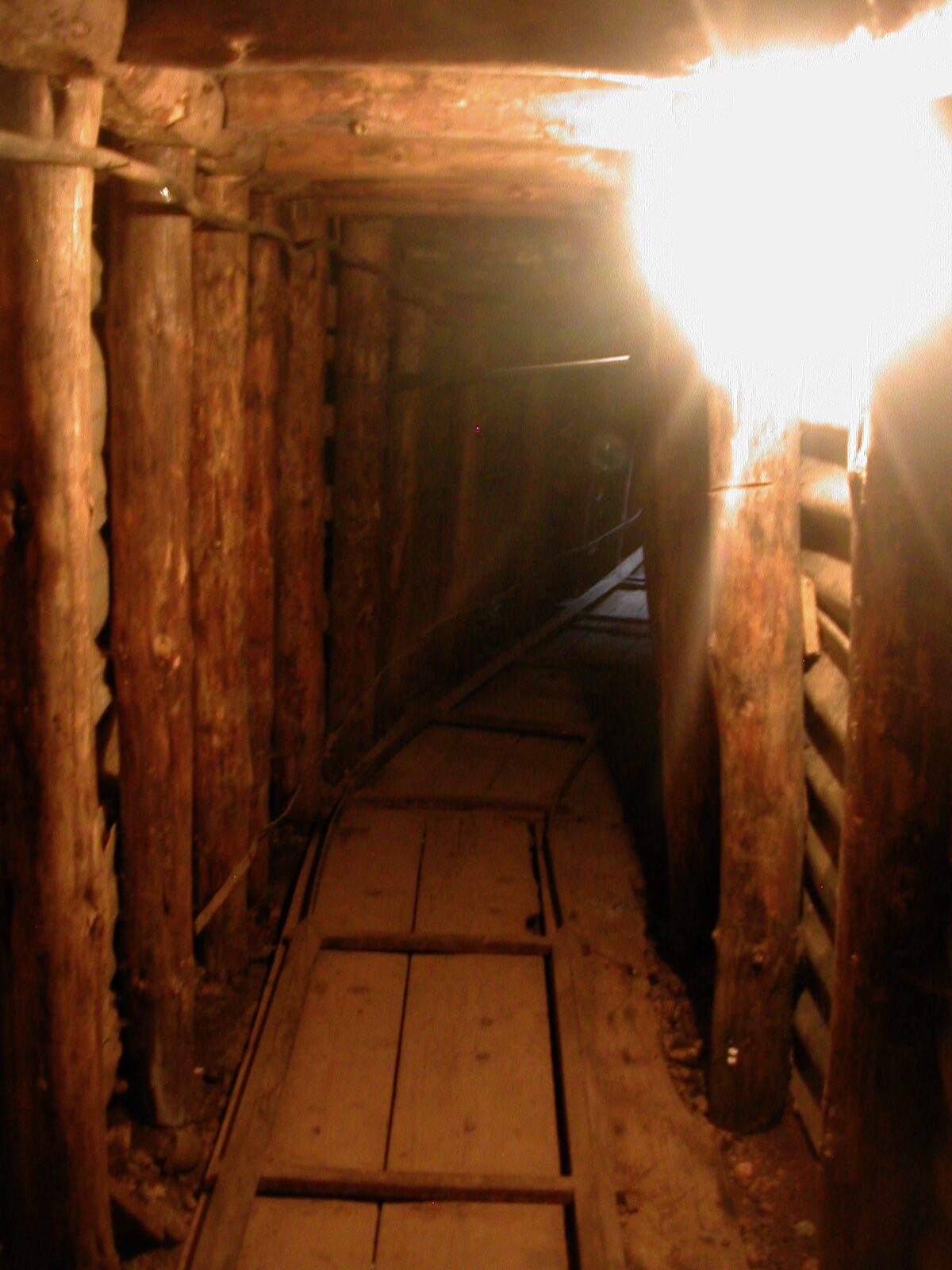
An 800-metre tunnel is dug by hand under the UN-controlled airport, connecting besieged Sarajevo with government-held territory on the far side. The city's only lifeline for the next three years.
-
Genocide
Srebrenica
More than 8,000 Bosniak men and boys are murdered in Srebrenica. Sarajevo's dedicated memorial is Galerija 11/07/95, which opens in 2012.
-
Dayton
The Dayton Peace Agreement is signed in Paris
Initialled in Ohio on 21 November, signed in Paris in December. The war formally ends. The siege of Sarajevo continues for another eleven weeks.
-
Siege ends
The siege of Sarajevo formally ends
1,425 days after it began — the longest siege of a capital city in modern history. Reintegration of the city begins the same week.

Independent Sarajevo
1996 · today 6 entries
Thirty years, and counting.
-
Heritage
The Sarajevo Haggadah is declared a national monument
The Commission to Preserve National Monuments (KONS) designates the 14th-century Sephardic manuscript held by the National Museum as a movable national monument of Bosnia and Herzegovina — the precursor to its 2017 UNESCO inscription.
-
Restoration
The restored Vijećnica reopens
Twenty-two years after it burned, the Vijećnica reopens after a full restoration funded largely by the European Union and Austrian donors. The building is now used for city functions and touring exhibitions rather than as a library.
-
UNESCO
The Sarajevo Haggadah is inscribed on the Memory of the World Register
Submitted 2016, inscribed 2017 — the manuscript becomes one of four UNESCO entries connected to Sarajevo. The others: sevdalinka on the Intangible Cultural Heritage list (2024), the city itself on the Tentative World Heritage List (since 1997), and the Old Jewish Cemetery on the Tentative List (since 2018).
-
Return of the ridge
The Trebević cable car reopens
Twenty-six years after it was destroyed. The first ride is free; queues stretch back through Bistrik. The reopening lands on the anniversary of the siege's beginning, which is deliberate.
-
UNESCO
Sevdalinka is inscribed on the Intangible Cultural Heritage list
The centuries-old Bosnian song tradition — half-Ottoman, half-Sephardic, sung with the accompaniment of the saz or later the accordion — becomes the second Sarajevo-connected UNESCO inscription. The city's Art Kuća Sevdaha in Baščaršija is the working museum of the form.
-
Today
Where the timeline ends and the field journal begins
Sarajevo today: about 275,000 residents, four working religious buildings within a four-hundred-metre radius, a restored city hall used for state functions, a rebuilt cable car to the ridge, and a working bazaar that has been trading on the same street plan since 1462.
