Sarajevo — the 1882 revolt that made the Habsburgs build for thirty years
In November 1881 the Austro-Hungarian administration extended compulsory military service to Bosnia and Herzegovina. Within eight weeks a general uprising broke out in the east. It failed. It is also the reason the empire spent the next thirty years building buildings.
Four years into the Austro-Hungarian occupation of Bosnia and Herzegovina, the administration in Sarajevo issued a decree that, within eight weeks, produced the largest armed challenge to Habsburg rule in the province’s forty-year existence.
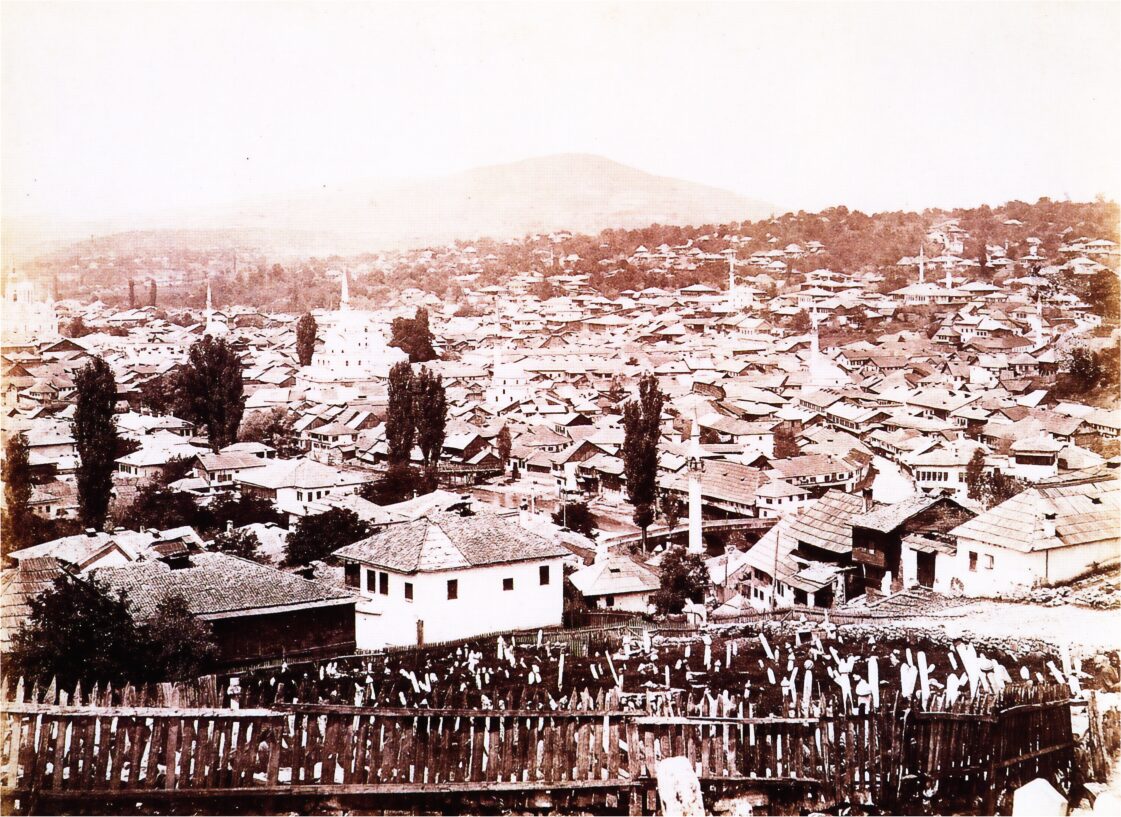

The decree of 4 November 1881 extended the empire’s compulsory military service law to the occupied provinces. Every able-bodied man in Bosnia and Herzegovina, previously exempt, was now required to serve three years in the active Austro-Hungarian army and nine years in the reserve. The law had been in force in the rest of the monarchy since 1868. In Bosnia, per the Berlin Treaty, its introduction was legally questionable, the two provinces were still, on paper, Ottoman territory the Habsburgs were merely “occupying and administering”. The empire treated that distinction as a technicality. The locals did not.
The revolt began in January 1882, in the karst villages of eastern Herzegovina, near the Montenegrin border. By March it had spread west and north into Bosnia. It was suppressed by the summer. Order was restored. But the political calculation the administration made in response, that raw force could not on its own hold the province, is the reason the next twenty years of Sarajevo’s architecture look the way they do.
The four reasons the province was already unstable
Charles Jelavich’s 1953 study of the revolt (The Slavonic and East European Review, June 1953) lays out four grievances that had been accumulating since the Habsburg army marched in during the summer of 1878. The conscription decree was the spark. The kindling was much older.
First: the occupation had never been welcomed. The Muslim landowners (begs), who under the Ottomans had held the province’s real economic power, saw the arrival of the Catholic Habsburg administration as a direct threat to their status. They had spent the summer of 1878 fighting the Austro-Hungarian army as it advanced from Bosanski Brod. Many of the ringleaders of that first resistance were still alive in 1881. Some were the same men who would organise the 1882 uprising.
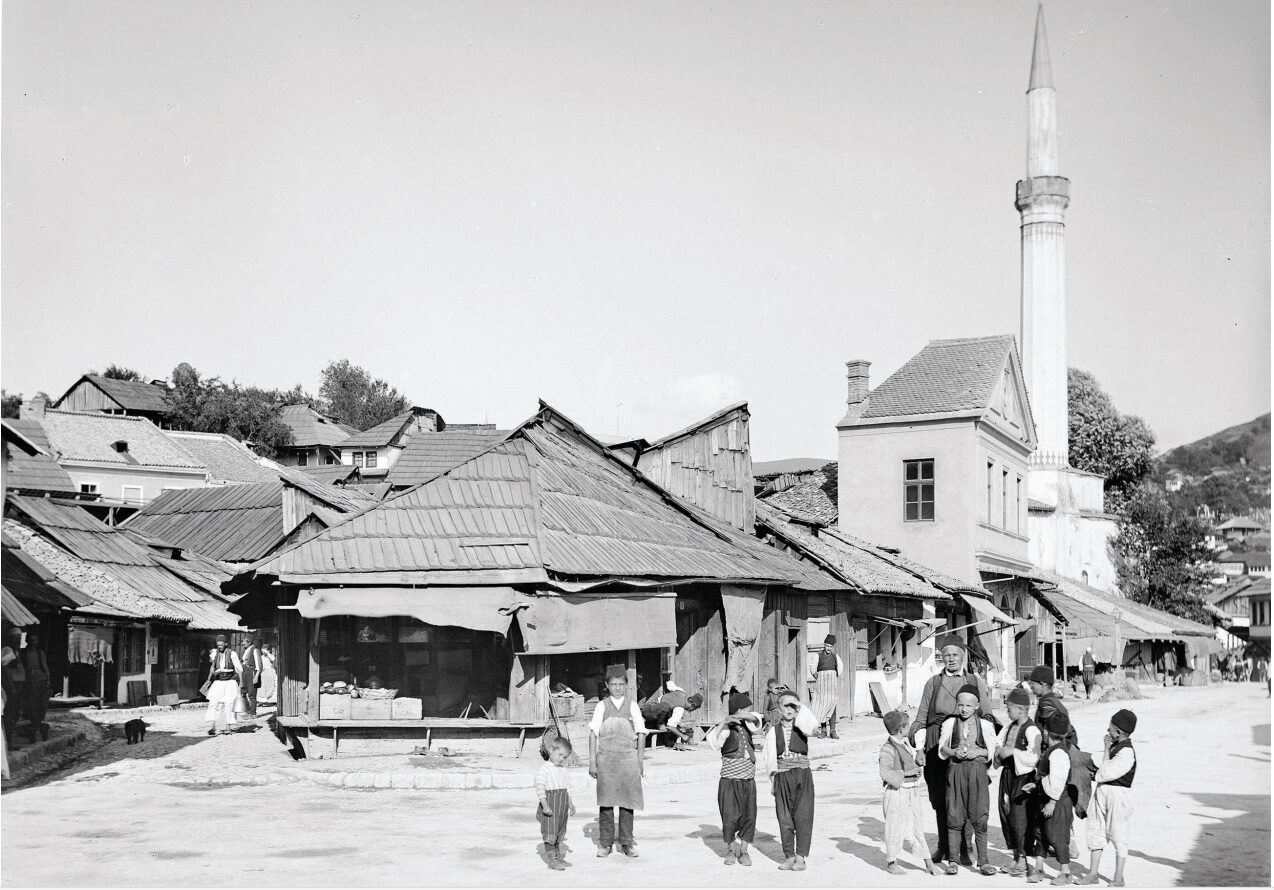

Second: the Christian Orthodox population had expected land reform, and had not received it. Under Ottoman rule, most of the Bosnian Orthodox population had been kmets, hereditary serfs working land owned by Muslim landowners. When Serbia and Bulgaria had gained independence from the Ottomans in 1878, both countries had passed rapid land-reform laws that transferred farmland from the old Muslim landowners to the peasants who worked it. Bosnian Orthodox peasants had expected the same. The Habsburg administration, calculating that it needed the political loyalty of the landowning begs against the possibility of an Orthodox-nationalist secession, deliberately postponed the reform. Four years on, the peasants had noticed.
Third: taxes had gone up. The Habsburg administration was under an imperial order to be financially self-sufficient, Vienna would not fund the occupation from central revenues. Every road, every barracks, every civil-service salary had to come from taxes raised inside the province. The tax burden on peasants had risen sharply.
Fourth: the province had been mapped. Between December 1879 and 1881, the Cataster-Commission had completed the first cadastral survey of Bosnia and Herzegovina, every plot of land recorded, categorised, and made legible to the state. Peasants who had lived under the Ottoman system’s benign vagueness suddenly found themselves in a document, at an address, with a tax obligation. Cf. Kadkani-Schmitt on the mapping process as “a prerequisite for future modernization and subsequent integration” (UC Berkeley, 2017, Ch. 1).
Into that four-part instability the November 1881 decree landed. The response was immediate.
What actually happened, in order
The first shots were fired in early January 1882 in the villages around Ulog, in eastern Herzegovina, near the Montenegrin border. The initial rebels were Orthodox Serb peasants, joined within weeks by Muslim landowners from the same district, an unusual alliance, given the two groups’ antagonisms, and one that the Habsburg administrators had explicitly hoped to prevent by playing the Muslims off against the Christians. That the alliance formed at all told Vienna the depth of the local rejection.
By February the revolt had spread into the Neretva valley and northward into central Bosnia. Rebel bands operated out of the karst terrain, the same limestone plateaus and forested ridges that had frustrated every foreign army from the Romans forward. They cut telegraph lines. They ambushed patrols. They avoided open battle with the imperial columns.
The Austro-Hungarian response was to send twenty-eight infantry battalions and six squadrons of cavalry into Bosnia, roughly 30,000 troops, on top of the standing garrison. General Stjepan Jovanović, the commander in Sarajevo, ran the counter-insurgency operation. He was Croatian by birth, a Habsburg career officer, and he understood the terrain. The tactics were the standard 19th-century counter-insurgency template: burn villages suspected of harbouring rebels, execute prisoners in the field, hold local elders as hostages.
By early April the main rebel bands had been broken. The last major engagements were in the mountains west of Sarajevo. By June it was over. The leaders who could flee crossed into Montenegro and Serbia. The ones who could not were tried and executed in Mostar and Sarajevo.
The revolt had lasted about five months and killed roughly a thousand people on both sides, most of them in reprisal actions after the fighting itself had ended.
What the administration learned
Reading Jelavich alongside Robin Okey (Taming Balkan Nationalism, Oxford, 2007), the administration’s reading of the revolt was clear enough: compulsion had cost them the province for a season, and compulsion alone could not hold it for the next thirty years. The Ottoman-era balance, Muslim landowners on top, everyone else beneath, could not simply be preserved under Habsburg colours. Nor could it be overturned by decree.
What the administration decided instead was to try to build a new balance. Not through land reform, which stayed politically frozen until 1918. Not through emancipation of the Orthodox population, which also did not happen. Through architecture.
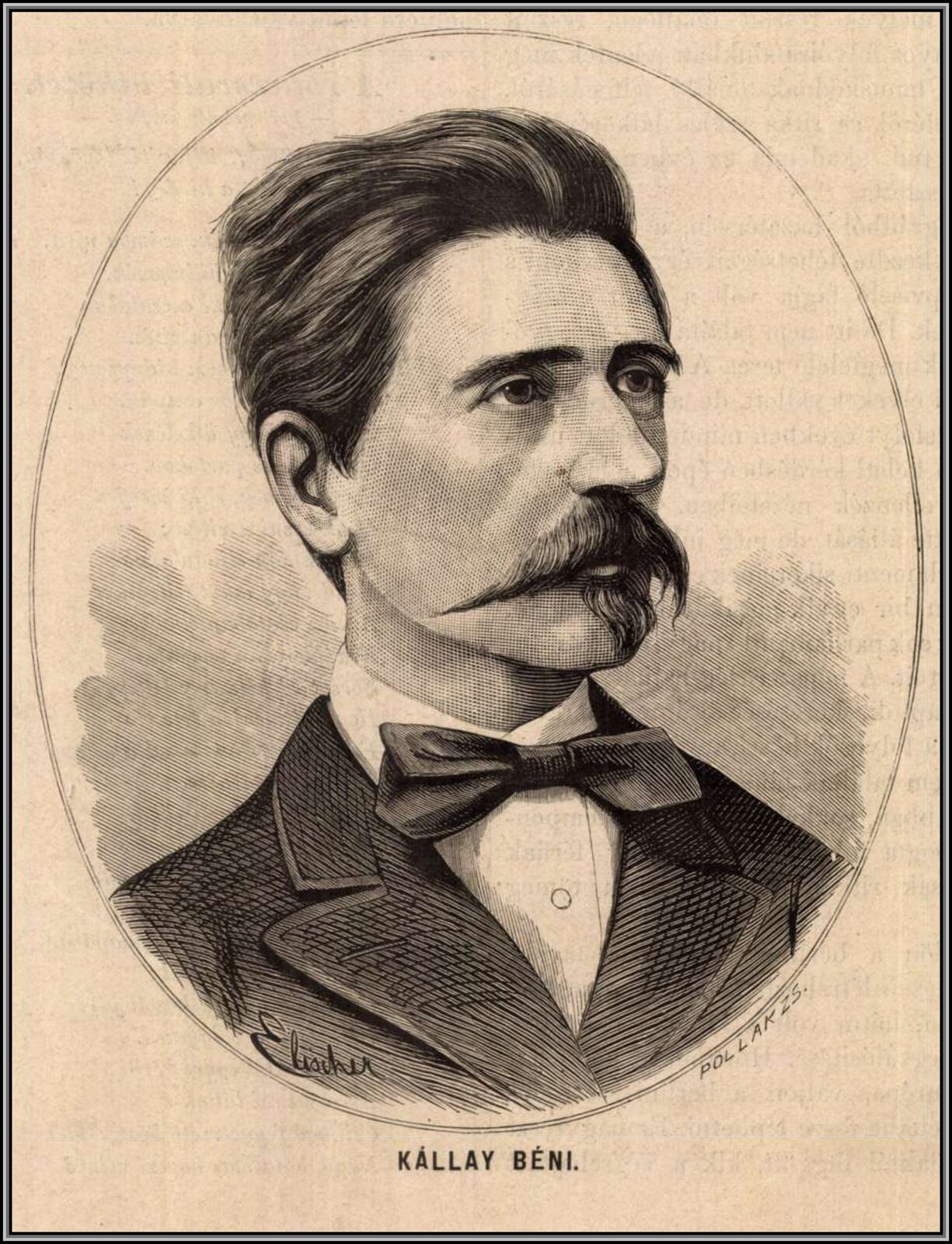
The Joint Minister of Finance, Béni Kállay (1839–1903, in office 1882–1903), took over the Bosnian portfolio a few months after the revolt was suppressed. Kállay was a Hungarian, a professional Balkanologist who had served as consul-general in Belgrade in the 1860s, and a fluent Serbo-Croatian speaker. His judgement on the occupied province was that its Muslim, Orthodox, Catholic, and Jewish populations could not be forcibly Germanised or Magyarised, but they could, over a generation or two, be given a shared imperial civic culture to belong to. That culture would be visible. It would be built.

The building programme that followed is the reason Sarajevo has a Habsburg-era National Museum (1888, completed 1913), a Provincial Government Building (1885), a purpose-built Hotel Europe (1882), a Sacred Heart Cathedral (1889), an Orthodox Cathedral already there (built under the late Ottomans, retained), an Ashkenazi Synagogue (1902), a Pseudo-Moorish City Hall, the Vijećnica (1892–1896), a Main Post Office (1907–1913), and roughly seventy other public buildings whose combined effect, in the phrase of Kadkani-Schmitt, was to “orchestrat[e] a powerful visual sense of imperial uniformity and commonality” (Framing Bosnia, Ch. 4).
Every one of those buildings post-dates the revolt.
Kállay’s calculation was that a Bosnian who walked past a Pseudo-Moorish city hall on the way to a Catholic cathedral, past a synagogue and a mosque within four blocks, and did business every day at a purpose-built imperial post office, might over time come to think of himself as a citizen of an imperial project he had a stake in. He might, at the very least, not shoot at the next census-taker.
The calculation worked, more or less, for about thirty years. It ran out in June 1914, on the corner of the Latin Bridge. But between 1882 and 1914 the Habsburg administration built a city.
Where to see the traces on the ground
-
Vijećnica: the empire’s most visible response to the 1882 crisis. Every architectural gesture on the building — the horseshoe arches, the striped sandstone, the central Islamic-inspired atrium — was chosen for its legibility to Sarajevo’s Muslim population.
-
Hotel Europe: opened in 1882, the same year the revolt was suppressed. The first purpose-built European hotel in the province, and the building where the Habsburg administration hosted its imperial guests for the next thirty years.
-
Kovači cemetery: the plot in the Old Town where Bosnian resistance is now buried. The 1882 dead do not have monuments here; the 1992–1995 dead do. But the two are connected by an argument the terrain has been making for a very long time.
-
Sarajevo architecture, two empires: the walking guide to the buildings the Habsburgs left. Read as a group they are one long political answer to the 1882 revolt.
Sources
- Charles Jelavich, “The Revolt in Bosnia-Hercegovina, 1881-2”: The Slavonic and East European Review, Vol. 31, No. 77 (June 1953), 420–436. The primary English-language academic account of the revolt. JSTOR link.
- Zahra Kadkani-Schmitt, Framing Bosnia: The Politics of Architecture and City Building in the Austro-Hungarian Administration of Bosnia and Hercegovina, 1878-1903 — PhD dissertation, UC Berkeley, 2017. Chapter 4 treats the revolt as the political inflection point that produced the Habsburg building programme. eScholarship link.
- Robin Okey, Taming Balkan Nationalism: The Habsburg ‘Civilizing Mission’ in Bosnia, 1878–1914 — Oxford University Press, 2007. The book-length treatment of Kállay’s programme and its long-run consequences.
- Peter Sugar, The Industrialization of Bosnia-Hercegovina, 1878–1918 — University of Washington Press, 1963. Still the standard economic history of the period; explains the tax and land-tenure grievances that fed the revolt.
Sources & further reading
Keep reading
More from the guide.

Sarajevo has been on UNESCO's Tentative List for 30 years — and still isn't inscribed
The 1997 Bosnian submission of Sarajevo to UNESCO’s Tentative World Heritage List is one of the more misread documents in the city’s...

Sarajevo Old Jewish Cemetery — 3,850 Sephardic tombstones, second-largest in Europe
Above Kovačići, on the south slope over the Miljacka, sits a cemetery of about 3,850 stone tombstones on 31,160 square metres. It...

Sarajevo architecture — from Isa-beg's 1462 čaršija to Pařík's 1913 Post Office, on foot in one afternoon
Sarajevo is the only European capital where you can walk for ninety minutes in a straight line and pass through four centuries...