
Explore Sarajevo / Destinations / Sarajevo Baščaršija
Destination · Stari Grad · 4 min read
Sarajevo Baščaršija
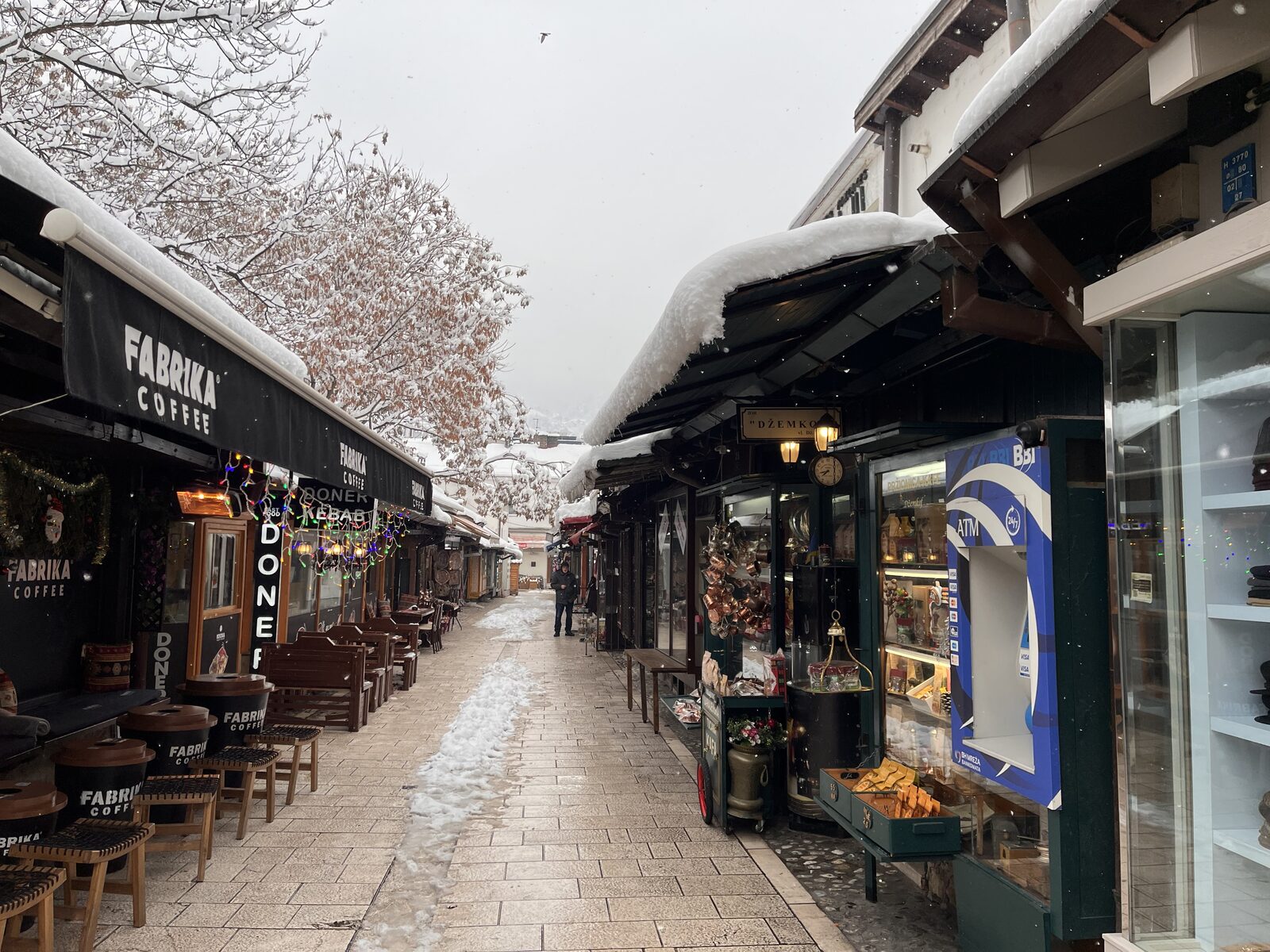
Sarajevo's 15th-century Ottoman bazaar. Copper still being hammered by hand, pigeons still descending on the Sebilj, ten ćevapi for the price of nothing.
- Established
- 1462
- By
- Founded by Isa-beg Ishaković


At a glance
Address
Sebilj Square, Baščaršija, Stari Grad
Hours
Open square. Shops typically 09:00 to 20:00.
Price
Free to enter
Getting there
Tram 1, 2, 3, 4, 5 to Baščaršija (end of the line); 12 minutes' walk from the Cathedral
Time needed
Half a day to a full day
Best time
Late afternoon into golden hour
Coordinates
43.8594° N 18.4314° E
Navigate
Baščaršija (bash-char-shi-ya) is the old Ottoman quarter and the oldest part of Sarajevo. It was founded in 1462 by Isa-beg Ishaković, the Ottoman general most often credited with founding the city itself. The recipe for turning a hamlet into a city in the 15th-century Balkans was modest and exact: build a hammam, a hostel for travellers, a Friday mosque, a bridge, and a market. Isa-beg built all five. The bazaar grew outward from his market.
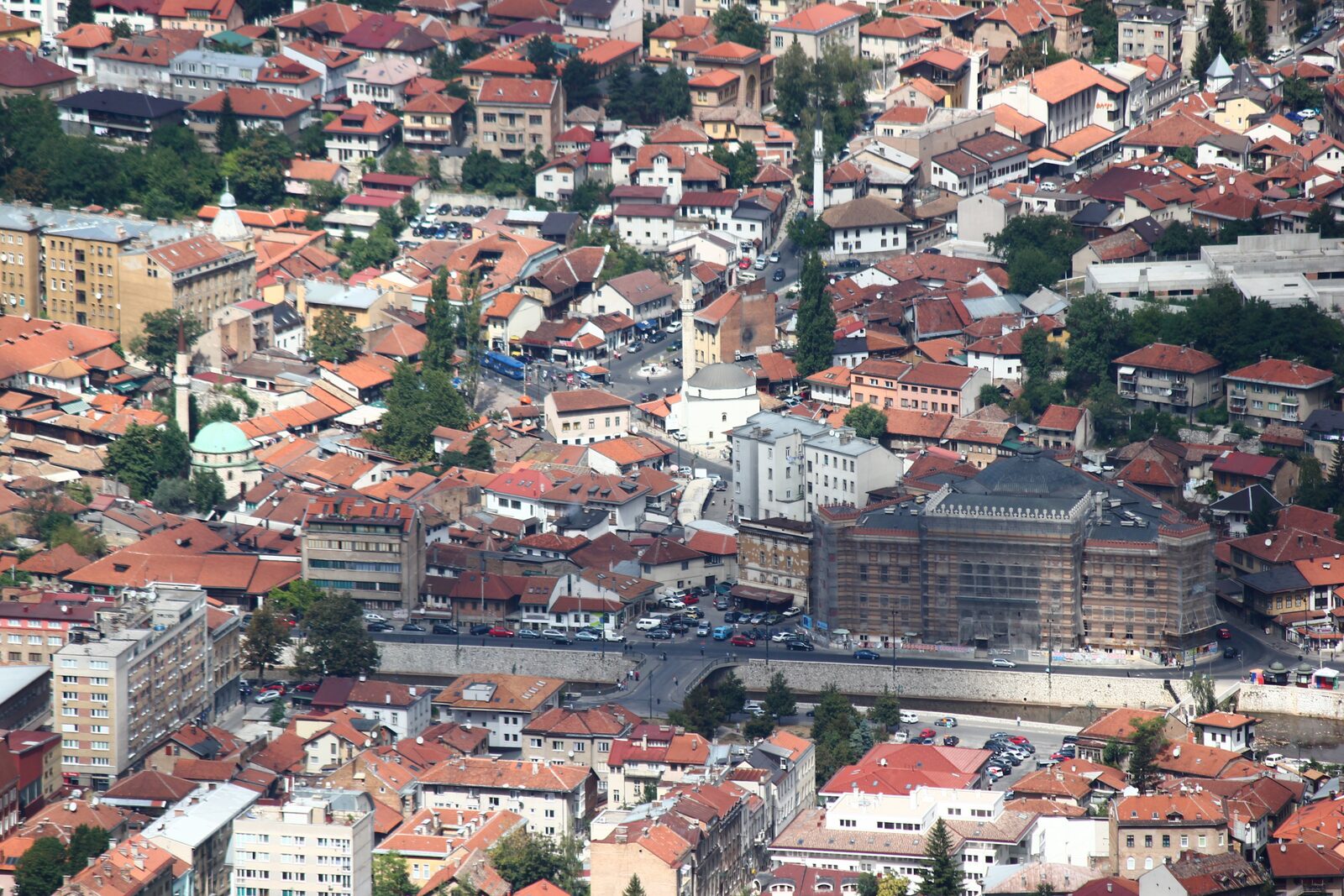
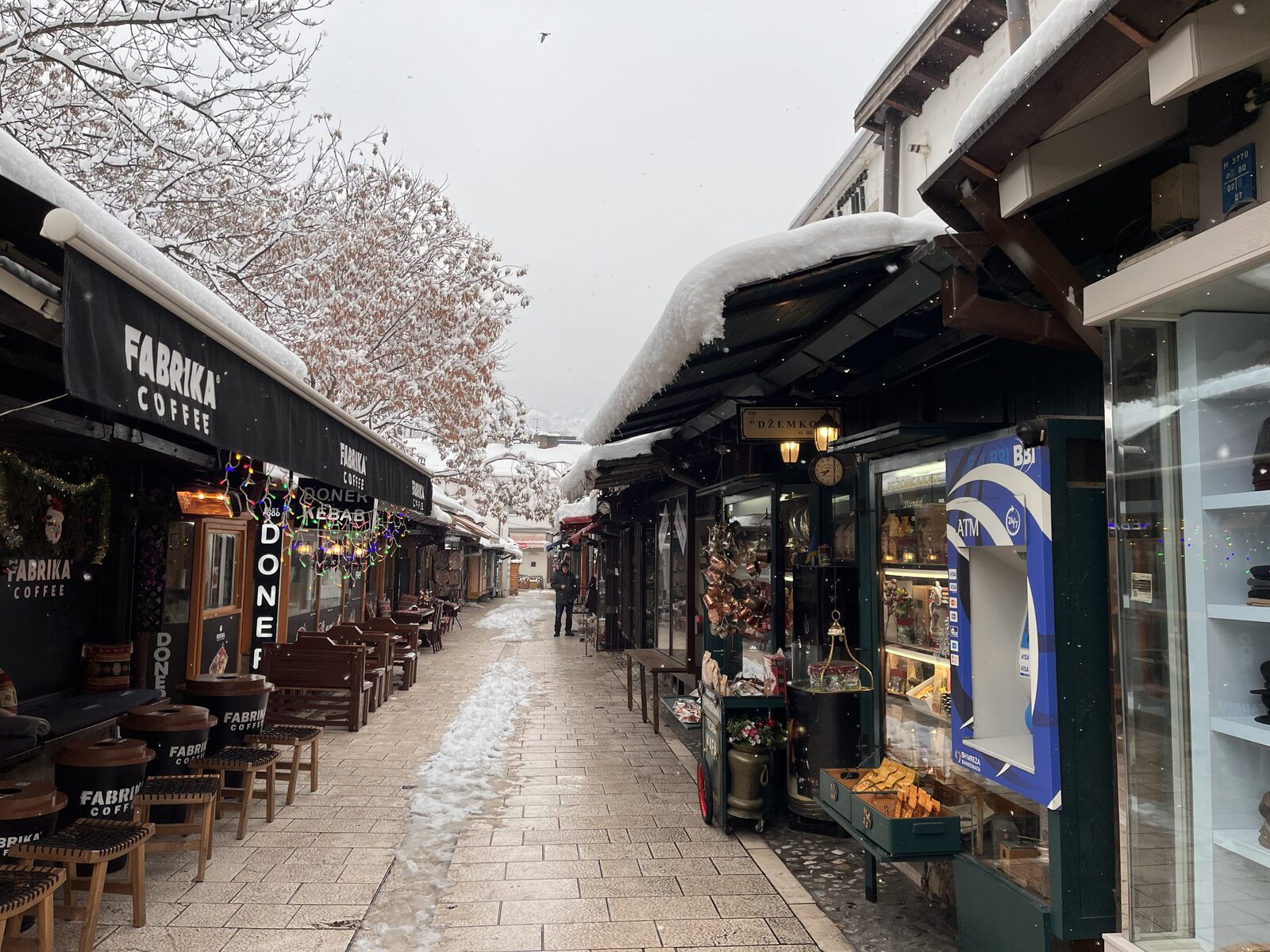
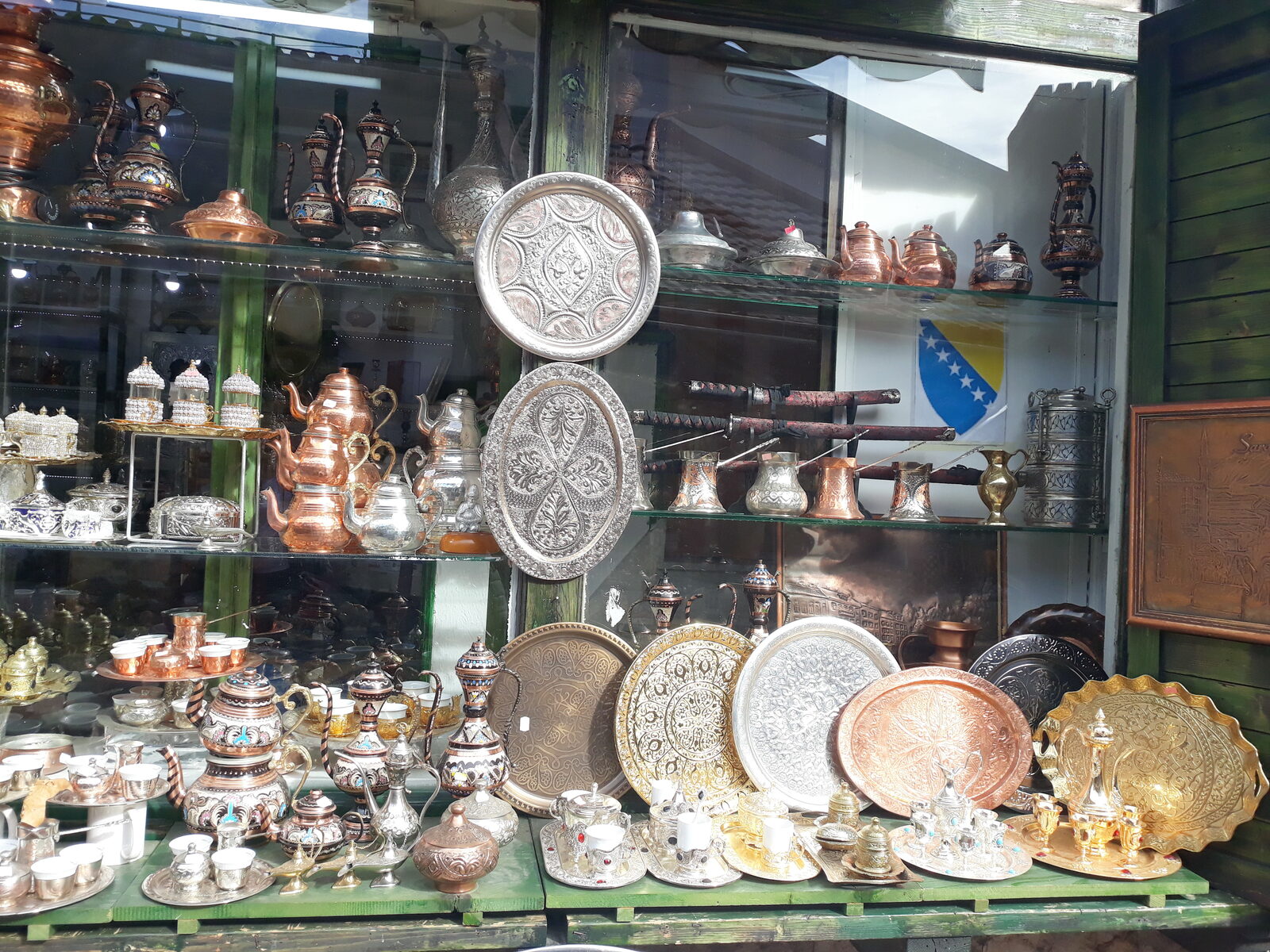
At its peak in the 16th and 17th centuries Baščaršija counted more than ten thousand artisans, organised into around eighty guilds, each with its own street. You can still read the streets like a directory of trades. Kazandžiluk is the coppersmiths’ lane, where families have hammered the same patterns into the same shapes for four or five generations. Sarači was the saddlers. Halači was the wool-carders. The names now mark cafés, restaurants, and souvenir stalls, but if you push the right door a workshop is still behind it, and the metalwork is still real.
The Sebilj
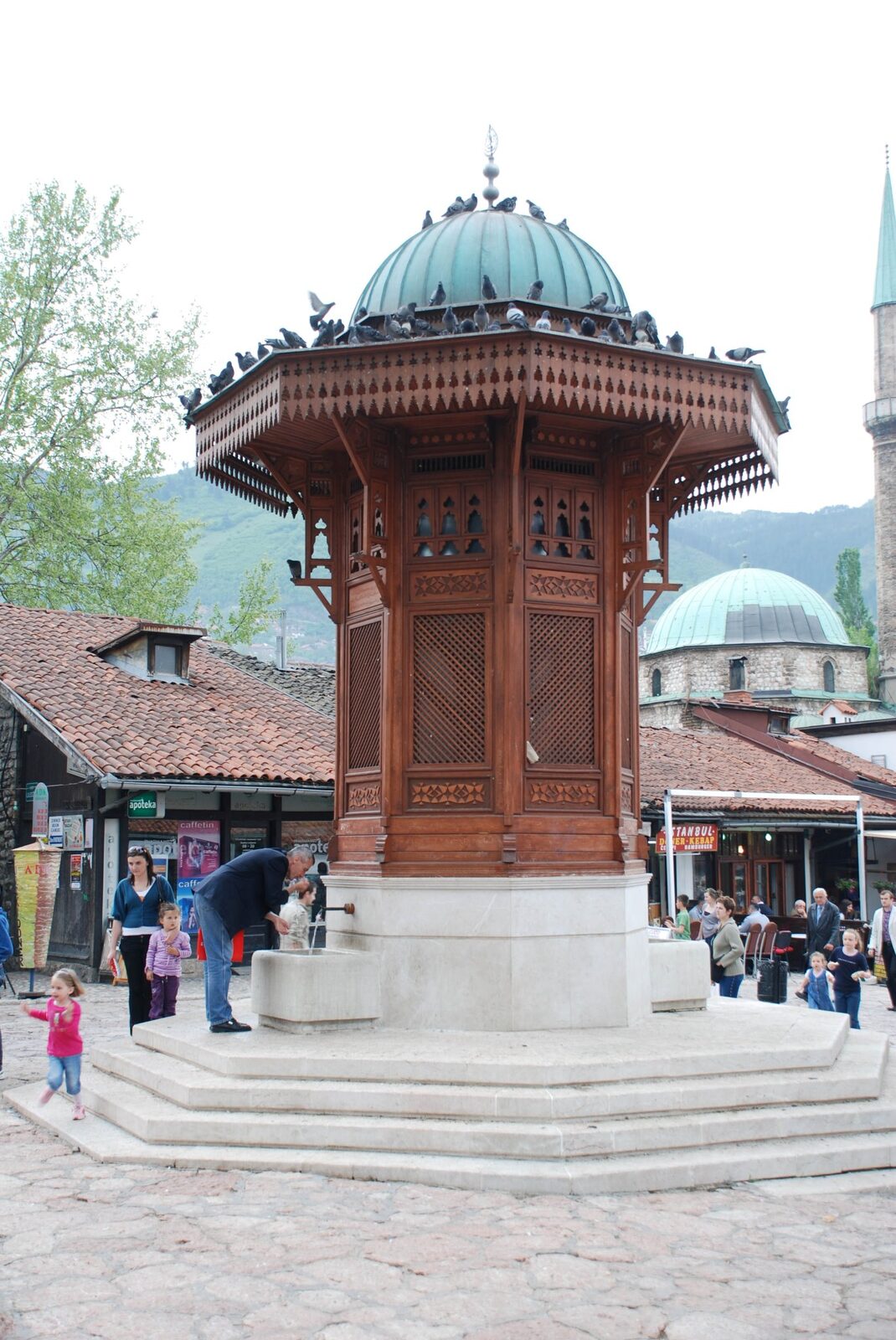
The Sebilj is the small ornate wooden fountain at the centre of the square, and the unofficial logo of the city. The first version was built in 1753 by the Ottoman vizier Mehmed-paša Kukavica. It burned, and was rebuilt in the late 19th century by the Austro-Hungarian architect Alexander Wittek, who also designed the City Hall. The pseudo-Moorish style is Wittek’s. The water still runs.
Locals will tell you that drinking from the Sebilj guarantees a return to Sarajevo. It is the line every guide in the city uses, and it is repeated often enough that visitors begin to remember it.
The square in front of the fountain is famous for its pigeons. Buy a paper cone of corn from one of the vendors and scatter it. A hundred birds descend. That is the most photographed half-minute in Bosnian travel.
Gazi Husrev-beg’s complex
A two-minute walk west of the Sebilj brings you to the Gazi Husrev-beg Mosque, completed in 1531 by the Ottoman governor Gazi Husrev-beg. It is the most important Ottoman building in the Balkans. Around the mosque sits the rest of his endowment: the bezistan (covered market), the medresa (religious school), the clock tower, and the library. The clock tower is set to à la turca time, counting the hours backward from sunset, and is one of the few public clocks in the world still kept on this schedule. The mechanism resets twice a month to match the changing sunset.
We have a dedicated page on the mosque if you want the long version.
A slow afternoon
Baščaršija is not a place to march through. The right way to use it is:
- Bosnian coffee at Morića Han, the 1551 han (traveller’s inn), or at Dibek, where the beans are still pounded by hand on a stone mortar.
- A coppersmith on Kazandžiluk. Buy a small džezva. They are inexpensive, durable, and a real piece of the city.
- Ćevapi at Željo, Petica, or Mrkva: three institutions within a hundred metres of each other.
- Sunset on the bridges over the Miljacka. Listen for the moment the muezzins begin the evening call to prayer. It moves around the valley in waves.
The line in the pavement
A small brass marker on Ferhadija, the main pedestrian street, sets the moment where the Ottoman quarter ends and the Austro-Hungarian one begins. Sarajevo Meeting of Cultures, the inscription reads. Stand on it. Look east into the bazaar. Look west into the Habsburg grid. Two empires, two architectures, one foot of pavement between them.
That is the experience the city is built around. Baščaršija is the eastern half.
Sources & further reading
More views
From Sarajevo Baščaršija
Photographs: Julian Nyča · source · CC BY-SA 3.0
.jpg)


Keep wandering
Nearby & related.

Sarajevo Kazandžiluk
Kazandžiluk is the row of coppersmiths’ shops that runs east from the Sebilj into Baščaršija. The patterns being hammered here...

Sarajevo Kovači Street
A short uphill walk from the Sebilj into the old residential mahala. Coppersmiths and blacksmiths once worked here; today it’s...

Sarajevo Sarači
Sarači is the long pedestrian street that bisects Baščaršija from the Sebilj fountain west to the great Friday mosque. It...