Explore Sarajevo / Destinations / Sarajevo Sacred Heart Cathedral
Destination · Centar · 4 min read
Sarajevo Sacred Heart Cathedral
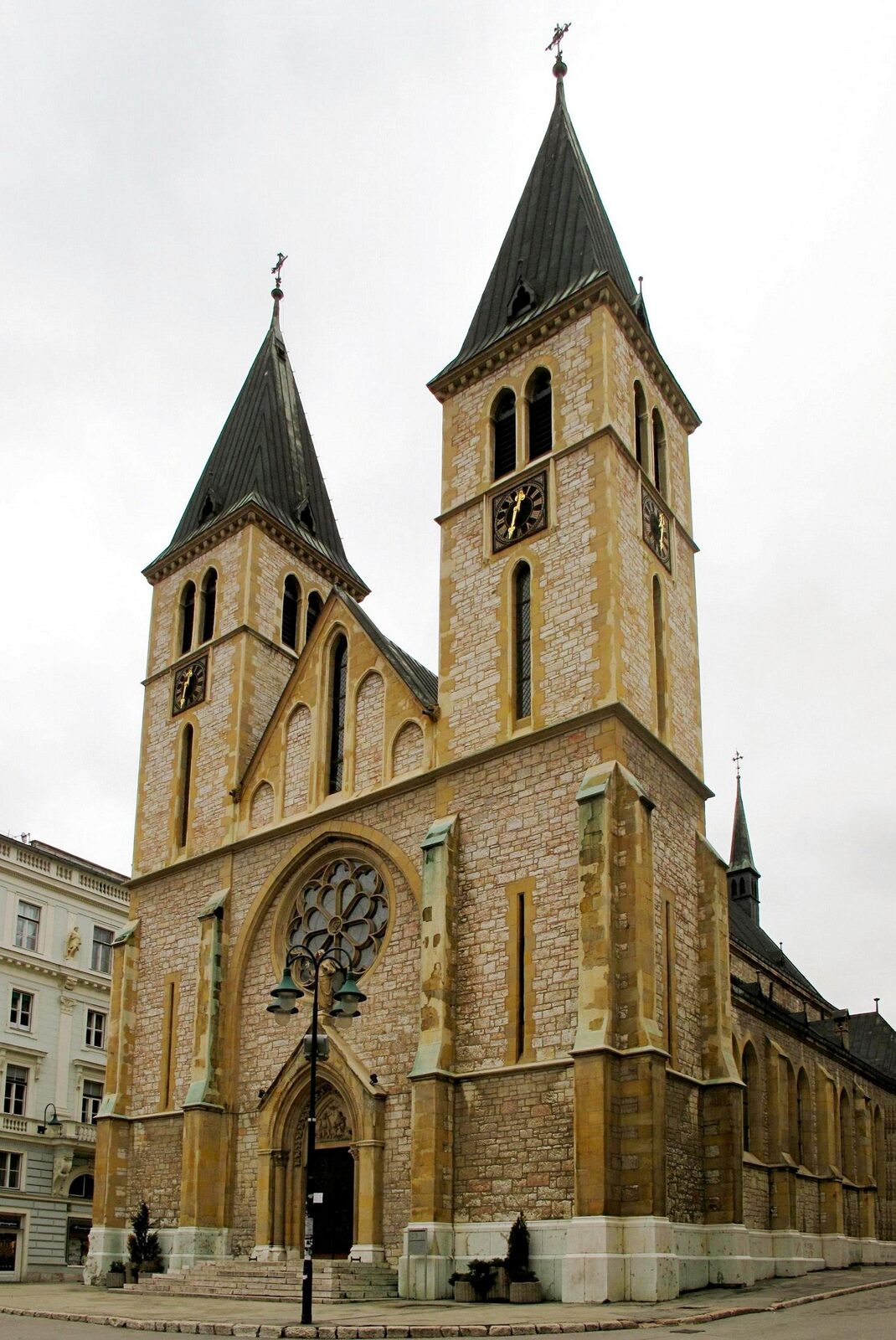
The neo-Gothic seat of the Vrhbosna archdiocese, finished in 1889. Two spires on the central pedestrian street.
- Established
- 1889
- By
- Josip Vancaš


At a glance
Address
Trg Fra Grge Martića, Centar
Hours
Open to visitors outside Mass — typically 09:00 to 19:00
Price
Free; small donation appreciated
Getting there
5 minutes from Sebilj walking west on Ferhadija
Time needed
30 minutes
Best time
Sunday morning if you want to attend Mass; weekdays for the quiet
Coordinates
43.8594° N 18.4254° E
Navigate
Three minutes’ walk west of the Meeting of Cultures line, the Sacred Heart Cathedral rises out of a small square called Trg Fra Grge Martića. Two neo-Gothic spires. Pointed arches. Rose window. The cathedral was finished in 1889, designed by the Croatian architect Josip Vancaš, and is the seat of the Archdiocese of Vrhbosna, the metropolitan see of Bosnia’s Roman Catholic Church.
It is also, demonstrably, an Austro-Hungarian building, in case the architecture was unclear.
A Habsburg cathedral
Bosnia became part of the Austro-Hungarian Empire in 1878, after the Treaty of Berlin handed administration of the Ottoman province to Vienna. One of the new administration’s earliest projects was to assert the Catholic presence in the city in built form. Vienna had been the seat of the Habsburg Catholic dynasty for centuries; Sarajevo did not yet have a cathedral large enough to express the new arrangement.
Construction started in 1884. The architect was Josip Vancaš, a Croatian architect trained in Vienna who would go on to design dozens of major buildings in Sarajevo over the following thirty years. The brief was clear: a properly large Catholic cathedral in the high Gothic style fashionable across central Europe at the time, on a prominent central street. Neo-Gothic was chosen over more contemporary styles because it carried the right historical weight.
The cathedral was completed and consecrated in 1889, dedicated to the Sacred Heart of Jesus. It was Sarajevo’s first major Catholic religious building since the medieval period.
What you see
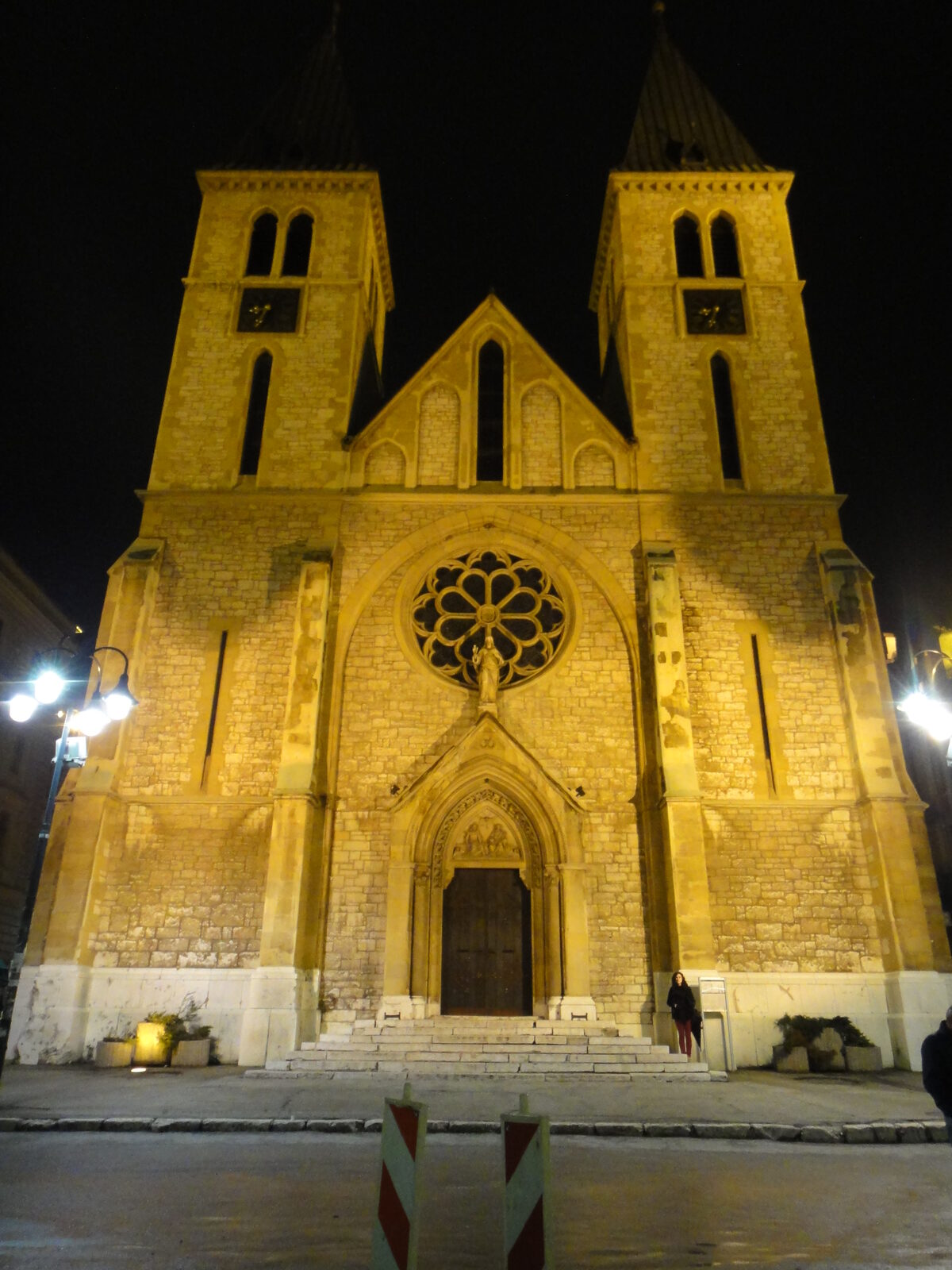
The exterior is two spires, a pointed central facade with a large rose window, and a side chapel added later. The stone is pale, the proportions are vertical, and the whole building reads as a polite Viennese take on French Gothic. It is beautiful, particularly at golden hour when the western light hits the spires.
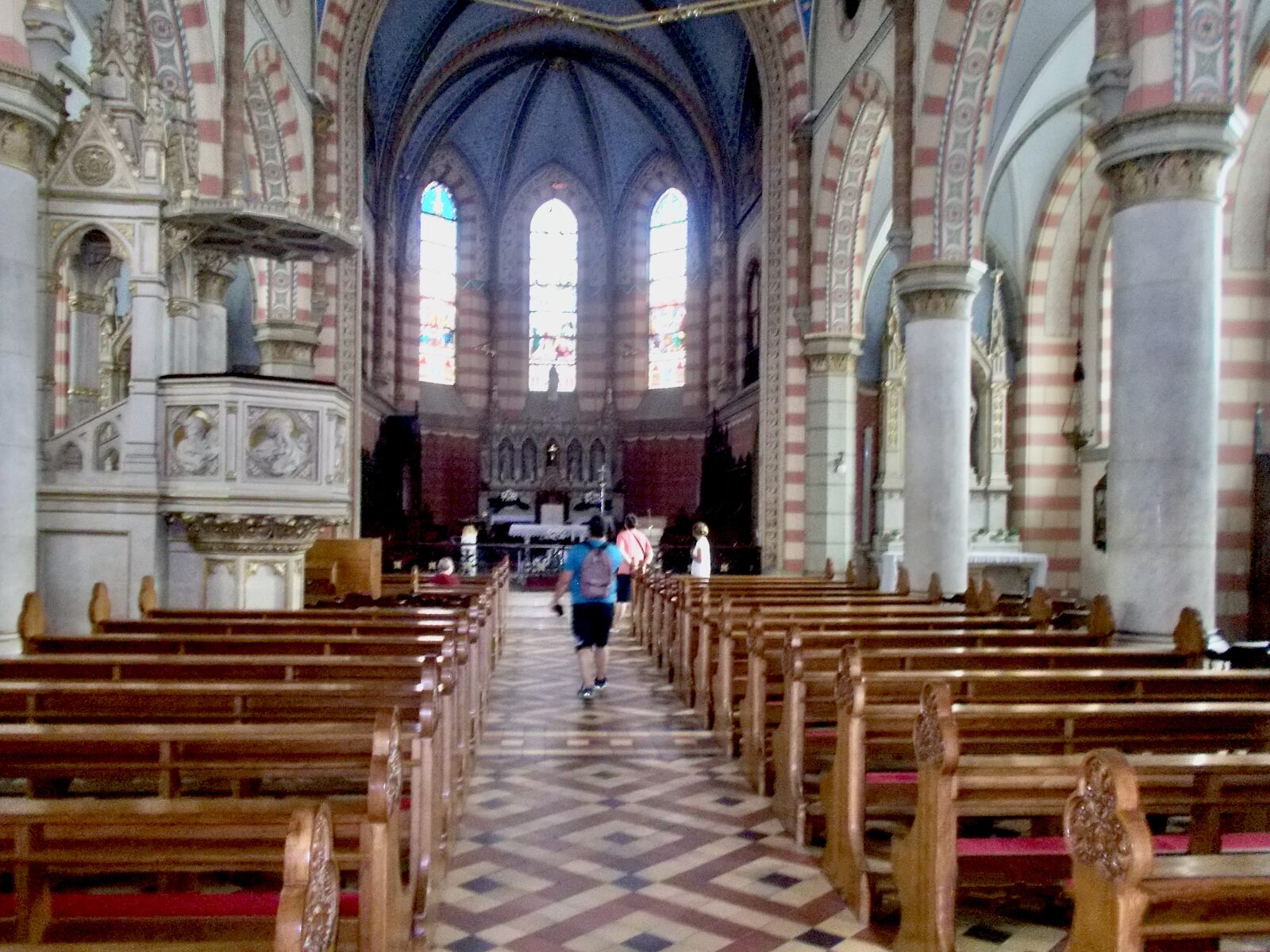
Inside, the cathedral is active and Roman Catholic, with daily Masses in Bosnian and occasional Latin. The nave is long, the ceiling is high, the side chapels hold local saints and a small memorial wall to civilian victims of the 1992–1995 siege. The cathedral was damaged by shellfire during the siege, the spires and the rose window took hits, and restoration work continued into the 2000s. Look for the small plaque inside near the south entrance.
The square outside
In the small square in front of the cathedral, two pieces of public art are worth pausing for:
- The bronze statue of Pope John Paul II, installed to mark his 1997 visit to Sarajevo — his first to a city still recovering from war, and a major moment in the city’s post-war diplomatic recovery.
- A Sarajevo Rose, set into the pavement of the square, marking the impact of one of the siege’s mortar shells. The Pope’s statue and the Rose face each other across the square. The arrangement is deliberate.
How to visit
Dress modestly. The cathedral is open daily, typically from morning to early evening, outside Mass times. There is no entrance fee. Photography is generally permitted; flash is discouraged.
The cathedral is directly adjacent to Galerija 11/07/95, the photographic memorial to the Srebrenica genocide, in the building on the corner of the square. Combining the two in a single morning is one of the more affecting two-stop walks in the city: the religious building that survived the war, and the museum that explains what the war did. Allow two hours.
After both, walk five minutes north for a coffee. The atmosphere requires it.
Why it matters
The Sacred Heart Cathedral is not the most important cathedral in Europe. It is not even the most architecturally distinguished building in Sarajevo. What makes it worth a visit is its position on the architectural seam of the city, three minutes from a 1531 mosque, three minutes from a 1872 Orthodox cathedral, four minutes from a 1902 synagogue, with the Meeting of Cultures marker between them.
You can walk between all four religious buildings in less than fifteen minutes. That is a fact about Sarajevo that no other European capital can claim. The cathedral is one of the four points.
Sources & further reading
More views
From Sarajevo Sacred Heart Cathedral
Photographs: Sebastian Müller · source · CC BY-SA 2.0
.JPG)

Keep wandering
Nearby & related.

Sarajevo Ferhadija
Ferhadija is the broad pedestrian street that begins at the Sarači–Sarači transition (marked by the Meeting of Cultures line in...

Sarajevo Galerija 11/07/95
A small, deliberately unflashy memorial museum to the Srebrenica genocide of July 1995. Founded by photographer Tarik Samarah in 2012,...

Sarajevo Latin Bridge
A small 1798 stone bridge across the Miljacka. The Habsburgs called it Princip’s Bridge after the assassination of Franz Ferdinand...