Explore Sarajevo / Destinations / Sarajevo Latin Bridge
Destination · Centar · 3 min read
Sarajevo Latin Bridge
A four-arch Ottoman bridge over the Miljacka. On a Sunday morning in June 1914 a young man stepped off the corner here and started the 20th century.
- Established
- 1798–1799 (current stone bridge)
- By
- Ottoman reconstruction on 1541 foundations


At a glance
Address
Obala Kulina Bana, on the Miljacka
Hours
Always accessible
Price
Free
Getting there
Tram 1, 2, 3, 4, 5 to Latinska Ćuprija. 5 minutes' walk from Baščaršija.
Time needed
20–40 minutes including the museum
Best time
Morning, before the tour groups arrive
Coordinates
43.8579° N 18.4288° E
Navigate
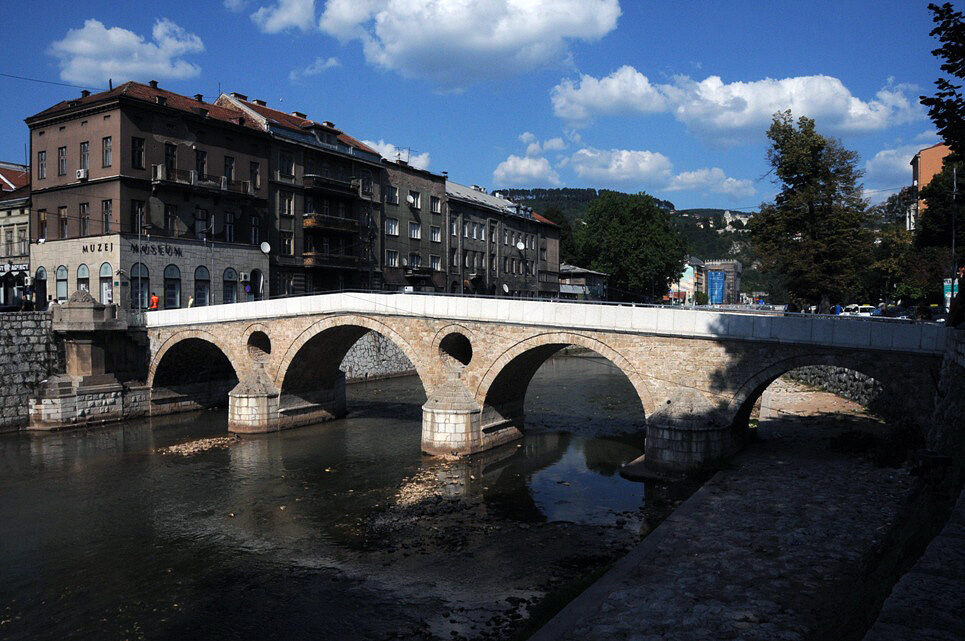
The Latin Bridge is one of the oldest crossings of the Miljacka. The first wooden bridge here was thrown across in the early 16th century. A stone version followed in 1541, paid for by a leather merchant named Husein, son of Šire. Floods took it more than once. The bridge you walk today was rebuilt in 1798–1799, with the four stone arches and stripped parapet you can see now. The name comes from the Catholic neighbourhood, historically called the Latin quarter, that sat on the north bank.
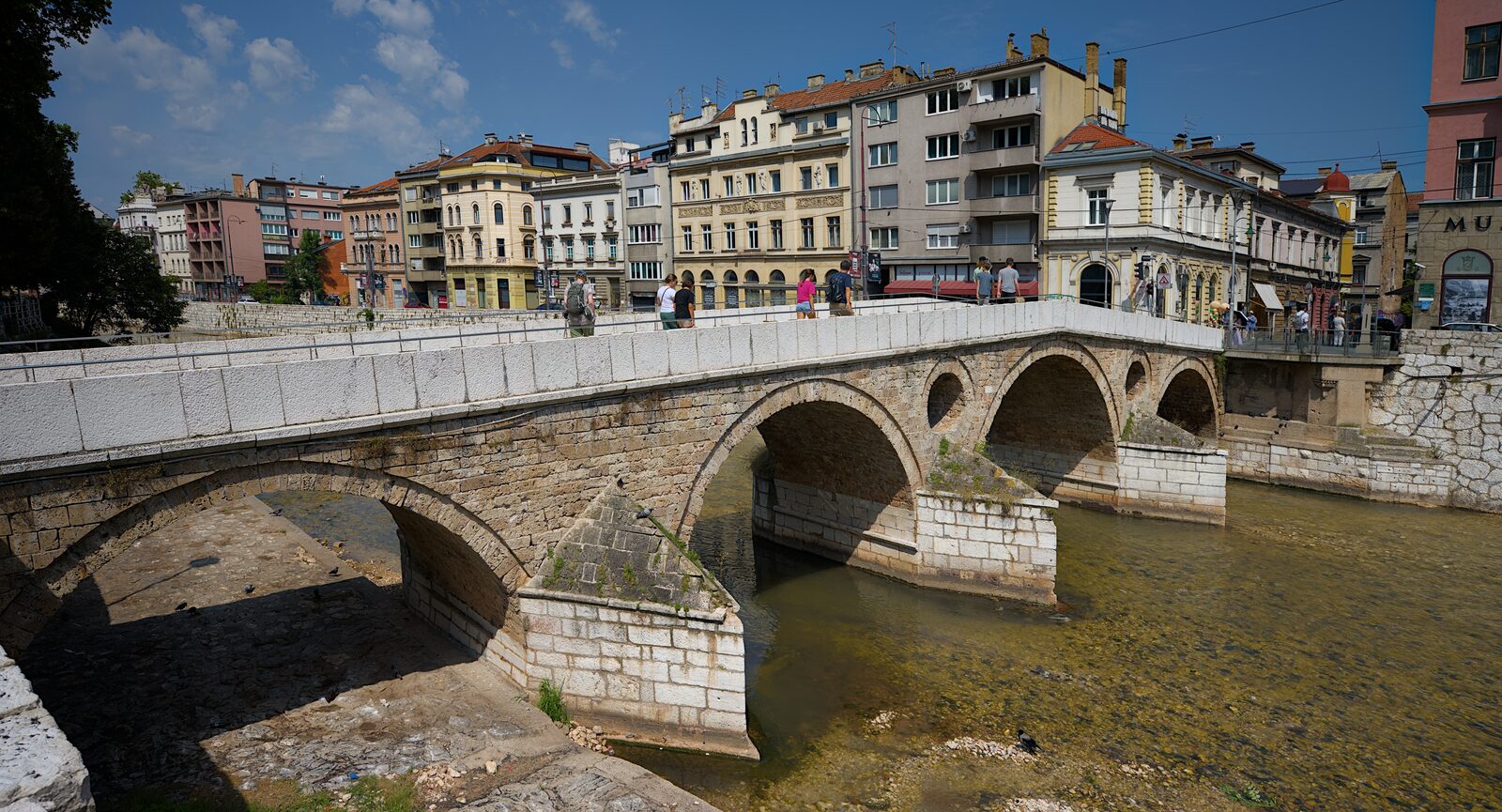
Most visitors come for what happened beside it on a single morning.
28 June 1914
On the morning of 28 June 1914, Archduke Franz Ferdinand of Austria-Hungary, heir to the Habsburg throne, was being driven through Sarajevo in an open touring car with his wife Sophie. An earlier attempt on his life, a bomb thrown at the motorcade along the Appel Quay, had failed but had injured several of his retinue. Disregarding advice to leave, the Archduke insisted on visiting the wounded at the hospital. His driver, unaware of the change of plan, turned wrongly onto Franz Joseph Street, just north of this bridge. The car stalled.
Standing on the corner was a 19-year-old member of Young Bosnia, Gavrilo Princip, who had been part of the earlier failed attempt. He stepped forward and fired twice. The Archduke and his wife died within an hour.
Five weeks later Austria-Hungary declared war on Serbia. Russia mobilised. Germany declared war on Russia and France. The alliance system that had taken two decades to assemble came apart inside a month. The First World War, and through it the Second, followed.
The bridge had nothing to do with any of it. It just happened to be there.
What you see today
The bridge itself is unchanged. A small plaque marks the corner where Princip stood. Across the street, in a handsome Austro-Hungarian building, sits the Museum of Sarajevo 1878–1918. The museum covers the Habsburg period in Bosnia and the lead-up to the assassination. Documents. Photographs. The famous fez and waistcoat. A careful, restrained reading of Princip and his comrades as young men caught in the South Slav national question, neither heroes nor villains.
The plaque on the building has been rewritten several times. Under Yugoslav rule it praised Princip as a national hero. In the 1990s it was removed. The current text is deliberately neutral: From this place on 28 June 1914 Gavrilo Princip assassinated the heir to the Austro-Hungarian throne Franz Ferdinand and his wife Sofija. No more. No less.
How to use the visit
The bridge is small. Most visitors spend ten minutes on the bridge and thirty in the museum. The combined hour is one of the more useful you can spend in Sarajevo. From the south bank, Inat Kuća and Vijećnica are both within a two-minute walk. Not for the history alone, but for how the city now holds it. Locals cross the bridge every day. Children kick footballs against the parapet. The river goes on.
That is enough.
Sources & further reading
More views
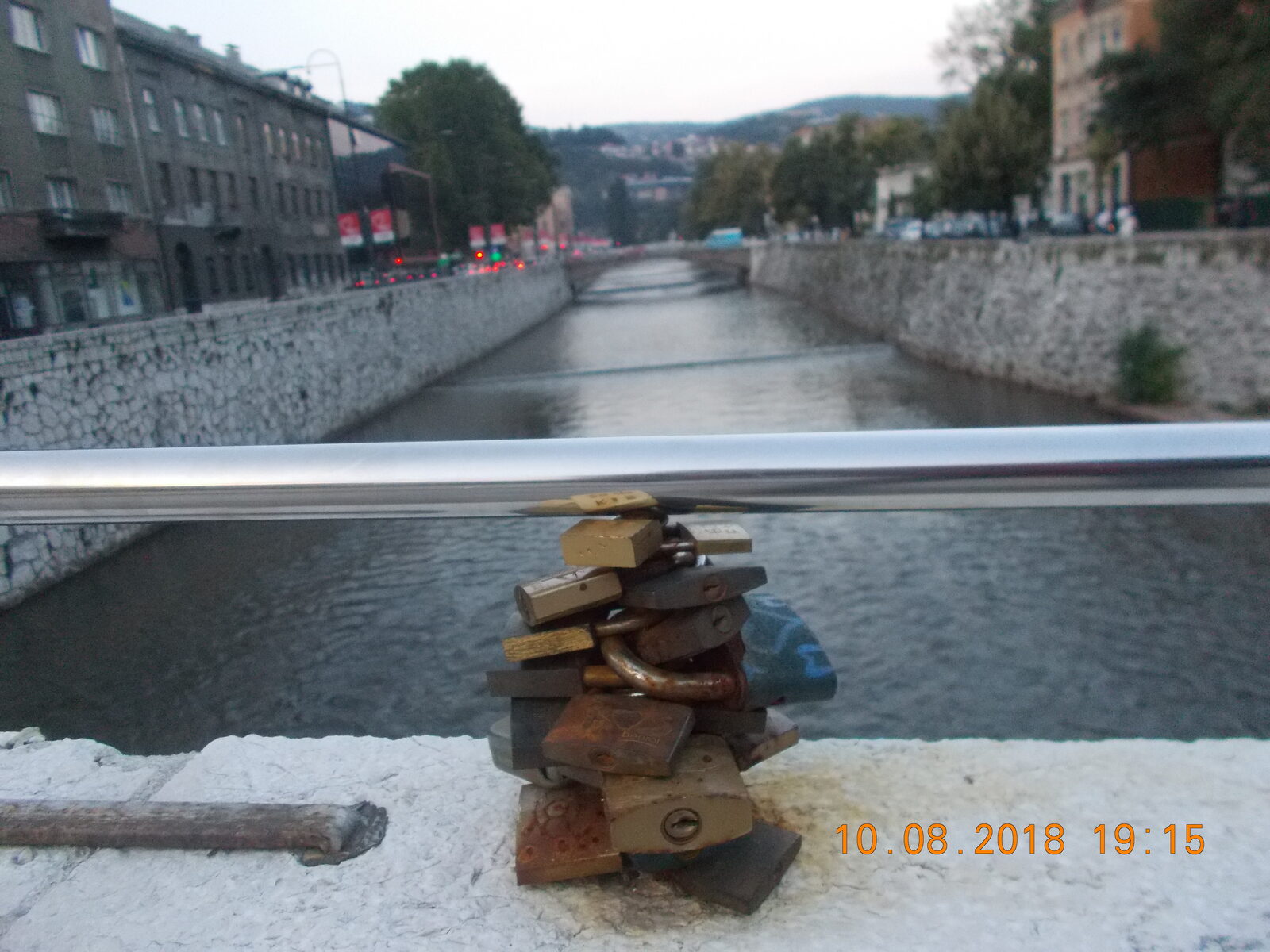
From Sarajevo Latin Bridge
Photographs: Miha Peče · source · CC BY-SA 4.0
_Bridge_on_Miljacka_River.jpg)

Keep wandering
Nearby & related.

Sarajevo Ferhadija
Ferhadija is the broad pedestrian street that begins at the Sarači–Sarači transition (marked by the Meeting of Cultures line in...

Sarajevo Galerija 11/07/95
A small, deliberately unflashy memorial museum to the Srebrenica genocide of July 1995. Founded by photographer Tarik Samarah in 2012,...

Sarajevo Markale Market
A working open-air food market on Ferhadija, in the centre of Sarajevo. Locals call it Markale (a Bosnianisation of the...