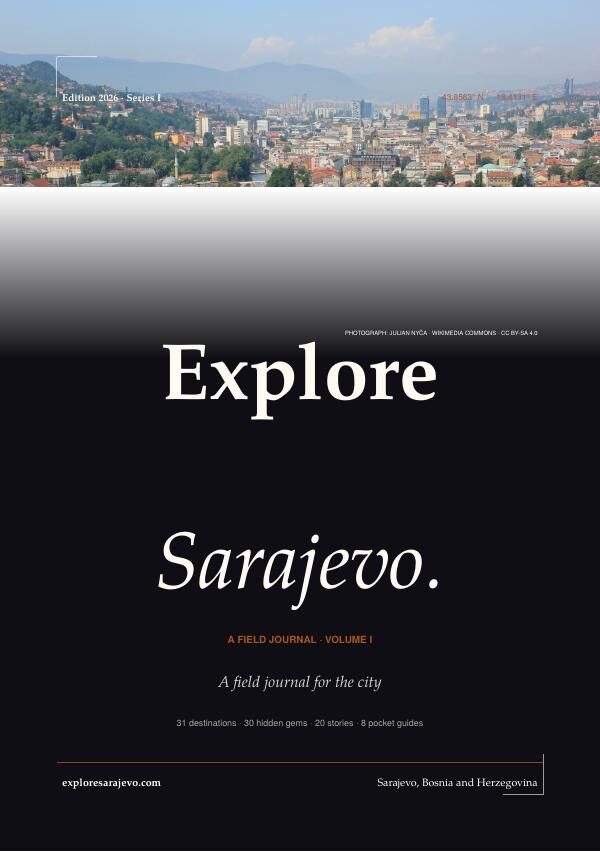
Sarajevo's UNESCO list: four entries, none of them a building
The city has no World Heritage site, and probably never will in the form most travellers expect. What it has, on the other UNESCO registers, is more interesting.
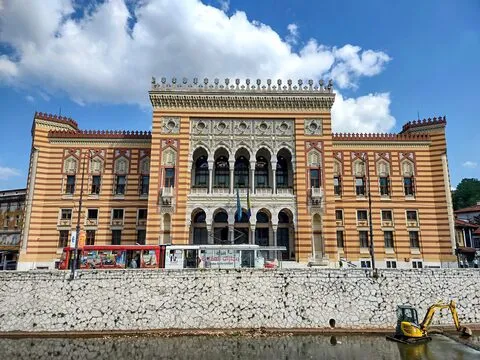
A small editorial note for anyone arriving in Sarajevo expecting a UNESCO blue-and-white plaque on Vijećnica: there isn’t one.
Sarajevo is not, currently, on UNESCO’s World Heritage List. None of the city’s buildings is inscribed, not Baščaršija, not the Gazi Husrev-beg complex, not the Latin Bridge, not the Yellow Fortress. No Old Town designation. The photograph of the Sebilj fountain at sunset that ends up on every Sarajevo postcard has no UNESCO authority behind it.
What the city does have, instead, are four UNESCO entries across three different registers. Two are inscribed: the Sarajevo Haggadah (2017) and sevdalinka (2024). Two sit on the Tentative World Heritage List: the city itself (since 1997), and the Old Jewish Cemetery (since 2018). Together they sketch the heritage profile of Sarajevo as UNESCO has formally recognised it. It is not architectural. It is not monumental. Cultural in a quieter register: a manuscript, a sung tradition, a hillside of tombstones, and the working argument that the city as a whole is a kind of living artefact.
Below, the four entries in order of UNESCO submission. Then a practical paragraph for what any of this means if you are visiting.
1. Sarajevo — unique symbol of universal multiculture — Tentative List (1997)
The earliest UNESCO submission Bosnia and Herzegovina ever filed for Sarajevo, and the only one that argues for the city itself.
Submitted 1 September 1997 by the Institute for the Protection of Cultural, Historical and Natural Heritage of Bosnia and Herzegovina (Ref. 906). The case rests on criterion (v): an outstanding example of a traditional human settlement representative of a culture, especially when it has become vulnerable under irreversible change. The earlier version of the submission also cited criterion (vi) for continuity of cultural tradition.
The submission’s argument, in plain English: Sarajevo is the heritage. Not any one building. The case is the linear-radial layout that opens out from the Miljacka, the visible layering of Ottoman, Habsburg, and Yugoslav periods, the four functioning religious quarters within walking distance of each other, and the way the seven hills carry vegetation into the urban grid. Bosnia and Herzegovina’s submitted title for the nomination reads, in full: Sarajevo, unique symbol of universal multiculture, continual open city.
In nearly thirty years on the Tentative List, no formal nomination has advanced. The reasons are practical: the World Heritage List is designed for discrete sites with defined boundaries (a building, a town centre, an archaeological zone), and “Sarajevo as a continuously inhabited multicultural urban setting” does not fit any of the standard frames. The status remains tentative, and probably will, unless the case is restructured around something narrower (a specific quarter, a defined ensemble, a single street) that the inscription frameworks can read.
Whether that ever happens is a small open question of cultural diplomacy. For now, the city is on the list, and has been since the year Titanic won eleven Oscars.
2. The Sarajevo Haggadah — Memory of the World (2017)
The single artefact in Sarajevo with international UNESCO recognition is a Hebrew book made in medieval Spain.
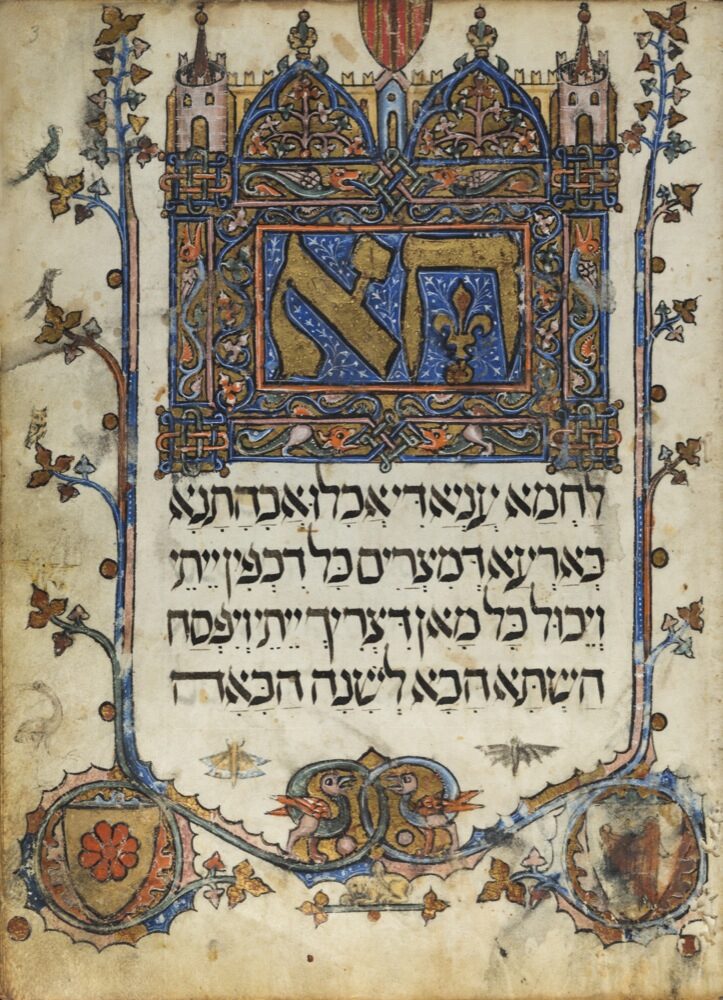
The Sarajevo Haggadah is a Sephardic illuminated manuscript containing the Haggadah shel Pesah, the text and ritual order read at the Jewish Passover Seder. UNESCO dates it to the second half of the 14th century, originating in Northern Spain; the conventional sub-attribution is Barcelona, around 1350. It was carried east by Sephardic Jews after the 1492 Alhambra Decree and was in Sarajevo by at least the late Ottoman period. The National Museum of Bosnia and Herzegovina acquired it in 1894 and has held it ever since.
The codex is written on parchment, in square Sephardic Hebrew script, fully punctuated. Structurally it has two parts: thirty-four folios of illumination carrying sixty-nine miniatures on the inner faces (outer faces left blank), followed by fifty folios of liturgical text. The miniatures run through the Pentateuch: the seven days of Creation, Cain and Abel, the story of Lot, the binding of Isaac, the Exodus, the parting of the Red Sea, the Blessing of Moses. The Joseph cycle is given particular emphasis. The text section pairs the Passover liturgy with lyrical works from the Golden Age of Jewish-Arabic culture (10th–13th centuries).
Museum staff have hidden the manuscript twice from invading armies. In 1942, the museum’s chief librarian Derviš Korkut, a Muslim, took it out of the collection ahead of a Nazi inspection and hid it in a mosque on Bjelašnica mountain. Korkut was recognised by Yad Vashem as Righteous Among the Nations in 1994. In the 1992–1995 siege, after a break-in and basement flooding at the museum, archaeologist Enver Imamović and police inspector Fahrudin Čebo moved the manuscript to the underground vault of the Central Bank of Bosnia and Herzegovina, where it spent the war. In 1995 the President of Bosnia presented the manuscript at a community Seder to counter persistent rumours that it had been sold abroad to buy weapons.
National-level protection arrived in 2003, when KONS designated the manuscript a movable national monument of Bosnia and Herzegovina. International recognition followed in 2017: the Haggadah was inscribed on UNESCO’s Memory of the World International Register (submitted 2016, registered 2017). Audrey Azoulay, Director-General of UNESCO, described it that year as “a silent witness to history and survivor of the many turbulent moments in the story of the region, Europe and the world”.
The Haggadah lives today in a climate-controlled vault room at the National Museum, shown publicly on occasions and as part of the museum’s permanent exhibition Three Lives of the Sarajevo Haggadah, which opened 1 February 2019 for the museum’s 131st anniversary, curated by Aleksandra Bunčić and Mirsad Sijarić. Plan a museum afternoon. The manuscript itself is shown for a controlled window; the surrounding rooms give the context.

3. The Old Jewish Cemetery — Tentative List (2018)
A second tentative entry, twenty-one years after the first.
Bosnia and Herzegovina submitted the Old Jewish Cemetery in Sarajevo to UNESCO’s Tentative World Heritage List on 3 April 2018 (Ref. 6334). The case is unusually broad: four criteria, (ii), (iii), (iv), and (vi): significance to multiple cultures, exceptional testimony to a tradition, an example of a sepulchral landscape, and association with a tradition of universal significance. The associated tradition is the Sarajevo Haggadah, via the cemetery’s Geniza (see below).
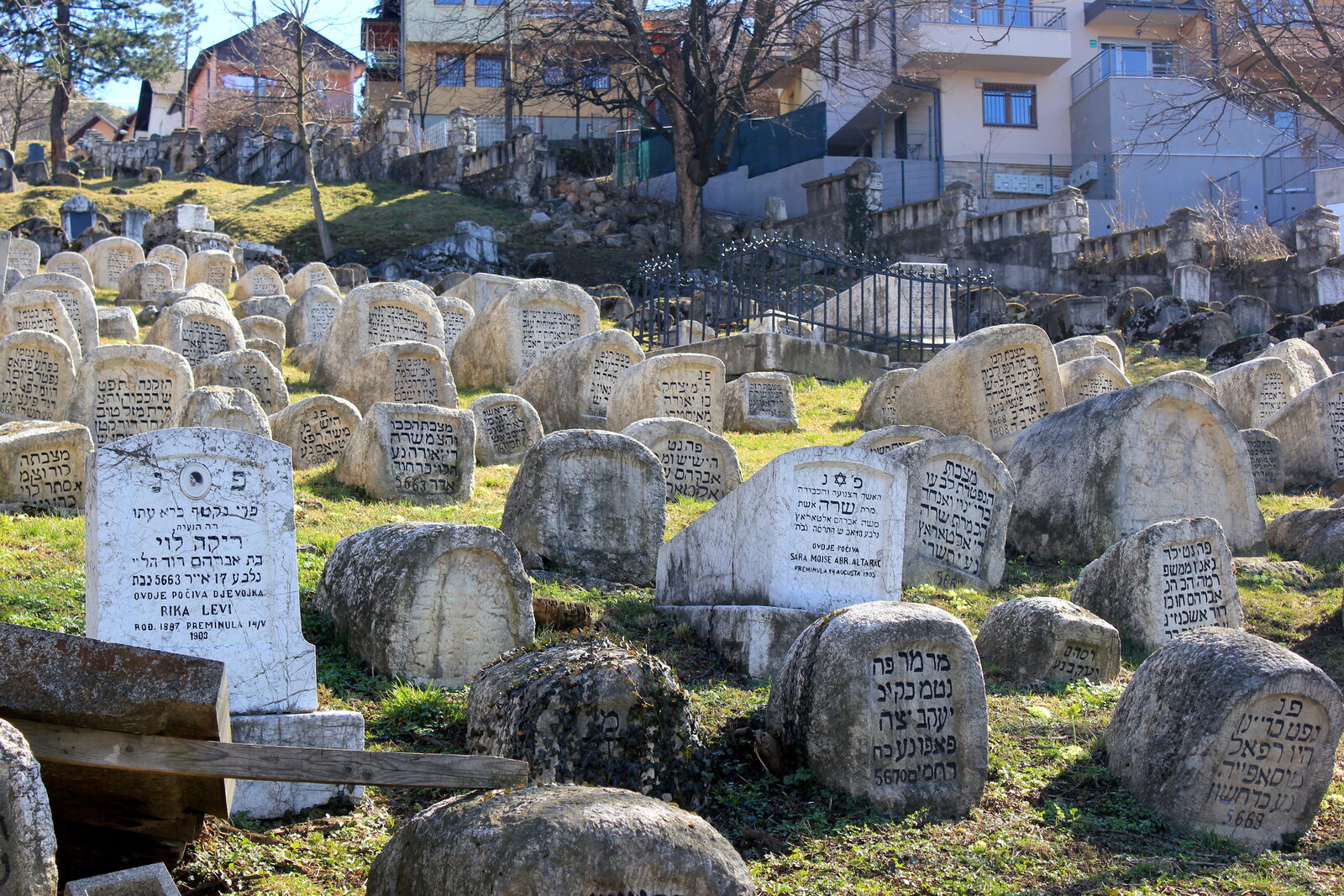
The cemetery sits on a steep slope on the Kovačići hillside, south of the Miljacka, with terraces of tombstones descending toward the river. The submission gives a total area of 31,160 m², with more than 3,850 tombstones in seven plots, plus four memorials to victims of fascist terror and a number of cenotaphs. An Ashkenazi ossuary in the complex was built in 1962 after the older Ashkenazi graveyards were exhumed. The cemetery was closed for burials in 1966.
Foundation dating is indirect. The Hevra Kadiša (Jewish burial society) of Sarajevo was established in 1558, two years after the earliest documentary record of Sephardic Jews living in the city (the Sarajevo court sijill of 1557). The cemetery itself is dated, by community records, to around 1630. The oldest tombstones lie next to a medieval stećak necropolis at Borak, and their stone, scale, and arrangement echo the stećak tradition, horizontal monolithic slabs and sarcophagi, sometimes ridged or stepped, with relief and incised epitaphs in square Hebrew letters on the north-facing front. According to the dossier this is the visual point where Sephardic sepulchral culture meets the indigenous Bosnian one. It is, as far as the submission knows, unmatched anywhere else.
A cemetery chapel (Ciduk Adin, built 1923–1924 by the engineer Scheiding) stands on the north-west side. The site has three entrance gates (a monumental one on the north, a smaller one on the south, a third at the south-west corner), a fountain, and a perimeter wall.
In the south-east of the cemetery is a Geniza: the burial vault for damaged Jewish holy books that contain the name of God and cannot simply be thrown away. The first Geniza burial took place on 3 July 1916; the second interred fourteen crates of books. This is the link to the Haggadah, community records suggest the Geniza is the institution that decided not to bury that particular manuscript when its time would have come, but instead to safeguard it.
National-level protection predates the UNESCO submission: state protection from 1951, 1st Category Monument from 1991, National Monument of Bosnia and Herzegovina from 2004.
According to the submission, the cemetery is the second-largest Jewish sepulchral complex in Europe after the Old Jewish Cemetery in Prague. (The ranking is the dossier’s own claim. European Jewish cemetery rankings are not uncontested.) The walk up from Wilsonovo Šetalište to the gates takes about twenty minutes. Our page on the cemetery is here.

4. Sevdalinka — Intangible Cultural Heritage (2024)
The most recent UNESCO recognition for Bosnia and Herzegovina, and on present count the most affecting.
In December 2024, at the 19th session of the Intergovernmental Committee (under nomination 19.COM 7.b.24), UNESCO inscribed sevdalinka, the traditional urban love song of Bosnia and Herzegovina, shortened in conversation to sevdah, on the Representative List of the Intangible Cultural Heritage of Humanity.
UNESCO inscribed a form, not a recording. Sevdalinka is the urban folk vocabulary of the Bosnian čaršija tradition: solo voice, sometimes accompanied by saz or accordion or piano, slow and ornamented, sung in homes and small rooms across the country for at least four centuries. The music of sevdah, a Turkish loanword from Arabic sawda, meaning a melancholic, devotional yearning, and the canonical songs of the repertoire are sung today by performers across the region without changing the words.
UNESCO’s inscription places sevdalinka in the same conceptual register as Argentine tango, Portuguese fado, and Greek rebetiko: urban folk-song traditions that became the emotional language of a city. The official reasoning runs through criteria of community vitality, continuity of practice, and inter-generational transmission. Sevdah meets all three.
To hear it properly in Sarajevo, the dedicated venue is Art Kuća Sevdaha on Halači, a small living museum with regular live performances in the evenings. The long-form essay on the form itself is here.

What this means for visiting
Practically, for a traveller in 2026:
- No UNESCO plaque on any of the bazaar buildings. Don’t look for one.
- The Sarajevo Haggadah is the city’s only inscribed documentary heritage, and it is at the National Museum on Zmaja od Bosne, not in Baščaršija. Plan a museum afternoon for it.
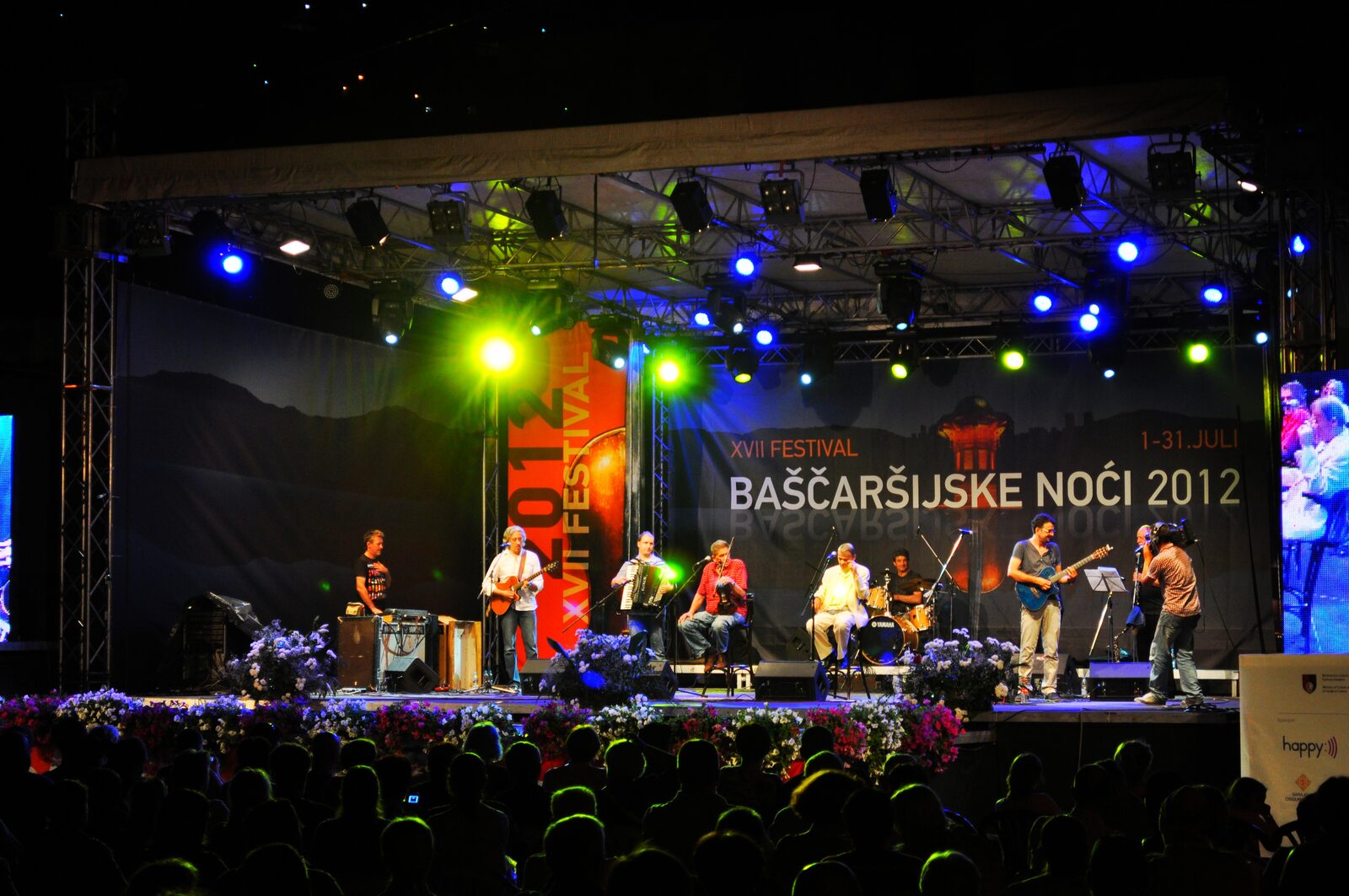
- Sevdalinka is the city’s only inscribed Intangible Cultural Heritage, and it is best experienced live. Art Kuća Sevdaha is the reliable nightly option; the Baščaršija Nights festival each summer programmes sevdah evenings; the kafanas of Sarači and Bravadžiluk vary, and you may need to ask.
- The Old Jewish Cemetery on Kovačići is the candidate to watch. A walk through the hillside in 2026 is a walk through what may be inscribed at a future session — and the only UNESCO-touched site in Sarajevo that you can walk to from the centre in about half an hour.
- The city itself, on the Tentative List for nearly thirty years, is what you are already walking through. The religious quartet of mosque, cathedral, church, and synagogue within five minutes’ walk; the surviving Ottoman bazaar; the Habsburg quarter — none of it is formally on a UNESCO list, but all of it is the working argument for the case Bosnia and Herzegovina has filed since 1997.
Most cities with this much continuous urban heritage are inside the system. Sarajevo, on the present count, is mostly outside it. That is part of why it has stayed, for serious travellers, one of the small European capitals worth the trip, the heritage is here, and it is not yet a museum. Vala, the application has been on the desk since 1997. Nobody is in a hurry.
Further reading
- Sevdah and the two souls: the long-form on the music tradition UNESCO inscribed in 2024.
- Old Jewish Cemetery: the hillside above Kovačići, on the Tentative List since 2018.
- Art Kuća Sevdaha: the small museum and live-music room dedicated to the sevdah tradition.
Sources & further reading
- UNESCO Tentative List · Sarajevo — unique symbol of universal multiculture (1997, Ref. 906)
- UNESCO Memory of the World · Sarajevo Haggadah Manuscript (inscribed 2017)
- UNESCO Tentative List · Jewish Cemetery in Sarajevo (2018, Ref. 6334)
- UNESCO ICH · Sevdalinka, the traditional urban love song of BiH (inscribed 2024)
Keep reading
More from the guide.

Sarajevo — the map that came first, how the Habsburgs surveyed Bosnia for three years before laying a stone
Before the Vijećnica, before the Sacred Heart, before the National Museum, before any of the buildings Sarajevo’s Habsburg-era architecture is famous for,...

Sarajevo — three Habsburg firsts you didn't know about: an 1885 horse tram, an 1899 postcard, and a pelican in Ilidža
The Habsburg administration turned Sarajevo into a European modernity in the forty years between 1878 and 1918. Three of the small firsts...
Sarajevo 1912 — the Bosnian Parliament the Habsburgs planned across the river from Vijećnica, and the First World War stopped
Directly across the Miljacka from Vijećnica, on the south embankment near the Cumurija bridge, there was once supposed to be a big...