Explore Sarajevo / Destinations / Sarajevo Gazi Husrev-beg Mosque
Destination · Baščaršija · 4 min read
Sarajevo Gazi Husrev-beg Mosque
The 1531 mosque at the heart of Ottoman Sarajevo. Designed by Acem Esir Ali of Tabriz, calling the city to prayer for 495 years.
- Established
- 1531
- By
- Acem Esir Ali of Tabriz


At a glance
Address
Sarači 8, Baščaršija
Hours
Open to visitors outside prayer times — typically 09:00 to 17:00
Price
Modest entrance fee, around 3 BAM
Getting there
2 minutes west of the Sebilj on Sarači
Time needed
30 to 45 minutes including the courtyard
Best time
Mid-morning, before tour groups
Coordinates
43.8592° N 18.429° E
Navigate
The Gazi Husrev-beg Mosque stands at the centre of Baščaršija, two minutes’ walk west of the Sebilj. It was completed in 1531 for the Ottoman governor Gazi Husrev-beg, designed by a Persian architect named Acem Esir Ali of Tabriz, and has been calling Sarajevo to prayer for 495 years without a break.
It is the most important Ottoman mosque in the Balkans, the largest historical mosque in Bosnia, and the architectural anchor of the entire bazaar. Walk in. It is open.
A Persian architect, an Ottoman patron, a Bosnian city
The mosque was commissioned in 1530 by Gazi Husrev-beg, the Ottoman governor of the Sanjak of Bosnia and one of the most consequential urban patrons in the early-modern Balkans. The design was given to Acem Esir Ali of Tabriz, a Persian master architect working within the Ottoman classical tradition. Construction was completed in 1531.
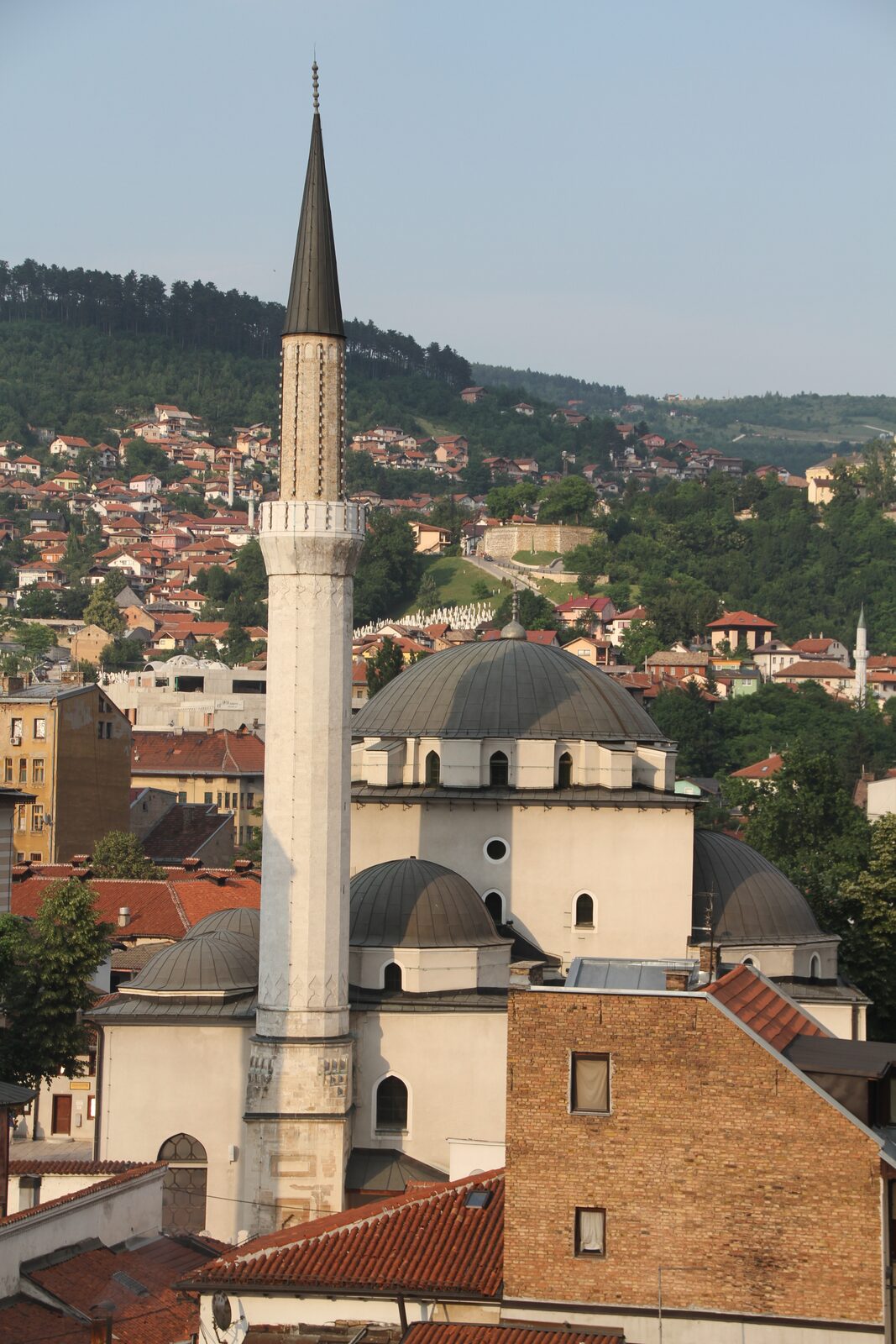
The mosque is built in the classical Ottoman style of the early 16th century: a square prayer hall covered by a single large central dome, flanked by smaller semi-domes, with a portico of three smaller domes in front and a single elegant minaret to one side. Scholars consider it the finest surviving example of early classical Ottoman architecture in the Balkans, predating most of the great Istanbul mosques by a generation.
Gazi Husrev-beg paid for the mosque from his personal estate, and on his death in 1541 he left the rest of his fortune as a vakuf, a permanent religious endowment, funding the maintenance of the mosque and the construction of an entire neighbourhood of associated buildings: the medresa (religious school, 1537), the library (still operating today as one of the oldest in the Balkans), the bezistan (covered market across the street), the clock tower, and the han — traveller’s inn — Morića Han. Almost everything that makes Baščaršija architecturally legible was funded by this single endowment.
What you find inside
The mosque is active and Sunni Muslim. Five daily prayers are held. The space is also open to visitors outside prayer times, and the staff at the door are well-practised at receiving the curious from every background. A small entrance fee (around 3 BAM) helps maintain the building.
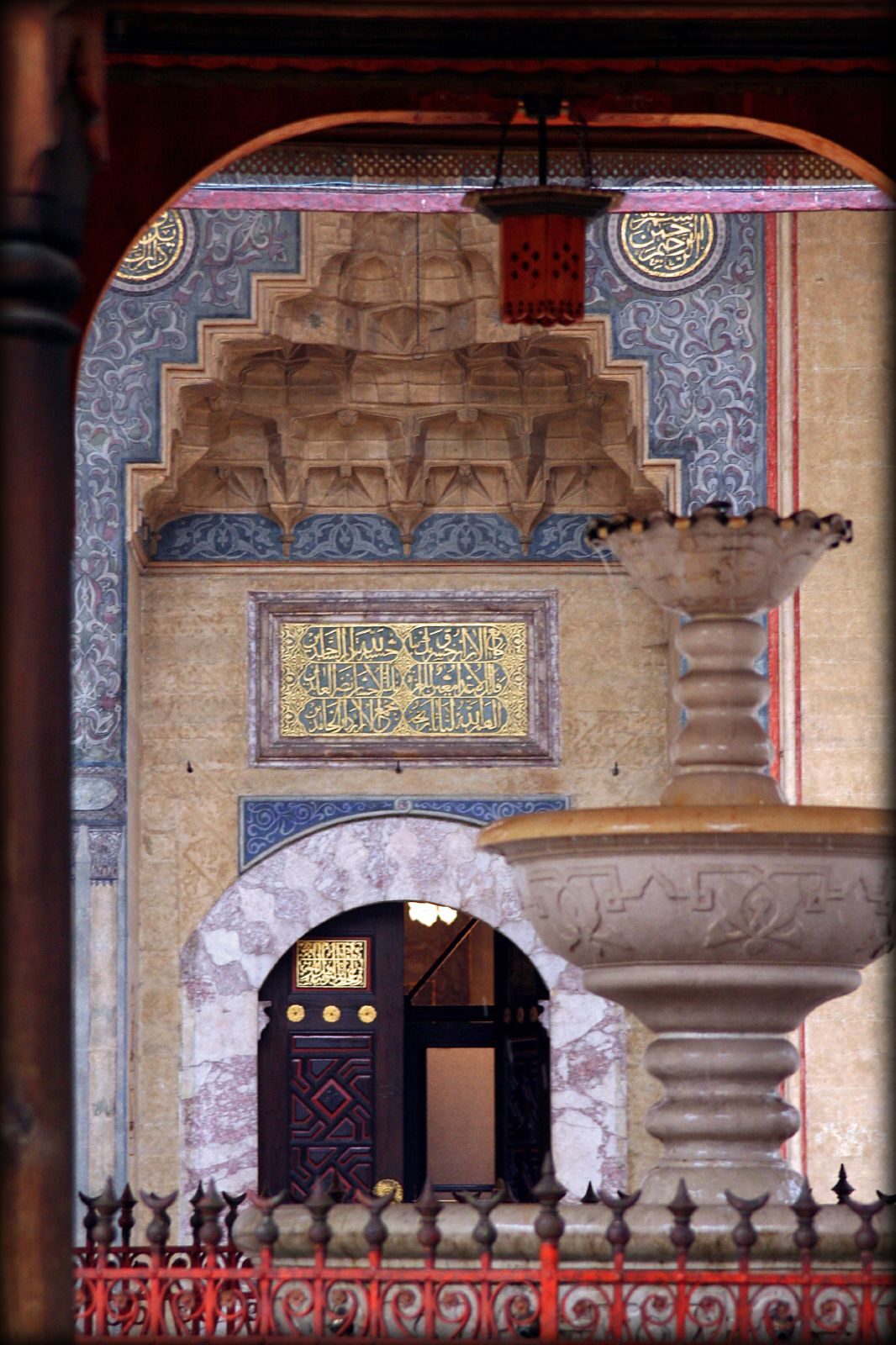
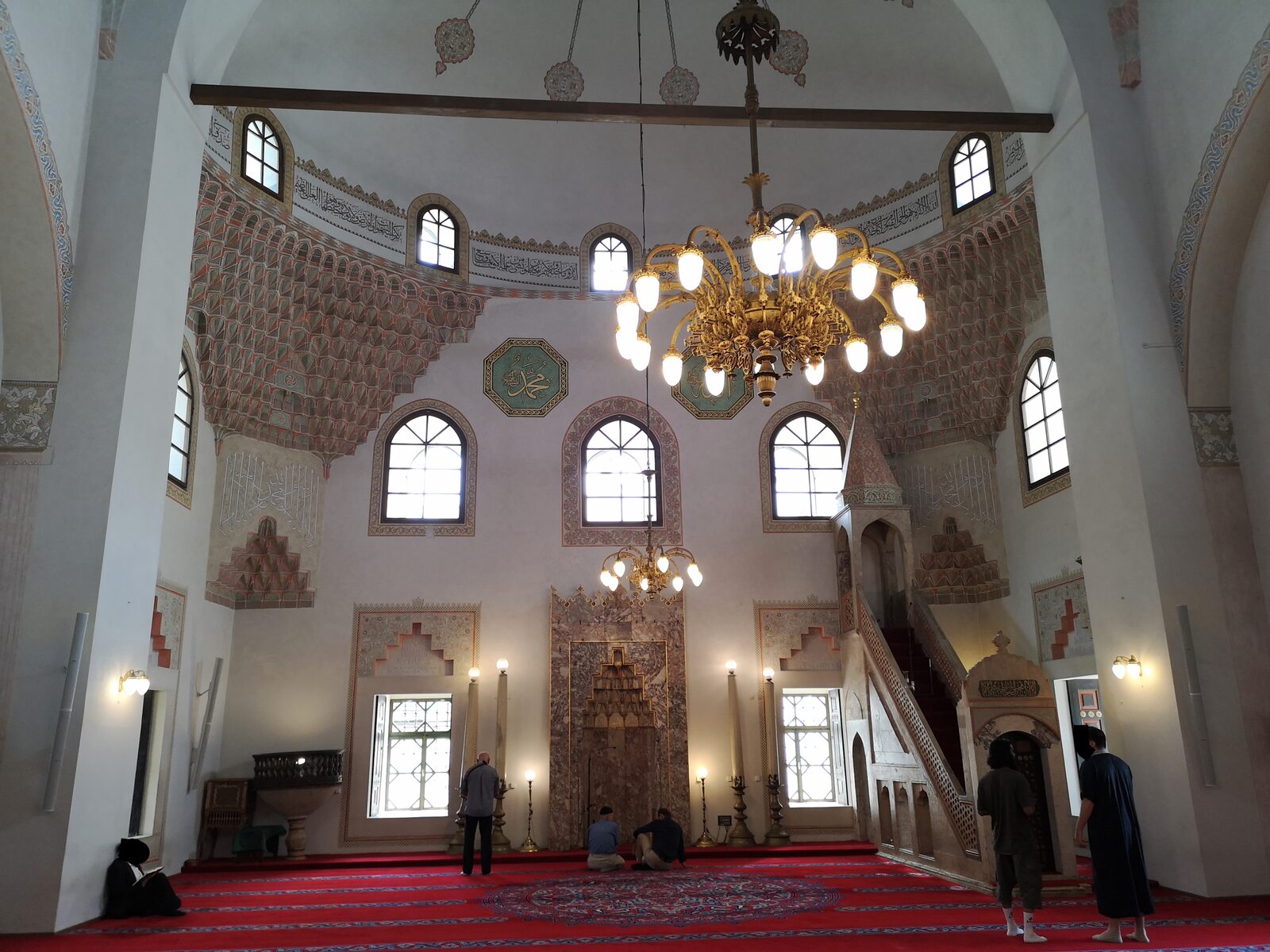
Inside, the prayer hall is calm, generous, and acoustically beautiful. The carpets are deep red, donated and replaced by the community over centuries. The mihrab, the niche pointing toward Mecca, is original 16th-century stonework. The walls and dome were painted with floral and geometric motifs in the Ottoman style, restored in the late 20th century after siege damage. There is a small women’s gallery at the back, raised on columns.
The mosque was damaged during the 1992–1995 siege, with shell hits on the dome and minaret and significant fire damage to the interior. Restoration was carried out in 1996–2000 with funding from international donors and the Bosnian government. The building you see today is structurally repaired and, to the trained eye, still carries traces of the war.
The clock tower
Beside the mosque stands the Sahat-kula, the clock tower of the Gazi Husrev-beg complex. It is one of the few working public clocks in the world still set to à la turca time, counting the hours backward from sunset, in line with Islamic prayer timing. The clock face is reset twice a month to match the changing sunset. The mechanism was originally English, installed in the 17th century.
Look up before you leave the courtyard.
How to visit
Dress modestly. Knees and shoulders covered. Women may be offered a headscarf at the door if needed; men do not need to cover their head. Remove your shoes at the entrance, there is a shelf inside.
The visit takes around 30 minutes if you stay for the architecture. Closer to an hour if you also walk through the courtyard, the bezistan across the street, and the small museum inside the medresa. Combine with the Sebilj, the clock tower, and a coffee at Morića Han a hundred metres east.
Photography is generally fine in the courtyard. Inside, ask the staff first. Do not photograph people praying.
What to take away
The mosque is not on display. It is a working religious building in continuous use for 495 years, generous to visitors as a matter of policy and tradition. The way you behave inside is the way you behave inside any working place of worship: quietly, respectfully, with your phone on silent.
The architecture rewards careful looking. The atmosphere rewards staying ten minutes longer than you planned.
Sources & further reading
More views
From Sarajevo Gazi Husrev-beg Mosque
Photographs: Bjoertvedt · source · CC BY-SA 3.0


Keep wandering
Nearby & related.

Sarajevo Morića Han
A 16th-century Ottoman han (traveller’s inn) on Sarači, the spine street of Baščaršija. Now home to one of the oldest...

Sarajevo Ashkenazi Synagogue
Sarajevo’s working synagogue, built in 1902 in pseudo-Moorish style by the Austro-Hungarian administration for the Jewish community that had grown...

Sarajevo Avaz Twist Tower
The Avaz Twist Tower is Sarajevo’s tallest building (142 metres, completed 2008). A small public observation deck on the 35th...