Sarajevo Olympics — twelve days on mountains that became the front line eight years later
The XIVth Winter Olympics opened in Sarajevo on 8 February 1984 and closed on 19 February. Twelve days. Forty-nine events. The venues sat on the mountains that ring the valley — Trebević, Igman, Bjelašnica, Jahorina. Eight years later, those mountains became the siege front line.
The XIVth Winter Olympic Games opened in Sarajevo on 8 February 1984 and closed twelve days later, on 19 February. Forty-nine events across six sports. 1,272 athletes from 49 nations. For twelve days in February, a mid-sized Yugoslav city of 500,000 people hosted the world and ran the Games without a single scheduling failure. The snow was good, the city was ready, and the opening ceremony at Koševo Stadium — held in a February snowfall that could not have been scripted — became one of the most-photographed moments of the Olympic year.
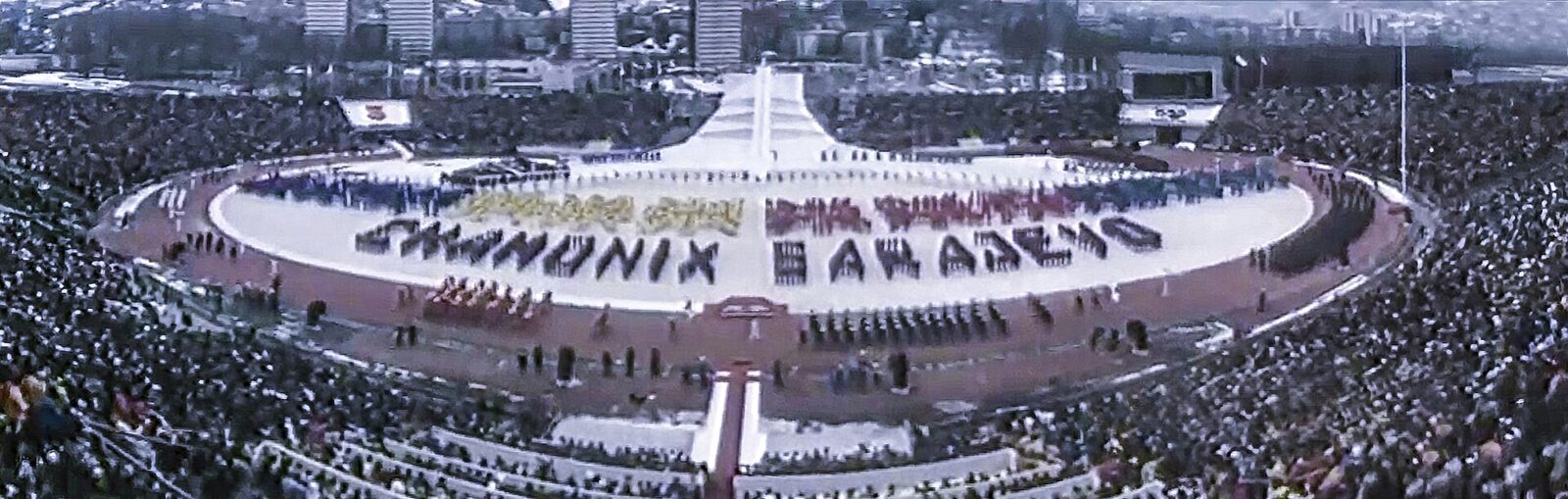

The bid idea had germinated in the late 1960s. In 1968, an OECD report concluded that Yugoslavia could sustain a winter sports industry; by 1971, city and state officials were in contact with the IOC (Pettit, IOC Olympic Studies Centre, 2021). On 18 May 1978, at the IOC session in Athens, Sarajevo beat Sapporo on the second ballot, 39 votes to 36, after finishing one vote behind on the first. Gothenburg was a distant third with ten. Mayor Anto Sucić had pitched Sarajevo’s multicultural character to the IOC — a city where cultures had “creatively met” for centuries — and Prime Minister Vaselin Đuranović pledged full government backing ten days before the vote (Pettit, 2021). It was the only Winter Olympics ever held in a socialist country, and the only Games — winter or summer — held in a non-aligned state, which meant no boycott: both the Americans and the Soviets came. China participated for the first time, ending a boycott of every Olympics since 1954 (Pettit, 2021).
The government spent approximately $189 million (1984 dollars) building the infrastructure — and the Games came in under budget, a rarity that the IOC noticed (Dunkelberger, Historical Dictionary of the Modern Olympic Movement, 1996). The snowflake logo — designed by the Sarajevan graphic artist Miroslav Antonić — became one of the most recognised Olympic brands of the decade.
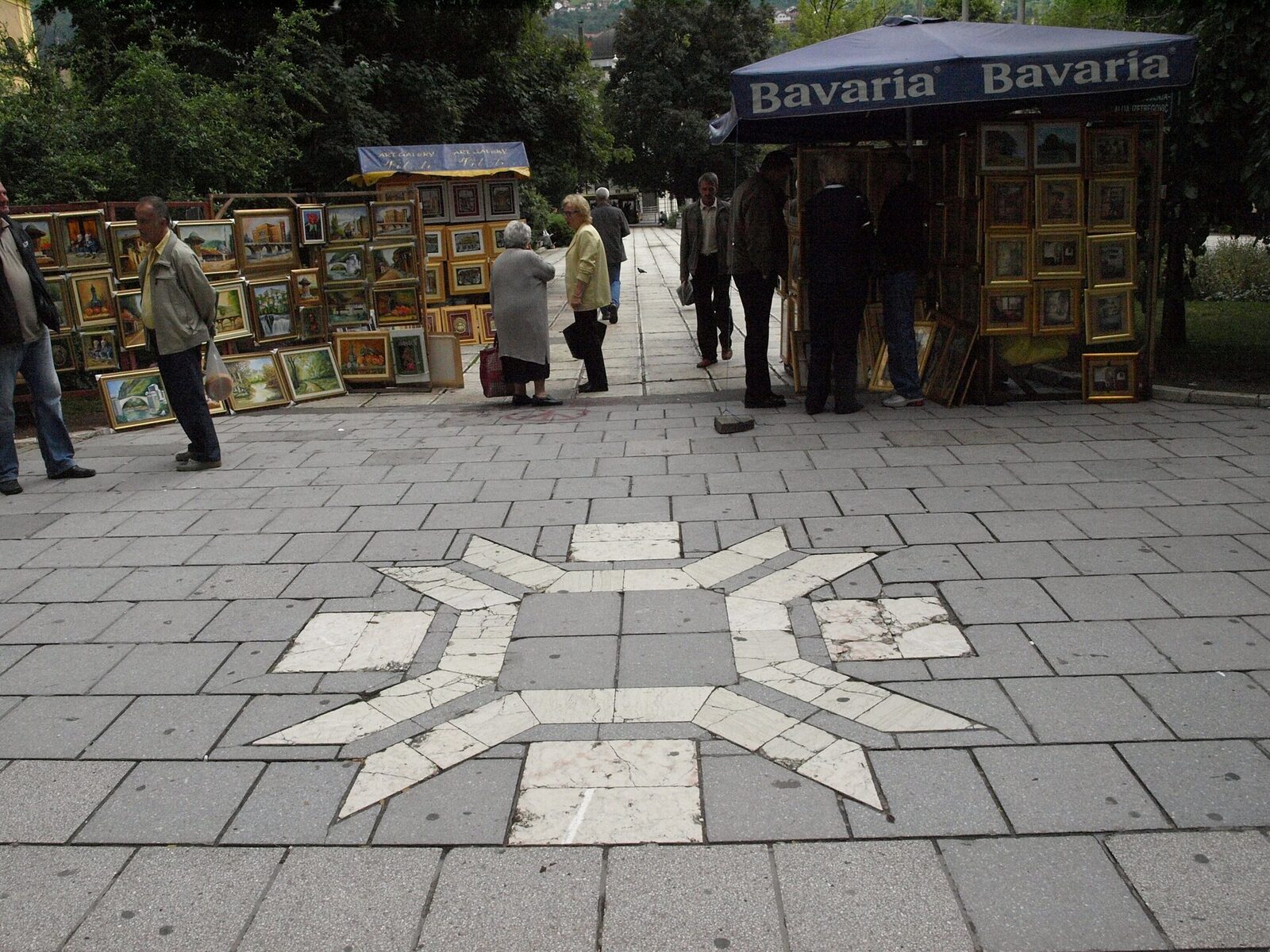

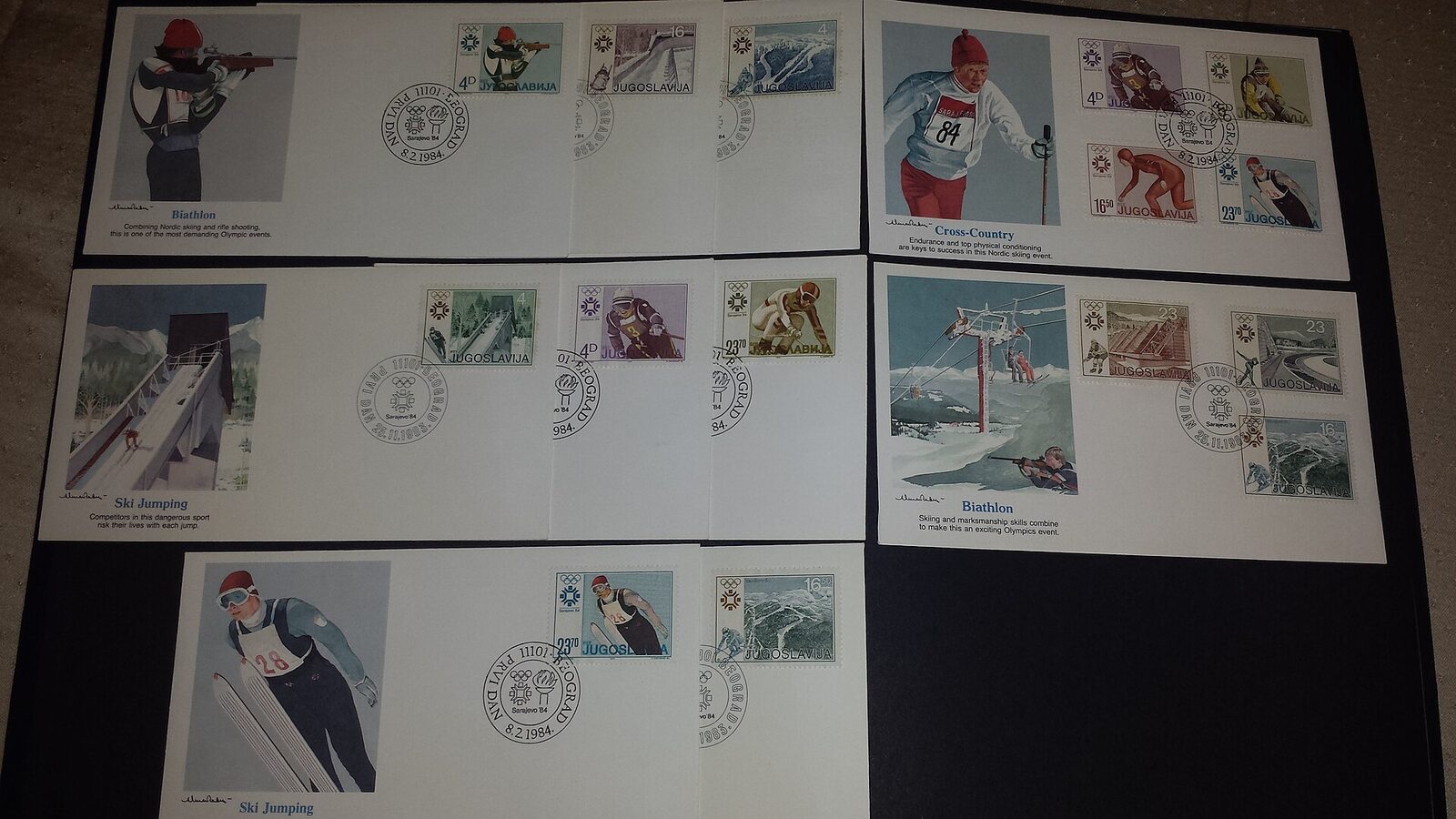
The venues sat on the four mountains that ring the Sarajevo valley — Trebević to the south, Igman and Bjelašnica to the south-west, Jahorina to the south-east — and in the valley itself, at the newly built Zetra Olympic Hall and the Koševo Stadium. Yugoslavia’s postal service issued a First Day Cover set for the Games, each stamp showing an Olympic venue in its original state — the set is now a collector’s item.
.jpg)
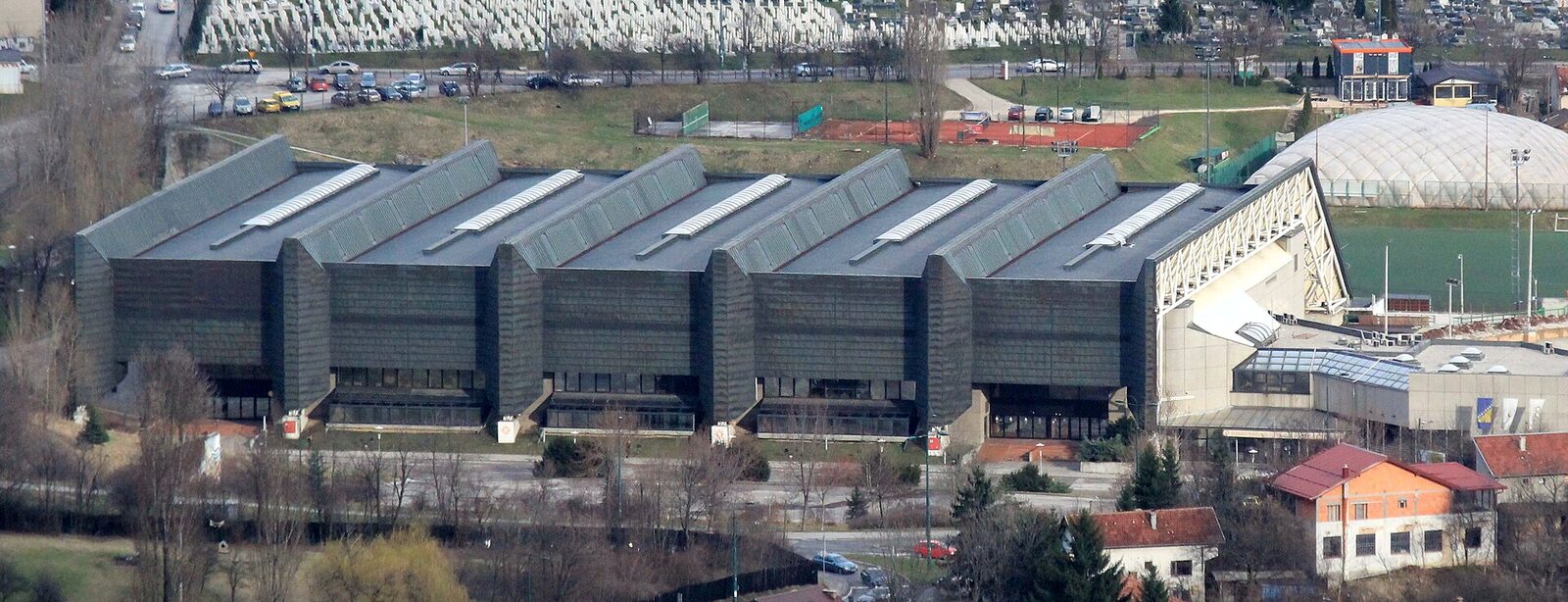
Eight years later, from April 1992, every one of those mountain positions became an artillery site in the siege of Sarajevo. The ski jumps on Igman became sniper positions. The bobsled track on Trebević became a military fortification. Zetra, where Torvill and Dean won gold, became a morgue in 1994 when the city’s cemeteries filled.
The venues are still there. Some are rebuilt, some are ruins, all are visitable. This is the overview.
The twelve days
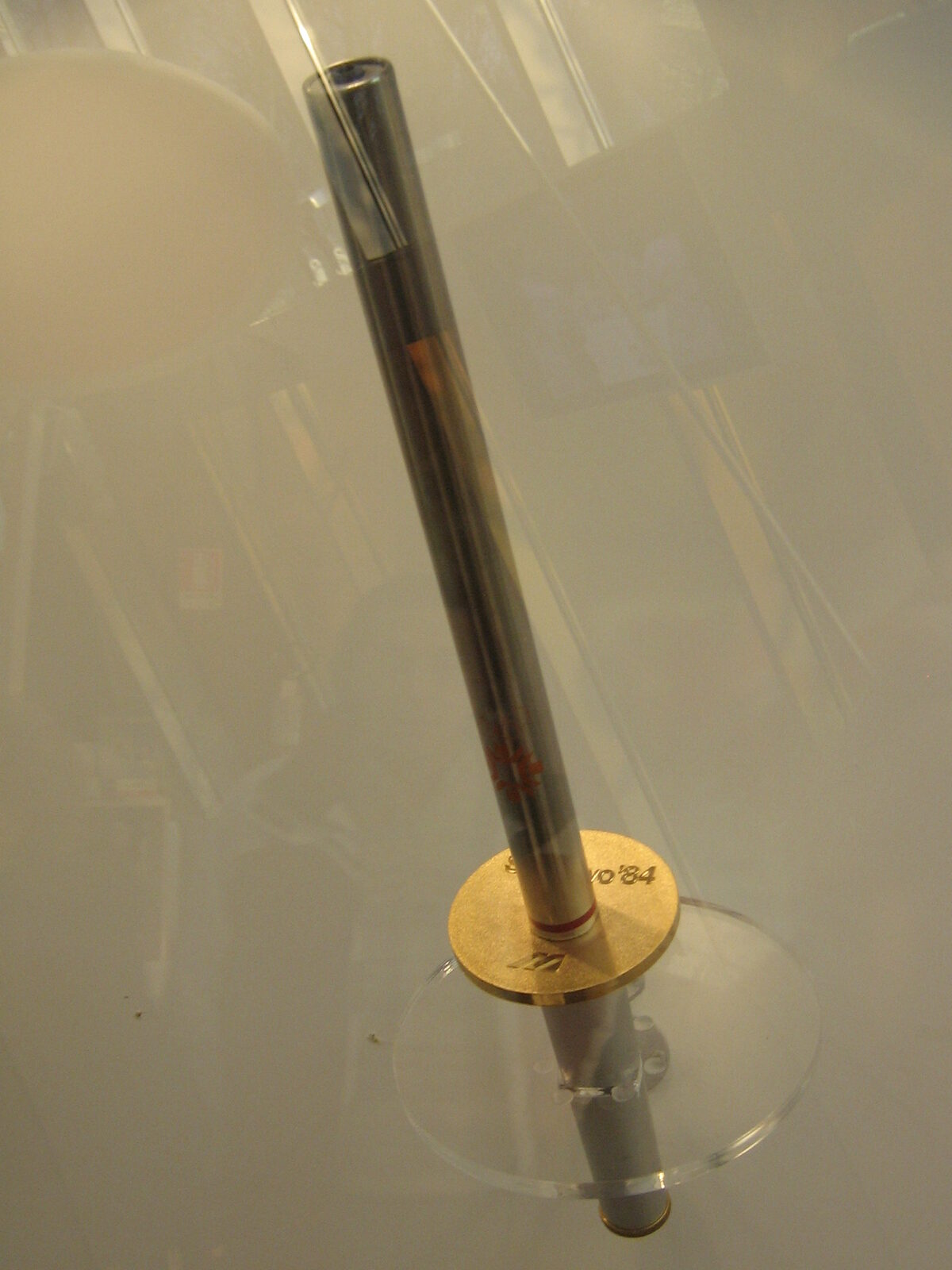

The Games were the largest single organised event in Sarajevo’s Yugoslav history — larger by attendance and infrastructure than the 1978 Non-Aligned Movement Summit. Approximately 400,000 spectators attended live across the twelve days. Global television broadcast reached roughly two billion viewers (IOC official report). At the closing ceremony, IOC President Juan Antonio Samaranch — for whom Sarajevo was the first Winter Games of his presidency — declared them the best-organised Olympic Games to that point (Pettit, 2021). Samaranch returned to the city a year later and told the anniversary audience: “It is true what they say, Sarajevo is different, it is younger. Its cultural, sports and economic development have transformed it into one of the first European cities of this kind” (Samaranch, first-anniversary speech, 9 February 1985, IOC Archives).
The Games’ defining moment was Jayne Torvill and Christopher Dean’s free-dance programme to Ravel’s Boléro on 14 February — Valentine’s Day — at the Zetra Olympic Hall. They received twelve perfect 6.0 scores and won gold. It remains one of the most-watched sporting performances in television history.
Other medallists: Jure Franko (Yugoslav, from Slovenia) won silver in the men’s giant slalom on Bjelašnica on 14 February — Yugoslavia’s first and only Winter Olympic medal. Franko’s silver has been described in the Yugoslav sporting press as the medal that Sarajevo won, on Sarajevo’s mountain, for the entire country. Katarina Witt (East German) won her first Olympic gold in ladies’ figure skating on 18 February. Bill Johnson (American) won men’s downhill on 16 February — the first-ever American Olympic downhill victory. Marja-Liisa Hämäläinen (Finland) took three individual cross-country gold medals on the Igman trails.
The mascot was Vučko the wolf, designed by the Slovenian artist Jože Trobec. Wolves are the largest predator native to the Dinaric Alps around Sarajevo, and the character was chosen to represent, per the design brief, “the spirit of the region and the boldness of a mountain animal.” Approximately 400 commercial licensed products carried Vučko’s image. Trobec’s character-development sketches and the licensing archive are held at the Museum of Modern Art (MAO) in Ljubljana. Sarajevans over forty remember Vučko as the definitive positive image of the pre-war Yugoslav years.

The venues

The Olympic infrastructure spread across the valley and the four surrounding mountains. In the city:
- Zetra Olympic Hall (capacity 8,500) — figure skating, ice hockey, closing ceremony. Designed by the Croatian architect Predrag Krstić, opened 29 June 1983. Severely damaged by shelling in 1992; rebuilt 1999, reopened with a Juan Antonio Samaranch visit. Now hosts concerts, basketball, and the weekly hockey league.
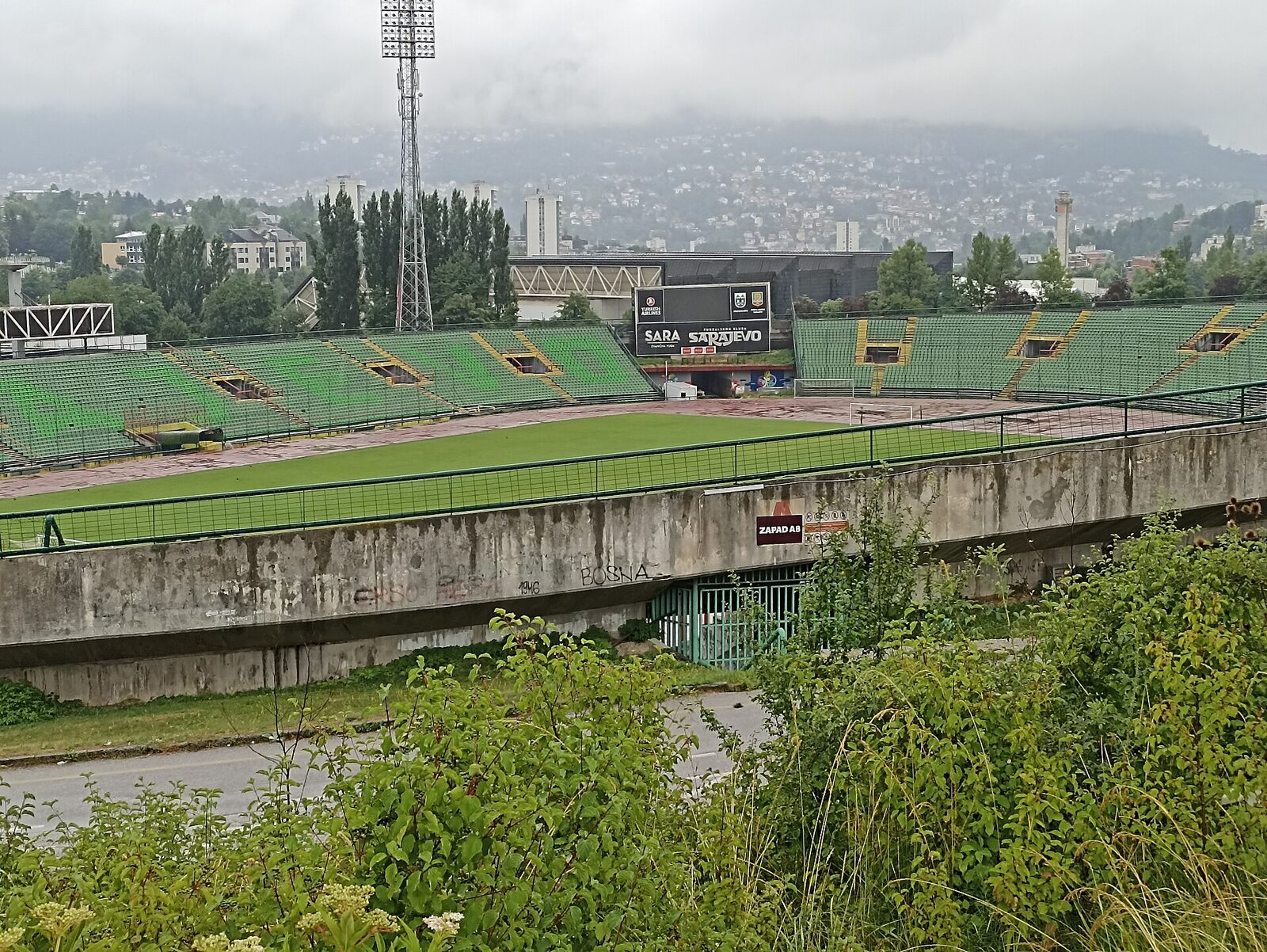
- Koševo Stadium (capacity 37,500) — opening ceremony, held on 8 February 1984 in heavy snowfall. Still the home of FK Sarajevo.
On the mountains:
- Bobsled and luge track, Trebević — 1,300 metres of concrete chute on the north face of Trebević, 7 km from the city centre. Designed by the Sarajevo engineer Kemal Muftić with international specialist consultation. Fifteen curves, vertical drop of 128 metres. Used as a military position during the siege and never repaired. Now the most-photographed Olympic ruin in Europe.
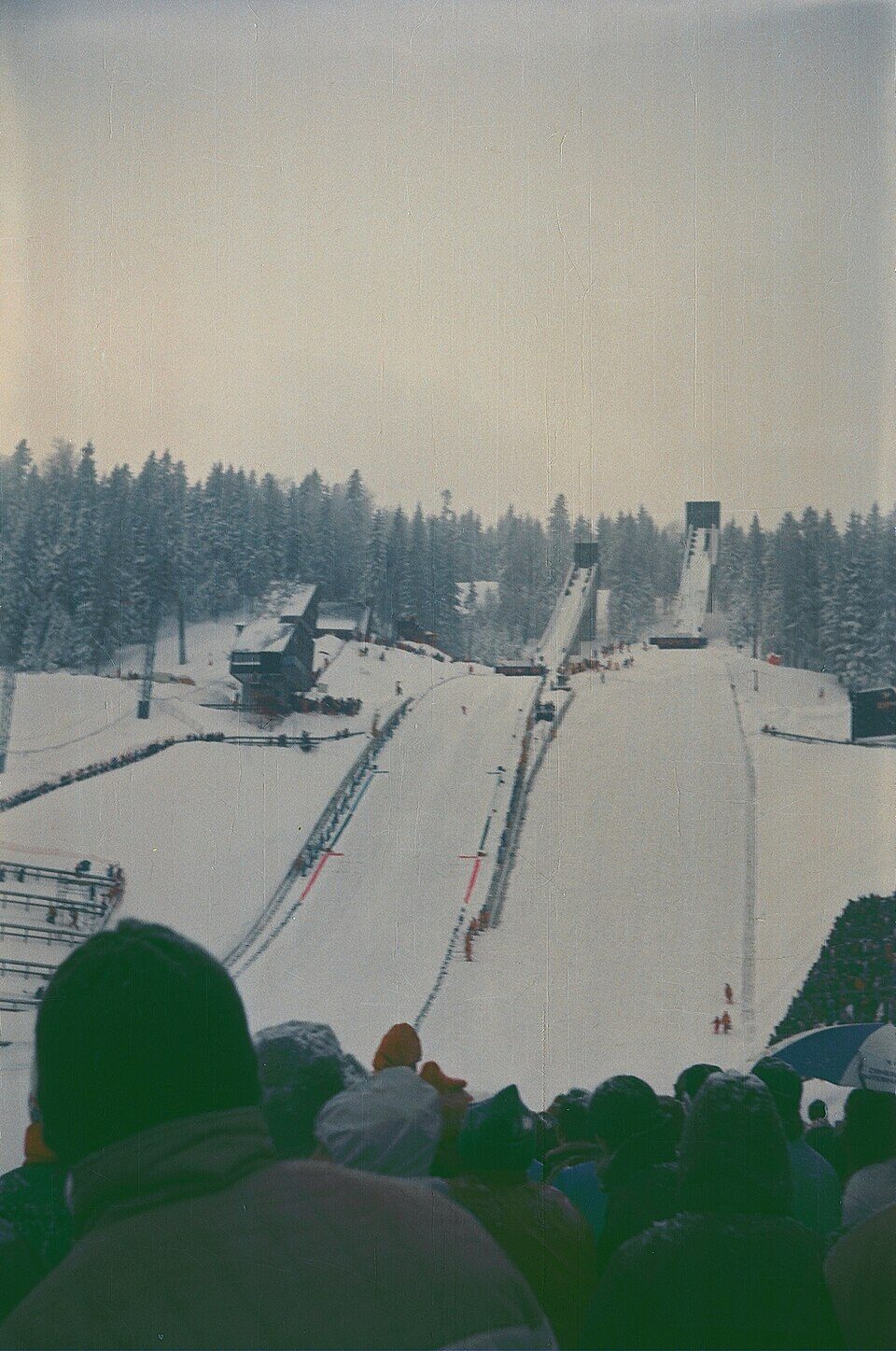
- Igman ski jumps (70 m and 90 m) — two towers on Mount Igman, south-west of the city. The 90 m jump was the venue for Matti Nykänen’s gold. Damaged in the war; partially repaired; the towers still stand.
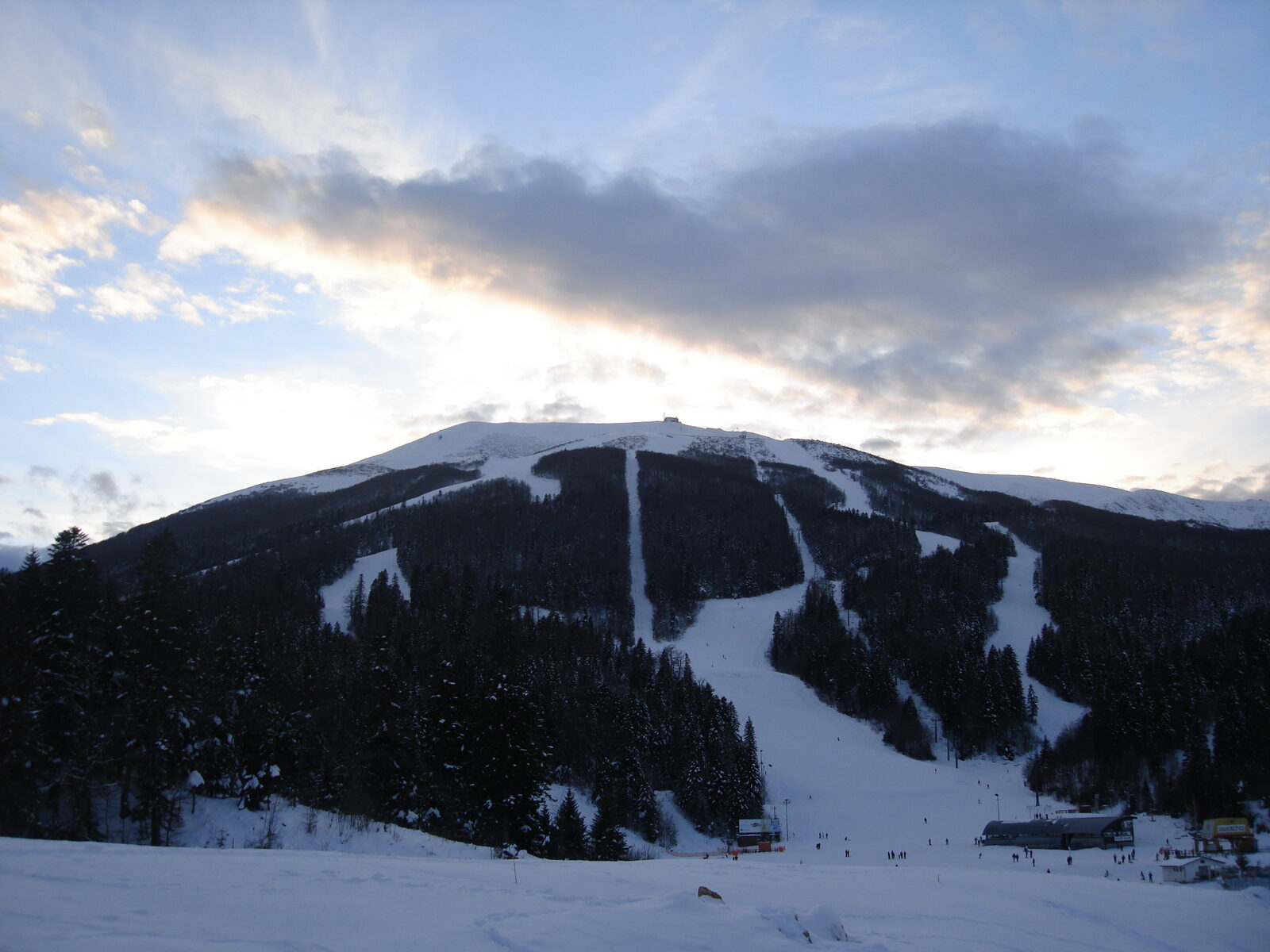
- Bjelašnica Alpine courses — men’s downhill, giant slalom, slalom. Bjelašnica’s summit is 2,067 m. The ski resort is operational year-round — the Olympic pistes are the ones you ski today.
- Jahorina Alpine courses — women’s downhill, giant slalom, slalom. Also operational, about 30 km east of the city.
The bobsled track
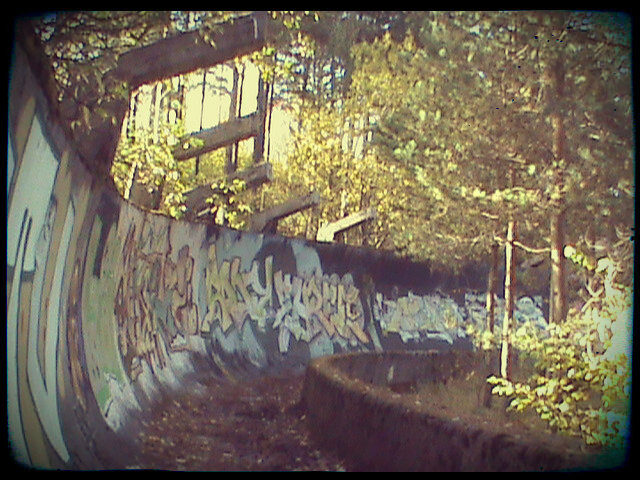

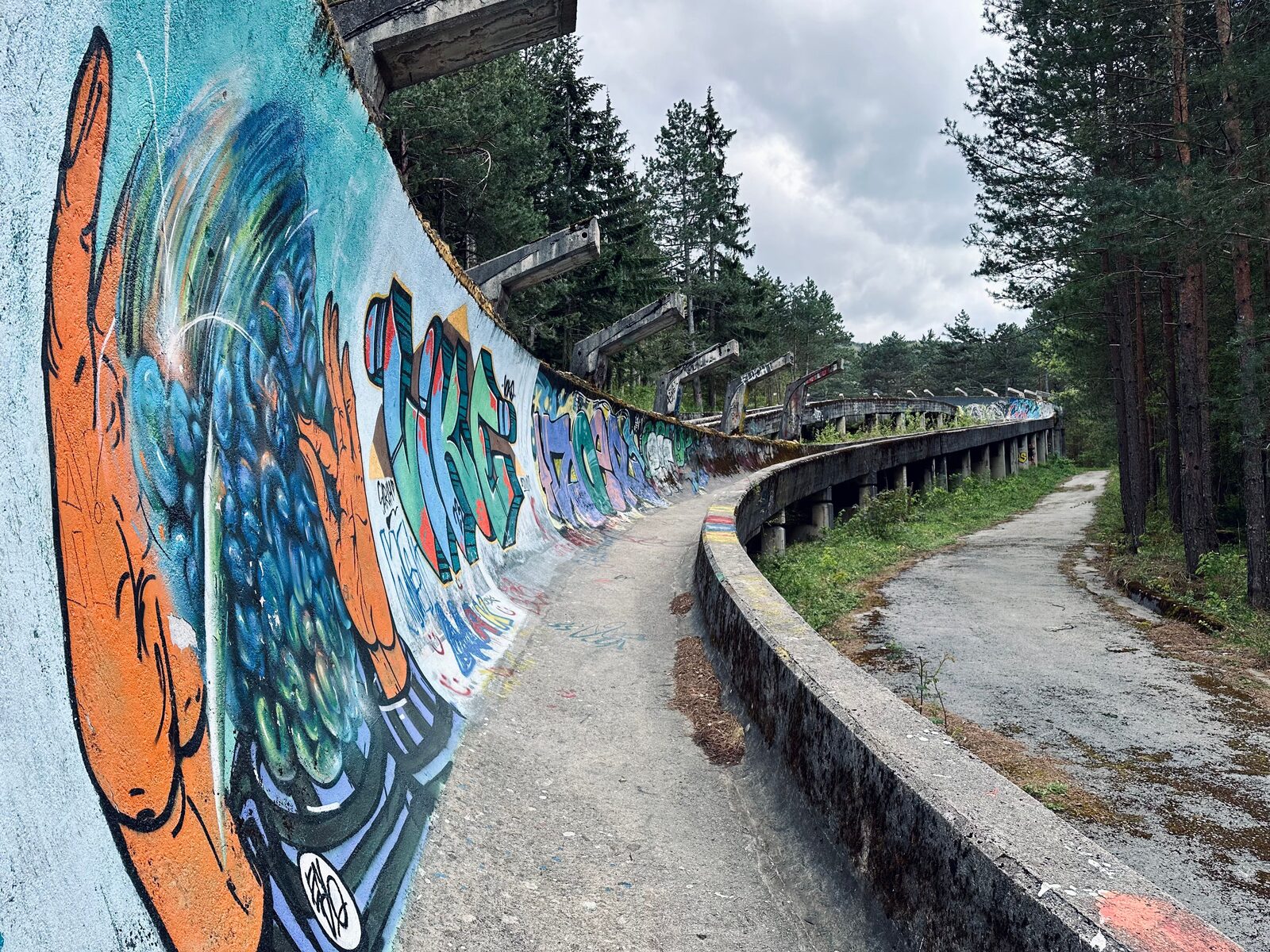
The Olympic bobsled and luge track on Trebević is the venue that defines Sarajevo’s Olympic afterlife. Built 1981–1982, 1,300 metres long, with thirteen curves and a vertical drop of 228 metres. During the siege it served as an artillery position for the Bosnian Serb Army (VRS), which held Trebević’s ridge line. The concrete walls took shrapnel; the timing huts were burned; the vegetation grew back into the chute.
It has never been rebuilt. The city has debated restoration since 2006; nothing has been funded. Instead, the track has become a walk — the kids who slide down it on makeshift sleds are one of the city’s small legends — and one of the most-visited sites in the city.
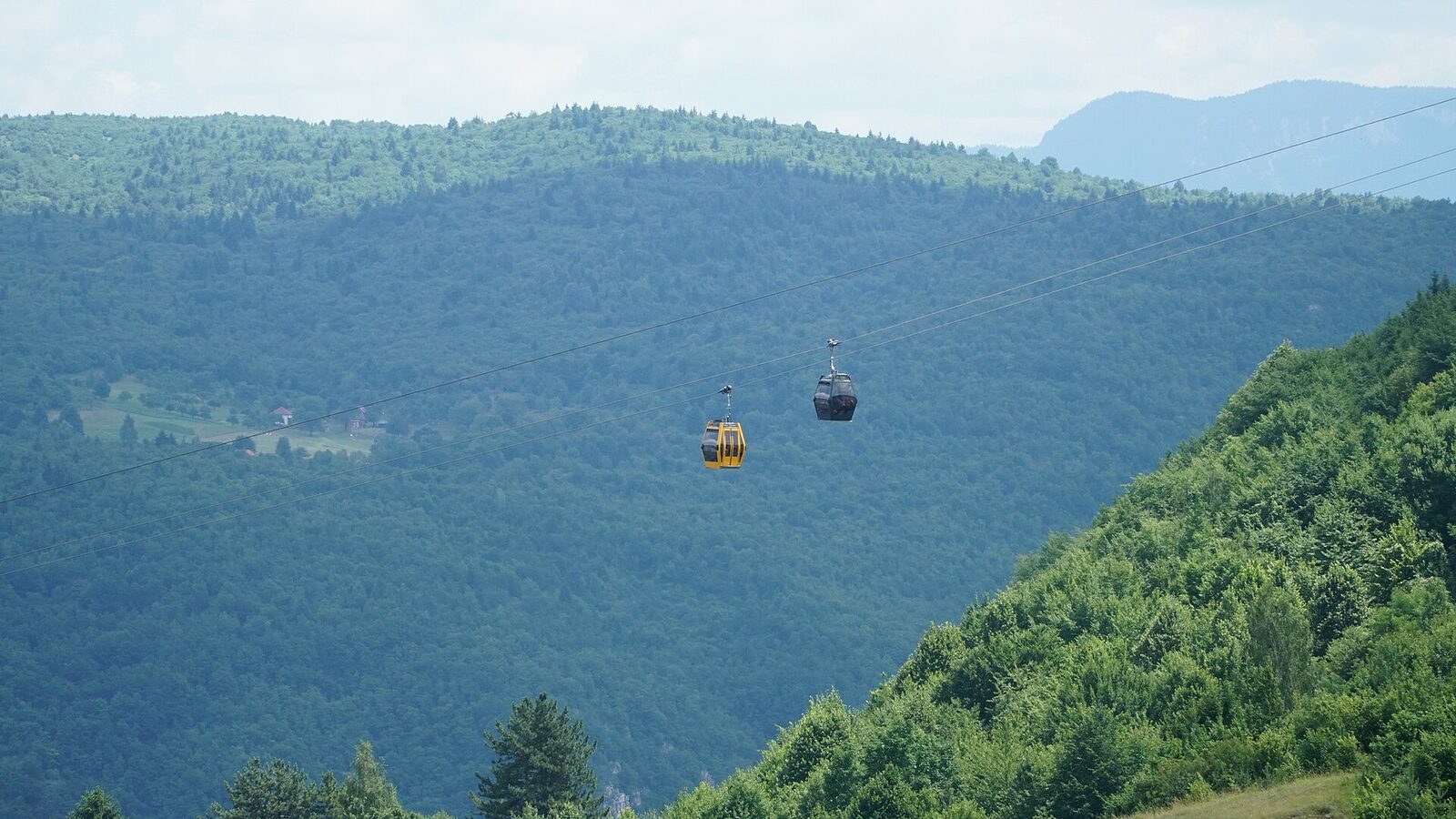
You can reach it via the Sarajevo cable car to Trebević (nine minutes, 30 BAM for foreign visitors) and a thirty-minute walk from the upper station, or by car up the mountain road.
What the siege did to the venues

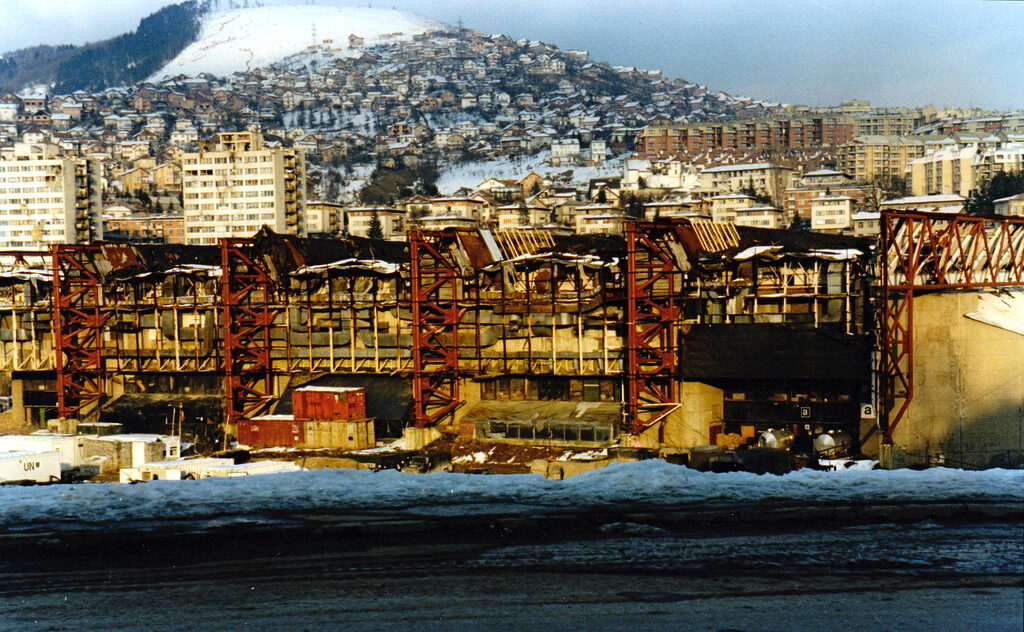

When the siege began in April 1992, the Olympic mountains became the siege ring. The Bosnian Serb Army (VRS) held the high ground — Trebević, Igman (partially), the ridges east and south — and fired down into the valley. The Olympic venues became military infrastructure:
- Zetra was hit by shells repeatedly in 1992–1993. By 1994, with Sarajevo’s cemeteries full, the hall was used as a temporary morgue and coffin-building workshop. It was one of the most photographed images of the siege — gold-medal ice where bodies now lay.
- The bobsled track became a VRS fortification. Its concrete walls provided ready-made cover.
- The Igman ski jumps sat in contested territory. The access road over Igman was the only land route into the city not controlled by the VRS — the same road the UN convoys used.
- Bjelašnica and Jahorina were held by the VRS for most of the siege. The ski lifts were destroyed.
- The cable car from the city to Trebević was destroyed in the first months of the war and did not reopen until 6 April 2018 — twenty-six years later.
The gap between gold medals and artillery positions was eight years. The gap between artillery positions and the cable car’s reopening was another twenty-six.
What the Olympic memory did during the war
The memory of 1984 was not passive. Almost immediately after the shelling began, appeals flooded into IOC President Samaranch’s office invoking the Games. On 17 April 1992 — eleven days into the siege — Sarajevo Mayor Muhamed Kresevljaković wrote to Samaranch asking him to help stop “the barbaric destruction of the Olympic City of Sarajevo.” In a second letter, dated 26 April, Kresevljaković made a direct appeal to the Olympic memory: “After the Olympic Games Sarajevo was accepted by the world as its own, City of friendship and joy. Unfortunately, nowadays some people who hate this city and state of Bosnia and Herzegovina want to destroy everything that was built with love in the last 500 years” (Pettit, IOC Olympic Studies Centre, 2021, citing IOC Historical Archives, Lausanne).
The IOC responded with three concrete actions:
- Humanitarian aid. The IOC worked with the Swiss Red Cross to send over $8 million in aid. The first convoy in July 1992 included sixty-four tonnes of food and sanitary items packed into 3,750 family packs. The Lillehammer Organizing Committee established the Olympic Peace Fund and raised close to $4 million for Sarajevo siege victims — Norwegian schoolchildren held auctions and cake lotteries to contribute (Pettit, 2021).
- Symbolic solidarity. In October 1992, eight North American Olympic cities simultaneously raised the Olympic flag at their city halls. In 1994, Olympic and Paralympic athletes initiated the Peace Flame Project, traveling to Sarajevo to light a flame symbolising the Olympic spirit. And at the Lillehammer 1994 opening ceremony, Samaranch made an unprecedented public plea from the podium: “Please stop the fighting. Stop the killing. Drop your guns” (Pettit, 2021).
- Rebuilding Zetra. The effort to plan the rebuilding began as early as 1992, when the Sarajevo city council established a Board of Rebuilding Olympic Facilities. The IOC ultimately committed $11.5 million — approximately 85% of the total $14 million cost — to reconstruct the Zetra Olympic Hall. Work started as soon as the siege ended in 1995 and the hall reopened in 1999 (Pettit, 2021). In 2010, the city renamed it the Juan Antonio Samaranch Olympic Hall in honour of the former IOC president.
The IOC’s 2024 official rating, long after the siege, was that the Sarajevo Games remained “among the technically most successful Winter Olympics of the twentieth century” — a judgment worth noting because it names, in institutional language, what everyone who was in Sarajevo in February 1984 already knew.
What you can see today


Every Olympic venue is visitable. The state of each:
- Zetra Olympic Hall — fully rebuilt, open, hosting events. The interior was reconstructed in 1999 with international funding. A plaque at the entrance names the 1984 Games.
- Bobsled track — an open ruin, free to walk. The cable car to Trebević is the most common approach. Graffiti artists have painted the chute walls in layers since the early 2000s; the result is one of the more distinctive open-air galleries in Europe.
- Igman ski jumps — standing, partially repaired. Accessible by car from the Igman road (the same road the UN convoys used during the siege).
- Bjelašnica — operational ski resort. The Olympic hotel on the summit has been rebuilt. A day-trip from Sarajevo (40 minutes by car, no public transport to the summit).
- Jahorina — operational ski resort, the better-maintained of the two. More developed infrastructure than Bjelašnica; shuttle services run from the city in winter.
- Koševo Stadium — operational, home of FK Sarajevo. Unremarkable as an Olympic site — it looks like a mid-sized European football ground — but the opening-ceremony location is marked.
The distance from the Sebilj in Baščaršija to the bobsled track is about 7 km and a cable-car ride. The distance to the Olympic ice hall is about 2 km and a tram ride. A dedicated Olympic-venues day covers Zetra in the morning, the cable car and bobsled track after lunch, and — if you have a car — the Igman jumps by late afternoon.
Sources
- Andrew Pettit, Remembering Sarajevo: Olympic Memory, Justice, and Legacy During and After the Bosnian War, 1992–1999 (Final report for the IOC Olympic Studies Centre PhD Grant Programme, Western University, Canada, December 2021). The primary source for the IOC’s response to the siege, the bid history, Samaranch’s speeches, the Zetra rebuilding, and the Lillehammer solidarity campaign. Based on five archival fonds at the Olympic Studies Centre in Lausanne.
- Robert Dunkelberger, “Sarajevo 1984,” in The Historical Dictionary of the Modern Olympic Movement, ed. John E. Findling and Kimberly D. Pelle (Westport, CT: Greenwood Publishing, 1996), 302–304. Bid history, budget, and the IOC’s rationale for selecting Sarajevo.
- 1984 Winter Olympics — Wikipedia. General Games statistics (athlete count, event count).
- Robert J. Donia, Sarajevo: A Biography (Ann Arbor: University of Michigan Press, 2006). Siege-era repurposing of Olympic venues.
- Ivan Štraus, Arhitektura Jugoslavije 1945–1990 (Sarajevo: Svjetlost, 1991). Chapter on Sarajevo Olympic infrastructure.
- Peter Maass, Love Thy Neighbor: A Story of War (New York: Vintage, 1996). Coverage of the Holiday Inn and Olympic infrastructure during the siege.
- Sarajevo City Museum, exhibition on the 1984 Games at the History Museum branch.
Sources & further reading
- Andrew Pettit, 'Remembering Sarajevo: Olympic Memory, Justice, and Legacy During and After the Bosnian War, 1992–1999' (IOC Olympic Studies Centre, Western University, 2021)
- 1984 Winter Olympics — Wikipedia
- Related on this site: Winter on Bjelašnica
- Related on this site: The kids who still slide down the Olympic ruin
- Related on this site: Zetra opened in 1983
Keep reading
More from the guide.

Sarajevo — yes it's the capital, and the name literally means 'the place around the palace'
The short answer: yes, Sarajevo is the capital of Bosnia and Herzegovina. The longer answer is worth reading. The city was founded...

Sarajevo siege — 1,425 days, and how to read the marks it left on the city
The Siege of Sarajevo lasted 1,425 days, from 5 April 1992 to 29 February 1996, making it the longest siege in modern...

Sarajevo — how Henri Moser sold it to Victorian Britain
Before 1914, upper-class British tourists visited Bosnia, not despite its ‘Oriental’ character but because of it. The country was branded to them...