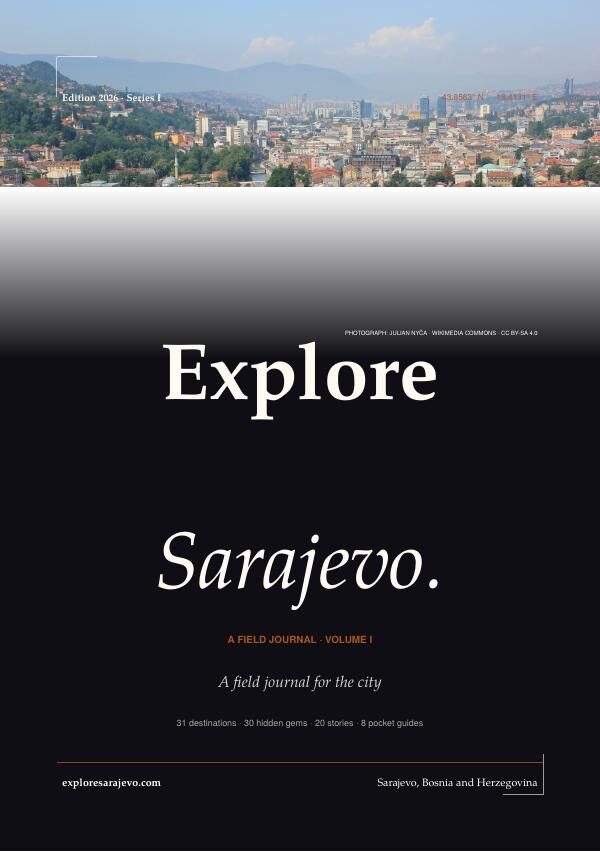
Explore Sarajevo / Destinations / Sarajevo Kovači Cemetery
Destination · Vratnik · 4 min read
Sarajevo Kovači Cemetery
The shahid memorial above Vratnik. White stones in tight ranks, the city below, and Alija Izetbegović buried among the soldiers he sent to war.
- Established
- 1992


At a glance
Address
Kovači, Vratnik
Hours
Always accessible
Price
Free
Getting there
12 minutes' walk uphill from Sebilj. Minibus 51, 52, 55 to Vratnik.
Time needed
30–45 minutes
Best time
Late afternoon, in any season
Coordinates
43.8614° N 18.4356° E
Navigate
Above Vratnik, where the cobbled streets of the old residential city begin to ease into the slope of Trebević, a steep field of white stone runs down the hillside in tight ranks. This is Šehidsko mezarje Kovači, the Kovači Martyrs’ Cemetery, the principal burial ground of the Sarajevans killed defending the city during the 1992–1996 siege.
Most of the names on the stones are young. Many are nineteen.
What it commemorates
The siege of Sarajevo lasted 1,425 days. By the end of it, 11,541 of the city’s residents were dead — 5,434 civilians and 6,107 combatants defending the city, per the ICTY record — including 1,601 children, with around 56,000 wounded. Some of the dead are buried in family plots across the city, in the older cemeteries that ring the centre. The largest concentration, however, is here at Kovači, soldiers of the Bosnian Army and civilians killed during the defence, interred together in the months and years from 1992 onward.
The cemetery was consecrated as a formal šehidsko mezarje (martyrs’ cemetery) during the war itself, and continued to be used through the 1990s. It now holds more than 1,000 graves.
The white stones are uniform. Slim, pointed, slightly tapered. Each carries a name and two dates, the second almost always between 1992 and 1996, the first almost always between 1971 and 1975. The arithmetic is unavoidable.
Alija Izetbegović
At the upper edge of the cemetery, in a small landscaped plot, sits a modest stone obelisk shaded by an open-sided lattice dome. This is the grave of Alija Izetbegović (8 August 1925 – 19 October 2003), the first president of independent Bosnia and Herzegovina, and the political figure most closely associated with the country’s survival of the 1990s war. He served as supreme commander of the Army of the Republic of Bosnia and Herzegovina from 1992 to 1996, stepped down from the presidency in October 2000, and died three years later of heart disease complicated by injuries from a fall. He was buried here by his own request, alongside the soldiers he had led.
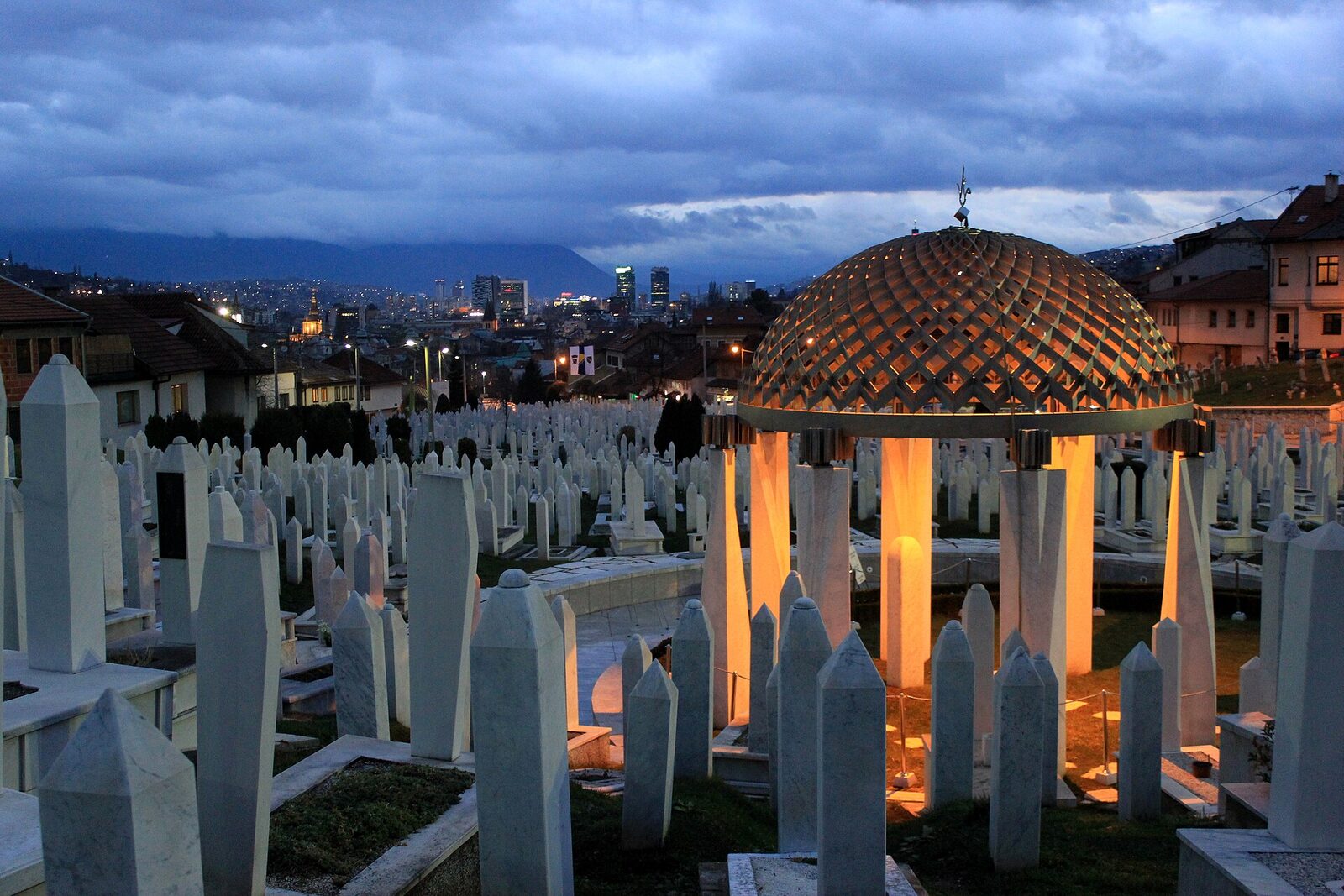

The gravesite was badly damaged by a bomb on 11 August 2006. The perpetrator was never identified. The damage was repaired. The political weight of the gesture, on either side, has not entirely faded.
The grave itself is deliberately modest. No statue. No tomb. A small inscribed stone, the dome over it, a few benches nearby. Most visitors stay a minute or two. The view back down across the cemetery, with the city behind it and Trebević on the far ridge, is the part of the visit that takes longer.
The Alija Izetbegović Museum
Just downhill from the cemetery, the Alija Izetbegović Museum occupies the old Ploča Gate, one of three surviving 18th-century fortified towers on the Vratnik defensive walls (built 1727–1739 under governor Ahmed-paša Rustempašić Skopljak, after Prince Eugene of Savoy’s 1697 raid on Sarajevo). The museum opened on 19 October 2007, exactly four years after Izetbegović’s death.
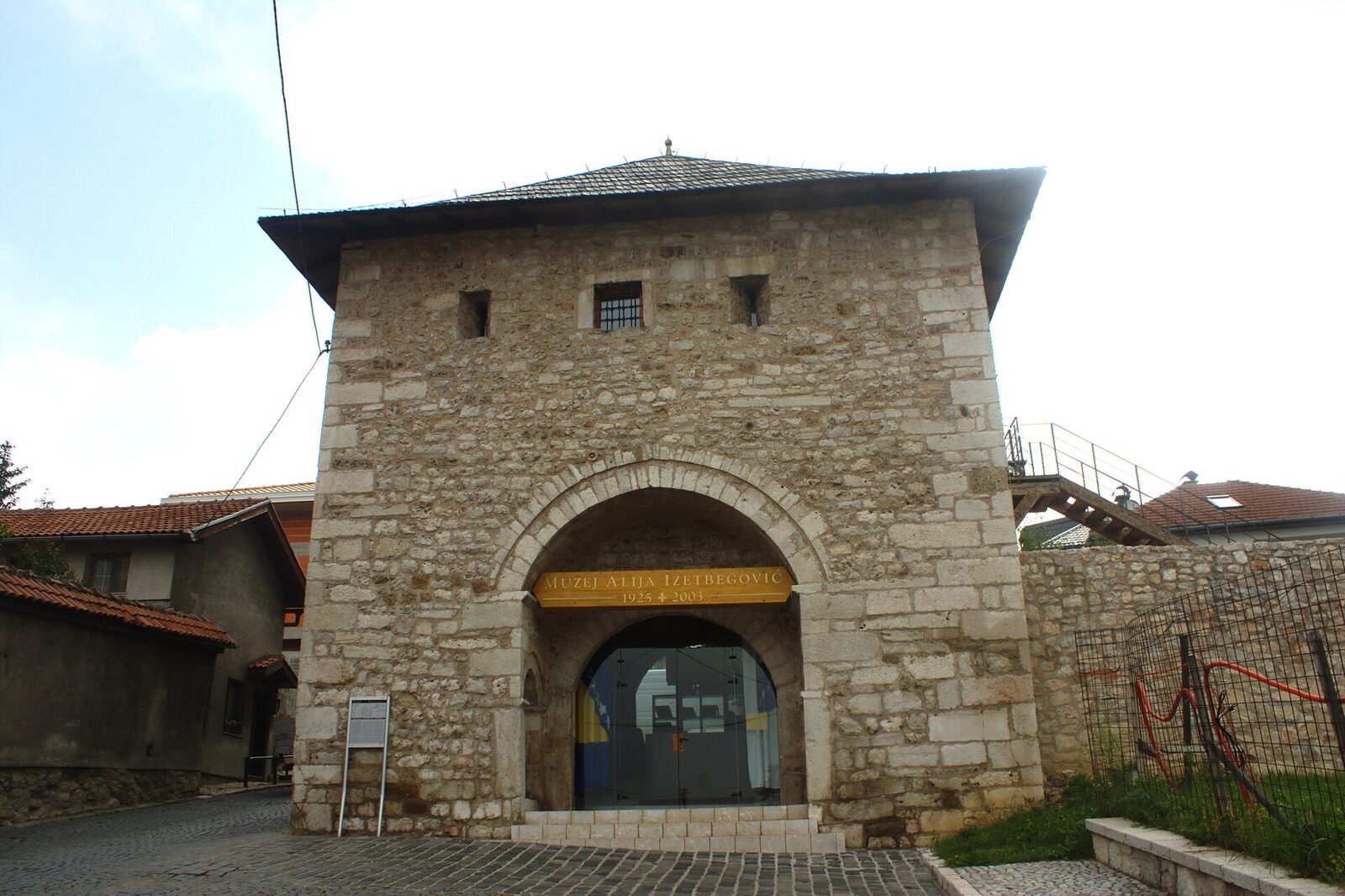

It is small. Personal documents, family photographs, his presidential robes, and a few of the books from his prison years under socialist Yugoslavia — he was jailed twice, first in 1946 (three years, for the Young Muslims association) and again in April 1983 (initially fourteen years, reduced to twelve, pardoned in 1988 after almost five). The captions are sober, in Bosnian and English. An hour is plenty.
It is the right pairing with the cemetery if you want both the person and the consequence.
How to use the visit
The cemetery is always open, with no entrance fee. It is consecrated Muslim ground. Dress respectfully, shoulders and knees covered is the safe default. Keep voices low. Do not photograph individual graves with names visible without thought; many families still visit.
The walk up from the Sebilj takes about twelve minutes through the residential streets of Vratnik, along Kovači street. The route is signposted in Bosnian; if uncertain, ask for Kovači or šehidsko mezarje and any local will point. Combine with Žuta Tabija, the Yellow Fortress, two minutes further uphill, particularly if you arrive an hour before sunset.
Take the time. The cemetery’s geometry is the answer to the question the rest of the city asks more quietly, in the red-resin Sarajevo Roses set into the pavement of central Baščaršija: what did the siege cost? Walk slowly. Read the dates. Then walk back down through Vratnik in the evening light.
Sources & further reading
- Alija Izetbegović (1925–2003) — Wikipedia (dates, imprisonments, grave, 11 August 2006 bombing)
- Vratnik (Sarajevo) — Wikipedia (defensive walls 1727–1739; Ploča Gate transformed into Alija Izetbegović Museum, opened 19 October 2007)
- Related on this site: Sarajevo siege — 1,425 days
- Alija Izetbegović Museum — Destination Sarajevo
Keep wandering
Nearby & related.

Sarajevo Žuta Tabija
An 18th-century Ottoman bastion on the hill of Jekovac, above the bazaar. During Ramadan a small cannon fires here at...

Sarajevo Ashkenazi Synagogue
Sarajevo’s working synagogue, built in 1902 in pseudo-Moorish style by the Austro-Hungarian administration for the Jewish community that had grown...

Sarajevo Avaz Twist Tower
The Avaz Twist Tower is Sarajevo’s tallest building (142 metres, completed 2008). A small public observation deck on the 35th...