Sarajevo has been on UNESCO's Tentative List for 30 years — and still isn't inscribed
Twenty-nine years ago, the Bosnian Institute for the Protection of Cultural Heritage submitted Sarajevo as a candidate World Heritage Site under criterion (v). The submission title, in its own English translation, was 'Sarajevo, unique symbol of universal multiculture, continual open city.' Bosnia and Herzegovina has not yet moved the nomination forward. A short guide to what the 1997 submission actually claimed, and why the city is not, in fact, a UNESCO World Heritage Site.
Journalists writing about Sarajevo describe the city, with regularity, as UNESCO-listed or UNESCO-protected. Neither claim is correct. Sarajevo is not on the World Heritage List. It has been, since 1 September 1997, on the Tentative World Heritage List, the candidate roster from which countries eventually push nominations forward for the full inscription. Twenty-nine years of tentative status is unusual, though not unheard of. And the submission itself is worth reading.
The dossier was filed by the Institute for the Protection of Cultural, Historical and Natural Heritage of Bosnia and Herzegovina, the same institution that would, twenty-one years later, submit the Old Jewish Cemetery (see our story on the cemetery). Its UNESCO reference number is 906. It cites criterion (v), an outstanding example of a traditional human settlement representative of a culture, especially when it has become vulnerable under the impact of irreversible change. Some earlier drafts also cited criterion (vi) for the continuity of cultural traditions.
The English title, translated word-for-word from the original Bosnian, reads a little awkwardly: Sarajevo, unique symbol of universal multiculture, continual open city. That title is the reason it does not appear near the top of English-language searches for World Heritage candidates. Reads like a marketing tagline. What the dossier actually claims is more interesting than the title suggests.
What the 1997 dossier argues
The nomination does not claim a single building. It claims the whole city as a piece of heritage.
The core argument, paraphrased in editorial English: Sarajevo is an example of urban pluralism as a lived practice, rather than a single monument. The city’s Ottoman core (1462–1878), Habsburg extension (1878–1918), interwar Yugoslav layer (1918–1941), and socialist expansion (1945–1991), all layered on the same narrow east-west valley within a five-kilometre walk, are the outstanding thing. The Vijećnica alone is a Habsburg municipal building. The Gazi Husrev-beg complex alone is an Ottoman mosque compound. Both together, and in their relationship to each other and to the Miljacka valley they sit in, are what makes Sarajevo Sarajevo.
The dossier locates the nominated area at approximately 43°51′11″ – 43°52′ N, 18°24′46″ – 18°27′4″ E, the central historical grid, from Baščaršija in the east to Marijin Dvor in the west, along both banks of the Miljacka.
The case for criterion (v) rests on three claims:
The linear-radial urban layout, radiating from the Miljacka outward, is legible across the four historical periods. Each empire and each state that governed the city added new fabric outward without erasing what was already there. The city grew by extension, not by demolition. You can measure it on the ground: the ratio of pre-1878 to post-1878 building stock is roughly preserved. The Ottoman quarter survives at approximately its 1878 extent.
The side-by-side worship spaces of four religions, Sunni Islam, Sephardic and Ashkenazi Judaism, Serbian Orthodoxy, Roman Catholicism, are all within a fifteen-minute walk. Baščaršija has, within a single square kilometre, the Gazi Husrev-beg Mosque (1531), the Old Orthodox Cathedral (16th century), the Old Sephardic Synagogue (1581), and the Ashkenazi Synagogue (1902). The Roman Catholic Sacred Heart Cathedral is a few hundred metres west. That spatial compactness of religious plurality is the concrete evidence for the multiculture claim.
The vegetation of the seven hills that carry the city, Trebević, Vraca, Igman, Bjelašnica, Jahorina, Kozija Ćuprija, and Grdonj, is carried into the urban grid itself. Green interrupts stone. That is the garden-city-avant-la-lettre aspect the dossier emphasises. Sarajevo does not have a formal Central Park. It has forty small parks distributed through the neighbourhoods.

What UNESCO’s Tentative List actually is
The World Heritage List proper contains, at the time of writing, about 1,200 inscribed sites. Getting onto it is a multi-year, expensive process. A country must first place a candidate on the Tentative List, the roster of sites the country intends to nominate. Sitting on the Tentative List does not confer any UNESCO protection, funding, or formal status. Just a queue.
Countries move nominations from the Tentative List to full inscription at their own pace. Some move within a few years. Some sit for decades. No penalty for staying tentative. No active preservation obligation either.
Bosnia and Herzegovina has, in the twenty-nine years since 1997, not moved the Sarajevo nomination forward. The country has moved other nominations forward in the same period: the stećci medieval tombstones (our stećaks story) were inscribed in 2016, the Mostar Old Bridge and Old City in 2005, the Sarajevo Haggadah on the Memory of the World register in 2017. Those were smaller, more concrete inventories. The whole-city Sarajevo submission is harder to advance because it requires the state to define the exact boundaries of the historic city, to accept binding conservation restrictions on all buildings inside the boundary, and to fund a management plan. All three are politically expensive under the Dayton constitutional arrangement.
Meanwhile, three other Sarajevo entries on UNESCO’s various registers are, in fact, inscribed. Do not confuse them with the Tentative List entry:
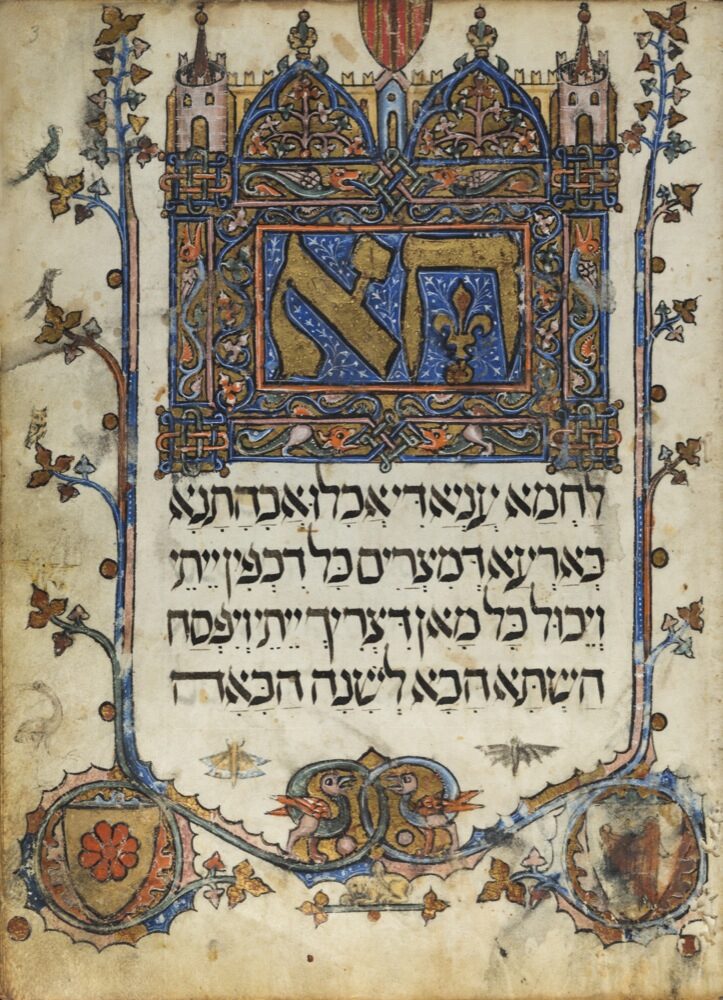
- The Sarajevo Haggadah on the Memory of the World International Register, inscribed 2017 (submitted 2016). Held at the National Museum since 1894. Widely misdescribed in the tourism press as a World Heritage Site; it is not. It is a Memory of the World register manuscript. See our Haggadah story.
- Sevdalinka on the Intangible Cultural Heritage list, inscribed 2024. Not city-specific but the tradition is heavily Sarajevan.
- The stećci medieval tombstones, inscribed 2016, twenty-two of the thirty component necropolises in BiH. One component sits in the National Museum’s botanical garden in Sarajevo but the inscribed site itself is at Radimlja near Stolac, not Sarajevo.
How to talk about it accurately
If you are writing about the city, or if a guide tells you Sarajevo is a UNESCO site, the accurate wording is:
Sarajevo has been on UNESCO’s Tentative World Heritage List since 1997 (Ref. 906) but is not itself inscribed on the World Heritage List. The Sarajevo Haggadah, held at the National Museum, is on UNESCO’s Memory of the World Register (2017), which is a separate international list.
The wording matters because UNESCO-protected is a term with legal weight, and applying it to Sarajevo overstates the situation. Some Sarajevan monuments are protected under Bosnian national law. None are protected under UNESCO’s World Heritage Convention. That is the reality of the current heritage inventory.
What you can do with the dossier as a reader
The 1997 submission is a good short read in its own right, though the English translation is awkward. It is fifteen pages on the UNESCO Tentative List portal and can be accessed at whc.unesco.org/en/tentativelists/906/. Read it as an editorial argument the Bosnian institution was trying to make in 1997, two years after the end of the siege, when the case for Sarajevo as a piece of cosmopolitan heritage was raw and urgent.
The dossier is, in a real sense, a wartime document. The institution that wrote it had its own headquarters shelled. And it argues for the city as multicultural at exactly the moment when parts of the international press were treating Sarajevo as an argument for the impossibility of multiculture. That argument for the city is legible in the dossier even where the English translation stumbles.
Twenty-nine years later, the argument still stands. The nomination has not moved forward. The city, and its layered architecture, keeps working.
Sources
- UNESCO World Heritage Centre, Tentative List Bosnia and Herzegovina, Sarajevo — unique symbol of universal multiculture, continual open city, Ref. 906, submitted 1 September 1997. Entry page.
- Institute for the Protection of Cultural, Historical and Natural Heritage of Bosnia and Herzegovina, submitting body of the 1997 nomination.
- UNESCO Memory of the World International Register, The Sarajevo Haggadah Manuscript, inscribed 2017 (submitted 2016). Entry page.
- UNESCO World Heritage List, Stećci Medieval Tombstones Graveyards, Ref. 1504, inscribed 2016.
- UNESCO Convention Concerning the Protection of the World Cultural and Natural Heritage, adopted 1972 (the framework for what World Heritage inscription actually means legally).
Sources & further reading
- UNESCO Tentative World Heritage List, Bosnia and Herzegovina, 'Sarajevo, unique symbol of universal multiculture, continual open city', Ref. 906, submitted 1 September 1997
- Institute for the Protection of Cultural, Historical and Natural Heritage of Bosnia and Herzegovina, submitting body
- Sarajevo Haggadah on UNESCO Memory of the World International Register, inscribed 2017
Keep reading
More from the guide.

Sarajevo architecture — from Isa-beg's 1462 čaršija to Pařík's 1913 Post Office, on foot in one afternoon
Sarajevo is the only European capital where you can walk for ninety minutes in a straight line and pass through four centuries...

Sarajevo — the 1882 revolt that made the Habsburgs build for thirty years
The Berlin Treaty of 1878 gave Austria-Hungary the right to occupy Bosnia and Herzegovina. Four years later, in January 1882, the administration...

Sarajevo — Zetra opened in 1983, hosted Torvill and Dean, was a morgue in 1994, and now runs hockey practice on Tuesdays
Zetra Olympic Hall opened in 1983 in the Koševo park for the 1984 Sarajevo Winter Olympics. On 14 February 1984, Britain’s Jayne...