Sarajevo — the best time to visit, month by month
Late May through early July is the honest answer. September is the second best. A specific breakdown by month, with what to expect from the weather, the crowds, and the festival calendar.
The short answer: late May through early July for the best combination of weather, light, and manageable crowds. September is the second-best month, cooler, quieter, and the Sarajevo Film Festival runs the second half of August into early September.
The longer answer depends on what you want the trip to do.
By month
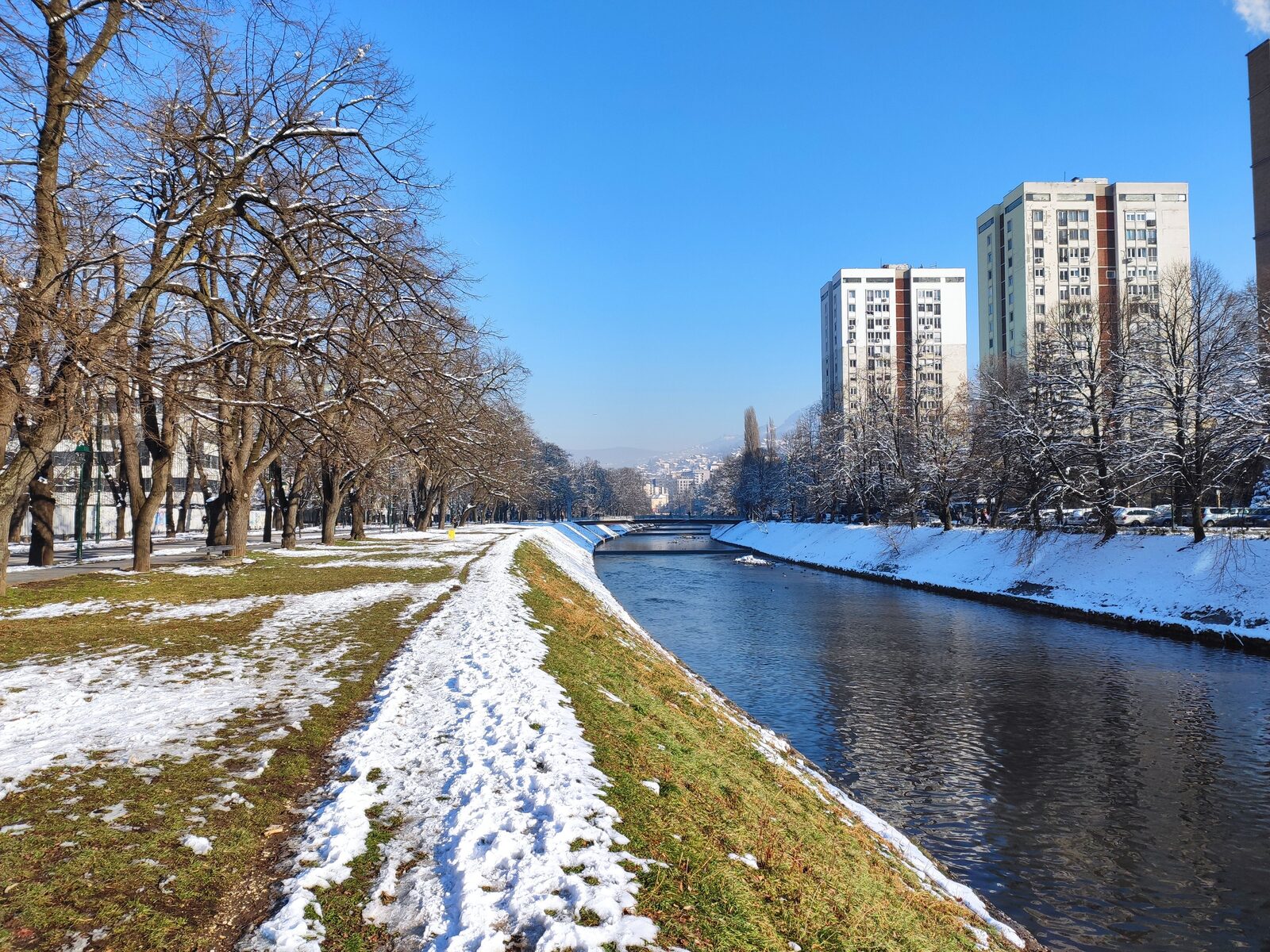
January
Cold. Snow on the hills. Low temperatures average −1°C in the valley, colder on the mountains. Bjelašnica and Jahorina, the 1984 Olympic pistes, are at their fullest. If skiing is the trip, January is right. If not, the city is quieter than usual and the cafés are at their most atmospheric.
- Pros: cheap flights, cheap hotels, cheap ski lift passes, empty museums.
- Cons: short days (sunset around 16:30), cold, some restaurants and cafés reduce hours.
- Festival: Sarajevska zima (the Winter Festival) begins in February but preparations start now.
February
Cold, but the light is coming back. Sarajevska zima runs through February and into March. The city hosts chamber music, theatre, and cinema across Skenderija, the National Theatre, and the Youth Theatre.
- Pros: the Winter Festival, cheap accommodation, empty streets, still-good skiing on Bjelašnica.
- Cons: cold, occasional heavy snow, some outdoor attractions closed.
March
Late-winter transition. Snow melts on the valley floor. The mountains still hold snow through mid-April. The Vrelo Bosne springs are dramatic in March, snowmelt off Mount Igman makes the flow rate the highest of the year.
- Pros: the springs at their fullest, cheap prices, no crowds.
- Cons: unpredictable weather — can be sunny, can be sleet.
April
The city starts to green. Terraces reopen. Days lengthen to 13 hours. The plane trees on Velika Aleja come into fresh leaf. The Bascharshija Nights programme is still weeks away, so the bazaar is calm.
- Pros: the shoulder-season low-price window, everything reopening, still no crowds.
- Cons: rain is common. Bring waterproofs.
May
The month the site’s editor most often recommends to first-time visitors. Warm enough for terraces, cool enough for walking uphill. The mountains behind the city, Trebević, Igman, Bjelašnica, are at their most photogenic. Vrelo Bosne is still at high flow.
- Pros: peak walking weather, everything open, terrace culture in full swing, still cheaper than July.
- Cons: occasional rain days — same as April but fewer.
- Festival: Sarajevo Beer Festival (typically late May into June) at the Zetra Olympic Centre.
June
Very good. Days are long (sunset around 20:45). The city warms to daily highs of 25°C, cools at night to 15°C, perfect for the terrace-and-walk rhythm. School groups start showing up mid-month but the bazaar is not crowded.
- Pros: long light, terrace culture, walking weather, good hotel availability.
- Cons: starts to warm — 28°C afternoons are possible.
- Festival: the Baščaršijske noći (Bascharshija Nights) run through July.
July
Hot and busy. Daytime highs of 28–30°C, cool nights of 16–18°C. Baščaršija is at its busiest, tour groups, cruise-ship day-trippers via Dubrovnik, and Bosnian diaspora returning for summer holidays. The old bazaar is still working but the pace is different. This is the month of the Baščaršijske noći festival, cultural programming across the old town every night.
- Pros: Baščaršijske noći, long evenings, terrace culture at peak, all attractions open.
- Cons: hot, crowded (by Sarajevo standards), most expensive month for accommodation.
August
Hot. This is the month when Sarajevans themselves leave for the coast. Baščaršija is busy with tourists, thin on locals. The Sarajevo Film Festival starts in the second half of August, one of Europe’s most-cited film festivals, and the specific reason to be here in August.
- Pros: Film Festival, warm evenings, everything open.
- Cons: hot (highs 30°C+), locals are on holiday, some family-run venues close for 2–3 weeks.
- Festival: Sarajevo Film Festival: mid-August into early September.
September
The second-best month. Weather turns cooler, highs 22–25°C, nights 12–15°C. Locals return from the coast. The Film Festival’s tail runs into the first week. Hotel prices drop from August’s peak. Fewer tour groups.
- Pros: best price-to-quality ratio in the calendar, Film Festival tail, cooler evenings, autumn light.
- Cons: first heavy rain days start end of September.
October
Beautiful. The valley turns gold. Kozija Ćuprija gorge (the Ottoman goat bridge on the eastern edge) is a particular late-October walk. Sunset moves earlier, by month’s end it’s 17:00. Hotel prices are at the annual low.
- Pros: autumn colour, cheap prices, no crowds, still terrace-comfortable in first two weeks.
- Cons: shortening days, rain more likely, some outdoor programming has ended.
November
Grey. Cold rain. The mountain hotels start their pre-ski soft-opening. Trebević gets its first snow, usually mid-month. The city drops into a slower rhythm, no festival, no tourists, no light after 16:30.
- Pros: the true off-season pricing, the emptiest bazaar of the year.
- Cons: the weather, the light, and everything that follows.
December
Christmas markets set up in early December on Trg Oslobođenja. The city has small-scale festive lighting, nothing on the Prague scale. The last week of December (25–31) is often the wettest of the year. New Year’s Eve is celebrated with an outdoor concert on Trg Oslobođenja.
- Pros: Christmas atmosphere on a small scale, cheap airfares (except NYE week).
- Cons: cold rain more than snow in the valley, short days, some venues close 24–27 December.
The two-line calendar
- Best for weather: late May through early July.
- Best for festivals: August (Film Festival) or February (Winter Festival).
- Best for skiing: January to early March on Bjelašnica or Jahorina.
- Best for prices: November and early December — but the weather is grim.
- Avoid: the last week of December unless you have a specific reason.
What to check before booking
The city’s public transport is reliable but the mountain access is not. Cable-car hours to Trebević shorten in winter (last car down around 18:00). Vrelo Bosne is at its most dramatic in May and June and quieter after mid-October. The Tunnel of Hope museum is open year-round.
If you have decided on a month, the next reads are How many days and A perfect day. If you are still deciding whether to come, the honest case is where to start.
May through July for a first visit. Come back in October for the colour. The city rewards both.
Sources & further reading
Keep reading
More from the guide.

Sarajevo — how many days do you need? One, two, three, or five
How many days in Sarajevo? Three is the honest answer for most travellers. Two if the trip is short. One is possible...

Sarajevo — the European capital where halal is the default, not the exception
Is Sarajevo Muslim-friendly? It is a Muslim-majority European capital with more than 120 mosques, five daily calls to prayer from Baščaršija, and...

Sarajevo at night — the bazaar after dark, sunset viewpoints, sevdah rooms, and one club worth staying up for
What is there to do in Sarajevo at night? More than most travel guides suggest. The bazaar stays alive until 02:00 on...