Explore Sarajevo / Destinations / Sarajevo Vrelo Bosne
Destination · Ilidža · 3 min read
Sarajevo Vrelo Bosne
The source of the Bosna river. Cold springs, willow paths, swans, and a 3.5 km Habsburg avenue of plane trees to walk you in.
- Established
- Park laid out from 1885 onward
- By
- Austro-Hungarian landscaping; Velika Aleja planted 1885


At a glance
Address
Velika Aleja, Ilidža (end of avenue)
Hours
Open daily, dawn to dusk
Price
6 BAM foreign adults; 3 BAM BiH residents; 3 BAM children (6–18); free under 6. Fiacre ride ~20–30 BAM.
Getting there
Tram 3 from Baščaršija to Ilidža (~40 min); then walk or fiacre down Velika Aleja
Time needed
Half a day
Best time
Spring through early autumn, especially May to June
Coordinates
43.8189° N 18.2695° E
Navigate
Vrelo Bosne is the point where one of Bosnia’s defining rivers begins. Beneath the slopes of Mount Igman, cold water rises through limestone into a series of crystalline pools, threads itself through small wooded islands, and gathers into the channel that runs north through the country and lends its name to Bosnia itself. The springs sit about ten kilometres west of central Sarajevo, in the spa-town suburb of Ilidža, and have been one of the city’s most-loved public spaces for nearly 140 years.
A Habsburg park
The springs are ancient. Romans built villas around them in the second century AD, when this was Aquae Sulphurae, the sulphurous waters. But the park you walk today was laid out by the Austro-Hungarians in the late 19th century. Ilidža was developed as a spa resort under Habsburg rule, and in 1885 the imperial administration planted Velika Aleja, the 3.5-kilometre avenue of plane and horse-chestnut trees that leads from the spa hotels to the springs. The trees were saplings then. They are now monumental.
It is one of the great walks in Bosnia and one of the great horse-carriage rides. Fiacres (open carriages drawn by a pair of horses) wait at the entrance and trot you down the avenue for about 20 BAM each way. The sound of hoofbeats on the cobbles has been the soundtrack here since the empire ended.
At the end of the avenue
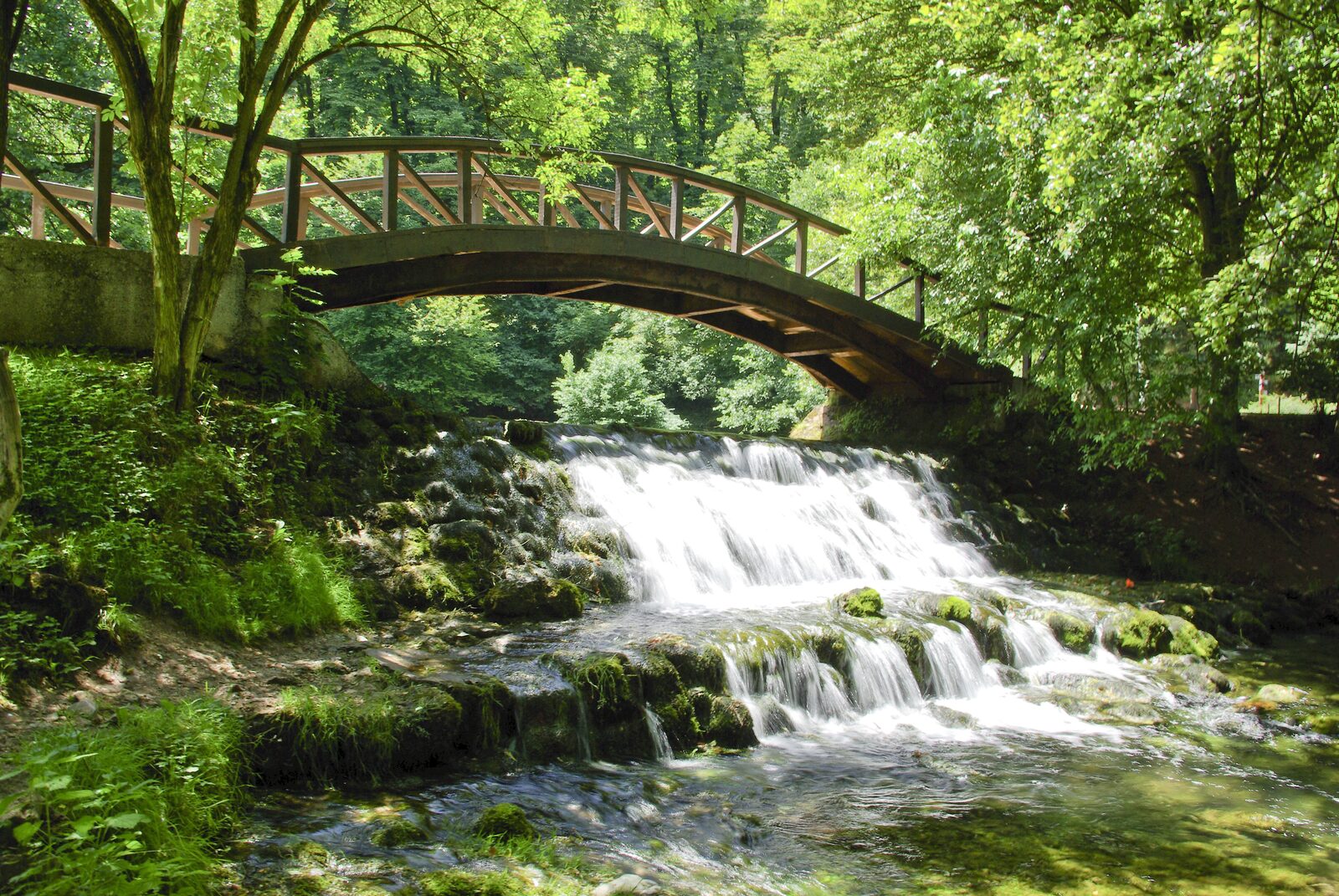
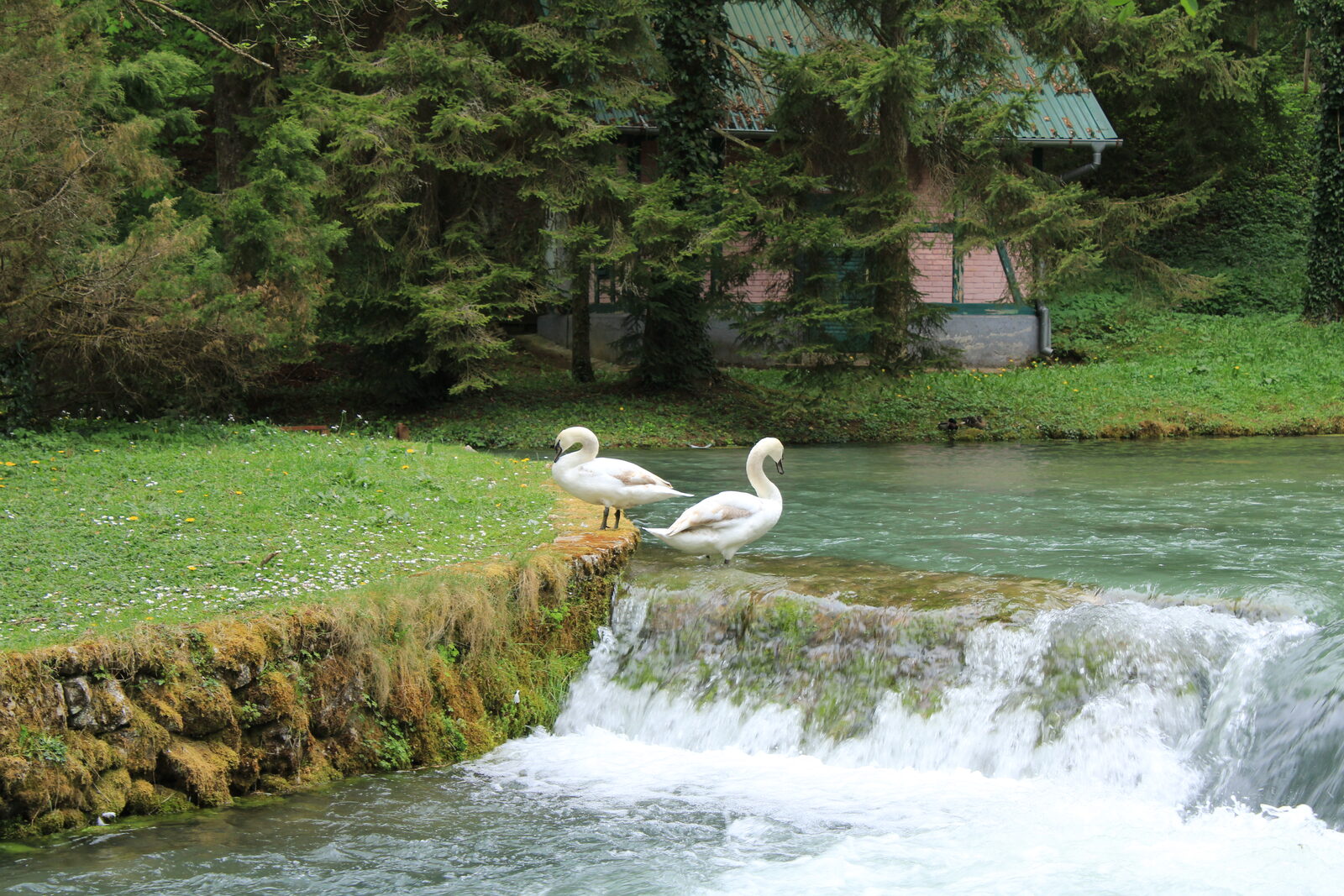
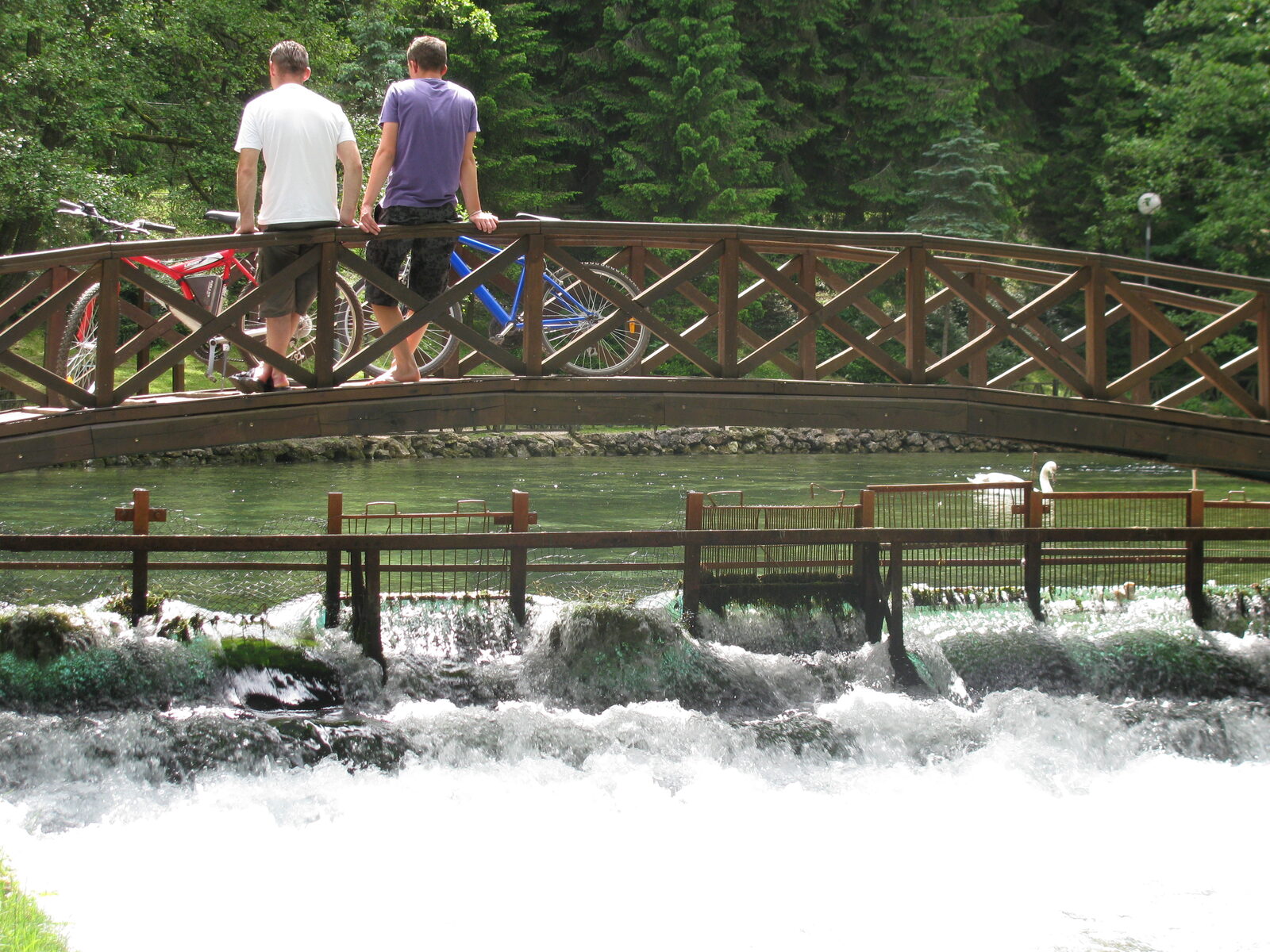
The park opens out into a landscape of footbridges, gravel paths, small wooded islands, and the springs themselves. The water is a constant 7 to 10 °C year-round, fed from underground aquifers in the limestone of Mount Igman. A well-established population of swans glides on the larger pools. There are picnic meadows under the willows, a couple of unfussy cafés selling cold drinks, and almost always a Bosnian family or two making a properly slow afternoon of it.
You can wade in the shallow streams if you want to. Bring a towel. The springs themselves are roped off as a protected nature reserve.
What can you do at Vrelo Bosne?
There is, deliberately, not much to do. That is the appeal. Walk slowly. Find a bench. Read for an hour. Buy a small ice cream from a kiosk. Watch the swans for a while.
For a longer outing, the Plandište picnic area sits about a kilometre upstream from the main springs, and quieter trails continue further into the woods toward Mount Igman. The Roman Bridge at Ilidža is on the parallel road and worth 30 minutes on the walk back.
Practicalities
Take tram 3 from central Sarajevo to end of the line at Ilidža, about 40 minutes from Baščaršija. From the tram stop walk 20 minutes through the spa district to the start of Velika Aleja. You can also catch a fiacre at the entrance.
A small entrance fee (a couple of marks) gets you into the park. Open dawn to dusk. The springs are most theatrical in spring, when meltwater from Igman makes them roar. In late summer the flow is calmer, the colours deeper, the swans showier.
It is the closest thing Sarajevo has to a public Eden. Go on a weekday morning if you can. Sundays belong to the families.
Sources & further reading
More views
From Sarajevo Vrelo Bosne
Photographs: Raphael Schön · source · CC BY 2.0


Keep wandering
Nearby & related.

Sarajevo Ashkenazi Synagogue
Sarajevo’s working synagogue, built in 1902 in pseudo-Moorish style by the Austro-Hungarian administration for the Jewish community that had grown...

Sarajevo Avaz Twist Tower
The Avaz Twist Tower is Sarajevo’s tallest building (142 metres, completed 2008). A small public observation deck on the 35th...

Sarajevo Baščaršija
The 1462 Ottoman bazaar of Sarajevo, still a working bazaar. Copper workshops on Kazandžiluk, Bosnian coffee at Morića Han, and...