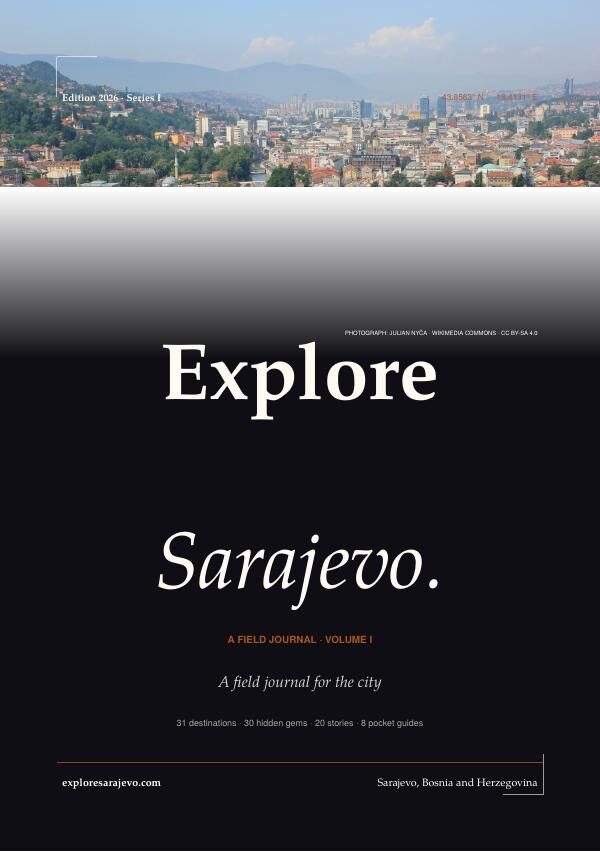
Sarajevo — five things no other European capital has
A short, opinionated list of experiences specific to this city — the war-history walks, the Olympic ruin, the Ottoman bridge upstream of the bazaar, the climb up to the old walled quarter, and the underground tunnel that ran under the airport.
Sarajevo gets compared to other cities a lot. Istanbul for the bazaar, Vienna for the Habsburg quarter, Berlin for the war-history walks, Sofia for the architectural mash-up. The comparisons are not wrong, but they miss the point of why people come back. Most of what makes the city specific cannot be slotted into someone else’s reference frame. A short list of five things you can do in Sarajevo that you cannot, in this combination, do anywhere else.
1. Walk the Sniper Alley and the Sarajevo Roses
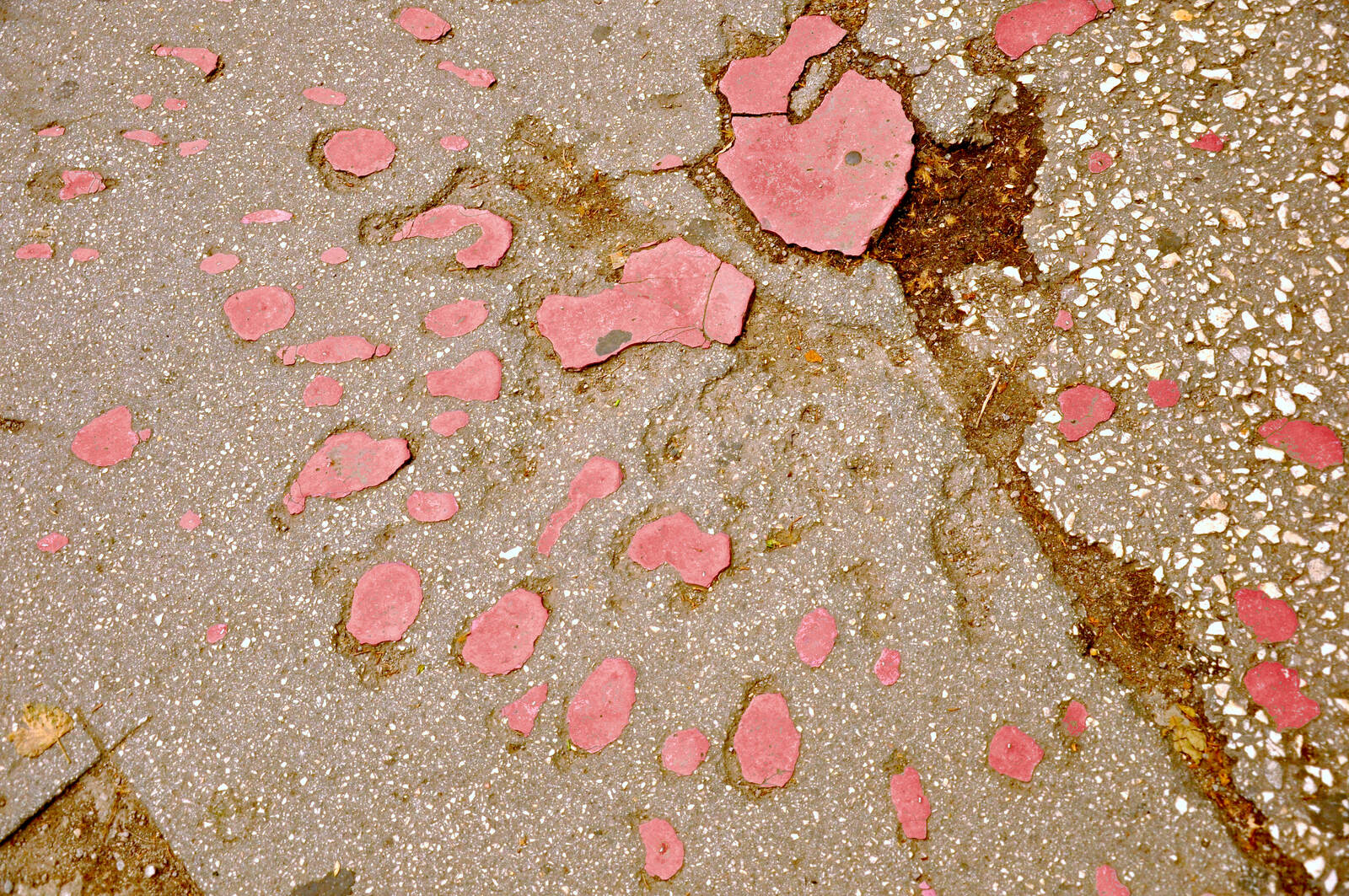
The single most affecting half-day in the city. Sniper Alley is the local nickname for Zmaja od Bosne, the long west-running boulevard between Marijin Dvor and Ilidža, which during the 1992–1995 siege was the main exposed line of fire for Bosnian Serb snipers in the surrounding hills. The Sarajevo Roses are the small concrete impact craters left by mortar shells that killed civilians during the siege, filled afterwards with red resin and left in place as memorials. There are at least fifty of them scattered through the central city.
A local guide helps. Sarajevo Insider and Funky Tours both run two-hour “War Scars” walking tours that step through the chronology in person. Without a guide, the self-walk is Marijin Dvor → Skenderija → Markale market → the Latin Bridge → the Eternal Flame → back. Allow two and a half hours.
Look for the roses on the pavement. Most visitors walk past five or six without noticing.
Full hidden-gem entry: Sarajevo Roses.

2. Walk through the Tunnel of Hope
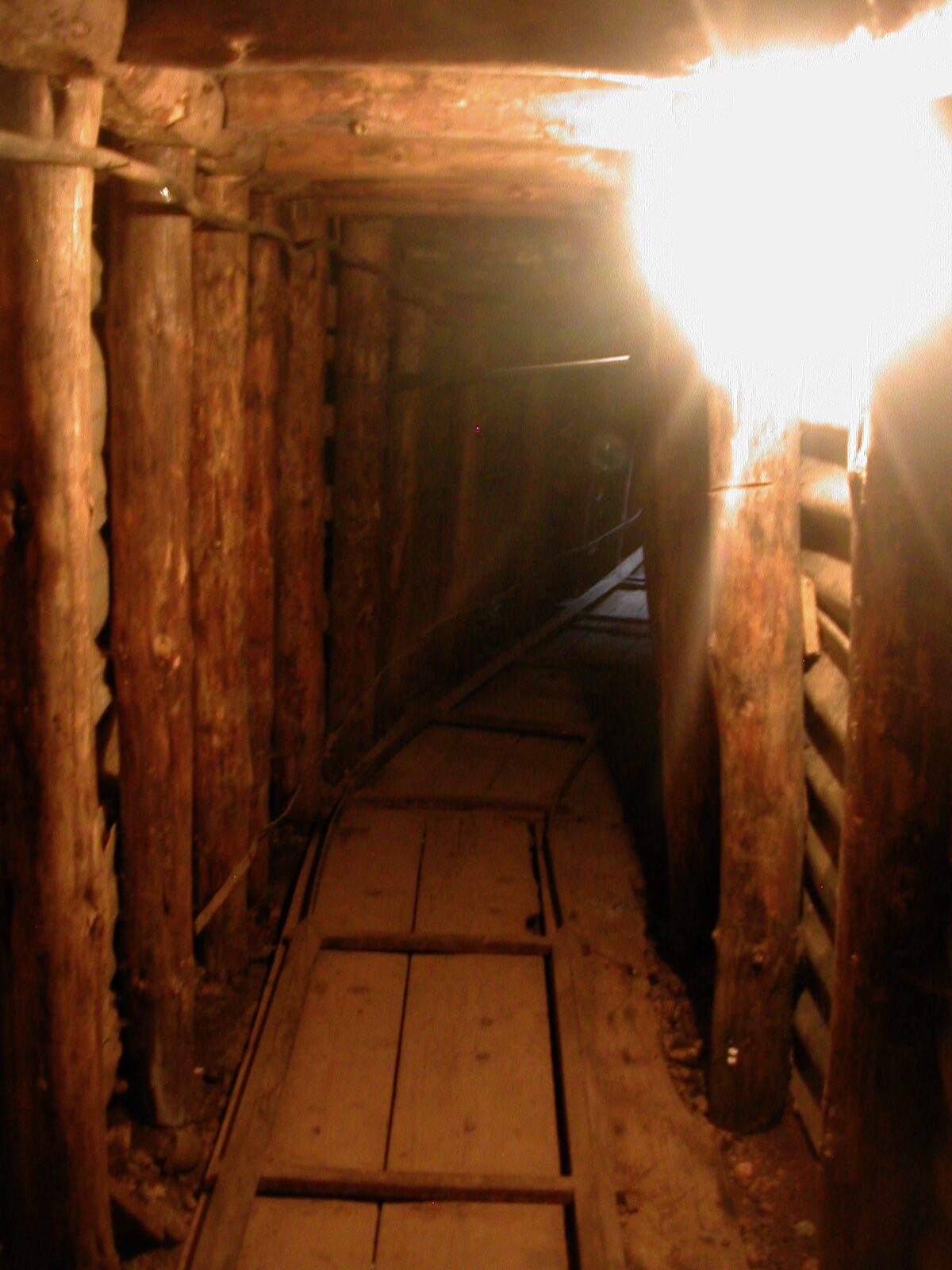
The 800-metre tunnel dug by hand, mostly at night, between March and June 1993, to connect the besieged city with the small Bosnian-controlled territory beyond the airport runway. It is the only working military supply tunnel of a 20th-century European siege that visitors can walk into.
About 25 metres of the original tunnel are preserved as a museum, at the Butmir end in Ilidža. The small entrance building was a private family home during the war; the front wall is still pockmarked. Inside there is a fifteen-minute documentary, a model of the full route, and the tunnel itself.
Standard practical approach: tram 3 to Ilidža, taxi to Butmir, ~10 BAM. Or a guided half-day tour from the centre, ~30 BAM all-in. Either works.
Full destination entry: Tunnel of Hope.

3. Walk down the abandoned 1984 Olympic bobsled track
The 1,300-metre concrete chute on Mount Trebević, built for the 1984 Winter Olympics, abandoned in the 1992 siege, never restored, now covered with two decades of graffiti and walkable on foot from the cable-car upper station.
Reopened on 6 April 2018 after twenty-six years of inactivity (it was destroyed during the war), the cable car runs fifteen minutes from Bistrik and opens the entire valley below you. From the upper station, walk five minutes south to the starting house, then walk down the track itself. The full 1,300 metres is open. Curves get tighter as you descend. Graffiti gets denser around curve 11. Allow ninety minutes for the walk and another hour for the cable car return and a coffee at the upper station.
This is the most-photographed graffiti site in the western Balkans and one of the more peculiar Olympic ruins in Europe.
The full hidden-gem entry: The Olympic Bobsled and Luge Track.
4. Climb up to Vratnik and the Yellow Fortress
The Yellow Fortress (Žuta Tabija), an Austro-Hungarian-rebuilt 18th-century Ottoman bastion, sits on the steep wooded ridge directly above Baščaršija, at 750 metres elevation. The climb from the Sebilj takes about twenty-five minutes uphill, mostly through the Vratnik quarter, the old Ottoman walled suburb that still has its surviving Stone Gate and Yellow Bastion, the residential lanes of low Ottoman houses, and the Kovači cemetery, the burial ground for soldiers killed in the 1992–95 war.
At the top, the Yellow Fortress is the city’s canonical sunset viewpoint. The cannon at the fort is fired daily during Ramadan to mark iftar. The view runs from Trebević in the east, across the entire Miljacka valley, to Igman and Bjelašnica in the west.
A reasonable evening sequence: cevapi at Petica on Bravadžiluk → climb up Kovači street → twenty minutes at the Kovači cemetery → ten more minutes to the Yellow Fortress → sunset at the fort → walk back down to the Sebilj for a salep or a coffee. About three hours, ending in the dark.
The full destination entries: Yellow Fortress and Kovači Cemetery.
5. Walk to Kozija Ćuprija — the Ottoman bridge that nobody talks about
Of the four surviving Ottoman bridges in central Sarajevo, the Goat Bridge (Kozija Ćuprija) is the prettiest, the quietest, and the least photographed. It sits about a kilometre east of the centre, in a small wooded gorge where the Miljacka narrows. Built in the second half of the 16th century, probably by the architects of Mehmed Paša Sokolović, the same engineering family that built the famous bridge over the Drina at Višegrad.
The walk from the Sebilj is forty minutes east along the south bank, past the Inat Kuća and the Šeher-Ćehaja Bridge, into the gorge. The setting is the prettiest stretch of riverside within walking distance of the city centre. The bridge itself is a single high arch over the river, with two distinctive circular openings in the spandrel, both structural (flood relief) and ornamental.
The walk and the bridge together take about two hours out and back. Sunday morning is the local time of choice; in summer the riverside is full of families with picnic blankets. In winter the gorge is gold.
The full hidden-gem entry: Kozija Ćuprija, and the wider story on the Ottoman bridges of the city: Stone, water, and four centuries.
What the list isn’t
Some of the most famous things to do in Sarajevo are not on this list. The Sebilj is the canonical photograph, and you should feed the pigeons, but you can feed pigeons in any tourist square in any city. The Latin Bridge and the Princip plaque are essential to the city’s identity, but they’re also five minutes of a longer walk, not an experience in themselves. The Gazi Husrev-beg Mosque is the most architecturally important Ottoman complex in the western Balkans, but it has architectural cousins in Istanbul, Edirne, and Skopje.
The five above are different. The siege-walk, the tunnel, the Olympic ruin, the climb up to the walled quarter, the quiet 16th-century bridge upstream, together they describe a city that is not Istanbul, not Vienna, not Berlin, not Sofia. Sarajevo is on the list because the combination is not available anywhere else. The locals have a name for the city in slang, Rajvosa, Sarajevo read syllable-backwards. Five things you cannot do anywhere else, and one name you cannot pronounce anywhere else either.
Further reading
- Sarajevo’s UNESCO list: four entries, none of them a building
- Two empires that built Sarajevo: a walking architecture guide
- Sarajevo’s museums: a reader’s ranking
- Sunset on Trebević: the nine-minute commute to a different world
Sources & further reading
Keep reading
More from the guide.

Sarajevo — the royal Kotromanić stećak is thirty steps from the National Museum entrance
Bosnia and Herzegovina has about seventy thousand medieval tombstones called stećci. They stand across the country in scattered necropolises, and since 2016...

Sarajevo's iron fences — the pheasant on Sime Milutinovića 15, and other pieces you walk past
Push a heavy oak door open in a Habsburg-era palace on Strossmayerova, or Vrazova, or Obala Kulina bana, and look up. The...

Sarajevo has been on UNESCO's Tentative List for 30 years — and still isn't inscribed
The 1997 Bosnian submission of Sarajevo to UNESCO’s Tentative World Heritage List is one of the more misread documents in the city’s...