Sarajevo Inat — the Bosnian word for stubbornness with honour, and the house dismantled beam by beam
One Bosnian word, an Ottoman-Turkish loan, and the house that moved across a river to make its point.
Bosnian has a word that English does not have, and that visitors to Sarajevo encounter (usually without knowing it) within their first few days. The word is inat.

Most translations call it stubbornness. That is not wrong, but it misses what makes the word do its work. Stubbornness in English is a small character flaw. Inat is closer to stubbornness with honour: a refusal to yield, made publicly, on principle, even when yielding would cost less.

The etymology
The word came into Bosnian via Ottoman Turkish. In modern Turkish it carries mostly negative connotations. Somewhere in the four hundred years between then and now, Bosnian picked up a positive register English has no equivalent for. Adnan Mahmutović’s essay collection on Bosnian refugee identity traces the same migration, and treats the word as one small piece of what has held the country together.
The canonical example
In 1894, the Austro-Hungarian administration of Sarajevo announced the demolition of several buildings on the north bank of the Miljacka to make way for the new City Hall (Vijećnica). The owners were offered compensation. Most accepted. One did not.
The story varies in detail between sources. The owner (generally remembered in local accounts as Benderija) refused. He owned a modest two-storey Ottoman house, with a wooden upper floor overhanging a stone ground floor. He told the imperial officials that he did not want their money. Then he made them a counter-offer: he would let them have the land, in return for:
- A bag of gold ducats.
- The house dismantled, stone by stone, by the imperial administration.
- Ferried across the Miljacka.
- Rebuilt exactly as it had stood, on a plot of his choosing on the opposite bank.
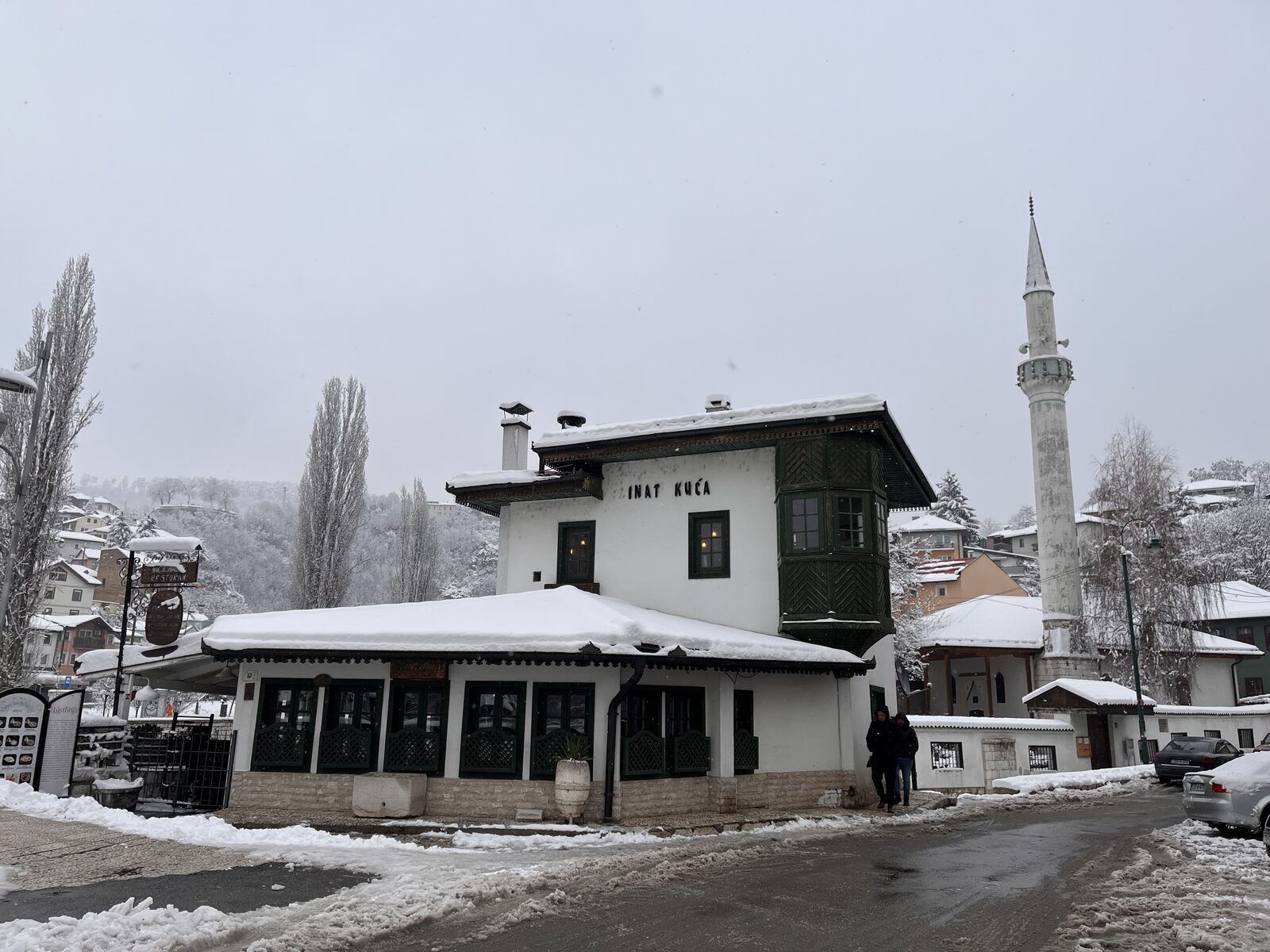
The administration agreed. The house stands today on the south bank, as a restaurant called Inat Kuća, the Spite House, facing across the river the City Hall it once stood in the way of. The story is recounted in Wikipedia’s entry on Inat kuća and in Daily Sabah’s piece on Sarajevo’s stubborn heart.
It is the most famous single act of inat in Bosnian history.
What it is, and what it isn’t
Inat is not contrarianism. A contrarian disagrees with the prevailing view because the prevailing view is the prevailing view. Inat is the opposite: the position is one you already held, and you refuse, publicly, to abandon it because someone has asked you to.
Inat is not quite pride either. Pride is about how you are seen. Inat is about what you will not do, regardless of how you are seen.
It is closest, in English, to a particular shade of principled refusal: Bartleby the Scrivener’s “I would prefer not to,” civil disobedience without the civility. The Yiddish chutzpah is the most-cited rough analogue, but chutzpah is about getting away with something, and inat is about losing on purpose if necessary. Inat will accept the cost. Inat will prefer the cost, when the cost is the point.
The historical weight
Inat is sometimes accused, by Bosnians themselves (often the most articulate ones), of being a national vice as much as a national virtue. The argument: a culture that values not-yielding above everything else will, over centuries, find itself in conflicts it could have avoided. Bosnia has had quite a few of those.
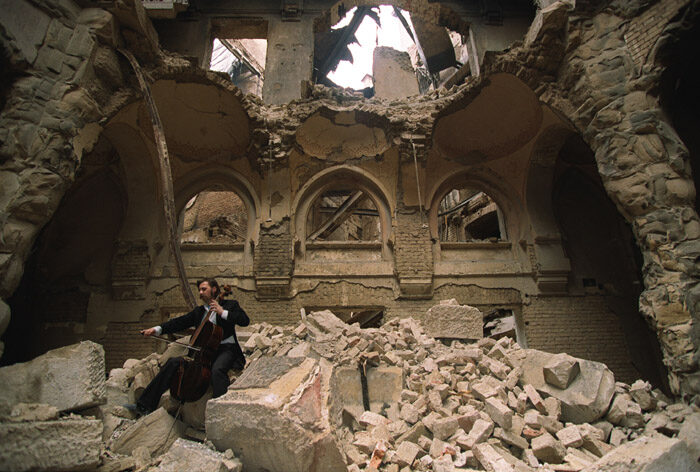
The counter-argument: a culture that values yielding above everything else will, given enough centuries, find itself with no country left to argue about. Bosnia, after a long succession of empires that wanted it absorbed, is still here. The partisan resistance to the Nazis, the 1,425-day defence of Sarajevo during the siege, the four-month digging of the Tunnel of Hope under the airport: all of these have inat in them. It is not the whole explanation. But it is in there.
A Sarajevan will rarely use the word about themselves. They will say it about a friend, a neighbour, a politician they cannot stand. “Vala, ima ga”: honestly, he has it. Half compliment, half complaint.
Sources & further reading
- The meaning of inat in the Bosnian context, Talkpal.
- To Spite or Not to Spite, Mangal Media — a longer essay on the word.
- Inat kuća — Wikipedia.
- Daily Sabah — Sarajevo’s stubborn heart: the story of Inat Kuća.
Sources & further reading
Keep reading
More from the guide.

Sarajevo's 'Islam You Didn't Know About' tour — a response to the tourists' comments
Twenty years after the Bosnian war, a tour operator called Insider Tour in Sarajevo launched a new offering alongside ‘Times of Misfortune’...

Sarajevo's crni humor — laughing at the worst thing that just happened
Crni humor, literally ‘black humour’, is a Sarajevan register that predates the siege by generations and became, during the four years of...

Sarajevo — the fifteen-minute Saturday radio slot that launched Yugoslav absurdist comedy
Before Top Lista Nadrealista was a TV show, it was a fifteen-minute Saturday radio segment on Radio Sarajevo’s second programme. The slot...