Pocket guide
Instagrammable Sarajevo
Eleven photographs the city makes easy — and how to take them without looking like everyone else who's taken them.
Sarajevo photographs well. That is part of the problem. The city has a handful of postcard angles that almost every visitor brings home — Sebilj pigeons, copper rooftops from Trebević, the Latin Bridge — and they are good photographs, but they are everyone’s photographs.
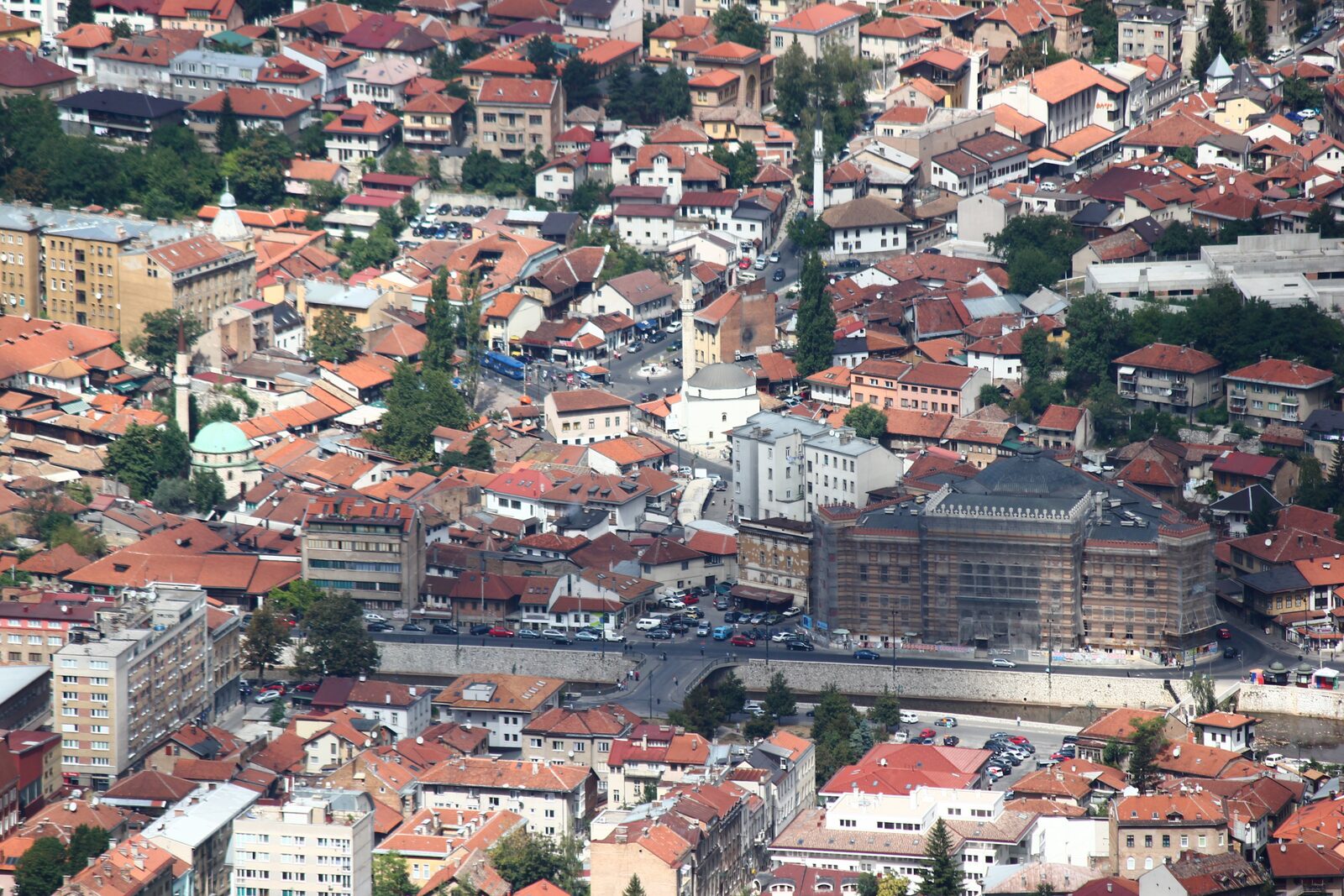

This is a short list of the shots the city offers most generously, together with one note per location on how to take it differently so the result feels like yours.
If you do nothing else, do #1, #5, and #9. The rest are bonuses.
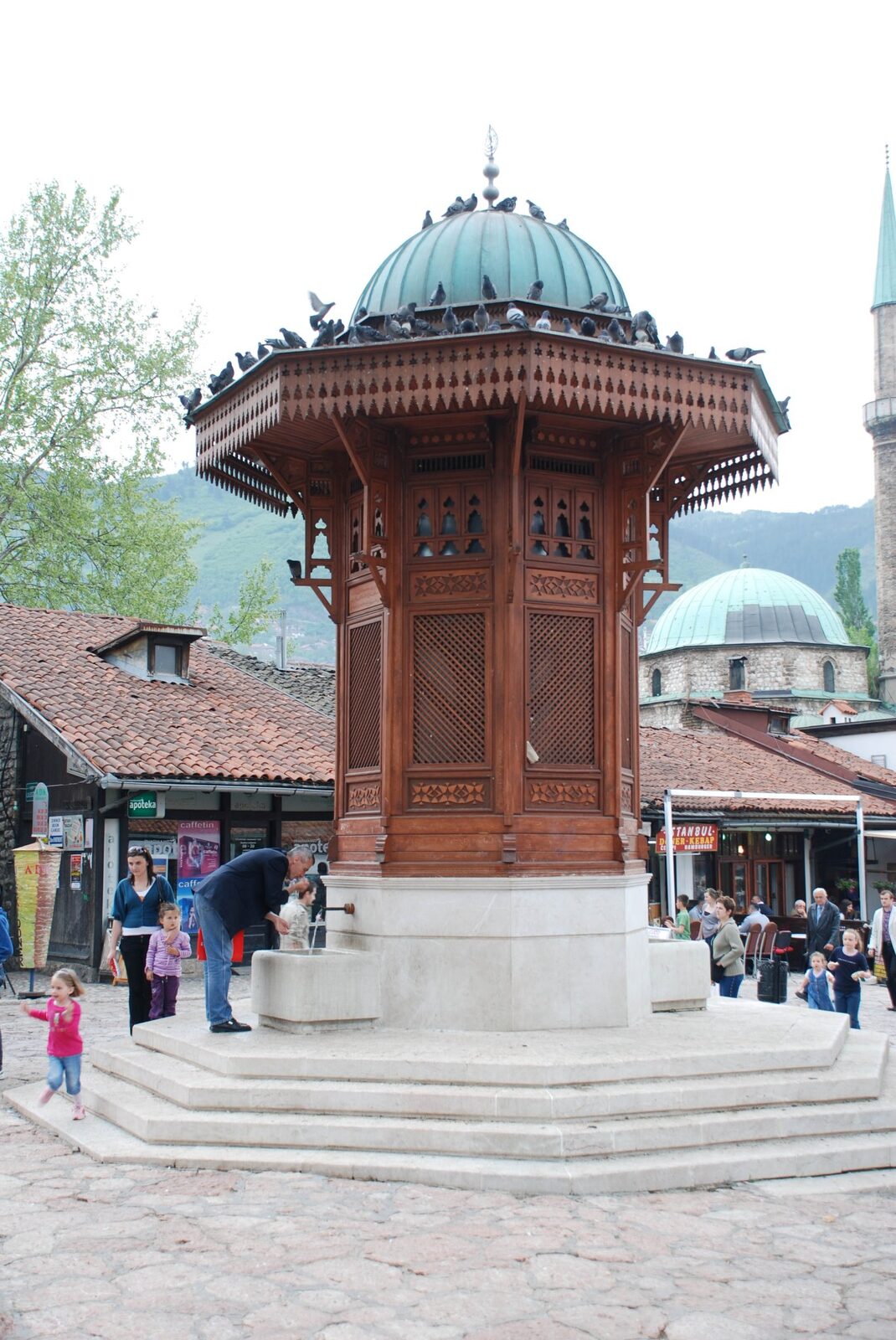
1. The Sebilj at twenty minutes before sunset
.jpg)
The pigeon-feeding photograph everyone takes. The improvement: stop trying to photograph the pigeons. Photograph the café tables ringing the square, with the Sebilj as a soft background object. The story is the city sitting around the fountain, not the bird descent.
The page is here. Best with: golden-hour light from the west.
2. Baščaršija from above (Žuta Tabija)
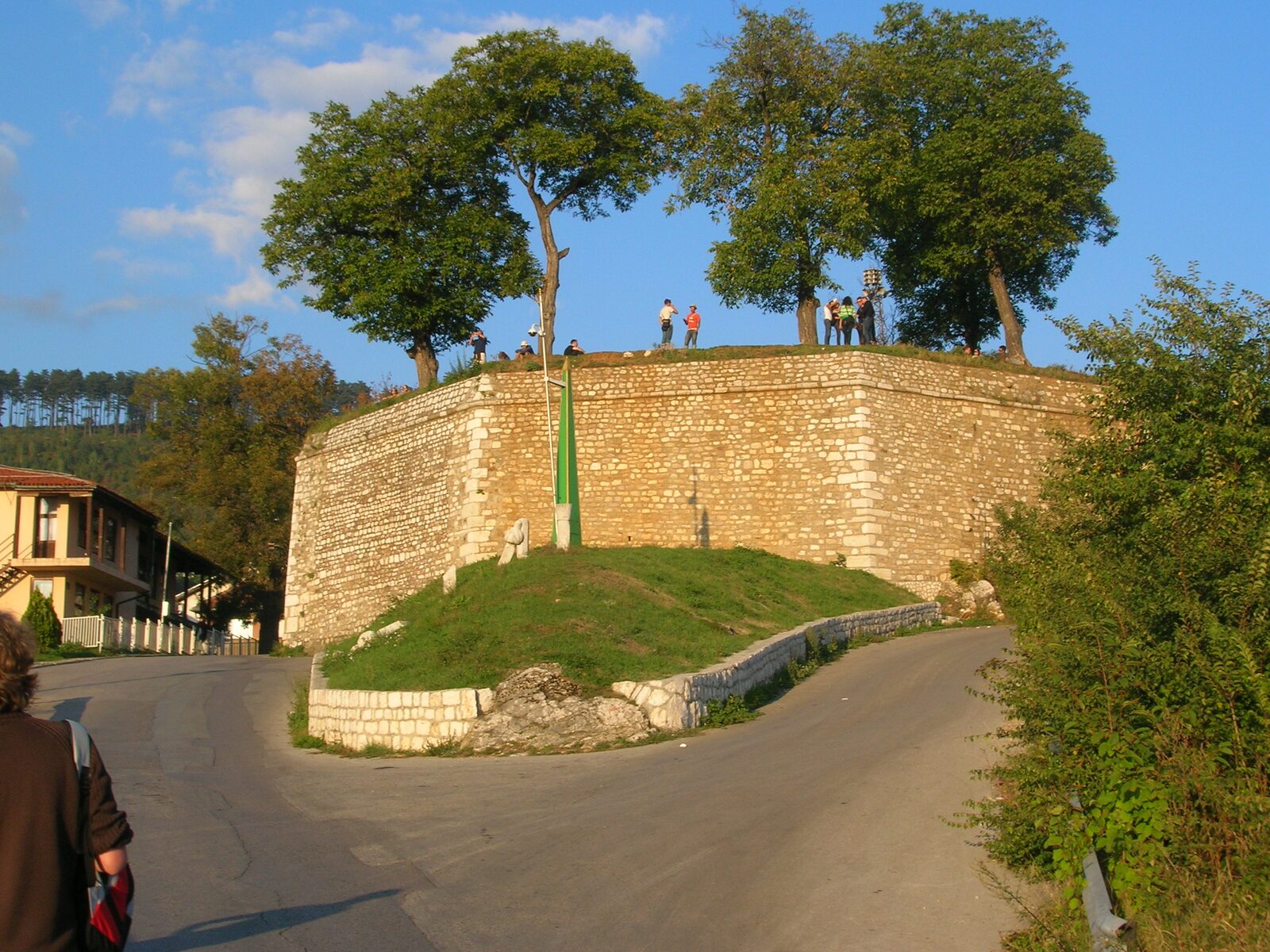

The canonical Sarajevo postcard. The improvement: arrive forty-five minutes before sunset, not twenty. The lower angle of light at that point picks out the copper rooftops of Kazandžiluk and the silhouette of every minaret simultaneously. Twenty minutes before sunset the whole city is already in shadow.
Full page: Žuta Tabija.
3. The Kazandžiluk hammering shot
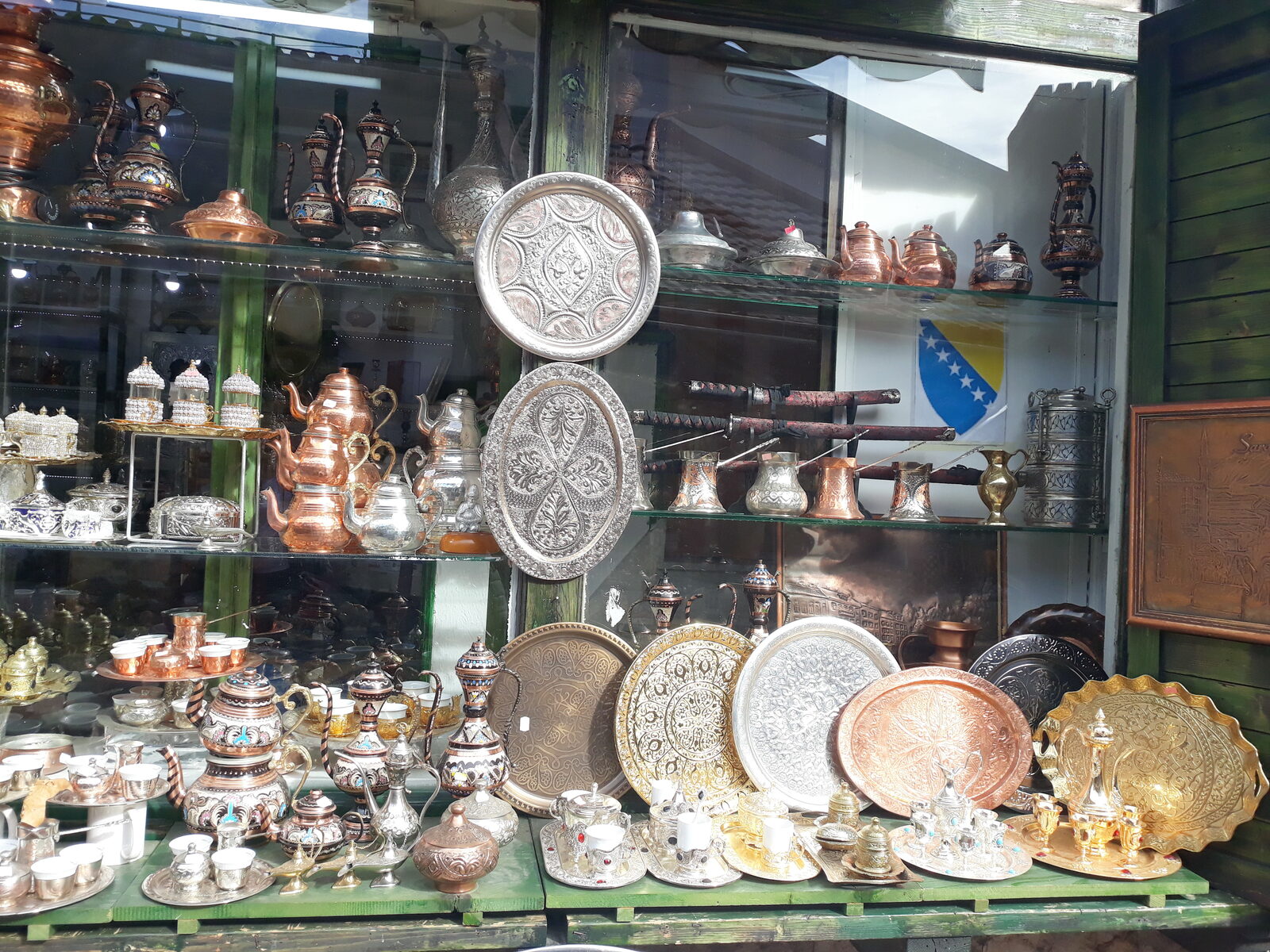

A coppersmith at his anvil, half-lit by the open workshop door. The improvement: ask first. Even a small Bosnian greeting (Salaam, smijem li slikati? — May I photograph?) gets you a different photograph from the one tourists fire from across the street. Most smiths will let you sit on the threshold for ten minutes and shoot at their pace.
Full page: Kazandžiluk.
4. The Latin Bridge plaque
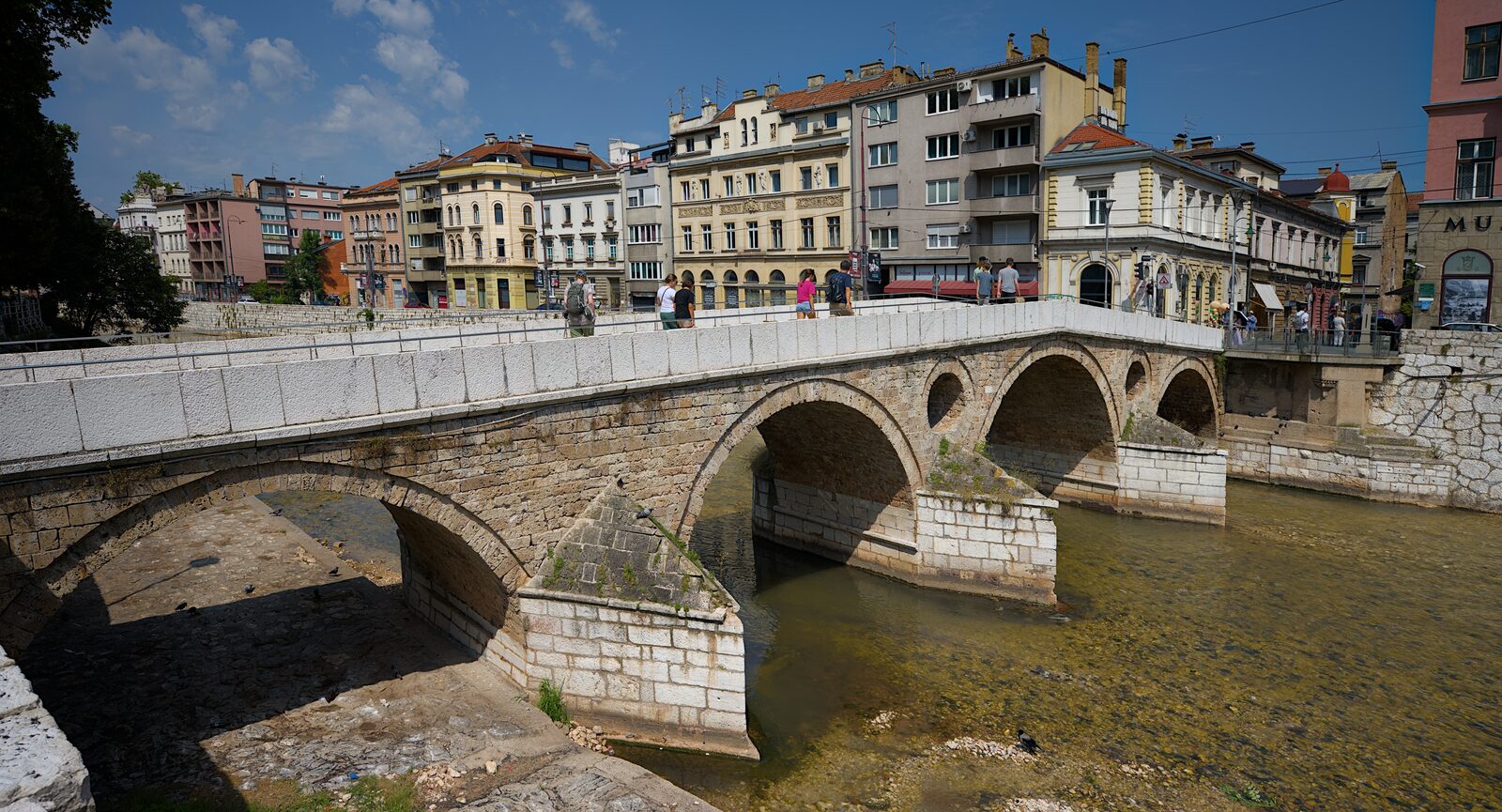

The corner where the 20th century began. The improvement: photograph the plaque from inside the Sarajevo Museum 1878–1918 through the window, with the bridge framed beyond. A small museum trick. Far stronger than the standard plaque close-up.
Full page: Latin Bridge.
5. The Vijećnica facade by night
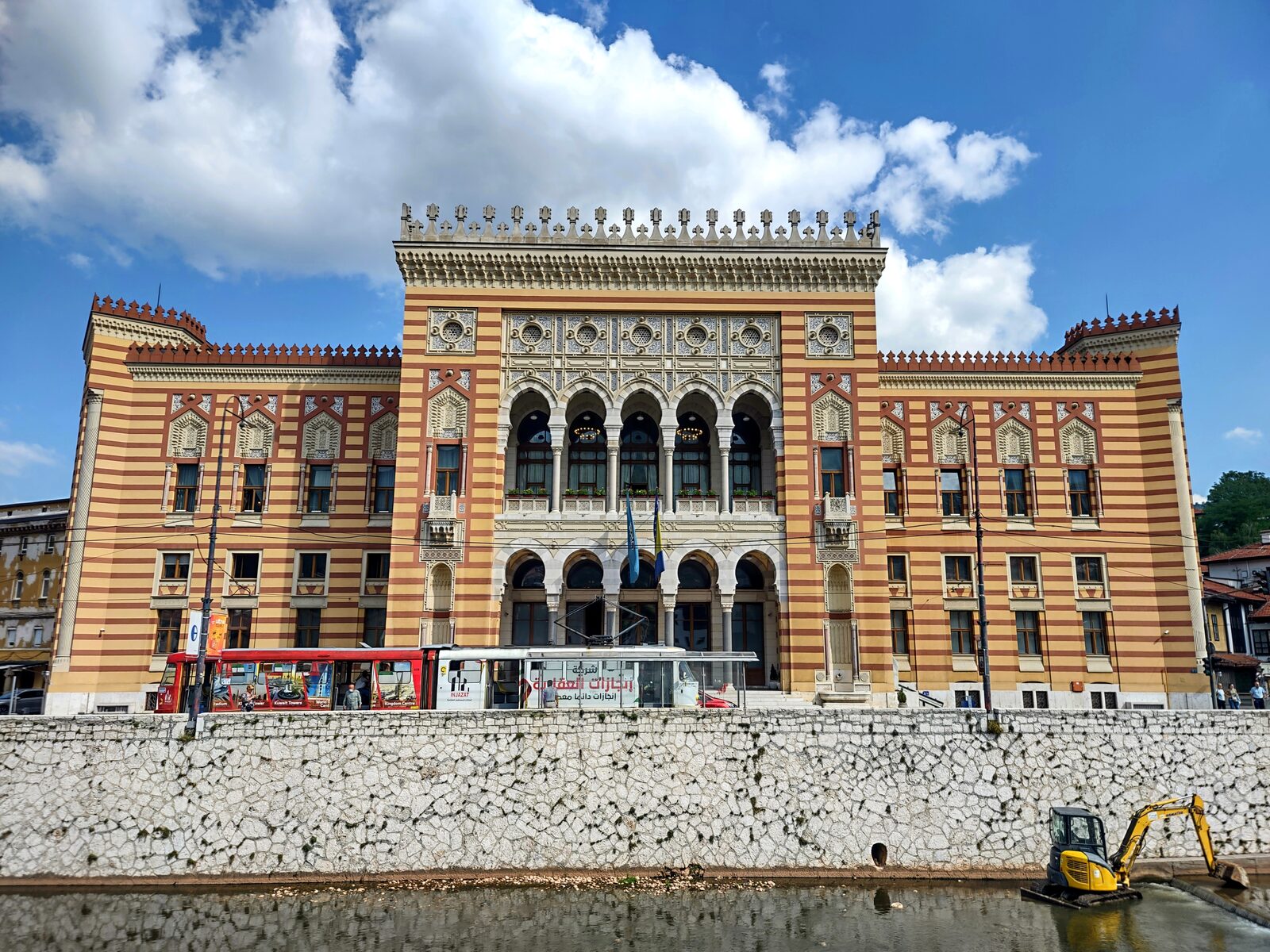

The pseudo-Moorish bands of the city hall lit up after dark. The improvement: shoot from the south bank of the river, with the Šeher-Ćehaja bridge in foreground and the Vijećnica sitting reflected in the Miljacka. Bring a tripod or a steady wall — long exposures here are gentle on the eye.
Full page: Vijećnica.
6. Inside Gazi Husrev-beg Mosque
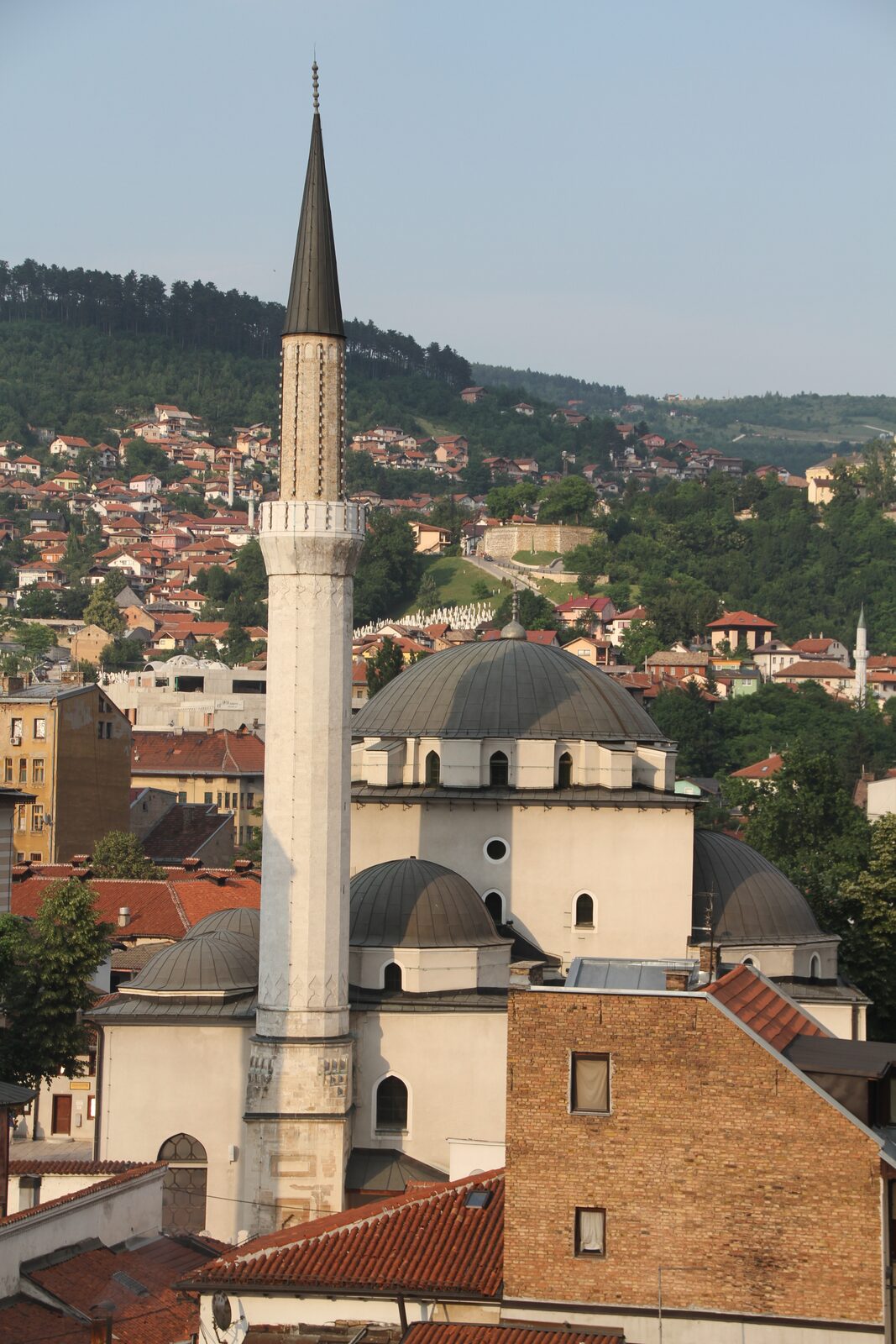

The painted ceiling under the central dome. The improvement: sit on the carpet for five minutes before raising your phone. Frame the dome from below, not from a step. Take your shoes off properly. Most mosques in Sarajevo welcome quiet visitors; behave like a guest, not a paparazzo.
Full page: Gazi Husrev-beg Mosque.
7. The cable car ascent
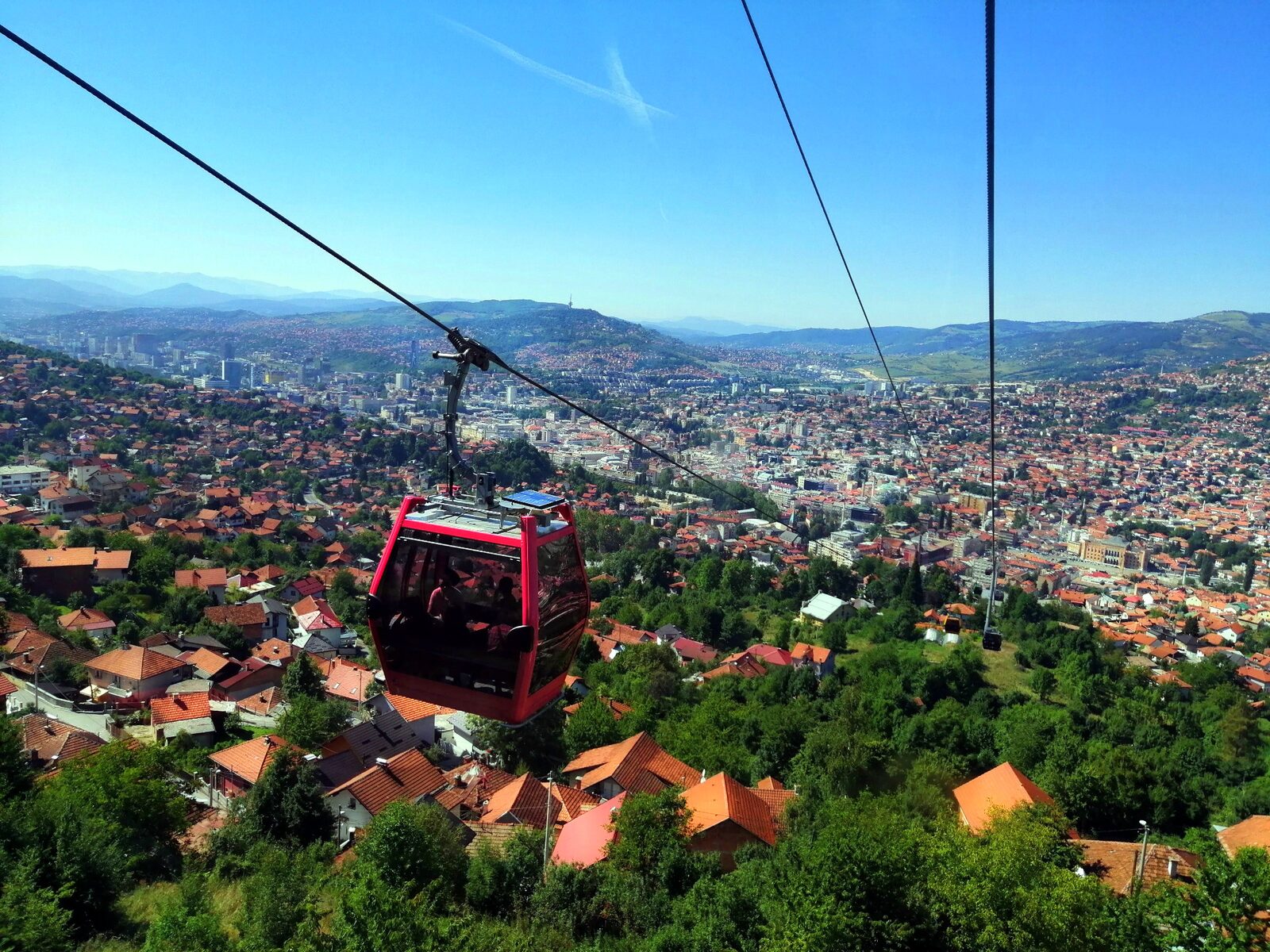

The city falling away beneath the red cabin. The improvement: ride the second-to-last car of the day, not the sunset one. The crowd thins; you get the window seat; the light is still useful.
Full page: Sarajevo Cable Car.
8. The Sarajevo Rose
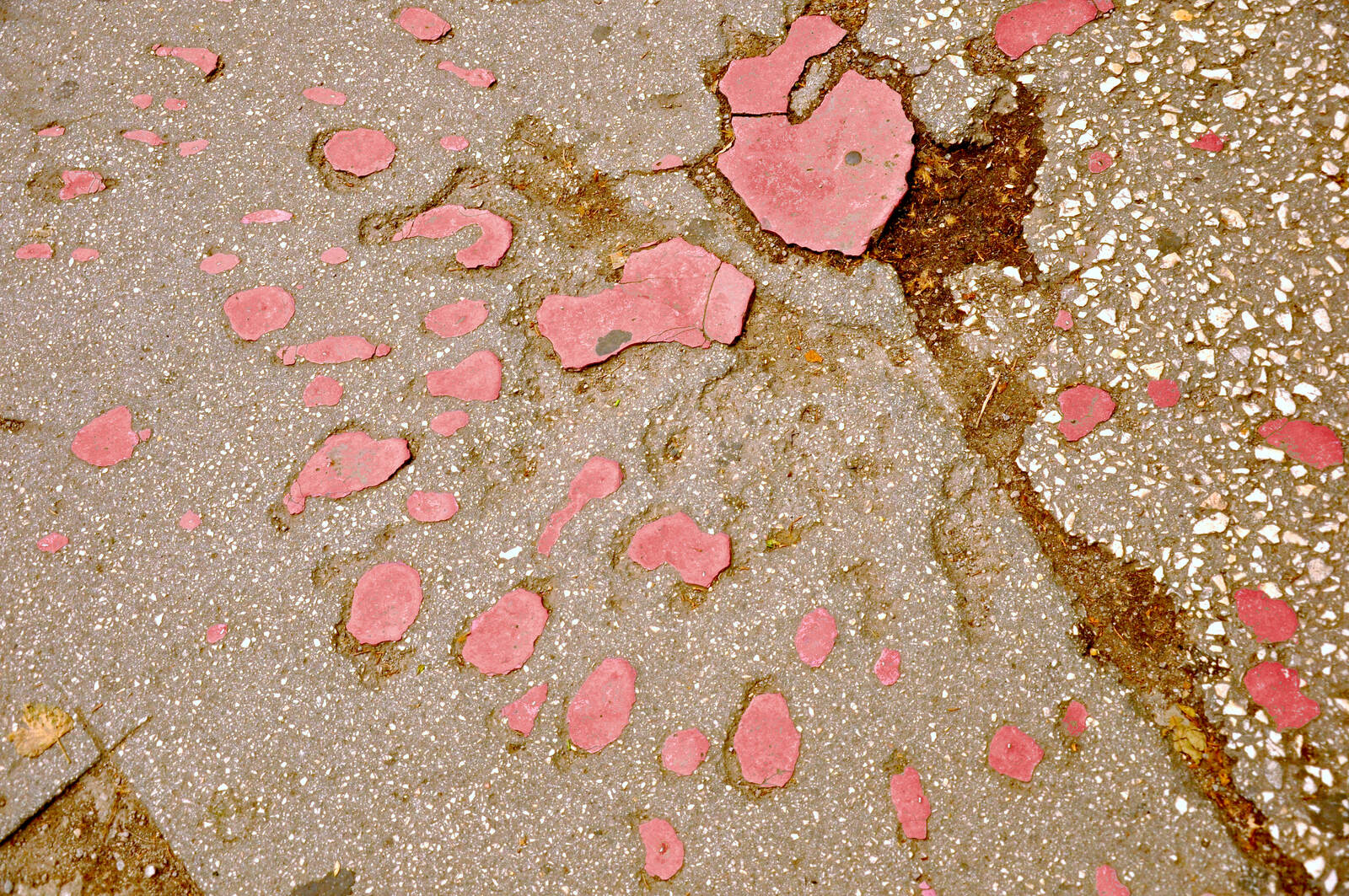

A red-resin-filled mortar-shell scar in the pavement. The improvement: photograph it in rain if you can, when the resin reads black-red and the pavement texture sharpens. Choose the Markale rose (in front of the market). Caption it carefully — these are war memorials, not décor.
Full page: Sarajevo Roses.
9. Caffe Kamarija’s terrace
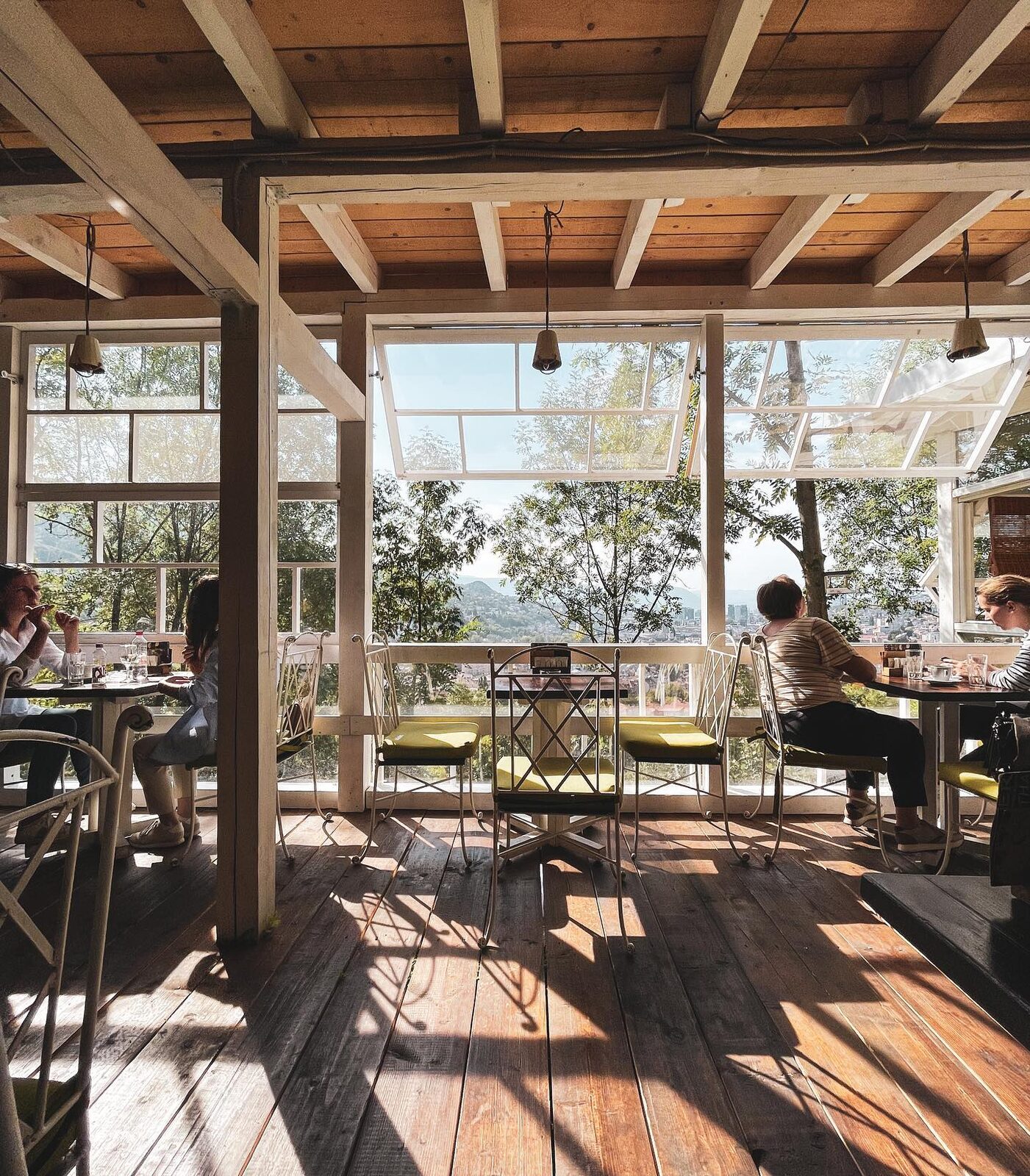
The bazaar laid out under the rampart wall, photographed from a small terrace café at the end of Pod Bedemom. The improvement: stay through the call to prayer at sunset. The image shifts every two minutes for ten minutes; the right frame is somewhere in there.
Full page: Caffe Kamarija.
10. Vrelo Bosne with the swans
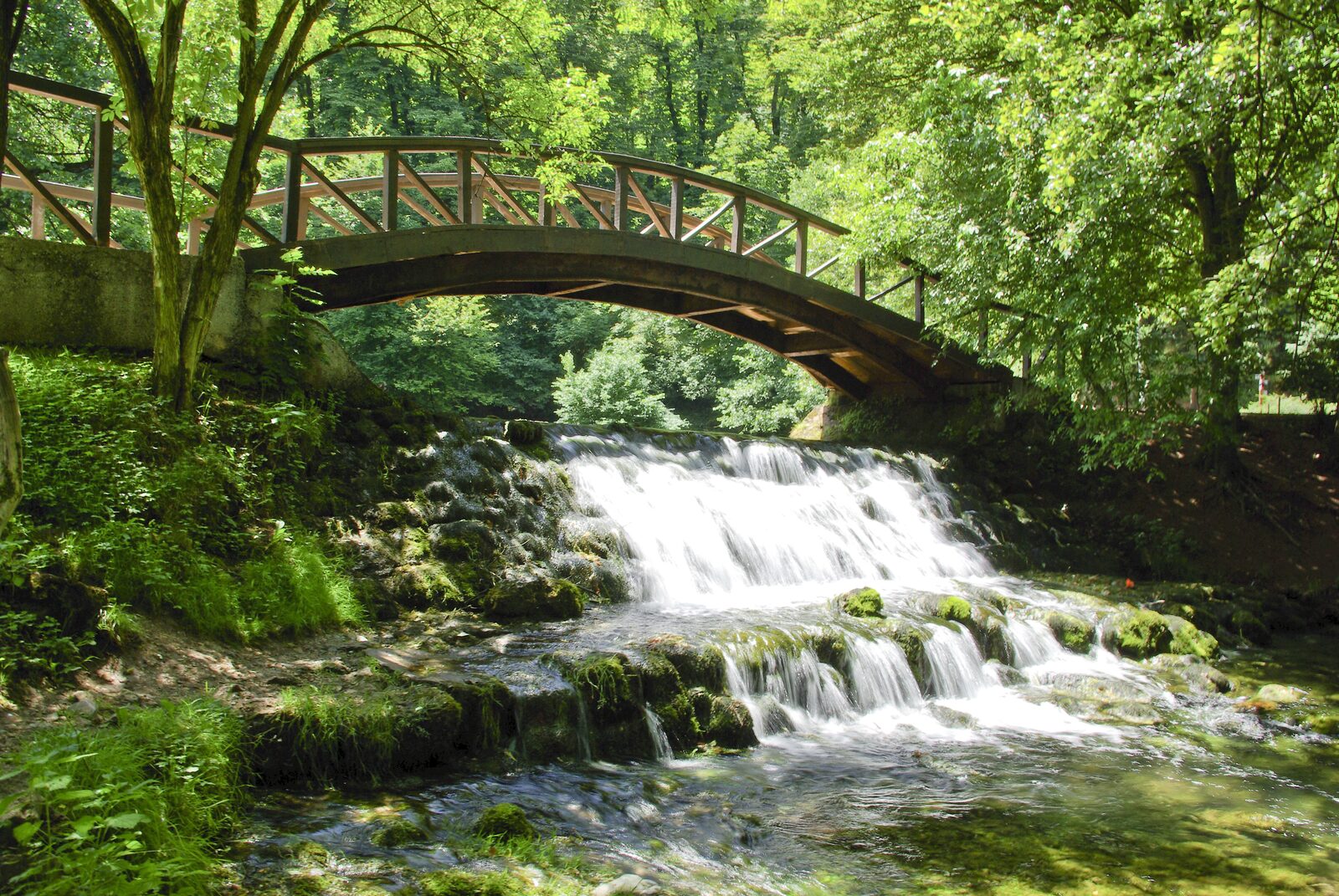

Cold spring water; willows; a clean white swan on the surface. The improvement: photograph from the wooden footbridges, slightly above the water rather than at it. The reflection of the trees is sharper from there.
Full page: Vrelo Bosne.
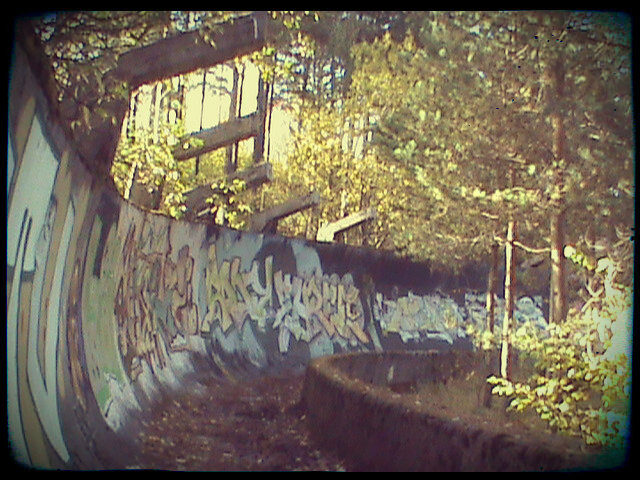
11. Žičara Trebević bobsled track
.jpg)
The graffiti-covered concrete spiral through the forest. The improvement: shoot inside the track itself, looking forward down the curve, with the trees framing the chute. Walk further along than feels comfortable; the best frames are about 300 metres in from the upper station.
Full page: Trebević.
Seven more the postcards skip
The first eleven are the city’s obvious offers. The next seven are the photographs that locals would recommend — less shared, more particular, and in most cases harder to take badly.
12. Bijela Tabija (White Fortress) — the higher panorama
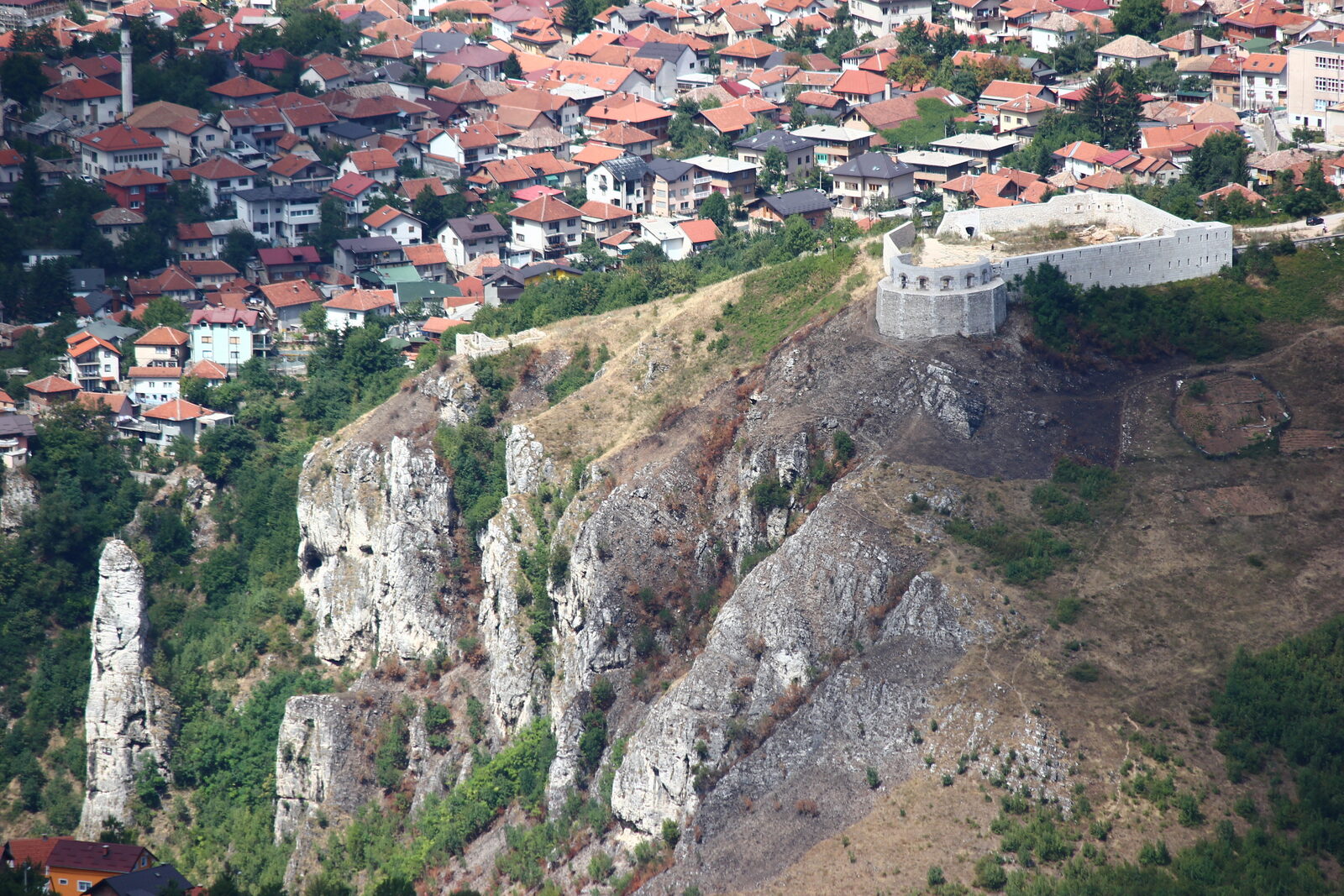

Žuta Tabija (#2) is the known viewpoint. Bijela Tabija sits higher and further east, above Vratnik. The panorama is wider, the crowd is thinner, and the late-afternoon light catches more of the valley. Fifteen minutes’ walk past the Yellow Fortress, uphill. Bring water.
13. Sacred Heart Cathedral — twin Neo-Gothic towers
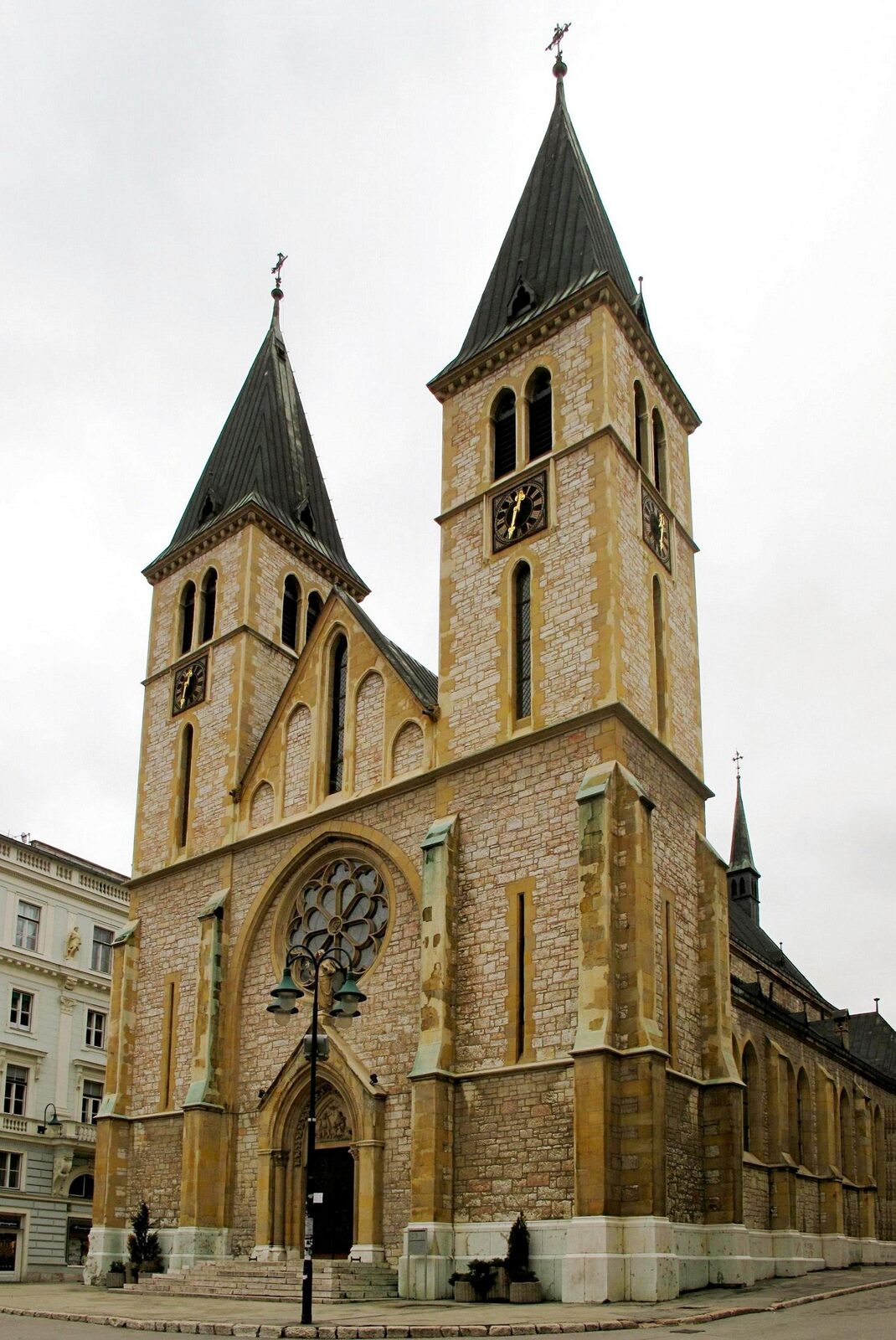

The seat of the Vrhbosna Catholic archdiocese, consecrated in 1889, by the architect Josip Vancaš. The twin towers and the rose window are the city’s most readable Neo-Gothic composition. Pair it with the Orthodox Cathedral and the Gazi Husrev-beg Mosque for the religious-diversity triptych that only Sarajevo offers in three city blocks.
Full page: Sacred Heart Cathedral.
14. Festina Lente Bridge — the modern loop
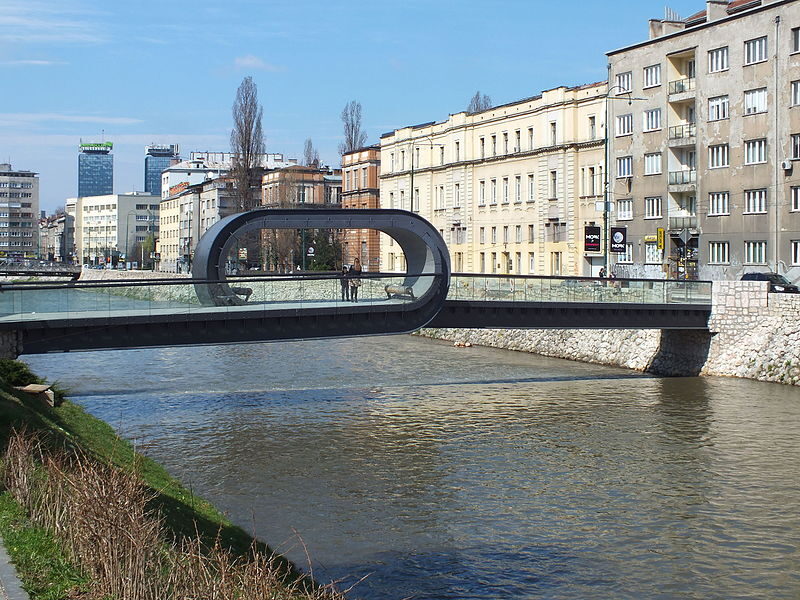

A pedestrian bridge by the Academy of Fine Arts that loops into itself — the name means “make haste slowly”. The architectural perspective play works at its best from the south riverbank at low angles, where the loop frames the Academy’s former-church façade behind it. The single modern composition on a river that is otherwise all Ottoman stone and Habsburg plaster.
15. The Eternal Flame (Vječna vatra)
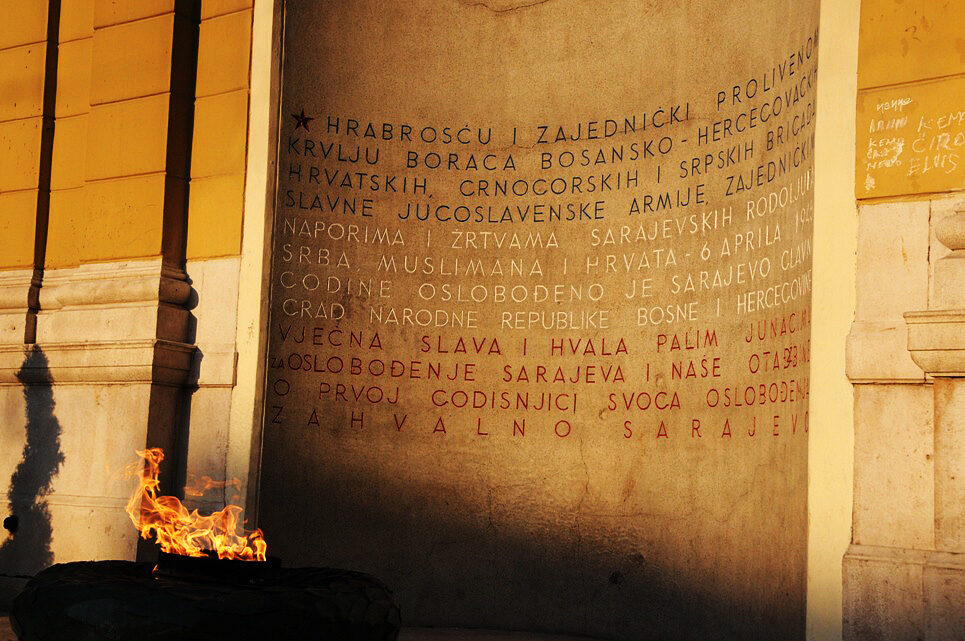

The World War II memorial at the western end of Ferhadija, marking the liberation of Sarajevo on 6 April 1945. The improvement: photograph it at night, when the flame reads against the dark alcove and the pedestrian flow of Ferhadija blurs long-exposure behind it. The subject is stillness, not fire.
16. Inat Kuća (The Spite House)
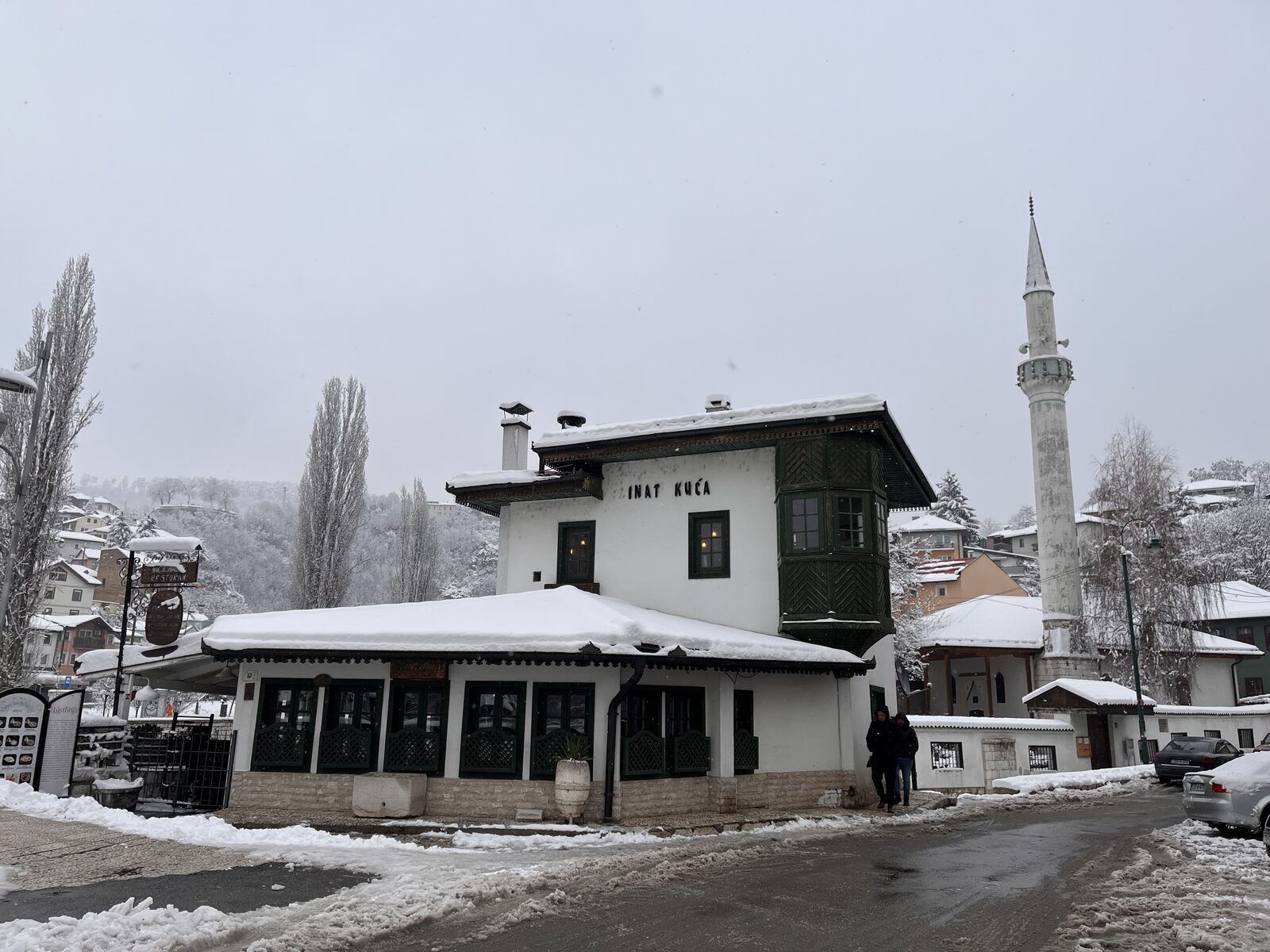

The small wooden house the owner refused to demolish when the Habsburgs wanted the south bank for the City Hall. The building was moved across the river, beam by beam, at the empire’s expense. The photograph that matters is the one that captures both the house and the Vijećnica in a single frame from the riverbank — Ottoman defiance and Habsburg ambition, thirty metres apart.
Full page: Inat Kuća.
17. Sahat Kula — the clock that keeps lunar time
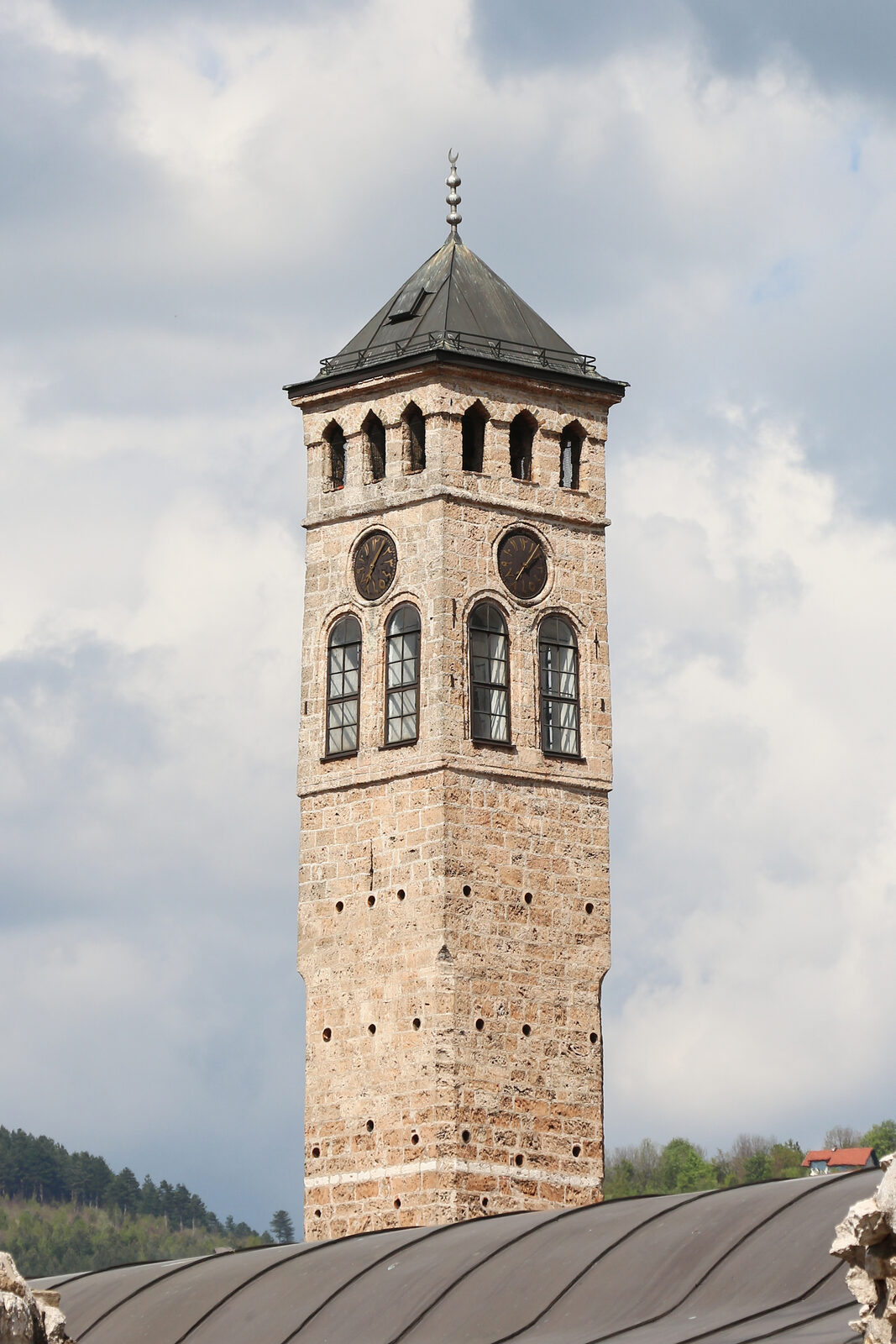

The Ottoman clock tower next to the Gazi Husrev-beg Mosque — the only public clock in the world still keeping lunar time (adjusted daily so that 12:00 aligns with sunset, as in the Islamic prayer calendar). The improvement: shoot the clock face in close-up, filling the frame with the Eastern Arabic numerals and the mechanical hands. The vertical tower-against-sky photograph is less interesting than the face itself.
18. Avaz Twist Tower — the 36th-floor view
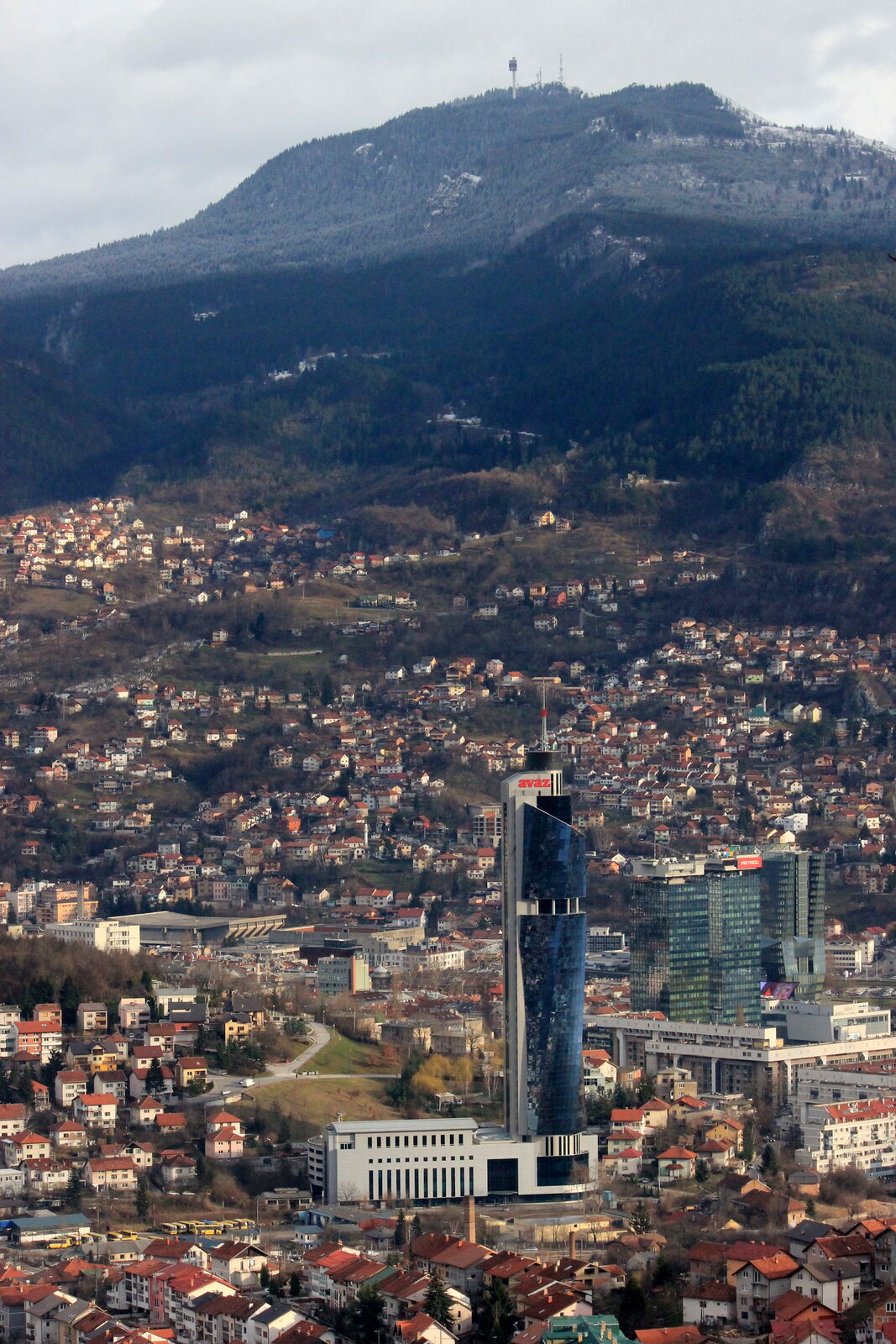

The tallest building in Bosnia and Herzegovina (176 m), with a public observation deck on the 36th floor. The improvement: photograph outward from the top, not the tower itself. The 360-degree panorama from the deck gives the only birds-eye view of Sarajevo that includes both the Ottoman old town to the east and the Yugoslav-era residential blocks to the west — the entire city in a single sweep. The tower itself is better photographed from the Marijin Dvor embankment.
Full page: Avaz Twist Tower.
Three smaller suggestions
- The light through Sebilj’s wooden roof at about 11:30 on a bright morning is one of the city’s gentlest small subjects. No people in the frame. Just the warm slats.
- The Žuta Tabija cannon during Ramadan, the moment the muezzin’s call begins. Move from “I am taking a photograph” to “I am watching” for one breath, then shoot.
- An empty Sarači at 07:30 on a Sunday. Almost no other photograph of the bazaar exists from that hour.
Hashtags that work
Five to ten per post is the working range. More than that and the algorithm reads it as spam; fewer and the post reaches only your existing followers. A short, curated set sorted by what it does:
The city (use on every Sarajevo post): #sarajevo · #visitsarajevo · #sarajevocity · #sarajevogram
The country and region: #bosnia · #bosniaandherzegovina · #balkan · #balkans
The specific place (pick the one that matches your shot): #bascarsija · #sebilj · #vijecnica · #trebevic · #vrelabosne · #latinbridge · #ferhadija · #kazandziluk · #bobsledtrack
The subject (pick one or two): #bosankakafa · #sevdah · #cevapi · #sarajevoroses · #olympicsarajevo
Travel and photography (pick two, not six): #travelphotography · #travelgram · #instatravel · #europetravel · #cityscape
What not to use. Generic volume hashtags like #love, #instagood, #photooftheday, #beautiful add nothing — they are so large that your post disappears in seconds. A post tagged #sebilj reaches people who are looking for the Sebilj. A post tagged #beautiful reaches nobody.
One habit. Before posting, search your top hashtag on Instagram and look at the recent tab. If the most recent post is from today, the hashtag is active. If the most recent post is from three months ago, pick a different one.
Caption-writing notes
Three small editorial habits that will keep your Sarajevo photographs from sounding like everyone else’s:
- Name the place specifically. “Sebilj fountain” beats “Sarajevo old town.”
- Use Bosnian when natural. “Bosanska kafa” not “Bosnian coffee.” “Sevdalinka” not “Bosnian blues.”
- Refuse the word “magical.” And “stunning.” And “must-visit.” We avoid them everywhere else on this site, and you can borrow the discipline. The photograph will speak more clearly with restraint underneath it.