Sarajevo — the Muslim family that hid a Jewish family from the Nazis in 1941, and were saved by them fifty years later
In April 1941, Mustafa Hardaga took Josef Kavilio's family into his Vratnik home when the Germans bombed theirs. In February 1994, when Zejneba Hardaga was 76 and trapped in besieged Sarajevo, the Kavilios in Jerusalem got the State of Israel to bring her out. Yitzhak Rabin himself intervened.
Here is a Sarajevo story that everyone in this city grows up hearing at least once, and that too few people outside the city know. It is one of the most quietly extraordinary rescue-and-return stories of the twentieth century. Verifiable at every point. Yad Vashem has been the archival keeper of it since 1984. Wikipedia has an entry for it. The New York Times has covered it. And it is not on the tourist maps.
Here it is.
April 1941 — the Kavilios come to the door
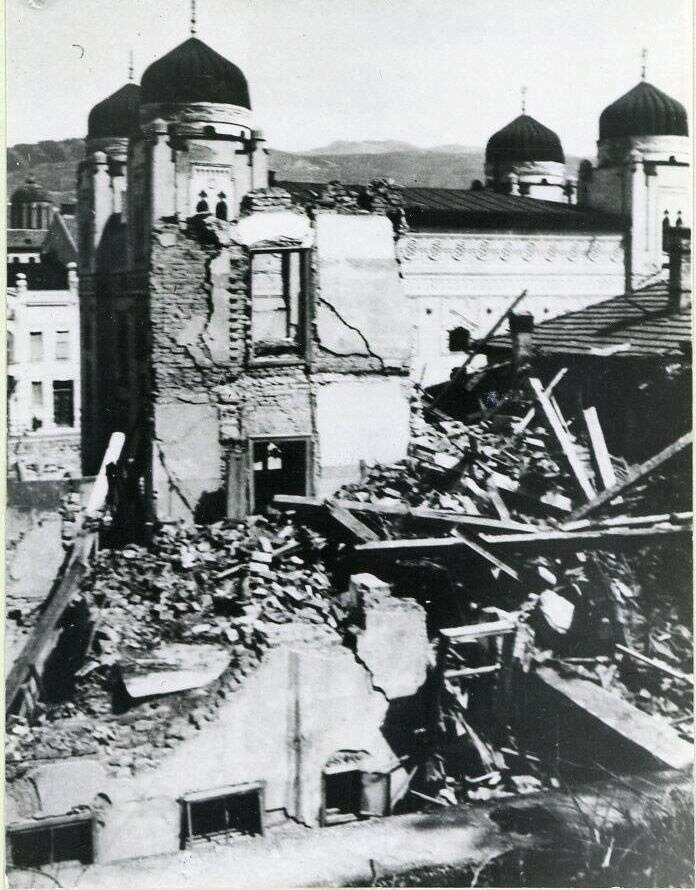

Josef Kavilio ran a small factory in Sarajevo that made steel sewage pipes. He rented the building from a kind Muslim landlord, Mustafa Hardaga, who lived with his wife Zejneba and his brother Izet and his sister-in-law Bachriya in a house in the traditional Muslim mahala of Vratnik, on the slope above Baščaršija. The two men had a good business friendship. They had, per Josef’s later testimony, been at each other’s tables for years.
Then in April 1941, the German Wehrmacht invaded Yugoslavia. Sarajevo was bombed from the air. Josef Kavilio’s family home was destroyed in the first wave of air raids. His wife Rifka and their two young children were alive, but they had nowhere to live, and the pro-Nazi puppet state of the Nezavisna Država Hrvatska (Independent State of Croatia, the Ustaša regime that ran Sarajevo under German protection) was in the process of announcing anti-Jewish laws that would strip them of any legal status by the end of the month.
Josef, walking toward his factory to see what was left of it, met Mustafa Hardaga on the street. Mustafa saw the state of the family and, without a long conversation, said: come and stay at our house.
That was the moment the story starts.
What sheltering a Jewish family required, in April 1941 Sarajevo
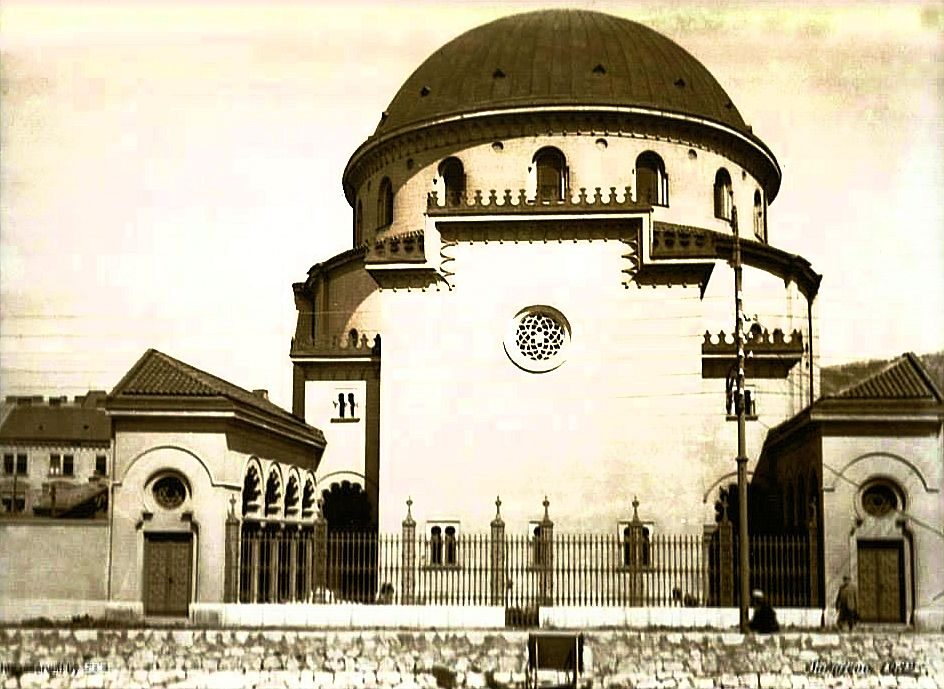

Under Ustaša law, hiding Jews was punishable by death.
Mustafa Hardaga knew this. So did Zejneba. So did Izet and Bachriya. And in the religious framework the Hardagas lived in, as observant Muslims, an additional problem: it was not customary for the women of the house to appear unveiled in front of strange men, and having Josef Kavilio and his family living under the same roof would break that convention every day for the duration.
Mustafa’s response, per Josef’s later testimony to Yad Vashem, was to gather the family and say to the women:
“From today on, you will not cover your faces in front of Josef and his family. They are our brothers and sisters. Their pain is our pain.”
Then he moved the Kavilios in.
Rifka and the two children stayed at the Vratnik house until Josef could arrange for them to be moved to Mostar, which was in the Italian-controlled zone of divided Yugoslavia. The Italians, for their own reasons in the 1941 geometry, were not enforcing the German anti-Jewish laws with the same rigour as the Ustaše, and Rifka and the children survived the war there.
Josef stayed in Sarajevo. He was, at various points, arrested and forced to clean streets under an Ustaša labour order. Zejneba brought him food daily, walking to the labour site with a bundle, giving it to Josef, and (in the version of the story Yad Vashem records) giving portions to the other Jewish prisoners around him as well.
Josef eventually escaped through the mountains. He returned, at least once, to the Hardaga house before finally getting out of Sarajevo to join his family in Mostar.
What happened to Zejneba’s father
The Hardaga story does not end without a cost.
Zejneba’s father, Ahmed Sadik, hid a different Jewish family in his own home during the same period: the Papo family. He was arrested by the Ustaše for it. He was executed.
Zejneba was in her twenties. Her father had died for the same act her husband was continuing to perform in the same city, at the same moment.
She kept sheltering the Kavilios.
The end of the war
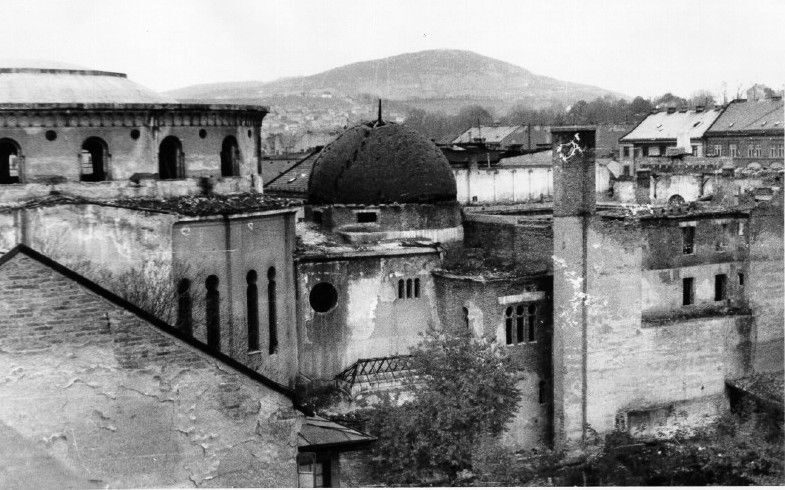

The war ended in 1945. The Kavilios survived — Josef, Rifka, both children. Most of the pre-war Sarajevo Jewish community did not: of the roughly 12,000 Jews living in Sarajevo in April 1941, about 10,500 were killed in the Ustaša camps or in Auschwitz. The Hardaga rescue is one small reason the number was not 12,000.
After the war the Kavilios eventually immigrated to Israel. Mustafa Hardaga died in the 1960s. Zejneba stayed in Sarajevo.
1984 — the recognition
In 1984, the Kavilio family, from Israel, formally petitioned Yad Vashem — the Israeli Holocaust remembrance authority — to recognise the Hardagas and Ahmed Sadik as Righteous Among the Nations, the honour Israel awards to non-Jews who saved Jewish lives during the Holocaust.
Yad Vashem investigated. The evidence stood up. In 1985, at a formal ceremony, Zejneba Hardaga — the surviving matriarch — received the Righteous Among the Nations medal. The Hardaga family was the first Muslim family in the world to be awarded the honour.
That is the story of the first fifty years.
1992–1994 — the rescue in reverse
Then the twentieth century did what it does to Sarajevo. On 6 April 1992, the siege began. Zejneba Hardaga, by then in her seventies, was living in the same city she had lived in her whole life. It was no longer safe.
In Jerusalem, Rifka Kavilio — the woman who had, as a young mother, been sheltered by Zejneba in 1941 — was watching the siege on the news. Sarajevo was being systematically destroyed. Zejneba was in it.
Rifka contacted an Israeli journalist. She asked for confirmation that Zejneba was still alive. It came back: yes. Then she started making calls.
The escalation: Josef Kavilio was ill by this point but was involved; the couple’s grown children were involved; the Israeli Jewish community was involved; and eventually — and this is the fact worth writing down slowly — Israeli Prime Minister Yitzhak Rabin personally intervened to authorise a state evacuation.
The convoy
In February 1994, in the middle of the worst winter of the siege, an evacuation convoy of six buses — the last convoy of mostly Jewish refugees organised by the American Jewish Joint Distribution Committee (JDC) and Sarajevo’s own Jewish community organisation La Benevolencija — left Sarajevo for Croatia.
Zejneba Hardaga was on one of those buses. So were her daughter Sara, her son-in-law Branimir, and her granddaughter Sasha.
She was 76 years old.
The convoy carried about 300 people across the front lines to Kiseljak, then to Split, then to Israel. On 10 February 1994, Zejneba Hardaga — the Muslim woman who had, half a century earlier, sheltered a Jewish family from the Nazis in her Vratnik house — landed at Ben Gurion Airport in Tel Aviv as a refugee from a different genocide.
Rifka Kavilio was there to meet her.
What happened next
Zejneba lived one more year. She died in Israel in 1995, aged 77.
Her daughter Sara, her son-in-law Branimir, and her granddaughter Sasha stayed in Israel. Over the following years, all three converted to Judaism. Branimir took the Hebrew name Moshe. Sasha took Ruth. Sara kept her name. When the Beit Din — the Jewish religious court — asked Sara why she wanted to convert, she said the line the Yad Vashem record preserves:
“Because of what my mother did, it is only natural that I should want to become Jewish.”
Sara Pecanac still lives in Jerusalem. She worked for many years at Yad Vashem — the archive that keeps her mother’s rescue on the historical record.
What this story is, and what it isn’t
Not a story about religion. A story about neighbours. Mustafa Hardaga hid Josef Kavilio in 1941 not because he was a Muslim and Josef was a Jew. He hid him because they had known each other for years and because the alternative was to let a family die.
Not a story about states. Both times, the rescue happened despite the state (Ustaša 1941, siege 1994), not because of it. The Israeli state’s 1994 intervention was itself organised as a personal act of a family paying a personal debt, in a country whose founding logic includes that debt.
Not a story that is over. Sara Pecanac is alive in Jerusalem in 2026. The Kavilio family is alive. The chain of favour returned is now in the third generation.
What to do with the story
.jpg)
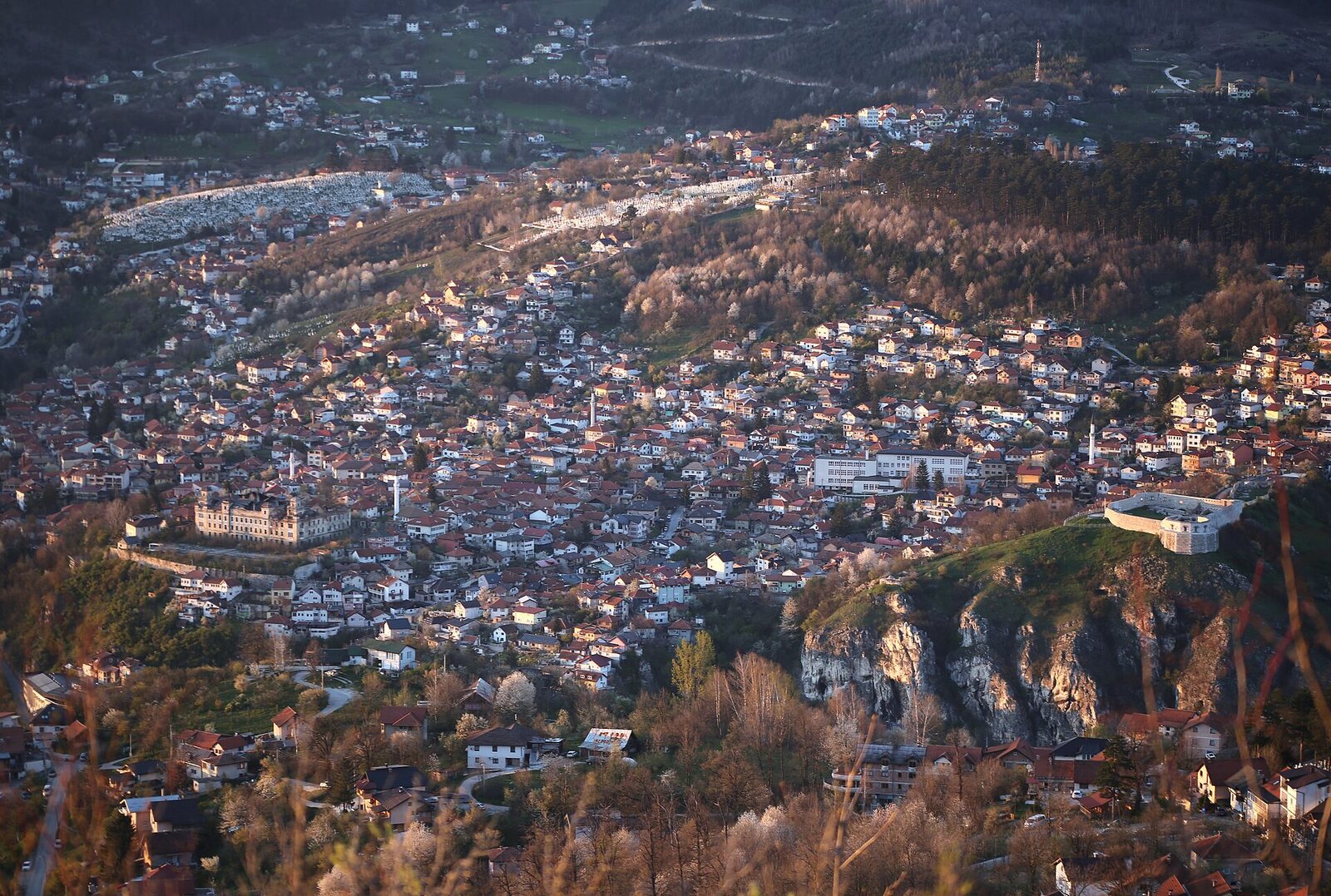
No plaque in Vratnik. No dedicated Hardaga-Kavilio museum in Sarajevo. No walking tour. You cannot find the address of the Hardaga house on Google Maps because it is a private house of a private family, and visiting a private house is not what this story asks of you.
What it asks of you is to read it. Then, on your next Sarajevo visit, when you walk up Kovači into the Vratnik slope, or when you visit the Old Jewish Cemetery on the Kovačići slope on the south side of the river, carry the chain of dates with you.
April 1941. Mustafa Hardaga opens the door. 1943. Ahmed Sadik is executed for the same act. 1985. Zejneba receives the medal in Jerusalem. February 1994. A six-bus convoy takes her back. 1995. She dies in Israel, aged 77. 2026. Her daughter still works, in a real sense, on the same file.
This is what multi-faith Sarajevo actually meant, and what it can still mean, at the hardest moments in the twentieth century’s arithmetic.
Josef Kavilio’s testimony is on the Yad Vashem website. Go read it. If you want the fuller printed version, look for Eva Fogelman’s Conscience and Courage: Rescuers of Jews During the Holocaust (Anchor, 1994), which treats the Hardaga case in its Muslim-rescuer chapter.
And when you’re standing in Baščaršija on your next visit and someone tells you that Sarajevo has been a multi-faith city for five hundred years, remember what that means. It means that in 1941 and 1994, in the same city, in the same Muslim household across two generations, the chain of neighbourliness held.
That is the reason Sarajevo is worth visiting.
Read the Hardaga file.
Sources & further reading
Keep reading
More from the guide.

Sarajevo siege — 1,425 days, and how to read the marks it left on the city
The Siege of Sarajevo lasted 1,425 days, from 5 April 1992 to 29 February 1996, making it the longest siege in modern...

Sarajevo Olympics — twelve days on mountains that became the front line eight years later
The 1984 Winter Olympics were held in Sarajevo — twelve days on mountains that eight years later became artillery positions. The bobsled...

Sarajevo defeated the sultan's governor in 1814, and the empire had to sack him
Everyone at the Ottoman court in 1814 knew Sarajevo was difficult. What most people don’t know is that in that year the...