
Explore Sarajevo / Destinations / Sarajevo Kovači Street
Destination · Stari Grad · 4 min read
Sarajevo Kovači Street
The cobbled climb out of Baščaršija toward Vratnik — once the blacksmiths' quarter, now the spine of the city's café row and the path to the Kovači war cemetery.
- Established
- 15th century (Ottoman)
- By
- Ottoman residential mahala


At a glance
Address
Kovači, Stari Grad (from the Sebilj uphill toward Vratnik)
Hours
Open street
Price
Free
Getting there
Walk from the Sebilj — 3 minutes to the lower cafés, 10 minutes to the cemetery
Time needed
An hour for the climb and one café; half a day with the cemetery and a long sit
Best time
Late afternoon into golden hour, when the bazaar lights begin to come on below
Coordinates
43.8602° N 18.4321° E
Navigate
Walk to the Sebilj fountain at the heart of Baščaršija, look uphill, and you will see a narrow cobbled street climbing north-east into the residential slopes of Stari Grad. That is Kovači. It is the route the city takes when it stops being a market and starts being a neighbourhood.
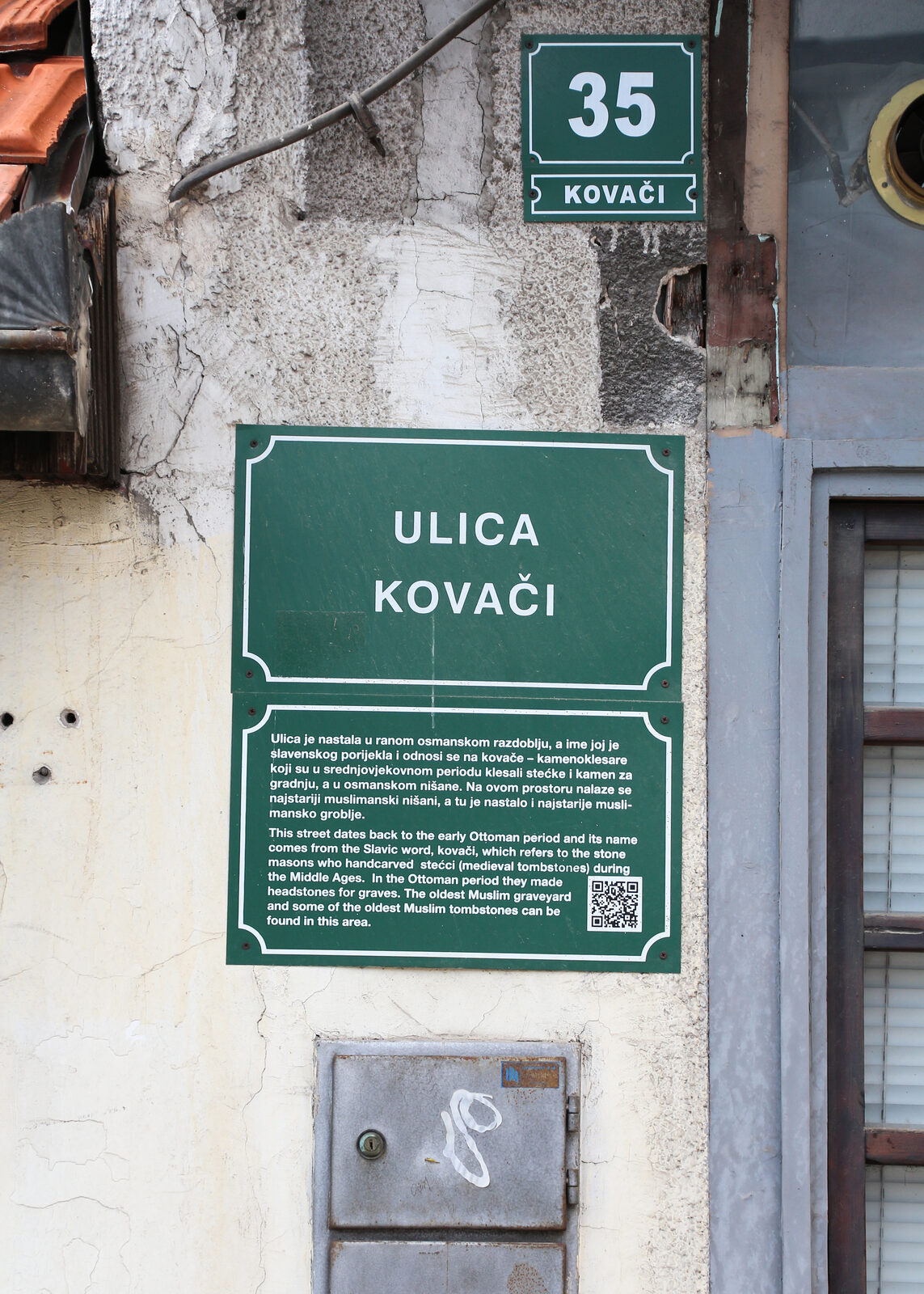
The street has been here, in something like its present form, since the 15th century. The name kovači means blacksmiths. Ottoman Sarajevo organised its trades by street, Kazandžiluk for coppersmiths, Sarači for saddle-makers, Bravadžiluk for locksmiths, Halači for cotton-fluffers, and the blacksmiths got this one. The forges are long gone. The street name stayed.
What it is today
Kovači today is a quietly important part of the city, in three ways at once.
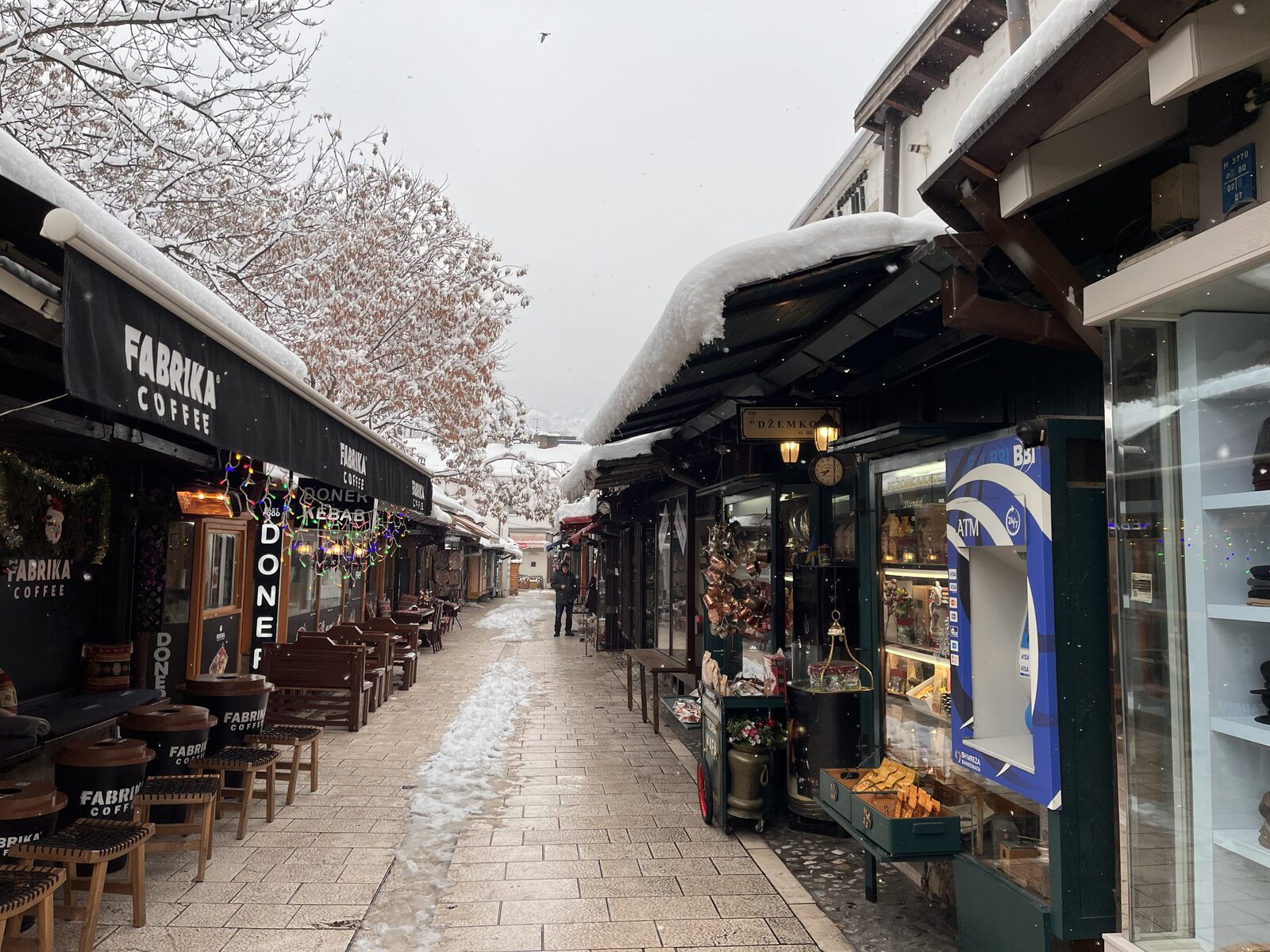
It is a residential street. Low Ottoman-style houses with overhanging upper storeys line the lower section. People live here. Cats sit on doorsteps. Laundry hangs from the windows above the cafés. The street has none of the bazaar’s tourist density and most of the bazaar’s architecture.
It is the city’s café row. A short walk up from the Sebilj, within the first three hundred metres, there are three of Sarajevo’s best cafés, each different in character and each excellent at what it does:
- Čajdžinica Džirlo (Kovači 16): a tiny traditional teahouse, opened 1997, fifty-three teas, salep in winter, a husband-and-wife project that became, by most measures, the best teahouse in Bosnia.
- Ministry of Ćejf (Kovači 26): Bosnia’s first third-wave specialty coffee café, opened 2018, single-origin espresso pulled with attention, a terrace overlooking the bazaar.
- Ćejf Coffee Roasters: the working roastery a few doors further up, where Ministry’s beans are roasted and sold by the bag.
Each gets its own page on this site. A slow afternoon on Kovači, one café going up, one coming down, is the correct introduction to Sarajevan coffee culture as it is now practised.
It is the route to the cemetery. Continue uphill for another five hundred metres and the street opens onto the Kovači šehidi mezarje, the Kovači martyrs’ cemetery, the principal memorial to the defenders of Sarajevo during the 1992–1995 siege. White marble tombstones cover the hillside in disciplined rows. Alija Izetbegović, the first president of Bosnia and Herzegovina, is buried here. The cemetery has its own page on this site; visit quietly.
A short historical note
Kovači sits in the upper part of Stari Grad, the old town, on the southern slope below the Vratnik citadel. Under Ottoman rule the city was organised as a network of mahalas, small residential quarters each typically anchored on a mosque, a fountain, and a few craftsmen’s workshops, and Kovači was one of these. The pattern is still legible on the ground. Houses are oriented inward toward courtyards. Minarets break the rooftop line at regular intervals. The light is good.
In the 19th century, when the Habsburgs took over and re-engineered Sarajevo around the broad axis of Ferhadija, much of the upper old town was left alone. Kovači stayed Kovači. The buildings that line it now are mostly Ottoman or Austro-Hungarian successors built in the Ottoman style. There are no Habsburg blocks here. There is no tram. There is, increasingly, very good coffee.
How to use it
Start at the Sebilj. Buy nothing. Look up the street and start walking. Keep climbing past the first café (you may stop on the way back); keep climbing past the second; reach the cemetery at the top of the rise, sit for ten minutes on a bench under the cypresses, then turn around and walk back down.
On the descent the city is laid out below you, minarets, rooftops, the broad swing of the Miljacka, the slope of Trebević across the valley. The light is best between 17:30 and sunset in summer; an hour earlier in winter.
The total walk is less than a kilometre. The total time, if you do it properly, is half a day. That is the kind of street Kovači is.
Sources & further reading
More views
From Sarajevo Kovači Street
Photographs: Bernard Gagnon · source · CC BY-SA 4.0


Keep wandering
Nearby & related.

Sarajevo Baščaršija
The 1462 Ottoman bazaar of Sarajevo, still a working bazaar. Copper workshops on Kazandžiluk, Bosnian coffee at Morića Han, and...

Sarajevo Kazandžiluk
Kazandžiluk is the row of coppersmiths’ shops that runs east from the Sebilj into Baščaršija. The patterns being hammered here...

Sarajevo Sarači
Sarači is the long pedestrian street that bisects Baščaršija from the Sebilj fountain west to the great Friday mosque. It...