Sarajevo — the 1462 Ottoman bath reopened as a working spa in 2014, and you can still book a slot
Isa-beg built his hammam in 1462, the year he founded Sarajevo. It ran as a working bath for four centuries. Most western-Balkan hammams that survived to 2000 are museums now — this one, restored 2010–2014, is one of very few still running the ritual it was built for. Standard bath 25 KM, cash. Bring nothing.
Isa-beg Ishaković founded Sarajevo in 1462. He took the small existing settlement at Vrhbosna, laid out the Muslim quarter around a mosque and a han (traveller’s inn), and started building. Among the first structures he built was a hammam — a public bath — on the south bank of the Miljacka, in what is now Bistrik. He named it after himself. (The same year, on the opposite bank, he founded the Mevlevijska tekija at Bentbaši.)
The hammam ran as a working bath for the next four hundred years. Under Ottoman rule (until 1878). Under Habsburg rule (1878 to 1918). Under the Kingdom of Yugoslavia. Into the socialist Yugoslav period. The clientele changed with the empire; the architecture didn’t. Same stone domes over the bath chambers. Same central marble platform — the göbektaşı, the “belly stone,” heated from below. Same sequence of hot room, warm room, and cold room. Same scrub-and-rest ritual, more or less unchanged since the fifteenth century.
Then in the twentieth century it slowly stopped working. Municipal water and private bathrooms in every apartment took away the need for a public bath. The hammam closed some time after World War II. It was used as storage, briefly as a museum piece, and then mostly not used at all. By the 1980s the building was structurally sound but functionally empty. It stood like that through the siege and into the 2000s.
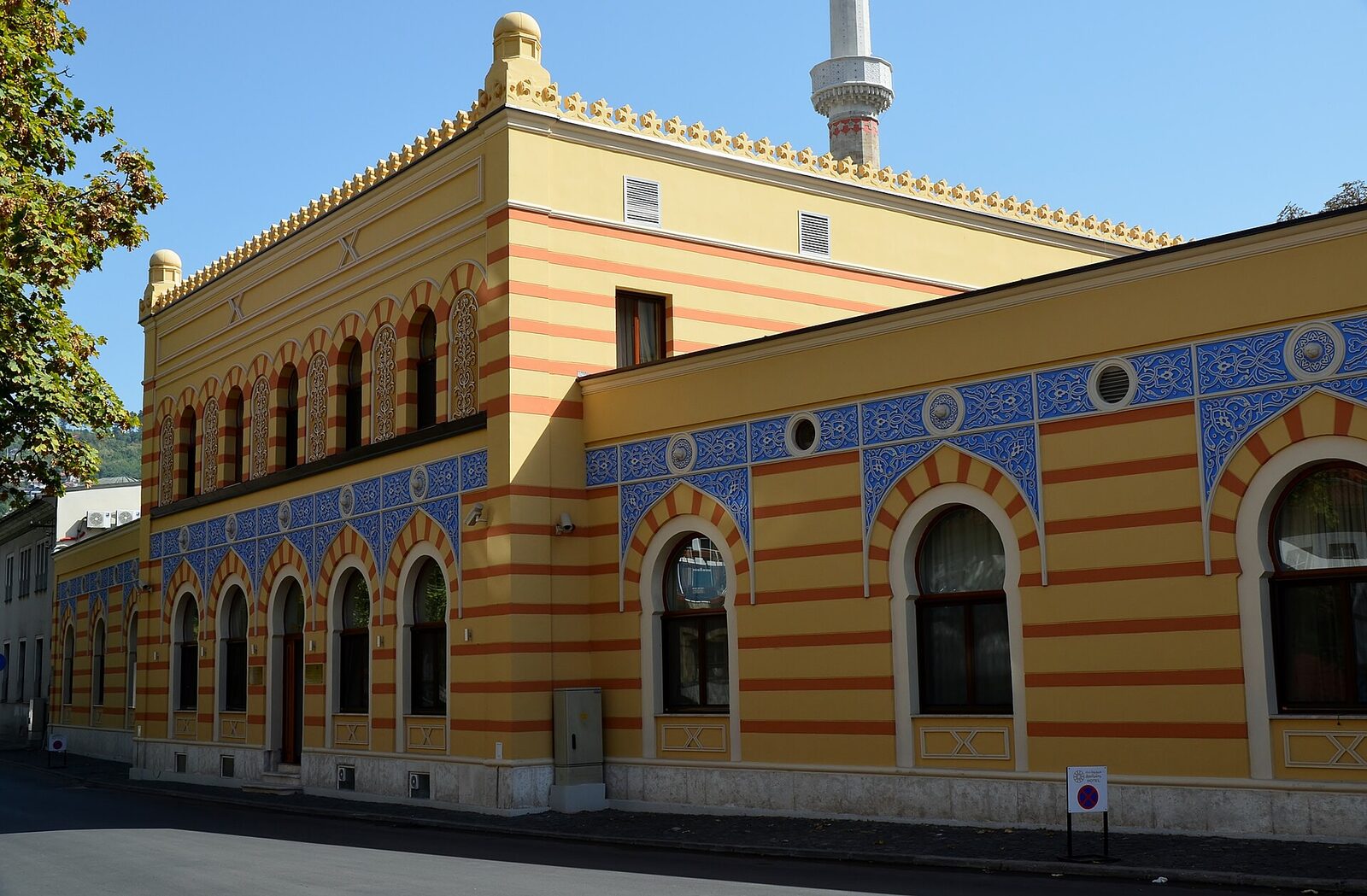
In 2010 a Bosnian-Turkish restoration project began. Four years of careful work — the domes cleaned and re-leaded, the underfloor heating restored, the marble platform relaid, the two separate men’s and women’s sides re-opened — and in 2014 the Isa-Begov Hamam opened again as a working Ottoman-style spa. Not a museum. A bath.
.JPG)
What the restoration actually did
The building had never been demolished. That is the important thing to know. The stone shell, the domes, the marble floor, the vaulted bath chambers — all of it was original fifteenth-century construction, with layers of Ottoman and Habsburg-era repair. What the 2010–2014 restoration did was:
- Rebuild the underfloor heating system. The original hipokaust (Roman-Ottoman under-floor heating) had been dead for a hundred years. The restoration installed a modern equivalent that heats the marble floor and the central platform to the correct temperature — around 40°C on the marble, air temperature around 50°C in the hot room.
- Restore the lead cladding on the domes. Sarajevo’s hammams have lead-covered domes that read as almost black from outside. The lead was replaced where corroded, kept where sound.
- Rework the water and drainage systems to modern hygiene standards.
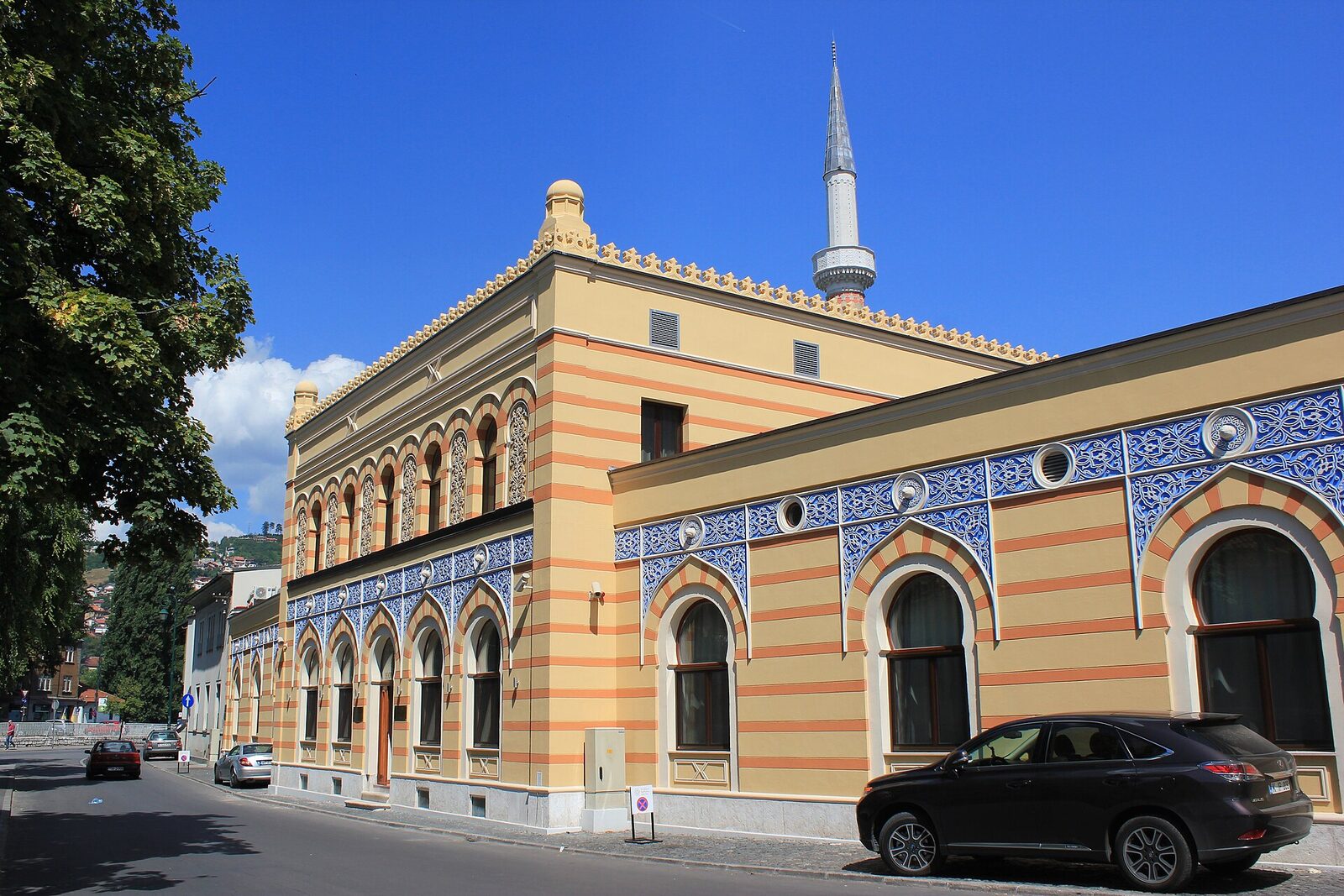
- Split the building into a spa on the ground floor and a nine-room boutique hotel on the upper level. The hotel is small, quiet, and expensive; the spa is open to walk-ins.
- Re-establish separate men’s and women’s hours. The tradition, going back to the fifteenth century, is that hammams have separate sessions for men and women rather than mixed use. The restoration preserved this. Check the current schedule on arrival — it varies.
What the restoration did not do was change the geometry. The bath chambers are the same size and shape they were in 1462. The dome heights, the arch spans, the marble platform placement — all original. If Isa-beg had walked in in 2014 he would have recognised the space.

The ritual, as it currently runs
If you book the standard bath — 25 KM at time of writing, around €13 — you get about ninety minutes. You are handed a modesty wrap at the entrance (mandatory), a robe, towel, slippers, and soap. You leave your clothes in the changing room.
You move through the rooms in sequence. The cold room first, briefly, to acclimatise. Then the warm room, where you sit for ten or fifteen minutes and let the heat work. Then the hot room, with the göbektaşı in the centre, where you lie flat on the heated marble and sweat. Twenty minutes or so. Then a rinse, a return to the warm room to cool down, and finally the rest room where you sit wrapped in a towel and are served Bosnian coffee.
The full ritual — 70 KM — adds a kese scrub (an exfoliating glove worked by an attendant, quite firm) and a massage. Total time about two and a half hours. The attendant does not speak English but the sequence is universal.

Why this hammam is different
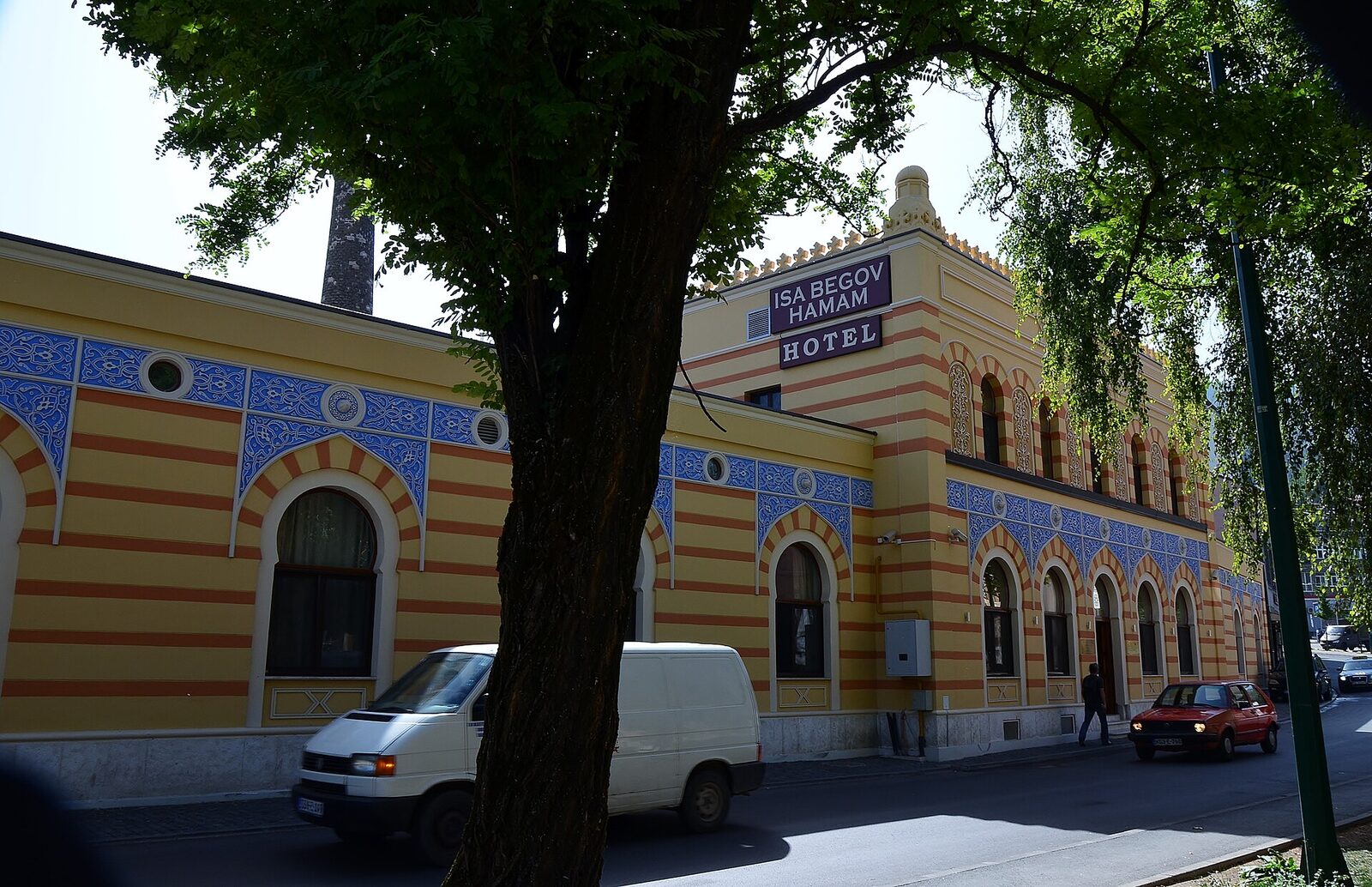
Most Ottoman hammams that were still standing in the western Balkans by 2000 have been converted into museums, restaurants, or exhibition spaces — the architecture preserved, the function retired. The Isa-Begov Hamam is one of very few — arguably the only significant one in Sarajevo — that has been restored back to what it was built for. You do not tour it as a heritage site. You use it as a bath.
That is a slightly different proposition from a Roman-bath ruin or a Turkish-museum bath. The rooms have humidity, the marble is warm underfoot, the domes echo with the sound of running water. It reads correctly as a fifteenth-century Ottoman bath because it is a fifteenth-century Ottoman bath, running the ritual it was built to run.
Five hundred and sixty-four years since Isa-beg opened it. Twelve years since the current owners reopened it. The domes look the way they always looked; the water still comes up hot; the coffee at the end is Bosnian, unfiltered, and served in the traditional little copper džezva. Bring nothing. It works.
Sources & further reading
Keep reading
More from the guide.

Sarajevo National Museum — four buildings pretending to be one, and the Haggadah has been inside since 1894
The Sarajevo National Museum, Zemaljski muzej Bosne i Hercegovine, is a four-pavilion complex on Zmaja od Bosne designed by Karel Pařík and...
Sarajevo — the Vijećnica reopened on 17 July 2014, twenty-two years after Serb shells burned it, and the new façade is a very careful copy
The Vijećnica opened in 1896 as the Habsburg-era City Hall of Sarajevo. From 1949 it held the National and University Library. On...

Sarajevo's iron fences — the pheasant on Sime Milutinovića 15, and other pieces you walk past
Push a heavy oak door open in a Habsburg-era palace on Strossmayerova, or Vrazova, or Obala Kulina bana, and look up. The...