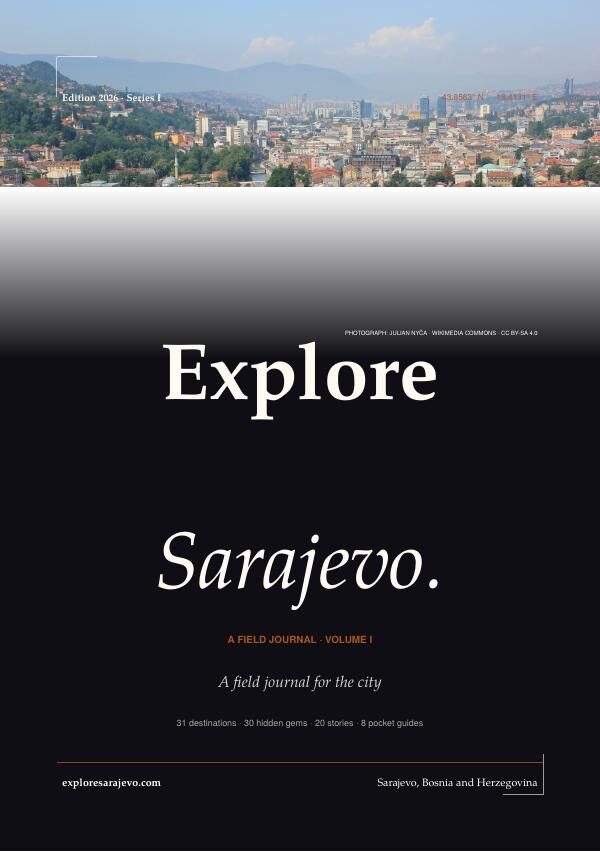
Explore Sarajevo / Destinations / Sarajevo Isa-Begov Hamam
Destination · Bistrik · 4 min read
Sarajevo Isa-Begov Hamam
Sarajevo's first Ottoman public bath, founded around 1462 by the city's founder Isa-beg Ishaković — restored and reopened in 2014 as a working spa and small boutique hotel.
- Established
- c. 1462; restored 2010–2014


At a glance
Address
Bistrik 1, Bistrik
Hours
Spa typically 09:00–22:00, with separate hours for men and women. Verify on arrival. The small hotel is open year-round.
Price
Standard bath ~25 BAM; full ritual with massage ~70 BAM.
Getting there
8 minutes' walk south from the Latin Bridge, across the Miljacka into Bistrik. Tram 1, 2, 3, 4 or 5 to Latinska Ćuprija.
Time needed
1.5–2 hours for a standard bath; 3 hours for the full ritual with rest and tea.
Best time
Late morning or early evening; the steam room is most pleasant when not crowded.
Coordinates
43.8587° N 18.4287° E
Navigate
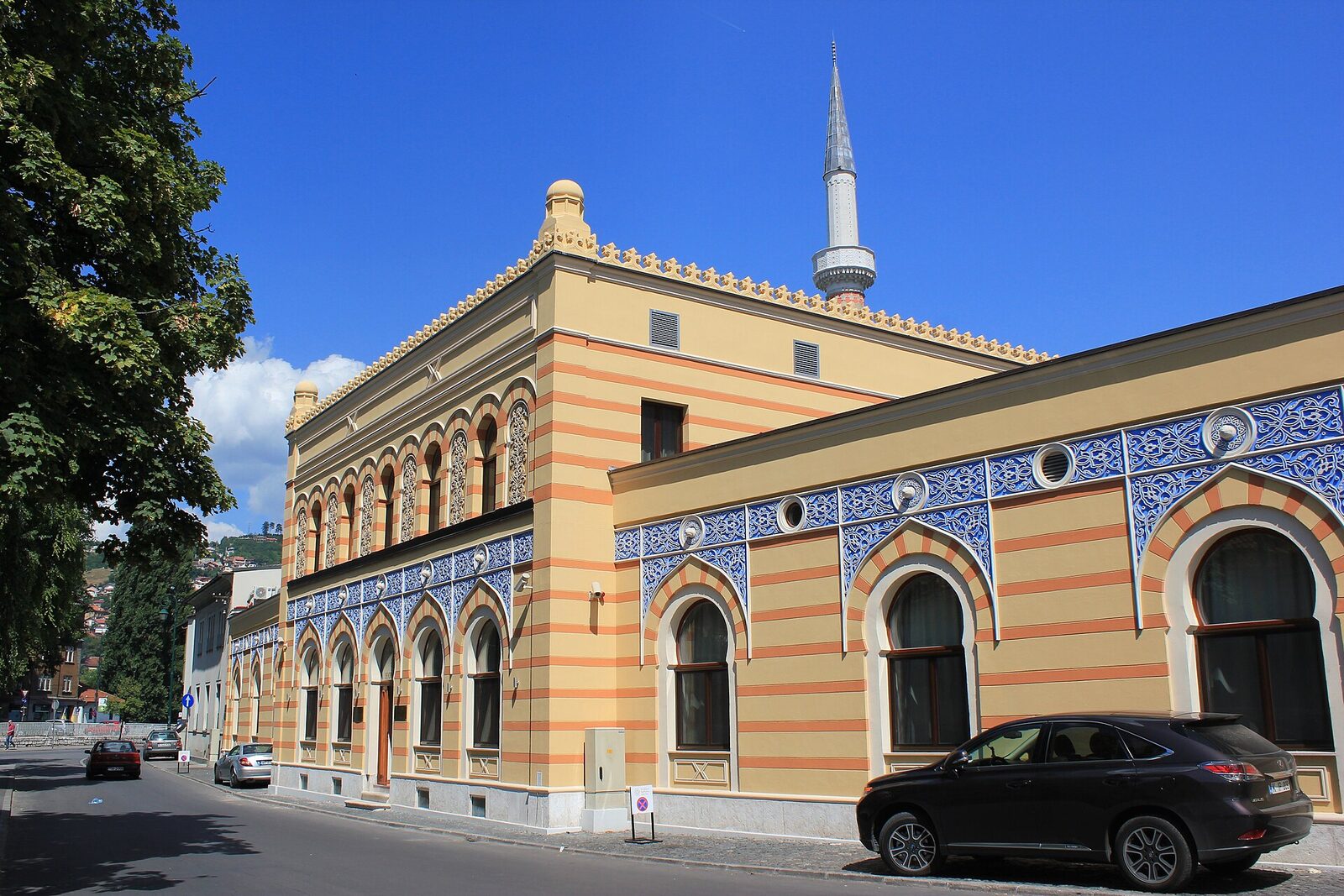
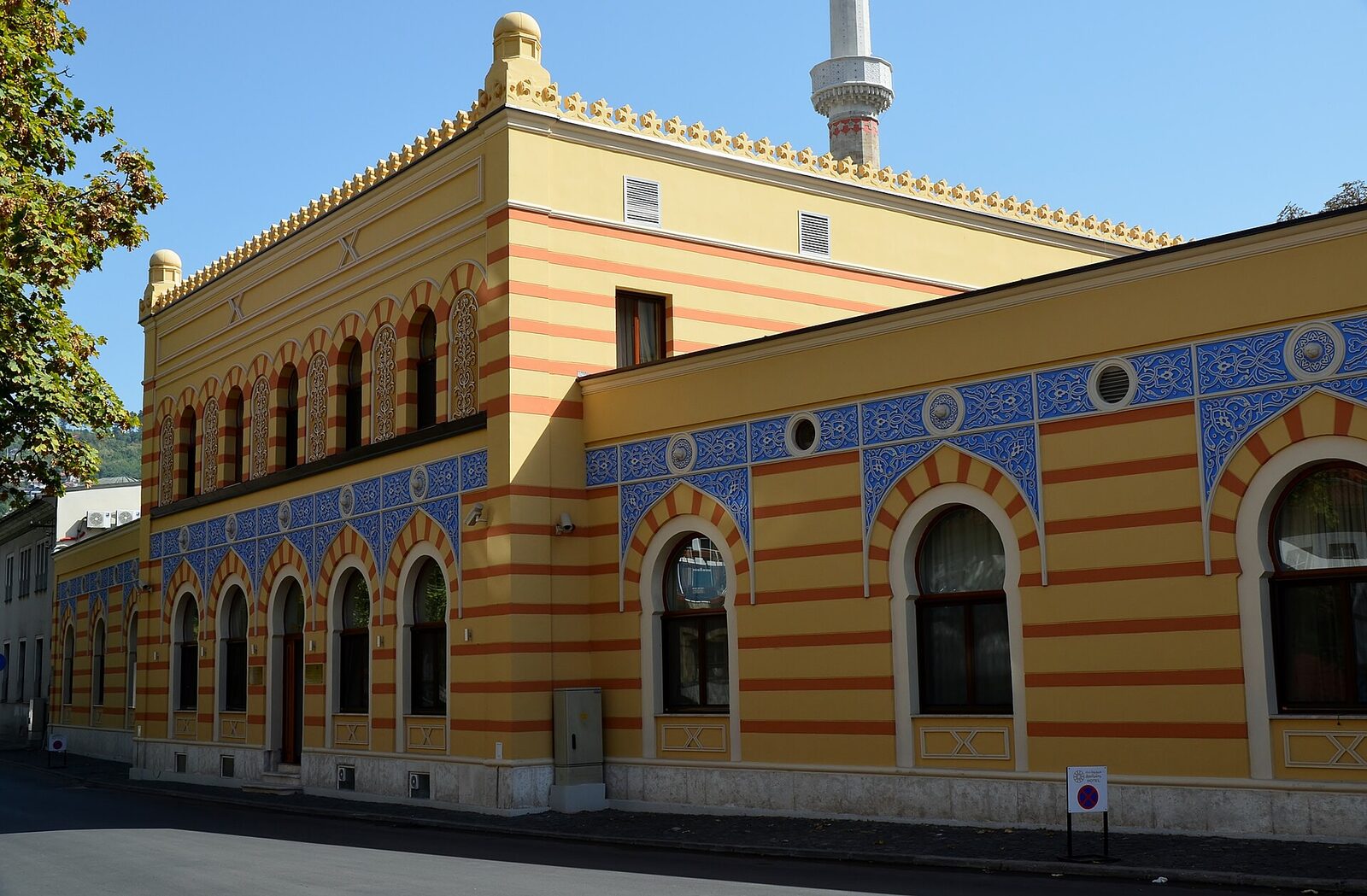
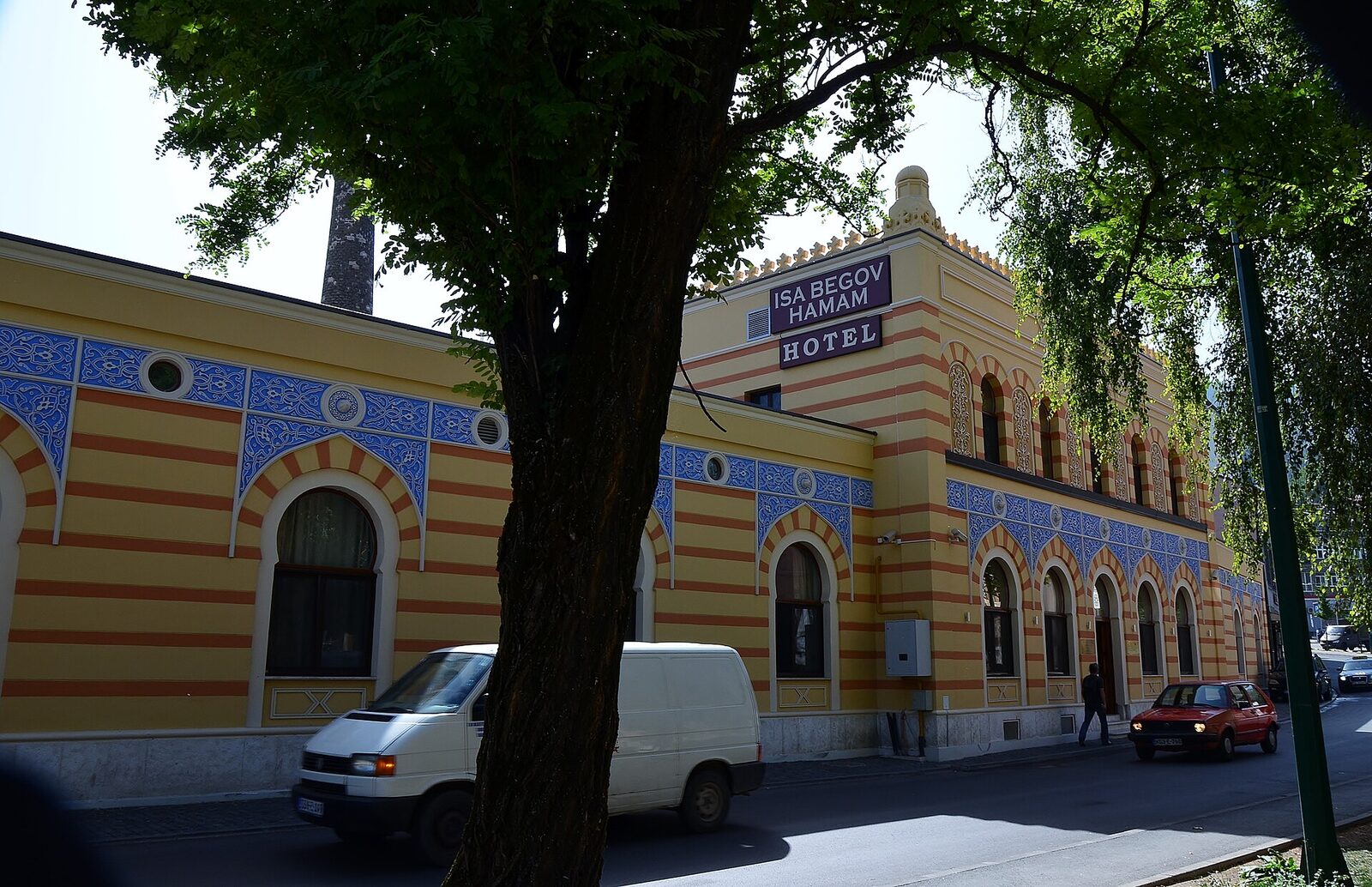
The Isa-Begov Hamam is the oldest public bath in Sarajevo and one of the oldest hammams anywhere in the western Balkans. It was founded by Isa-beg Ishaković, the Ottoman governor of the Bosnian Sanjak and the founder of Sarajevo itself, around 1462, the same year he is conventionally credited with founding the city and laying out the Muslim quarter around a mosque and a han (traveller’s inn). The bath sits in Bistrik, on the south bank of the Miljacka, eight minutes’ walk south of the Latin Bridge across the river.
The hammam functioned as a public bath for over four centuries, serving the population of Ottoman and Habsburg Sarajevo continuously, with intermittent renovations, until the 20th century. In the Yugoslav period it fell into disuse. Between 2010 and 2014 it was restored, with international funding and to international heritage-conservation standards, and reopened in 2014 as a working Ottoman-style spa with a small nine-room boutique hotel on the upper floors.
The architecture
The hamam follows the standard Ottoman public-bath geometry, scaled down from the imperial examples in Istanbul and Edirne. The plan has three main spaces:
- The camekan (cold room) — the entrance, where bathers undress, leave clothes in lockers, and acclimatise. In the Isa-Begov building this room is now the spa’s reception area.
- The soğukluk (warm room) — a transition chamber heated to about 35°C, used for resting between the steam room and the cold room.
- The hararet (hot room) — the steam chamber, traditionally with a central marble platform called göbektaşı (literally “belly stone”) on which bathers lie on heated marble. This is the heart of the bath, and in the Isa-Begov it is the original 15th-century space restored.
The roof is a cluster of small lead-covered domes, each lit with small round oculus skylights, the same technique as the great Ottoman baths in Bursa and Istanbul. The light through the oculi into the steam is what makes the architecture famous.
.JPG)
How the bath works
Bathing here is not a casual stop. It is a ritual that takes two to three hours, and it works in a specific order:
- Undress in the camekan. You will be given a peštemal (cotton wrap), wooden bath clogs, and a brass bowl for water.
- Adjust in the warm room, roughly twenty minutes.
- Sweat on the göbektaşı in the steam room, ideally forty-five minutes to an hour.
- Be scrubbed with a kese — a rough Anatolian glove — by an attendant. This is the part of the ritual that is most distinctively Ottoman, and the part most visitors find startling on the first visit. Allow ten minutes.
- Soap and rinse, using the brass bowl from the heated marble cisterns.
- Rest back in the warm room, then in the cold room. Tea is served. The full rest is at least thirty minutes.
- Coffee in the reception area. Bosnian, traditionally, with rahat lokum (Turkish delight).
Men and women bathe separately, in different hours, in the same spaces.
Practical notes
- The bath is open daily, with separate hours for men and women that rotate during the week. The Friday afternoon women’s session is the busiest; the weekday-morning men’s sessions are the quietest.
- Book ahead. The hamam has limited capacity and good time slots fill up, particularly in summer.
- Bring nothing. Towels, robes, the peštemal, slippers, and soap are all provided. You arrive in clothes and leave in clothes; the bath provides everything else.
- The boutique hotel above the bath has only nine rooms. Book months ahead for the high season. Guests of the hotel get a discount on the bath ritual.
- Photography is not permitted inside the bath chambers. The architectural photographs that circulate online are from official press shoots; you cannot take your own.
- The bath is not specifically a tourist site. Locals use it. The atmosphere is dignified and quiet.
How to use the visit

A full Isa-Begov visit takes a long afternoon. The classic Sarajevo sequence pairs the hamam with a slow meal afterwards:
- Early afternoon — arrive at the hamam, do the full two-and-a-half hour ritual.
- Late afternoon — coffee in the reception room, leave the bath in a state of considerable relaxation.
- Early evening — walk five minutes back across the Miljacka to Inat Kuća for a slow Bosnian meal. The transition — warm bath, slow walk, slow food — is the canonical Sarajevo Sunday.
The bath is one of the more authentically Ottoman things you can still do in Sarajevo. Most of the city’s Ottoman heritage is architectural, buildings you walk past, photograph, and continue. The hamam is functional, a 15th-century building still doing the thing it was built for. That is rarer.
Sources & further reading
Keep wandering
Nearby & related.

Sarajevo Ashkenazi Synagogue
Sarajevo’s working synagogue, built in 1902 in pseudo-Moorish style by the Austro-Hungarian administration for the Jewish community that had grown...

Sarajevo Avaz Twist Tower
The Avaz Twist Tower is Sarajevo’s tallest building (142 metres, completed 2008). A small public observation deck on the 35th...

Sarajevo Baščaršija
The 1462 Ottoman bazaar of Sarajevo, still a working bazaar. Copper workshops on Kazandžiluk, Bosnian coffee at Morića Han, and...