Sarajevo Bosnian coffee — a ritual four hundred years older than the espresso, slower on purpose
Coffee reached Sarajevo in the mid-sixteenth century, roughly two hundred and eighty years before espresso was invented in Turin. The Ottoman preparation the city adopted — ground fine, boiled in a copper džezva, served in a fildžan with a cube of sugar and a glass of water — has not changed. What has changed, in every other European city, is the time given to drink it. In Sarajevo it is still an hour. A guide to the sequence, and to what ćejf means.
Bosnian coffee is the city’s most quietly serious ritual. It looks, at first, like an espresso served the wrong way: smaller cup, no milk, grounds at the bottom. Drink it like that and you have missed the whole point. The point is the hour around the cup. The best places to learn it: Čajdžinica Džirlo on Kovači, Ministry of Ćejf a few doors up, or Dibek near the Sebilj.
.jpg)
The setup
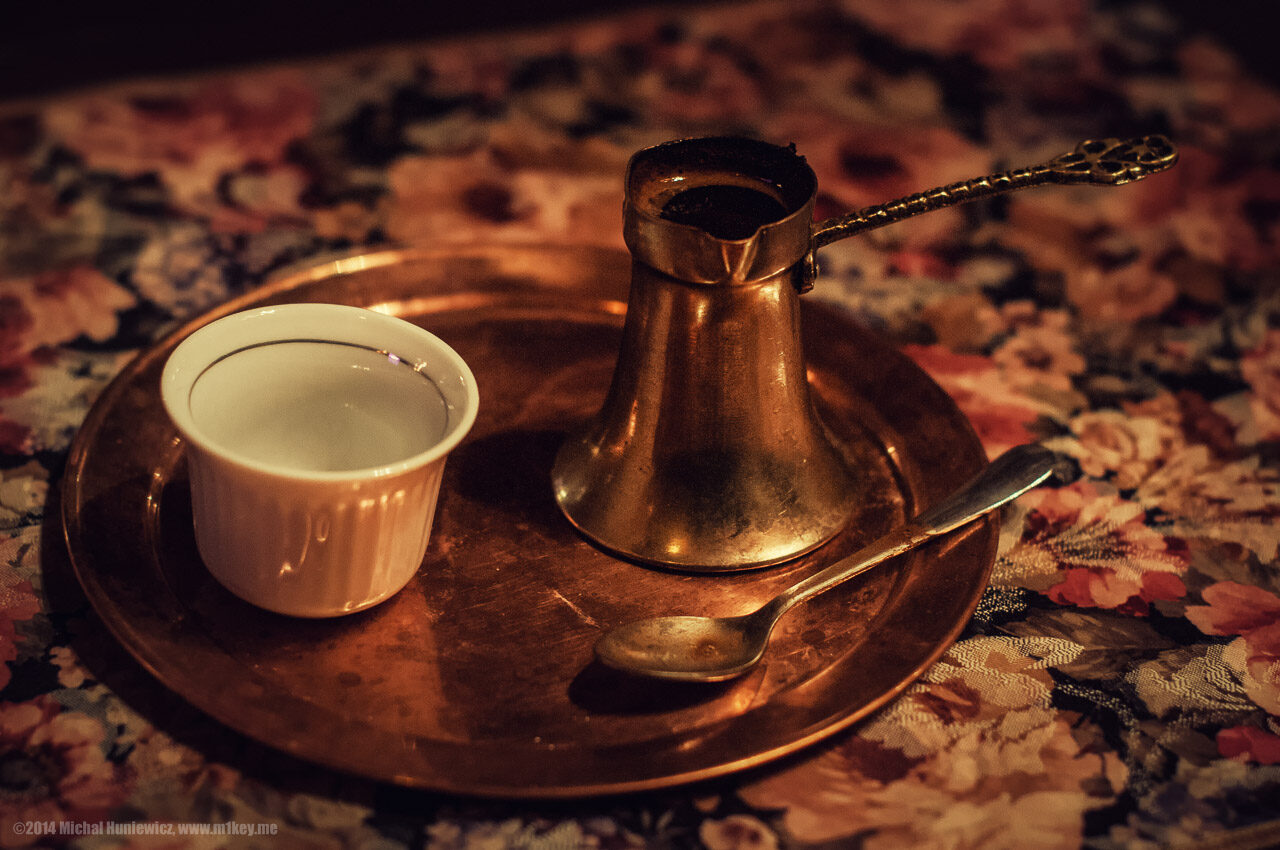
Bosnian coffee comes on a copper tray. On the tray: a long-handled džezva (the pot), a small porcelain cup called a fildžan, a glass of water, a single cube of sugar (or a piece of rahat lokum), and if you are lucky, a tiny spoon.
The whole arrangement is a sentence. It says: we are going to sit here a while.
The technique
- Drink a sip of water first. This clears the palate.
- Hold the sugar cube in your teeth. Sip the coffee through it. Or dip the sugar in, bite, then sip. There are two schools of thought. Both are correct.
- Do not stir. The grounds belong at the bottom. You are drinking the clear coffee above them.
- Pour a little more from the džezva when your cup runs low. Coffee is meant to be poured by someone, for someone. Pour for the person next to you first.
A coffee for every time of day
The Bosnian habit goes deep enough that the language has different words for the same drink at different hours. The first cup of the morning is the razgalica, the cheer-up, taken before anyone says anything important. Mid-morning comes the razgovoruša, the conversation coffee, poured when you actually have something to discuss. A guest who arrives unannounced gets dočekuša, the welcome cup. After lunch is sikteruša, the get-out coffee, politely signalling the visit has ended without anyone needing to say so.
Sarajevo Times traces the tradition back to 1463, the year the Ottoman Empire absorbed the medieval Kingdom of Bosnia. Six centuries on, the ritual is largely unchanged. The cups are smaller now. The conversation is still slow.
Bosnian, not Turkish
Worth saying clearly: Bosnian coffee is not Turkish coffee, and you will be corrected if you confuse them. The bean is the same. The pot is the same. The difference is in the brewing sequence, a Turkish cook adds the coffee to cold water before lighting the flame; a Bosnian brings the water to a boil first, lifts the pot off the heat, stirs in the ground coffee, and returns it briefly to raise the foam. The interview Brad Cohen quoted in a 2014 BBC Travel piece put it plainly: “Bosnian coffee is not Turkish coffee.”
The point
A coffee in Sarajevo is never just a coffee. It is, in order, an invitation, a conversation, and a small act of resistance against the speed of the world. The local word for the underlying state is ćejf, the slow, deliberate enjoyment of a small pleasure, taken without hurry.
If you have an hour, give it the hour. If you have less than that, drink something else.
Sources & further reading
Keep reading
More from the guide.

Sarajevo Baščaršija — the mortar-casing coffee grinders on Kazandžiluk
Walk down Kazandžiluk on a warm afternoon and, between the coffee sets and the copper trays, you will see them: pens made...

Sarajevo — Nele Karajlić decided the city from Čaršija to Marijin Dvor would be 'our cosmos'
Every editorial project needs a thesis. The Nadrealisti’s was stated plainly by Nenad Janković in a 2020 interview: ‘We put Sarajevo at...

Sarajevo Nadrealisti 1988 — the nationalism detector's only alarm
The Nacional Detektor sketch from the 1988 second season of Top Lista Nadrealista is three minutes and six seconds long. In it,...