Sarajevo's crni humor — laughing at the worst thing that just happened
The city's tradition of dry, self-deprecating black humour predates 1992 by generations. Under siege it became a survival tool. On today's war tours it is the register in which the war is retold. A note on the voice — and its limits.
Crni humor, “black humour”, is easier to recognise than to define. It is dry. It has a specific rhythm: state a fact, then a second, then a third that turns the first two on their heads. It aims inward first, at the speaker, at the city, at the country, before ever aiming out. It arrives in a level voice, without punchline signalling. If it needs an exclamation mark, it isn’t crni humor.
The voice predates the war. It descends from the four stock characters of Bosnian joke culture (Mujo, Suljo, Fata, Haso), from the Sarajevo TV programme Top lista nadrealista (1984–1991), from Yugoslav late-socialist absurdism, and further back from the Ottoman-Bosnian aphoristic wit that also produced šatrovački, the reverse-slang in which Sarajevo becomes Rajvosa.
Under siege, this voice became something else. Helen M. Orr’s UNC dissertation on Bosnia’s war tours (2019) treats that transformation directly. Chapter 3, “Transgression and Dark Humor”, is the closest thing to a proper academic account in English. Everything below is either paraphrased from Orr’s fieldwork with attribution, or a note on what an outside writer can and cannot do with the material.
What the voice does
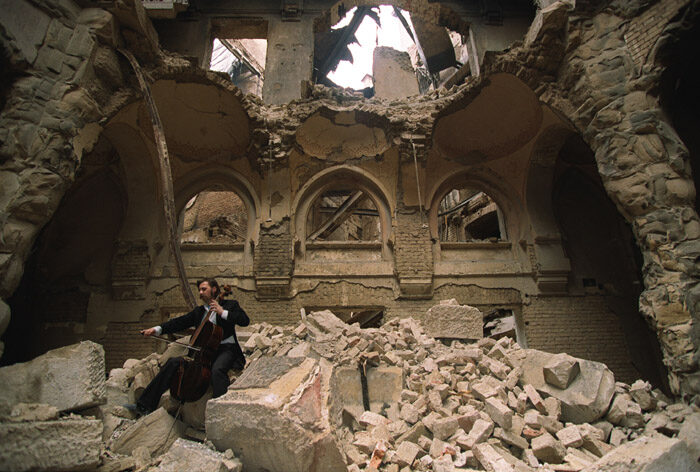
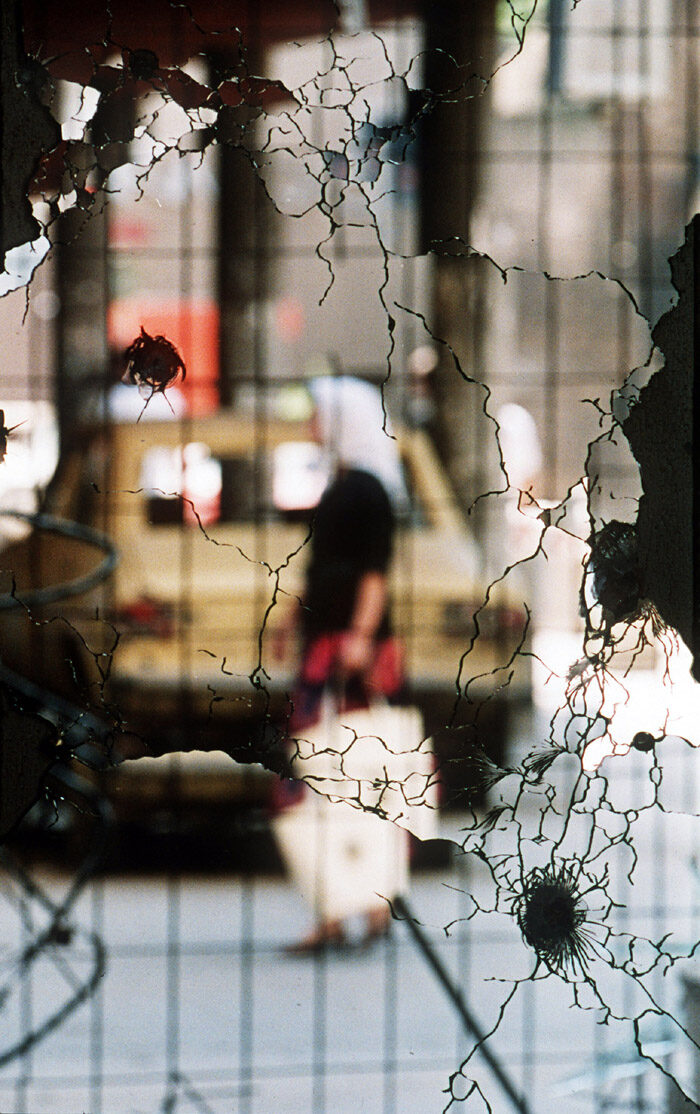
Orr’s fieldwork on Sarajevo’s war tours, sustained ethnographic observation, several years of it, some of it in the passenger seat of a tour van, turns up a pattern that matters precisely. The tours, which take international visitors to the Tunnel of Hope, Žuta Tabija, Vraca Memorial Park, and other siege sites, are led by guides who lived through the war, in most cases as children or teenagers. They are describing, in real time, the specific place where they or someone they knew was almost killed. And they are, for large stretches of the tour, funny.
The humour, in Orr’s reading, does three things at once.
It transgresses. The joke is not about how terrible things were. The joke is often about how absurd things were, or how petty, or how boring. A guide describes the impossibility of getting a haircut during the siege. The war is not spared, but neither is it ennobled.
It builds trust. A tour guide who tells a crni humor joke about their own siege experience is telling the visitor: I lived this, and I get to choose how it is told. It is a way of authoring the memory in the same beat as sharing it.
It resists Western pity. A significant portion of Orr’s dissertation argues that crni humor is, among other things, a refusal of the Orientalist framing of the Balkans as a place of unrelieved suffering. The guide who cracks a dry joke in front of a burnt-out apartment block is saying: we are not a victim to be pitied. We are people. We have jokes.


The Yugoslav lineage, Top lista nadrealista
Crni humor did not begin in 1992. It has an immediate predecessor in the Sarajevo television programme Top lista nadrealista (English: Top List of the Surrealists), which aired on TV Sarajevo from 1984 to 1991, the six years before the war, ending as the war began.
The programme was a sketch comedy in the vein of Monty Python. Its sensibility was absurdist, structurally, and unmistakably Sarajevan in delivery: deadpan presenter, surreal subject, calm elaboration, no laugh track. The core cast, Boro Kontić, Nele Karajlić, Zenit Đozić, Đuro Grbo, and others, used the show to skewer the fault lines that would, within months of the last broadcast, become the war. Some of the sketches, watched today, are prophecies delivered in the register of jokes.
Reading the Nadrealisti archive is the fastest way for an outside reader to hear the tone of crni humor without having lived it. Clips are on YouTube; the show is unsubtitled but a Bosnian speaker can walk a curious visitor through half an hour of it in an evening. It is the direct grammatical ancestor of the register a war-tour guide uses.
The one rule the editor obeys
Crni humor about the siege belongs to the people who lived through it. That is not a matter of politeness. It is a matter of authorship.
Orr’s dissertation is careful about this, and it is a point worth restating. The register is available to a Sarajevan tour guide who was seven years old in 1993 and to a Sarajevan grandmother who queued for water under sniper fire. It is not available to a Western tourist, and it is not available to a writer whose siege experience is second-hand.
What an outside writer can do is:
- Report the register, describe what it sounds like, where it comes from, how it functions.
- Cite it, quote a specific documented joke or line, short, with attribution to the person who said it.
- Recommend it, send readers to Nadrealisti, to Orr’s dissertation, to Sarajevan comedy sources.
What an outside writer cannot do is produce it, write new crni humor about the siege in the editorial voice. That would be, in the strictest sense, taking someone else’s memory and putting a new joke into it.
This site is, per its own Cardinal Rule 10 and its voice guide, careful about the line between reporting and producing. The Sarajevo humour register is a place where the line matters most.
A note for visitors
If you take a war tour in Sarajevo, and the Bullets in Baščaršija story argues that most first-time visitors do, expect it to be, in stretches, funny. Do not be surprised. Do not, if you can help it, look confused. The guide is not being flippant. They are giving you the tour in the register that is available to them, which is the register of their language and their neighbourhood and their inheritance. Laugh where you find it funny. Sit with the pauses. Ask no follow-up jokes.
If you would like to prepare, watch a few sketches of Top lista nadrealista the night before. Read the voice section of the colophon if you’re curious about how this site tries to write about Sarajevan comedy without borrowing it. And, if the tour ends in Baščaršija, buy the coffee for the guide.
Sources
- Helen M. Orr, Sarajevo and the War: Atrocity, Commodity, and Transgression in Bosnia’s War Tours, PhD dissertation, University of North Carolina at Chapel Hill, 2019, Chapter 3: Transgression and Dark Humor: On the Excesses of Violence, Laughter, and Spam Meat. UNC Carolina Digital Repository
- Top lista nadrealista (television programme, Sarajevo, 1984–1991). Wikipedia
- Explore Sarajevo, Colophon and voice guide, section on Bosnian humour, small dose, dry, mostly aimed inward.
Sources & further reading
Keep reading
More from the guide.

Sarajevo Inat — the Bosnian word for stubbornness with honour, and the house dismantled beam by beam
Inat does not translate. The closest English word is stubbornness, but inat is stubbornness with honour. The most famous example in Sarajevo...

Sarajevo's imperial nostalgia — how the Habsburg quarter became a tourism economy
Miloš Jovanović’s 2025 article in Southeast European and Black Sea Studies argues that post-1989 urban restructuring in four Balkan and imperial cities,...
Sarajevo — Neidhardt's archive burned in the siege, and MoMA bought what survived in 2021
The Grabrijan and Neidhardt story tells you how the two Yugoslav architects wrote the 1957 book that redefined Bosnian modernism. What it...