Sarajevo bakeries — the shortlist, from a French artisan that opened after the siege to a somun oven that bakes in a minute
The most-recommended bakery in Sarajevo is a French artisan house — Maison Coco, opened around 2013, ten years after the war ended. The working city runs on wood-fired somun ovens whose technique hasn't changed since Ottoman times. Both are real. Here are five to know, split by which one you're actually looking for, plus one gluten-free specialist.
Sarajevo runs on somun. It’s the flat wood-fired bread you buy for one BAM from a corner pekara at 07:00, tucked into your bag or eaten walking, and it moves in serious volume through every neighbourhood of the city. The technique hasn’t changed since Ottoman times. There are about a hundred bakeries in Sarajevo Canton and most of them do somun and only somun.
Then in 2013, ten years after the war ended, a French artisan bakery opened in central Sarajevo. Maison Coco. Croissants, baguettes, pain au chocolat, Mille Feuille. It is now, per every English-language travel review, the best bakery in Sarajevo.
Read that carefully. It is a French bakery in Sarajevo. Not the same as a Sarajevo bakery. Both are real. Neither invalidates the other. Here’s how to tell which one you’re actually looking for.
Two French houses
Maison Coco
Six locations across the city, per their own contacts page, the original at Kranjčevićeva–Tepebašina 1, plus Branilaca Sarajeva 10, Kolodvorska, Pehlivanuša 2, Grbavička (near no. 51), and the Alta shopping centre (Bulevar Franca Lehara 1). Their own site records the founding year as 2013. Positioning per their own site: “the only artisan bread and pastry producer in Bosnia and Herzegovina.”
The croissant is what you go for. The chocolatine is the second call. The tartines and Mille Feuille are competent European café patisserie. Hours vary by location, the Kranjčevićeva original runs Mon–Fri 07:00–20:00, Sat 07:00–17:00, and (unlike most bakeries under the FBiH Sunday trading rules) is open on Sundays 08:00–16:00. Grbavička also opens Sundays. Alta runs closer to shopping-centre hours. Check the outlet you’re going to before you go.
Prices sit above pekara level. You’re paying for the ingredients and technique. Bring more BAM than you would for a somun run.
Mrvica Café & Patisserie
Founded in 2014, first location opened 2015. Two locations, Paromlinska 53h in the Marijin Dvor / Kovačići stretch south of the Miljacka, and a second on Jelića (Old Town). Their own current site foregrounds San Sebastian cheesecake and Dubai chocolate as signature items; macarons are a strong second and travel well as an export. Full breakfast menu, Balkan, Bosnian, German, Deluxe, plus eggs Benedict and club sandwiches. It’s a French-touch bakery that also functions as a proper café.
If you want a bakery with tables, wifi, and a coffee that arrives correctly, Mrvica is the honest answer.
What makes a Sarajevski somun
A somun is not the same as a lepinja, though most translations flatten the distinction. Sarajevski somun is a specific variant with three features that set it apart from the wider Balkan flatbread family:
-
The mušebak pattern. Every Sarajevski somun is pressed on top with a small crosshatched grid before it goes into the oven. The pattern is named after mušebak — the fine wooden lattice screen that traditionally enclosed the upper-storey windows of the women’s quarters in a Bosnian Muslim house. The tool that makes the pattern is a long metal rod wrapped in white cloth; per Sarajevo Times, the shape has not changed since Gazi Husrev-beg’s quartermaster first made a somun for the vakuf’s imaret in the 1530s.
-
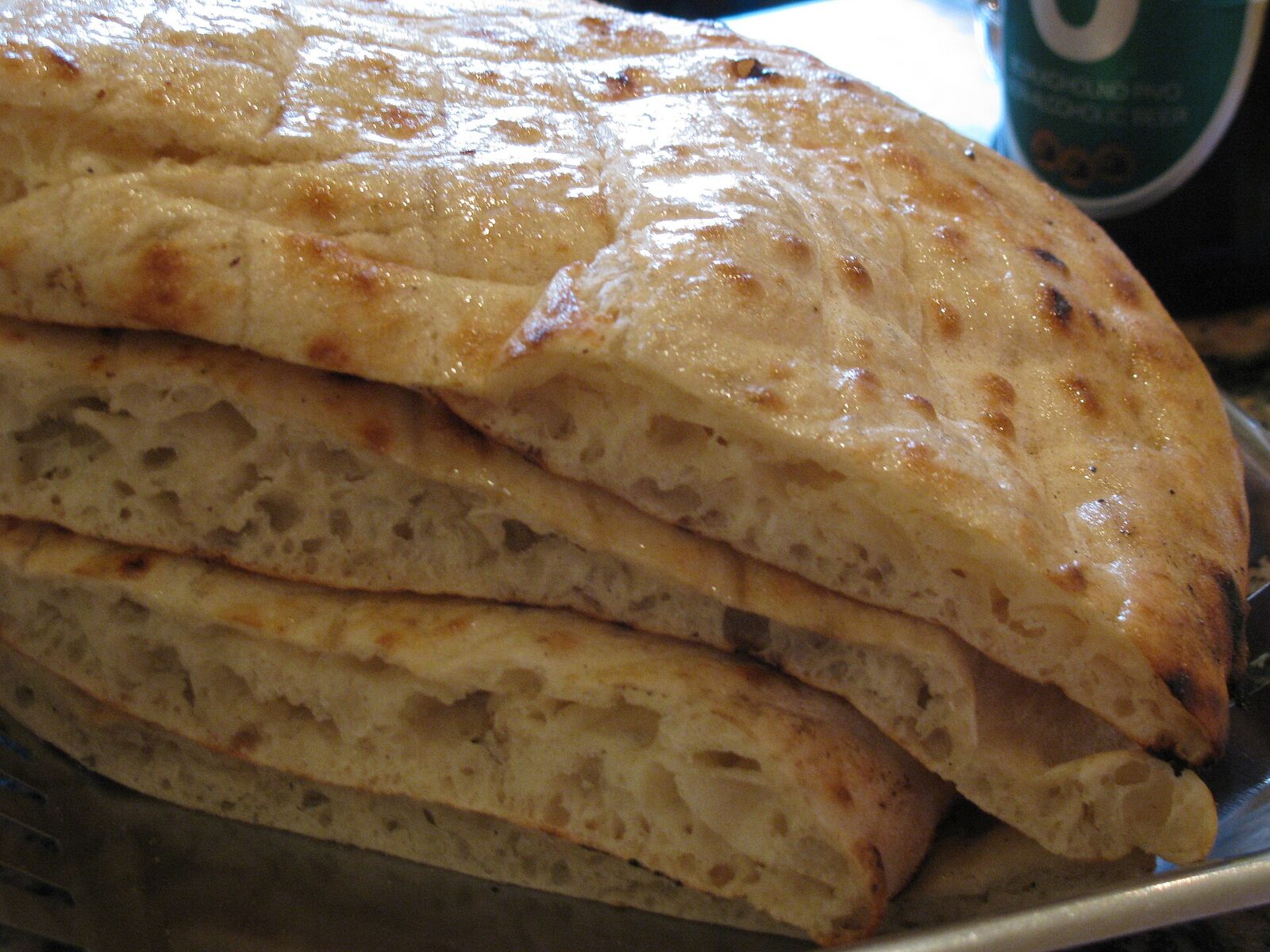
A hollow interior. During baking, the dough puffs and separates into two layers — top and bottom — creating a natural pocket in the middle. Tear the bread open along the seam and you have a soft-walled bag that holds ćevapi, kajmak, and raw onion without falling apart. The pocket is the reason Sarajevski somun is the correct bread for ćevapi service; a solid flatbread would not hold the fillings.
-
The wood-fired brick oven. The dough is thrown against the inner wall of a hot brick oven — 300°C-plus — and bakes in under two minutes. That is why the city’s pekaras run in short cycles: a batch goes in, the queue watches through the counter window, the somun comes out puffed and speckled, and the next batch is already being shaped. It is also why a wood-fired pekara at 07:00 has a queue and a supermarket-shelf somun tastes like a different bread altogether.
The recipe itself is short: flour, cold water, salt, a pinch of sugar, yeast, sometimes a scattering of nigella seeds on top (especially during Ramadan — the “holy seed”, called čurokot in Bosnian). The dough is fermented overnight and still kneaded by hand at most of the traditional bakeries. Everything else is heat and technique.
The pekaras the city actually uses

Pekara Kod Mahira
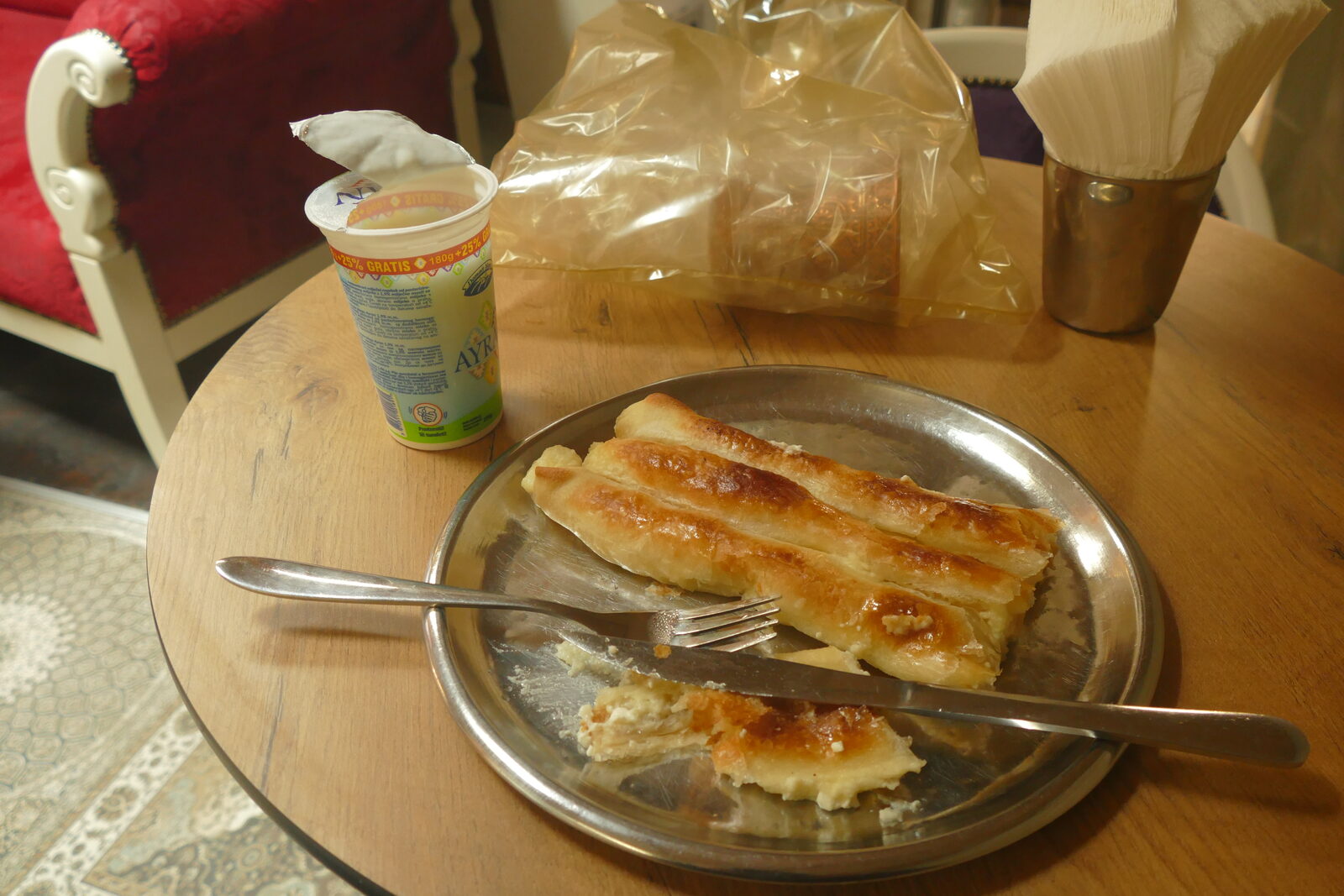
Kovači, Stari Grad. The one the site’s own hidden gem entry covers. Two minutes uphill from the Sebilj, in the Old Town. Burek 4–6 BAM per portion; somun 1–2 BAM. Busy before 09:00; stock thins after lunch. Cash and small notes. The bench at the top of Kovači by the cemetery is where you eat it.
The other thing kod Mahira has done for roughly 35 years is a somun-based pizza with kajmak, wood-fired, dried cured meat, mushroom, tomato paste, hard yellow cheese, all on the flat somun dough. Small pizza around 7 BAM. Home delivery through the day. It’s an accidental Sarajevo invention that nobody else has copied cleanly.
Pekara Alifakovac
Alifakovac neighbourhood, near the old cemetery. This is a monoline shop: they make somun and only somun. Traditional wood-fired brick oven, runs hot and fast; traveller accounts describe fresh bake times measured in a couple of minutes rather than the tens-of-minutes a home oven would need. Cash, small notes, no seating. Extremely cheap. Locals-only-really. Rule of thumb: whichever direction the queue is facing is where the next batch is coming out.
Pekara Imaret
Off Mudželiti veliki, tucked in a small courtyard down a narrow alley near the Gazi Husrev-beg Mosque. If you didn’t know it was there you’d walk past.
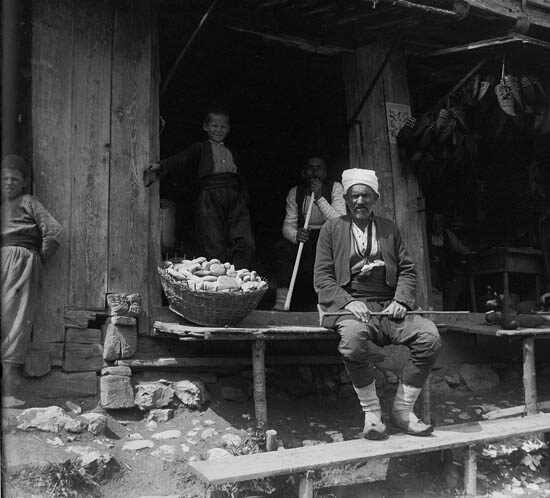
The name is not decorative. Imaret is the Ottoman-Turkish word for a public soup kitchen — one of the charitable institutions built into every serious mosque vakuf (endowment). Gazi Husrev-beg’s 1530s Sarajevo endowment funded a full complex — the mosque, the madrasa, the library, the bezistan, the hamam, the clock tower, and an imaret to feed the poor of the mahala. Local sources (per bascarsija.ba) treat Pekara Imaret as the direct 16th-century continuation of that public-kitchen tradition — the oldest continuously-operating bakery in the city, built by Gazi Husrev-beg himself for the neighbourhood. Read that as heritage-and-continuity rather than a documented unbroken chain of ownership: the imaret institution goes back to 1530s Sarajevo, the current shop trades on that name and near the original location.
.jpg)
The day-to-day is genuinely working-city and cheap. Traditional Bosnian output — burek, sirnica, krompiruša, and the round wood-fired somun that is the shop’s canonical bake — for a fraction of what you’d pay in a proper restaurant, plus the after-drinks late-night pizza slice. Extended hours make it the pekara you use when it’s 23:30 and you’ve walked out of Zlatna Ribica with a carbohydrate need.

Pekara Edin
Old Town. Known for long opening hours — historically into the early morning and back before dawn; verify current times on Google Maps for the day you’re going. Chocolate croissants and pizza slices are what the crowd calls. Convenient for the pre-airport 06:00 exit or the post-tunnel-tour 21:30 return.
One speciality
No Gluten Factory
Zagrebačka 13b, north-west of the centre. This is the dedicated gluten-free operation in Sarajevo — full 100% gluten-free supply chain, including burek, krumpiruša, croissants, and cakes. For coeliac and gluten-avoidant travellers this is the only viable dedicated bakery in the city. Everything else, in a Sarajevo pekara, contains wheat.
What to actually do with this
Do not skip the pekaras for Maison Coco. If you spend a week in Sarajevo and only eat at Maison Coco, you have eaten at a French bakery that happens to be in Sarajevo. You have not eaten a Sarajevan breakfast.
Do not skip Maison Coco for the pekaras either. If you spend a week in Sarajevo and only eat at pekaras, you have missed one of the small things that grew here after the war — a French artisan house that opened in the middle of the reconstruction economy and stayed. That is also part of what Sarajevo is now.
The honest plan: Buy a somun and a portion of burek from Kod Mahira on the walk up Kovači on a Tuesday morning. Buy a croissant from Maison Coco on Ferhadija on a Wednesday morning. Compare on a Thursday afternoon while walking along the Miljacka. You will not want to pick one.
Sources
- Maison Coco: official contacts / locations page; Tripadvisor listing.
- Mrvica Café & Patisserie: official site.
- No Gluten Factory: official site (Zagrebačka 13b).
- Pekara Kod Mahira: this site’s hidden-gem entry has the full working detail: /hidden-gems/pekara-kod-mahira/.
- Pekara Imaret (heritage claim): Baščaršija.ba directory entry and the Gazi Husrev-beg Mosque destination page for the 1530s vakuf institutions the Imaret name descends from.
- Sarajevski somun (mušebak pattern, tool continuity from the 1530s vakuf): Sarajevo Times — Do you know the story about the origin of somun? and the technique write-ups at Chasing the Donkey and Breadtopia.
- In and Around Sarajevo: Bakeries directory: the standing local aggregator on Sarajevo bakeries: inandaroundsarajevo.com/bakeries-in-sarajevo.html.
- Wanderlog: 33 best bakeries in Sarajevo: broader aggregator, useful for finding neighbourhood-specific pekaras this shortlist skipped: wanderlog.com.
Sources & further reading
Keep reading
More from the guide.

Sarajevo ćevapi — five grills in Baščaršija, one running since 1957, all within a hundred metres
Ten little grilled sausages, a fluffy somun bread, a spoon of kajmak, raw onion. The whole soul of Bosnian comfort food, refined...

Sarajevo — in 1942, Grabrijan and Neidhardt tried to demolish Baščaršija
In 1942, Dušan Grabrijan and Juraj Neidhardt guest-edited a special issue of the Croatian architectural journal Tehnički Vjesnik titled Sarajevo and Its...

Sarajevo's 'Islam You Didn't Know About' tour — a response to the tourists' comments
Twenty years after the Bosnian war, a tour operator called Insider Tour in Sarajevo launched a new offering alongside ‘Times of Misfortune’...