Sarajevo ćevapi — five grills in Baščaršija, one running since 1957, all within a hundred metres
Sarajevo's five most-cited ćevabdžinicas — Željo, Petica Ferhatović, Hodžić, Mrkva, and Nune — all sit within a hundred metres of each other on the same three streets of Baščaršija. Four of them have been operating since the 1960s or earlier — Petica opened in 1957. Sarajevans have strong opinions about the ranking, and none of them agrees. A short field reference with founding dates, portions, prices, and what each is specifically known for.
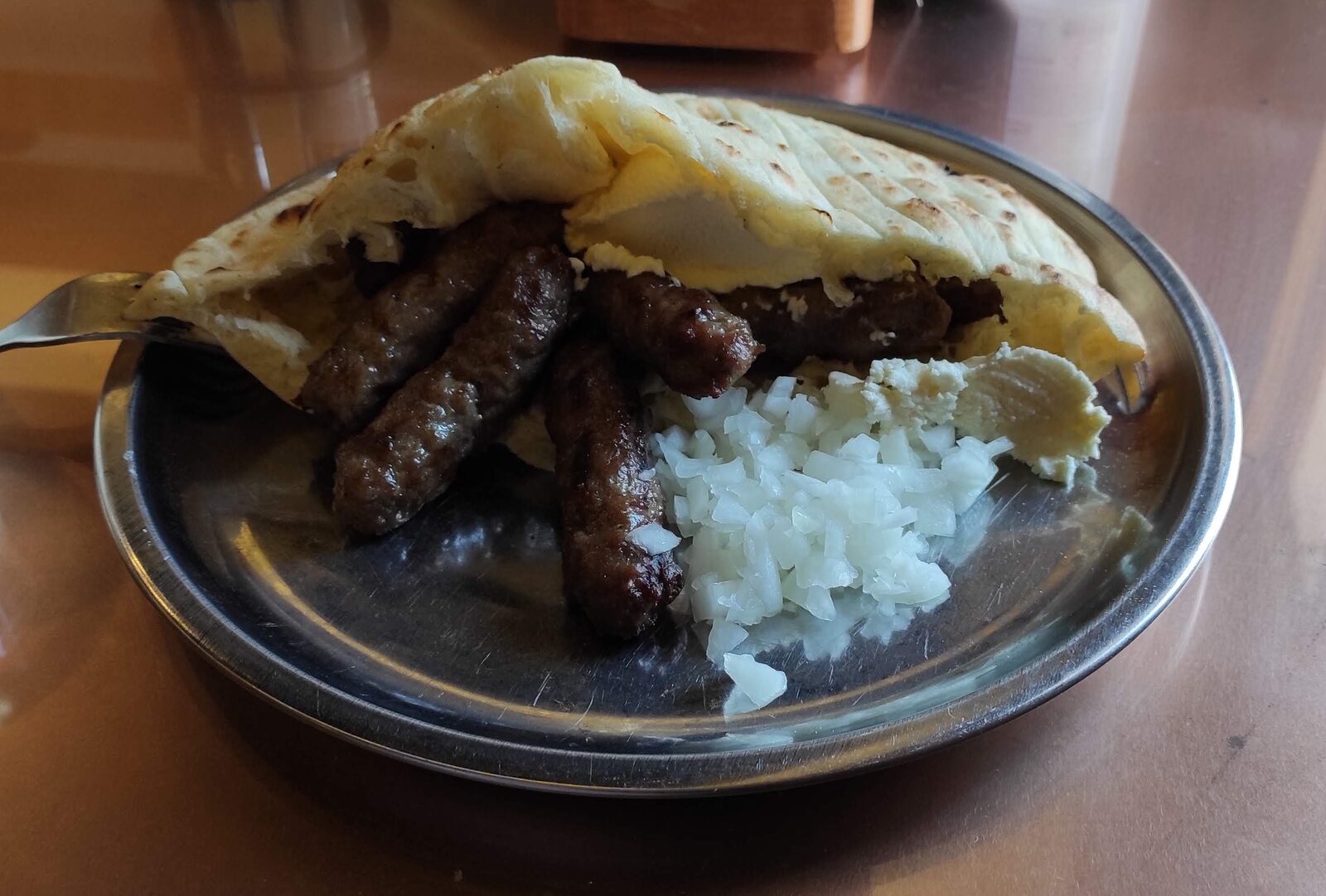
Ćevapi is not Bosnian kebab. It is its own thing, small, hand-rolled minced-beef sausages, grilled over open flame, served inside a soft pita-like bread called somun, with raw onion and a dollop of kajmak (a soft, lightly tangy clotted cream). Order ten; five is the smaller portion.

The five Baščaršija ćevabdžinicas below are the ones the Bosnian and English-language press most often place at the top of the list.
1. Željo (1968)
The benchmark for visitors and the most cited. Two locations on Kundurdžiluk, both popular. Hand-mixed meat, beech-charcoal grill. Long write-up on the Željo page.
2. Petica Ferhatović (1957)
Three minutes’ walk from Željo on Bravadžiluk. The oldest still-active ćevabdžinica in the city, run by the Ferhatović family across three generations. Slightly less crowded than Željo. Petica Ferhatović page.
3. Mrkva (1963)
On Bravadžiluk, with several other branches across the city. Uses Argentine charcoal rather than beechwood, which gives the meat a darker, deeper char. Mrkva page.
4. Hodžić
On Bravadžiluk, opposite Pigeon Square. Three-time Golden Crown (Zlatna Kruna) winner, the Bosnian dining-industry award. Slightly more refined dining room. Hodžić page.
5. Sač
Late-night option in the bazaar. Open into the small hours, useful when the others have closed.
The companion order
Whichever one you choose, the standard accompaniment is:
- somun: extra, always.
- kajmak: the spoonful is part of the dish.
- luk (onion): chopped, raw.
- yoghurt: drinkable, in a glass, ice cold.
A meal lands at around 12 to 15 BAM per person, cash preferred. Order ten, not five. If you cannot pronounce the address, ma hajde (oh, come on), order ten anyway. They are not going to ask you to say it twice.
Sources
- SoulHaus — Where to Eat Ćevapi in Sarajevo
- Wikipedia — Ćevapi
- Destination Sarajevo — Ćevabdžinica Hodžić
Sources & further reading
Keep reading
More from the guide.

Sarajevo bakeries — the shortlist, from a French artisan that opened after the siege to a somun oven that bakes in a minute
Sarajevo runs on somun, the flat wood-fired bread you buy for one BAM from a corner pekara at 07:00. In 2013 a...

Sarajevo Kállay era — twenty-one years that built the Sarajevo you walk, run from a desk in Vienna
Béni Kállay ran Bosnia-Herzegovina from a desk in Vienna between 1882 and 1903. His twenty-one-year tenure as Common Minister of Finance overlapped...

Sarajevo — is it safe? A local's honest answer for 2026
Is Sarajevo safe? Yes, meaningfully safer for common tourist risks than Barcelona, Rome, or Paris, though not on the Zurich or Vienna...