
Explore Sarajevo / Hidden Gems / Sarajevo Pekara kod Mahira
Hidden Gem · Kovači, Stari Grad · 3 min read
Sarajevo Pekara kod Mahira
A working bakery on Kovači — the morning burek, the lunch somun, and the warm room that opens at six and is empty by ten.

At a glance
Address
Kovači, Stari Grad (a short climb up from the Sebilj)
Hours
Early morning into the evening; busiest before 09:00
Price
A portion of burek 4–6 BAM; somun 1–2 BAM
Getting there
4 minutes' walk uphill from the Sebilj along Kovači
Time needed
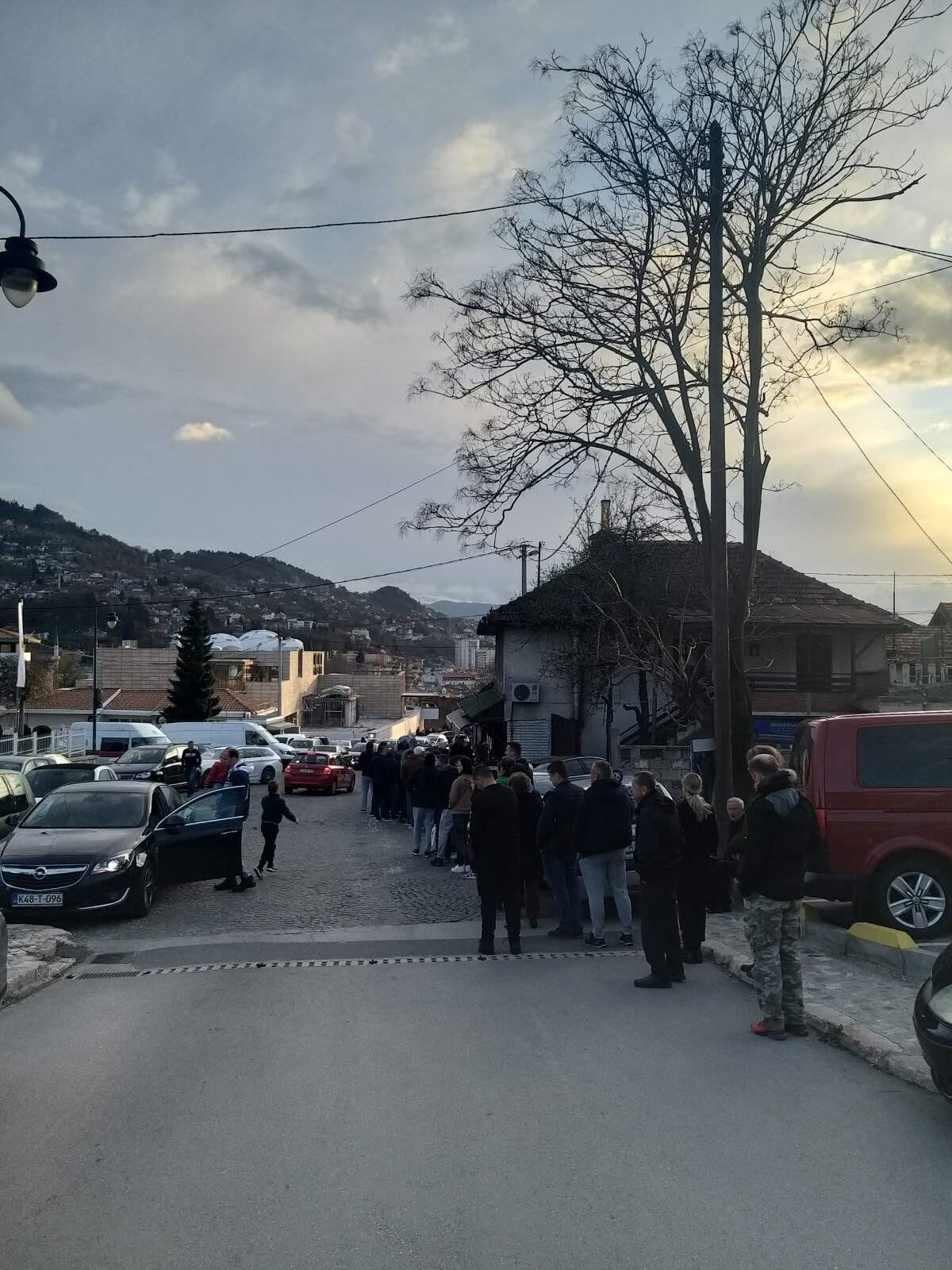
10 minutes for the queue
Best time
Early morning, fresh out of the oven
Coordinates
43.8613° N 18.4337° E
Navigate
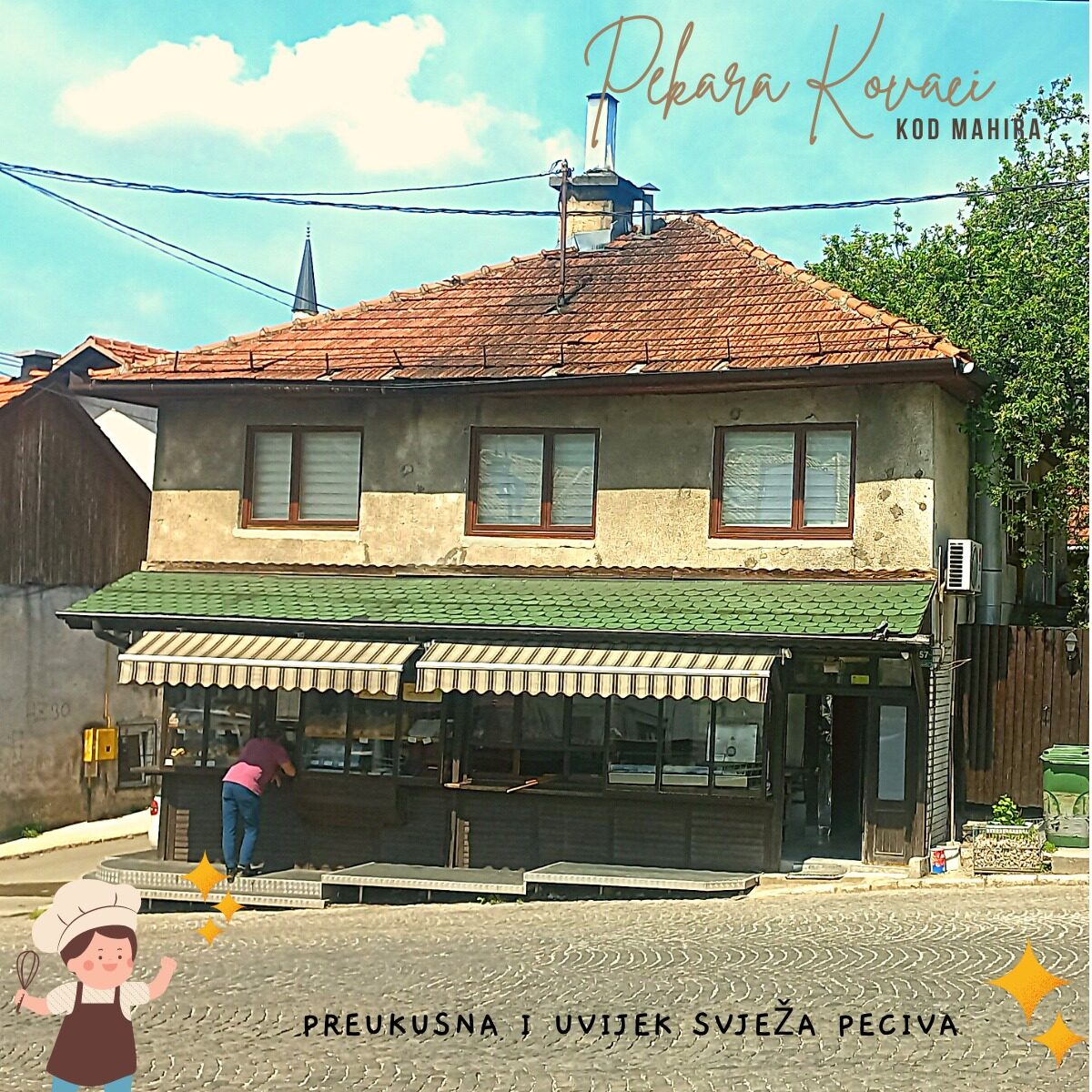
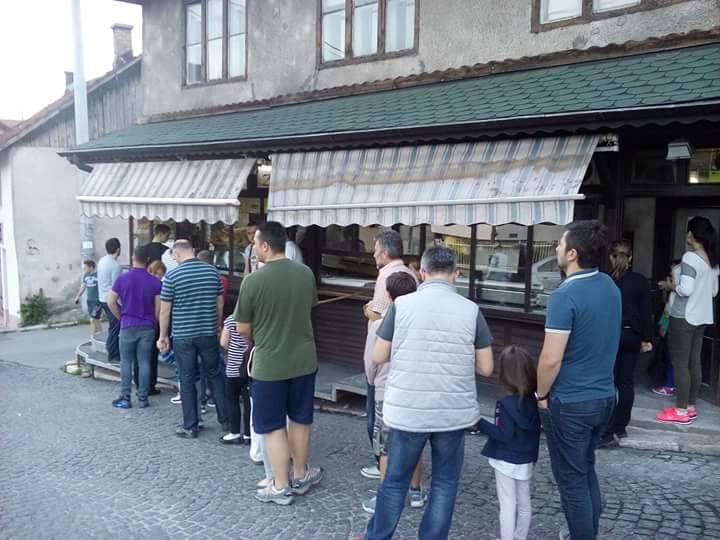
Two minutes uphill from the Sebilj fountain, on the cobbled climb of Kovači street, there is a small bakery known to the locals simply as kod Mahira, at Mahir’s. It is the kind of working-class neighbourhood pekara that anchors a Sarajevan morning: open early, hot oven, paper bags, a small queue of regulars between 06:30 and 09:00, and a counter of fresh burek and savoury pastries that thins steadily through the day.
This is not a destination. It is a piece of the city’s everyday infrastructure. We put it on the site because the everyday infrastructure of Sarajevo is, on closer inspection, very good.
What’s on the counter
A Sarajevan bakery counter, kod Mahira included, will typically carry on any given morning:
- Burek: the coiled phyllo pie with minced beef. In Bosnia the word burek refers strictly to the meat version. Confusion only arises across the border, where burek is used loosely for any savoury pie.
- Sirnica: the same coil with a cheese filling, usually a young white cheese.
- Krompiruša: with potato and a little onion.
- Zeljanica: with spinach and cheese.
- Somun: the soft round flatbread that goes with everything Bosnian, especially ćevapi.
- A small pizza option — many Sarajevan bakeries double as pizzerias, which is why the OSM listing reads Pizzerija Mahir. The pizza is fine. The pies are better.
You order by name, by weight (pola kile, half a kilo, is a standard portion), and pay at the counter in small bills. A serious morning order is a portion of burek, a yogurt or kefir, and a small coffee from the café next door. The total, for two people, lands around 12 BAM.
How to use it
Walk up Kovači from the Sebilj. The bakery is on the right, a few doors past the first row of cafés. The smell of the oven announces it before the sign does. The light inside is fluorescent; the staff are quick; the queue is local. Order, pay, walk back out into the bazaar with your paper bag.
The bench at the top of Kovači, just outside the cemetery wall, is the seat we use to eat. The view, at 07:30 on a clear morning, with a hot piece of burek in one hand and the city waking up below, is the kind of small Sarajevan reward that does not appear in any guide. So it appears here.
Why a bakery is on this site
A Sarajevan pekara is not a patisserie and not an artisanal bread shop. It is a working-class institution, the place where the city starts its day, every day, for the price of a few marks. The products are simple: phyllo dough, fillings, heat, time. The register is democratic: an office worker, a taxi driver, a student, and a pensioner, all in the same queue, all leaving with the same paper bag.
Kod Mahira sits on Kovači, the street that climbs north from the Sebilj into the residential mahala above the bazaar. Below it is the tourist quarter. Above it is the Kovači cemetery and the residential slopes of Vratnik. The bakery is right at the seam between the two, the point where Baščaršija stops performing and Sarajevo starts living. That position is the reason it is here. The burek is the reason to go.
Sources & further reading
More views
From Sarajevo Pekara kod Mahira
Photographs: Pekara Mahir · source · Used with permission
Keep wandering
Nearby & related.

Sarajevo Ashkenazi Synagogue
Sarajevo’s working synagogue, built in 1902 in pseudo-Moorish style by the Austro-Hungarian administration for the Jewish community that had grown...

Sarajevo Avaz Twist Tower
The Avaz Twist Tower is Sarajevo’s tallest building (142 metres, completed 2008). A small public observation deck on the 35th...

Sarajevo Baščaršija
The 1462 Ottoman bazaar of Sarajevo, still a working bazaar. Copper workshops on Kazandžiluk, Bosnian coffee at Morića Han, and...