
Sarajevo on film 2003 Bosnia and Herzegovina
Remake
One actor, two wars — a father in Sarajevo 1941 and a son in Sarajevo 1992, played by the same man in Mustafić's wartime debut.
- Director
- Dino Mustafić
- Year
- 2003
- Language
- Bosnian
- Country
- Bosnia and Herzegovina
- Genre
- drama
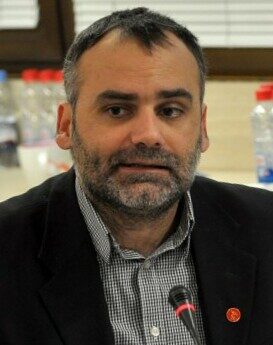
Remake is a film built on a structural idea that would be corny anywhere else and is devastating in Sarajevo: the same actor plays both a father and his son, fifty years apart, in the same city, in two different wars. The father’s story is set in Sarajevo during the Second World War; the son’s is set in the siege of 1992–95. The frame is a present-day screenwriter finishing a script about his father — a script that turns out to be the film we are watching, folding the two wars into one continuous city.
Dino Mustafić made it as his feature debut in 2003, at a moment when Bosnian cinema was just beginning to reckon with the war on its own terms, and the doubling device gives it a specific power: the same streets, the same buildings, the same stubborn family instinct to survive, repeated across a fifty-year gap. It premiered at the Sarajevo Film Festival and travelled the festival circuit as one of the early post-war Bosnian features.
For a visitor, it is the film that makes the city’s two mid-century catastrophes legible as the same event — the Habsburg and socialist architecture as the shared stage. Watch it before walking the old town, and the twentieth century on those streets compresses into a single, repeated story.
Critical reception
Reviews divided sharply. Variety was cool, while Kino-German Film’s Ronald Holloway called the film a major event of 2003. It became the most-watched film in Bosnia and Herzegovina and screened at more than a hundred festivals.
Public reception and legacy
In 2003 Remake was the most-watched film in Sarajevo’s main Forum cinemas, ahead of The Matrix Reloaded and Pirates of the Caribbean, and at the Rotterdam festival it led the audience vote, where the local press called it the most-watched film in the city. It screened at over a hundred festivals worldwide and was ranked by MukMag among the best films of ex-Yugoslav cinema. It is remembered as the pillar of post-war Bosnian cinema’s international breakout after No Man’s Land.
What the critics said
“'Remake' is long on narrative but short on original insight into Balkan history.”Read the review →
“Remake is already a major film event of 2003.”Read the review →