
Sarajevo on film 1972 Yugoslavia
Walter Defends Sarajevo (Valter brani Sarajevo)
The partisan classic every Sarajevan over fifty grew up quoting — a WWII resistance thriller that turned its hero into a local legend.
- Director
- Hajrudin Krvavac
- Year
- 1972
- Language
- Serbo-Croatian
- Country
- Yugoslavia
- Genre
- war, partisan
Walter Defends Sarajevo is the film that Sarajevo quotes the way other cities quote catchphrases. Made in 1972 by Hajrudin Krvavac, it tells the story of a partisan leader, code-named Walter, who spends the film outwitting the Gestapo in WWII-occupied Sarajevo. The Germans know Walter is in the city; they never find him. The film’s closing line — when the Gestapo colonel finally understands, at the moment of his own defeat, that the city itself was the resistance — is recited by Sarajevans to this day. Bata Živojinović plays Walter; the film was the highest-grossing Yugoslav film of its era and a box-office hit across the Eastern bloc and China.
Its importance to the city is cultural as much as cinematic. For a generation that grew up under Yugoslavia, Walter was a shared reference, a film whose scenes were shot in the real streets of Baščaršija and the Habsburg avenues. The “Walter” legend outlived the film: a small cafe near the old town trades on the name, and older Sarajevans will happily tell you the story of the man who may or may not have been the model.
For a visitor, it is the film that unlocks conversation: mention Walter to anyone over fifty and you will get a story. Watch it for the old town as it looked before the modern era, and for the particular register of Sarajevan pride — sly, self-aware, and completely unwilling to be beaten.
Critical reception
No Rotten Tomatoes or Metacritic listing exists for the film, and its critical standing today is cultural and historical rather than journalistic: historians note that it captured the city’s resistance, and it became the most successful foreign film in China in the 1970s.
Public reception and legacy
Walter’s real impact was in China: released there in 1976, it was seen by an estimated 300 million people in its first year and became the decade’s most popular foreign film, shaping a generation of filmmakers — “The film had a great influence on Chinese film — in everything”, a Beijing Film Academy professor told Sixth Tone. Xi Jinping recalled it during his 2016 state visit to Serbia, where its theme song played at a banquet. The film’s fame later fed Balkan tourism, and the Walter Defends Sarajevo Museum opened in Sarajevo in 2019. At home its closing line made “We are all Walter!” the slogan of the March 1992 peace protests.
What the critics said
“It's the most quoted Yugoslav film of all time.”Read the review →
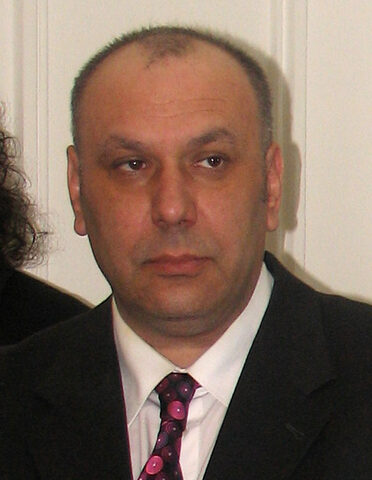
Portrait: Dragan Tadirović · CC BY-SA 4.0
“Walter went on to become the most successful foreign film in China in that decade and the most-watched Yugoslav movie of all time.”Read the review →