
Sarajevo on film 1995 Greece / France / Italy
Ulysses' Gaze (To Vlemma tou Odyssea)
The film's final long take is set in besieged Sarajevo — a Greek auteur's odyssey that ends in the city under fire.
- Director
- Theo Angelopoulos
- Year
- 1995
- Language
- Greek / English
- Country
- Greece / France / Italy
- Genre
- drama, arthouse
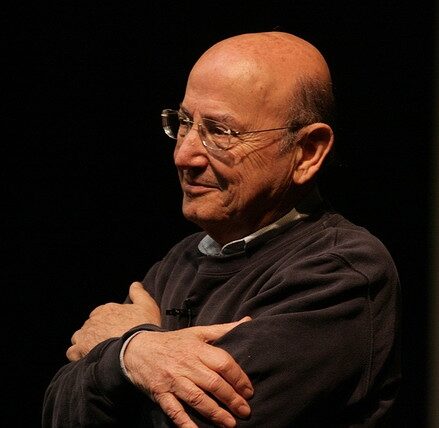
Ulysses’ Gaze is the film in which the great Greek director Theo Angelopoulos brings his odyssey to Sarajevo, and the city’s siege becomes the last shore of the journey. A Greek filmmaker returns to the Balkans to search for three undeveloped reels — the earliest films ever shot in the region — and the search carries him through Albania, Macedonia, Bulgaria, Romania, Serbia, and finally into the besieged city. The film’s final sequence is a single, unbroken long take through the streets of a Sarajevo under fire, a continuous movement of camera and life that is among the most famous shots in modern European cinema.
It won the Grand Prix at the 1995 Cannes Film Festival, was Greece’s submission for the Academy Award, and stands as one of the highest forms of the Sarajevo film: not a documentary, not a war picture, but a meditation that ends by placing the city at the end of European history. Angelopoulos shot the final scenes in the real city during the war’s last years.
For a visitor, it is the film that treats Sarajevo as the terminus of a century — the place where the film’s search for the origins of cinema arrives at the city that would later become the symbol of everything that century destroyed. Watch the final long take, then walk the streets it moves through; you will recognise them.
Critical reception
The film won the Grand Prix at the 1995 Cannes Film Festival and was Greece’s submission for the Academy Award. Critics split sharply — a 27% Tomatometer against an 88% audience score — between those who saw a masterpiece and those who found the compositions too calculated.
Public reception and legacy
Angelopoulos, who had prepared a speech for the Palme d’Or, told the Cannes audience he had now forgotten it; three years later Eternity and a Day won the prize he wanted. Ulysses’ Gaze is frequently considered his masterpiece, appears in TIME’s all-time top 100, and drew over 200,000 admissions in Europe. Its long takes became a reference point for European cinema, and its audiences have always rated it higher than its critics — an 88% audience score against a 27% Tomatometer.
What the critics said
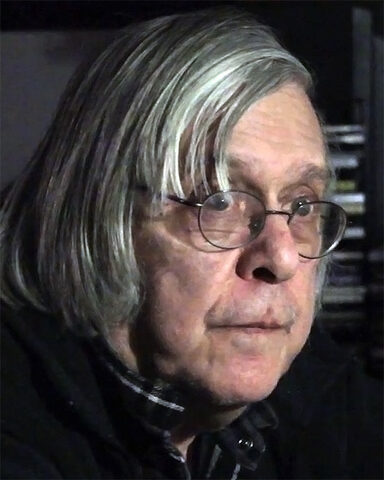
“Magisterially filmed, this movie demands at almost every instant to be regarded as a masterpiece.”Read the review →
Portrait: Kevin B. Lee and Ignatiy Vishnevetsky · CC BY 3.0
“Constructed from long elegant takes, and moving fluidly between naturalism and tableaux-like theatricality, it's a mesmerising work of arresting beauty and impressive emotional power.”Read the review →
“There is no doubt that we are in the presence of greatness, but Angelopoulos's compositions are so calculated they leave no room for spontaneity.”Read the review →