
Sarajevo on film 2012 Bosnia and Herzegovina
Children of Sarajevo (Djeca)
Aida Begić's post-war film about two orphaned siblings — the war that raised them, and the city still coming to terms with it.
- Director
- Aida Begić
- Year
- 2012
- Language
- Bosnian
- Country
- Bosnia and Herzegovina
- Genre
- drama
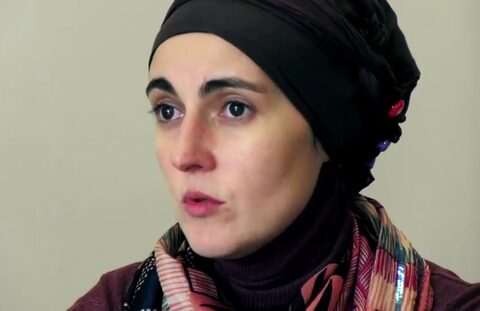
Children of Sarajevo (Djeca, “children”) is the film about the generation the siege actually produced. Its subjects are not the adults who lived through 1992–95 but their children, who grew up with the war as their first fact of life. Rahima, a young woman working in a kitchen, and her teenage brother are war orphans, raised in state care after their parents were killed. The film follows them in present-day Sarajevo as she tries to keep him out of trouble — and to build, out of nothing, the family the war denied them.
Aida Begić made it as her second feature, after her debut Snow (Snijeg, 2008) had already established her as the chronicler of post-war Bosnian life. What sets Djeca apart is its subject: the war is not a flashback here but a permanent absence, felt in the gaps — the missing parents, the institutional childhood, the neighbourhoods that remember. It is the film of the city’s post-war generation, made by someone who belongs to it.
For a visitor, it is the essential bridge between the memorials and the living city: the Sarajevo Roses mark where people died, and this film shows what the people who survived the war’s first years grew up to become. It is the quietest of the post-war films and, in some ways, the most relevant to the city you will actually meet.
Critical reception
Children of Sarajevo won the Un Certain Regard Special Distinction at the 2012 Cannes Film Festival and was Bosnia and Herzegovina’s entry for the 85th Academy Awards. Critics read it as a portrait of a city still shadowed by its war. It holds a 62% critics’ score on Rotten Tomatoes.
Public reception and legacy
The film drew about 22,000 cinema admissions in Europe, led by Italy and France, and holds a 62% audience score on Rotten Tomatoes. Its Oscar submission for Bosnia in 2012 was decided by a committee that included Danis Tanović. International critics received it as a portrait of a post-war city still shadowed by the siege.
What the critics said
“But it creates a disturbing feeling of a city haunted and menaced by its past.”Read the review →
Portrait: MartinCunningham · CC0
“The technique works well here to create the tension and worry that comes from seeing a lead character constantly moving away from the camera.”