Sarajevo — pronouncing the bazaar, nine Bosnian consonants English doesn't have
A walking tour of the unpronounceable streets of Baščaršija, by way of nine consonants you don't have and one diacritic you'll learn to love.
The streets of Baščaršija have names that look, to a first-time visitor, like keyboard accidents. Letters tip over with diacritics. Consonants cluster four-deep with no vowels in sight. The signs do not appear to spell anything a human tongue could say out loud.
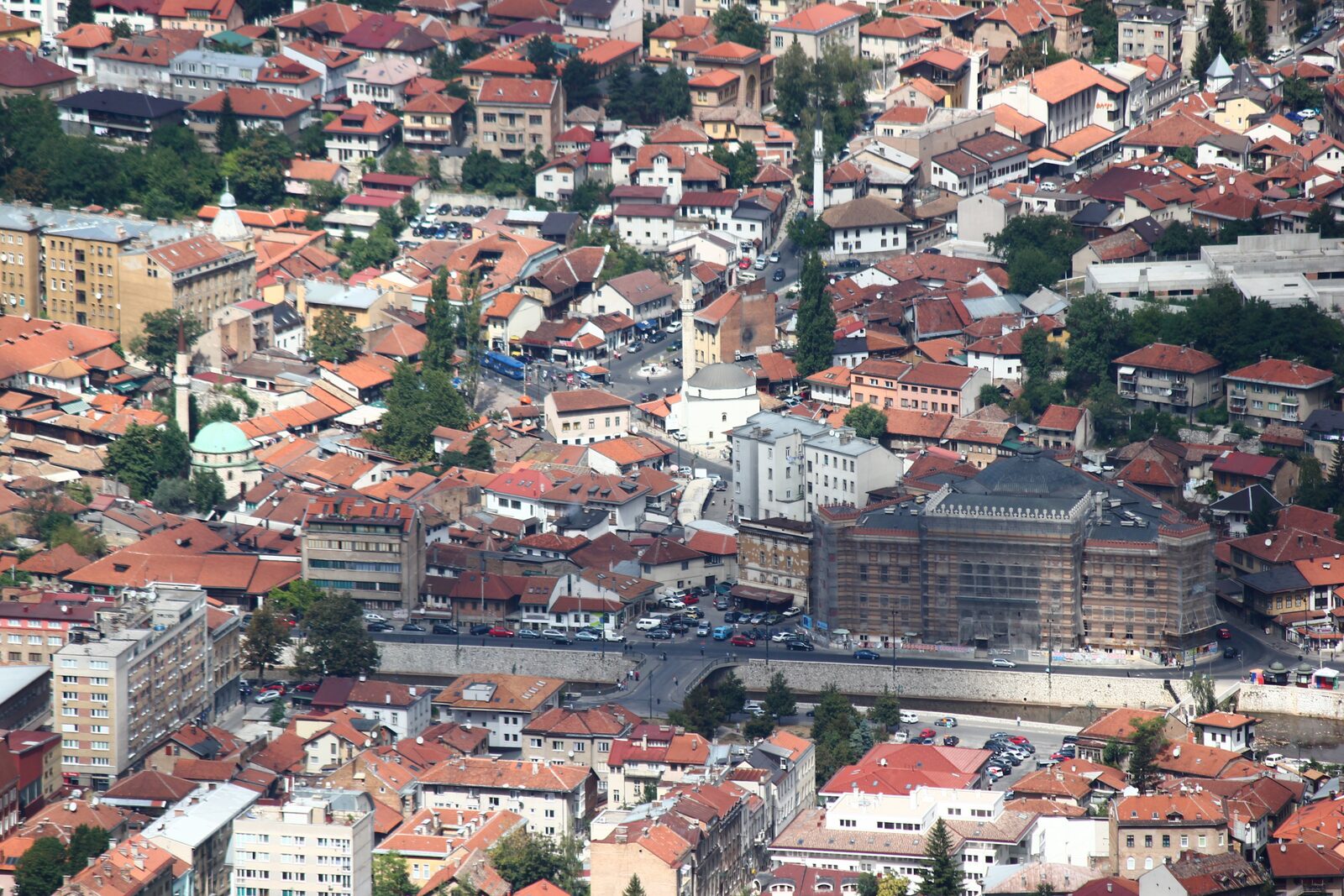

This is a friendly warning that they are easier than they look. They are also more useful than they look. Each name preserves a 15th-century craft, and learning them is learning the geometry of the Ottoman city. The locals will smile when you try. They will smile harder if you mispronounce them. Either outcome is good.
A two-minute pronunciation primer
Three consonants do all the heavy lifting. Learn these and the rest follows.
- Č / č: ch, as in church. The sharper, harder version.
- Ć / ć: also ch, but softer, almost a ty. As in cheese said with a smile.
- Dž / dž: j, as in judge. Two letters in Bosnian, one sound.
- Š / š: sh, as in shoes.
- Ž / ž: the zh in measure.
All vowels are clean. A as in father, e as in bed, i as in machine, o as in or, u as in boot. No silent letters, no surprises. If you see it, you say it.
Now you can read every street sign in the bazaar. Watch.
A short, mostly painless walking lesson
You’re standing at the Sebilj. Pick a direction. You’re now on one of these:
Sarači
sa-RA-chi. The saddle-makers’ street. Started in the 15th century as the supply chain for the Ottoman cavalry; today it’s a row of jewellers, copperware shops, and tea houses. It runs straight as a die from the Sebilj to the Gazi Husrev-beg Mosque. If you are lost in the bazaar, walk until you find Sarači.

Kazandžiluk
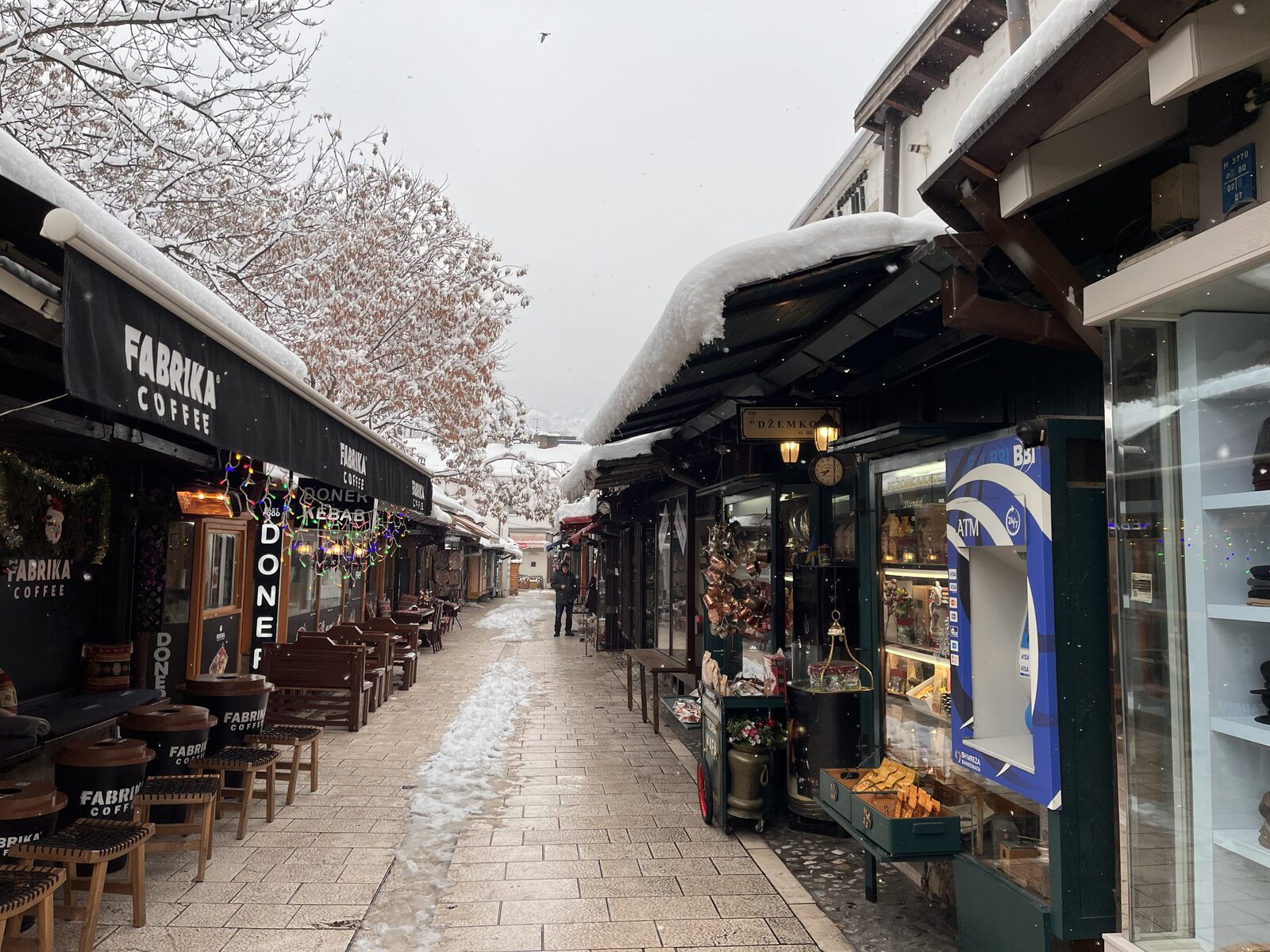
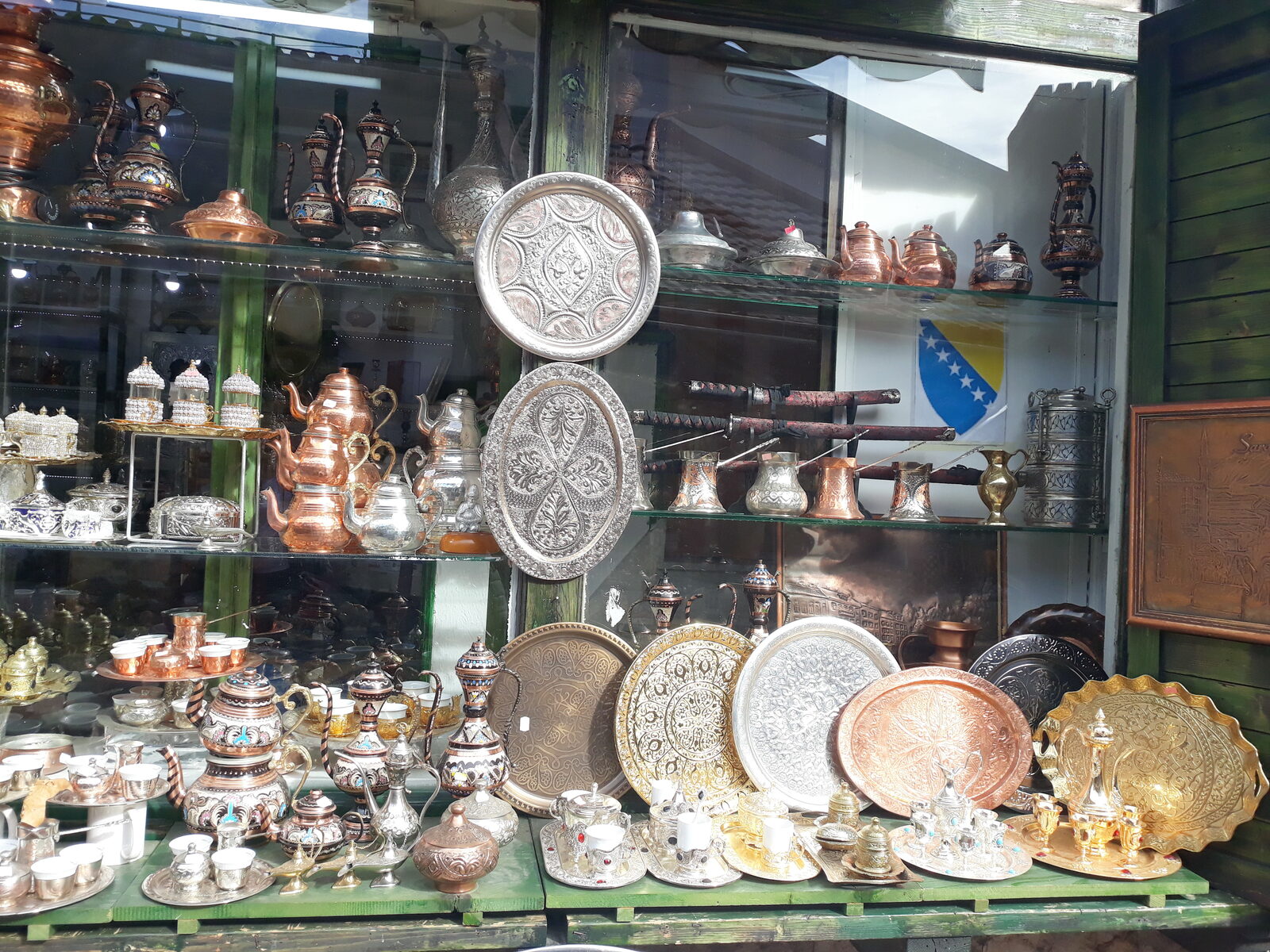
ka-zan-JI-luk. The coppersmiths’ street. The -džiluk suffix means quarter of. So kazan-džiluk = the coppersmiths’ quarter. You will know it by the rhythmic hammering from open workshops. Try saying KA-zan-JI-luk slowly. Now faster. Now apologise to the coppersmith you’ve just disturbed.

Bravadžiluk
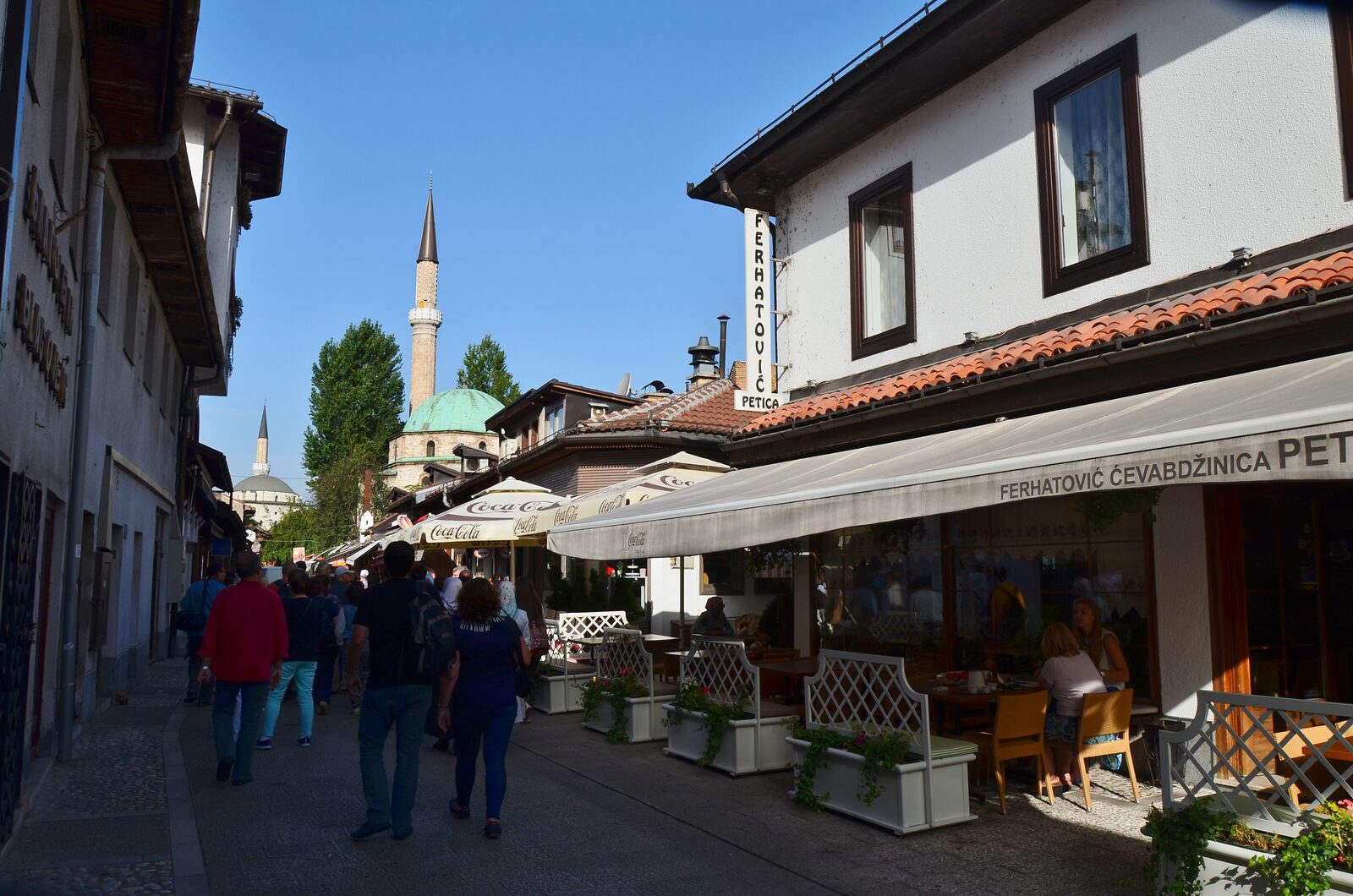
bra-va-JI-luk. The locksmiths’ quarter. Today it is the ćevapi street: Petica, Mrkva, Hodžić, and others all sit shoulder-to-shoulder here, sharing one short cobbled lane and pretending to compete. Brava = lock, plus the -džiluk suffix.

Čizmedžiluk
chiz-me-JI-luk. The boot-makers’ street. Čizma = boot. There are no boot-makers left, but the name has stayed since the 15th century, which is, when you think about it, a remarkable thing for a name to do.
Ćurčiluk
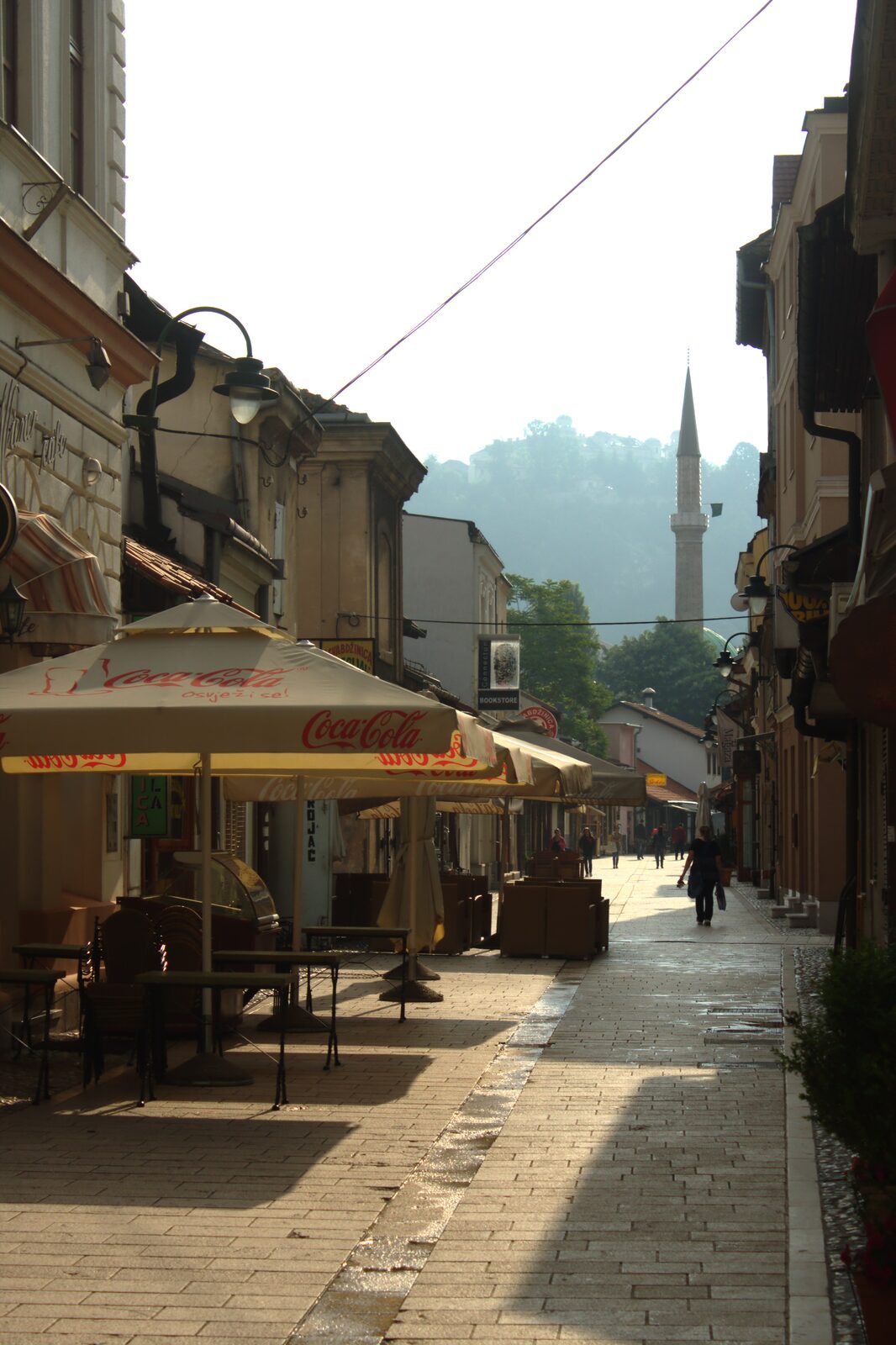
chur-CHI-luk. The furriers’ quarter. The Ć at the start is the soft ch (almost a t), and the diacritic is doing real work: Čurčiluk with a hard č would be a different (non-existent) street. The fur trade thrived in cold Sarajevan winters; the name remains.

Halači
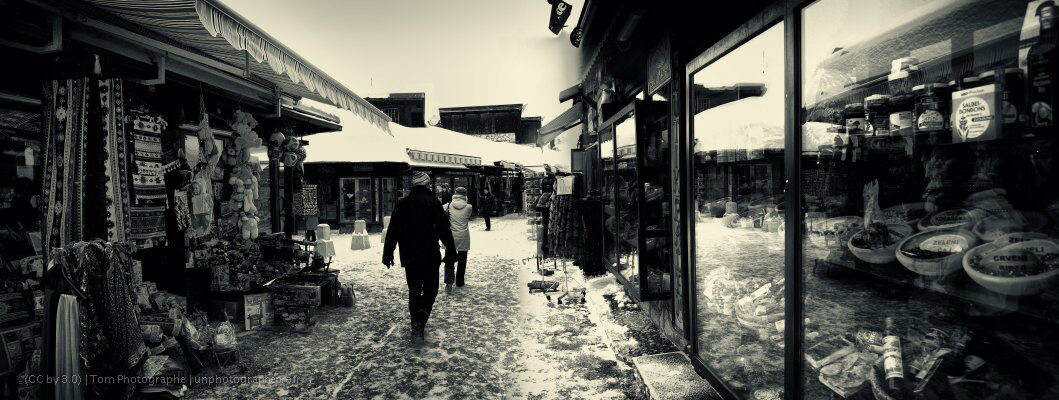
ha-LA-chi. The cotton-fluffers, the men who, in pre-mechanical times, beat raw cotton with strung bows to prepare it for mattresses. A trade you may not have known existed; this street name is its monument. Art Kuća Sevdaha, the dedicated sevdah museum, sits on Halači today.
Abadžiluk
a-ba-JI-luk. The wool-cloth-weavers’ quarter. Aba is a coarse woollen cloth, the Ottoman peasant’s everyday fabric.

Aščiluk
ash-CHI-luk. The cooks’ street. Aščinica (from aščija, a cook) is still the word for a traditional Bosnian cafeteria-style restaurant. If you eat home-cooking in Sarajevo, you will eat in an aščinica.
Bazardžani
ba-zar-JA-ni. The merchants of the bazaar. From the same Persian root as bazaar itself.
Džidžikovac
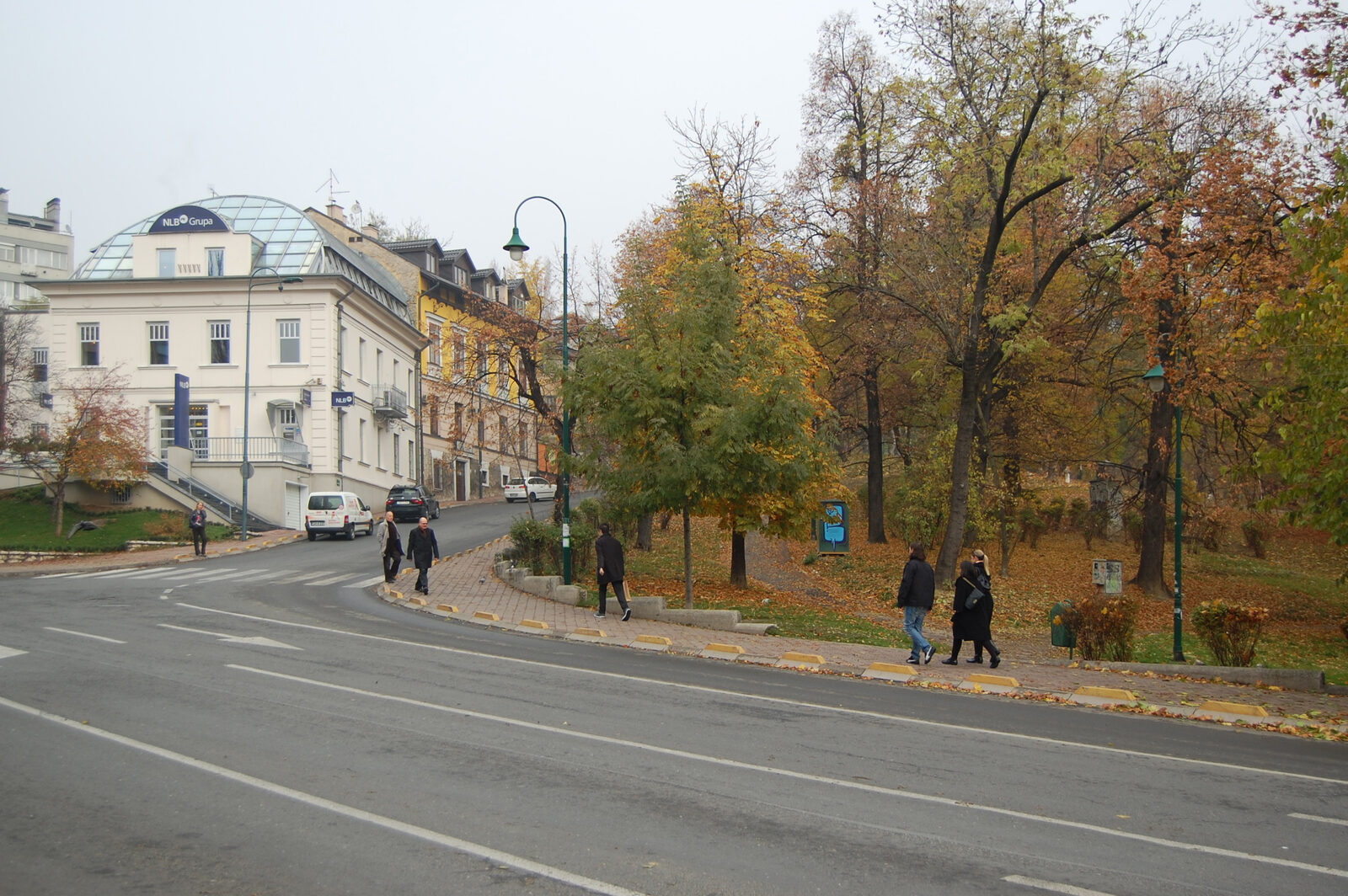
JI-dji-KO-vats. This one is a residential street near the National Museum and one of the more characteristically Sarajevan names. Džidža is dialect for small jewel or trinket; džidžikovac roughly means the place of the little treasures. Try saying it three times fast. Have a glass of šljivovica. Try again. Better.

A small game
A standard Sarajevan parlour test: ask a guest to read this sentence aloud.
Idem na Bravadžiluk po ćevape pa preko Čizmedžiluka na kafu.
(I’m going to Bravadžiluk for ćevapi, then through Čizmedžiluk for a coffee.)
If they get through it without breaking, you offer them a šljivovica and a chair. If they don’t, you offer them a šljivovica and a chair anyway. The sentence is a trap. The hospitality is the point.
Why this matters
The street names are a 600-year-old map of Ottoman labour. Walk Sarači and you walk through the workshop of an empire’s cavalry supply chain. Walk Kazandžiluk and you walk through the workshop of a copper culture that still hammers, by hand, the same patterns it hammered in 1500. The pronunciation is a small entry fee for a long history.
So practise on the bench by the Sebilj. Apologise to a coppersmith. Buy a small džezva. The first time you say kazandžiluk without thinking about it, you will have arrived in Sarajevo for real. Đe si? (“Where are you?”, used as what’s up?) will get you a coffee. Plaćeno! will end the argument over who pays for it.
Sve najbolje.
Sources & further reading
Keep reading
More from the guide.

Sarajevo — nearly the hardest place on earth to start a business, and the tech scene doesn't care
The canton’s development strategy cites three numbers that, taken together, form one of the sharpest paradoxes in the Sarajevan economy: 184th out...

Sarajevo Sebilj — a wooden copy of Mimar Sinan's stone fountain in Istanbul
The most photographed object in Sarajevo is the wooden kiosked fountain in the middle of Baščaršija. Everyone assumes it’s Ottoman. It isn’t...

Sarajevo Institute — founded in 1992, the year it now studies
The University of Sarajevo Institute for the Research of Crimes Against Humanity and International Law hosted a three-day scientific conference in Sarajevo...