Explore Sarajevo / Hidden Gems / Sarajevo Caffe Divan
Hidden Gem · Sarači, Stari Grad · 3 min read
Sarajevo Caffe Divan
The working café inside the courtyard of Morića Han — Sarajevo's only surviving Ottoman *han* (traveller's inn), built 1551 by Gazi Husrev-beg's vakuf, and rebuilt in the 1970s after the December 1957 fire.
- Established
- Café opened mid-20th century; building 1551
- By
- Endowed by Gazi Husrev-beg's vakuf, 1551. Reconstructed 1971–1974 after the December 1957 fire.


At a glance
Address
Sarači 77, Baščaršija, Stari Grad (in the Morića Han courtyard)
Hours
Typically 08:00–23:00
Price
Bosnian coffee ~3 BAM; tea 3–5 BAM
Getting there
Tram to Baščaršija; two-minute walk west on Sarači
Time needed
An hour, comfortably
Best time
Mid-afternoon, when the courtyard is in soft light and the bazaar's noise muffles to the level of the fountain
Coordinates
43.8596° N 18.4299° E
Navigate
Caffe Divan is the small working café inside the courtyard of Morića Han at Sarači 77, on the spine street of Baščaršija. The building is Sarajevo’s only surviving Ottoman han (traveller’s inn). The walls around you were built in 1551, during the reign of Suleiman the Magnificent, as part of the great vakuf (religious endowment) of the Ottoman governor Gazi Husrev-beg. The courtyard you are sitting in was where a few hundred merchants, drovers, and pilgrims a night unsaddled their horses, washed at the fountain in the corner, and ate a meal. Five centuries later it is a café — and, as the destination page notes, one so old it appears in sevdah songs.
For the building’s full history, the vakuf that endowed it, the 1697 and December 1957 fires, and the 1971–1974 reconstruction, see the Morića Han page. This page is about what the café feels like to sit in.
.jpg)
The room
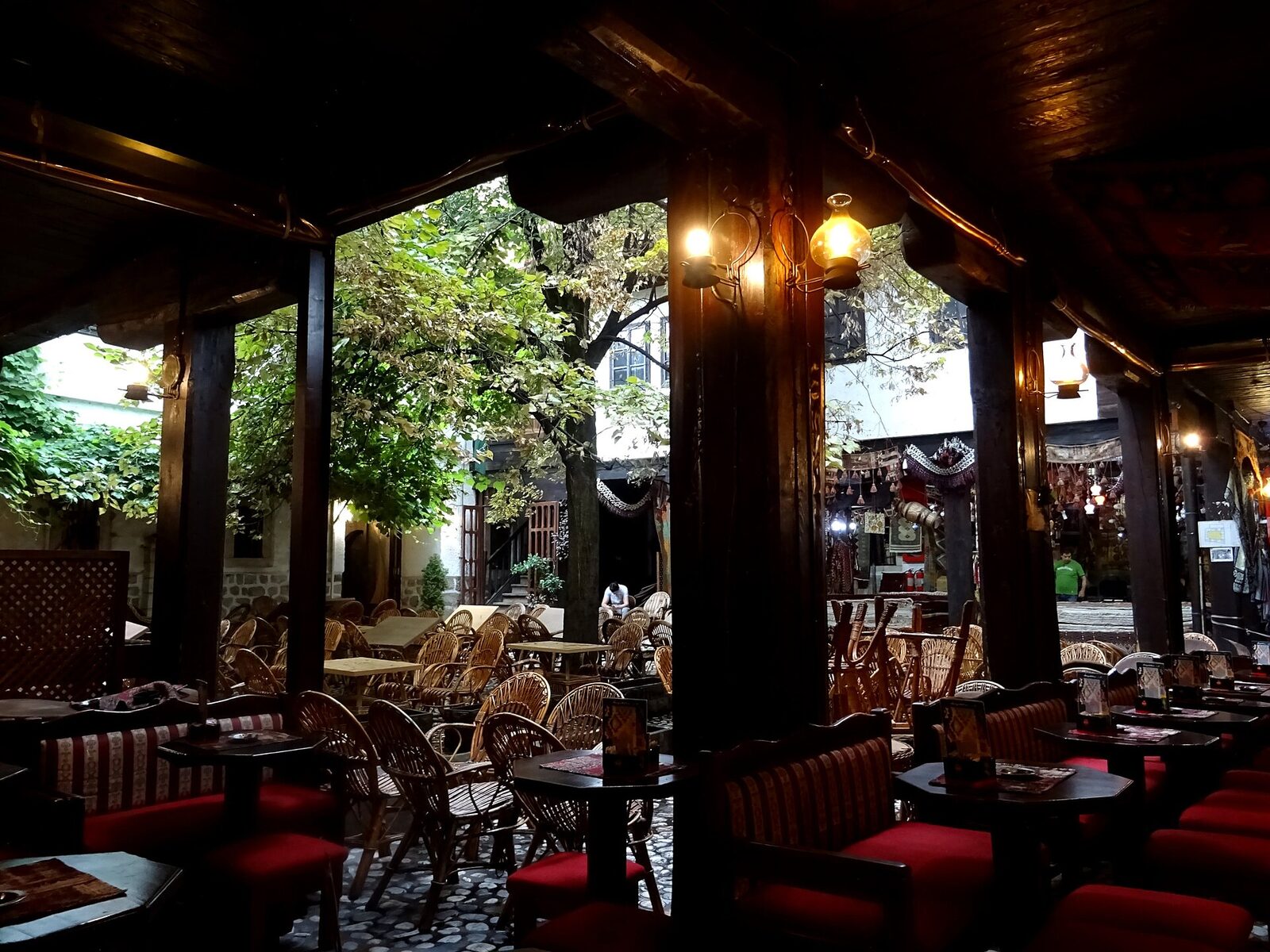
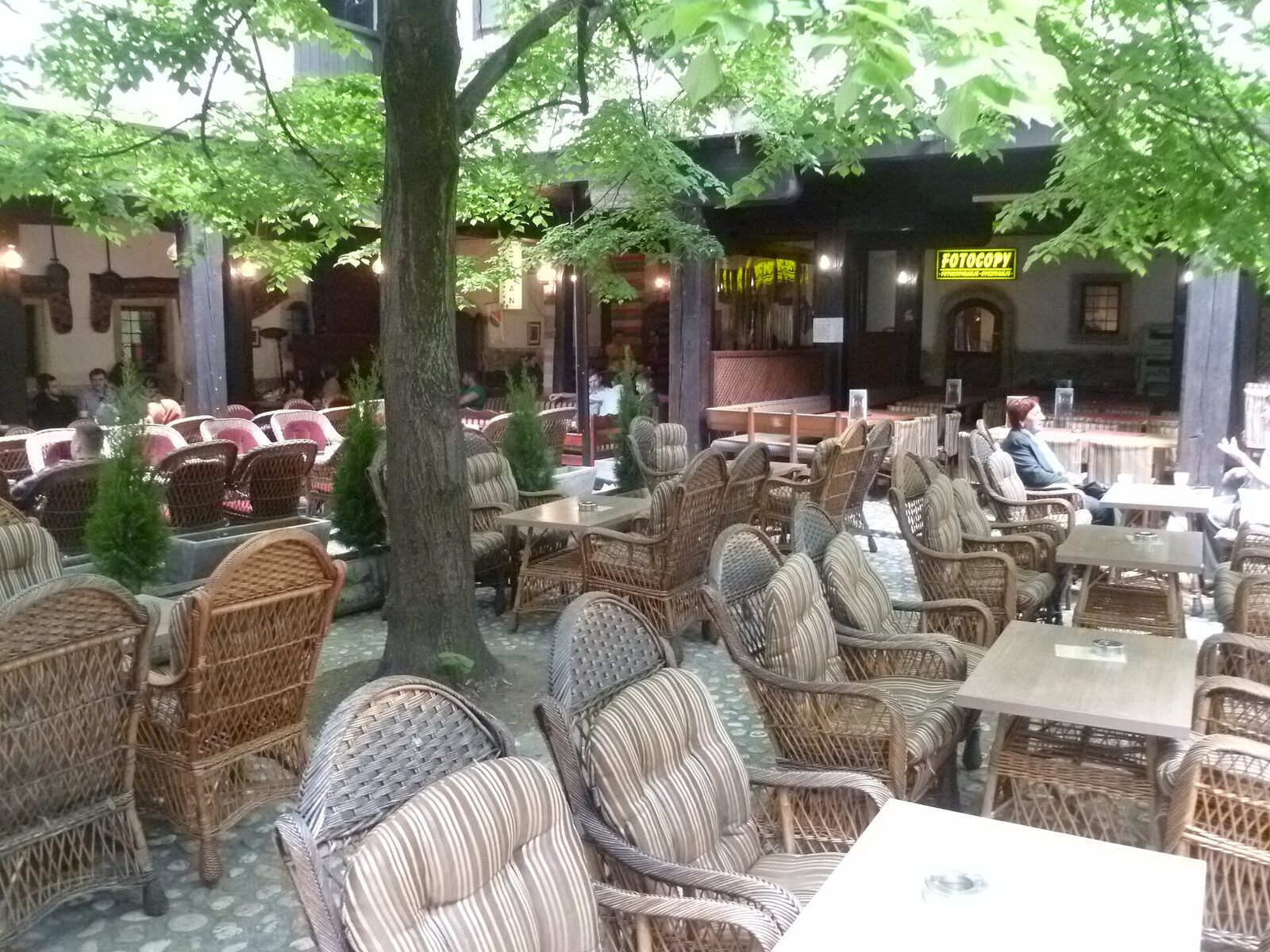
Caffe Divan occupies the cobbled rectangle of the open courtyard, with low red-upholstered Bosnian bench seating along the walls under the arcaded galleries, and rattan chairs at small café tables in the centre of the space, under the shade of the courtyard’s trees. A small fountain runs in one corner. The two surrounding storeys of the old inn are now small shops — leather, copper, and one that sells Persian-style lamps, kilims, and textiles — that quietly continue the bazaar’s character without intruding on the café tables below. Above the courtyard is an opening to the sky; in summer it lets dappled light fall across the cushions, and in winter the room becomes a small enclosed warmth with the fountain still running.
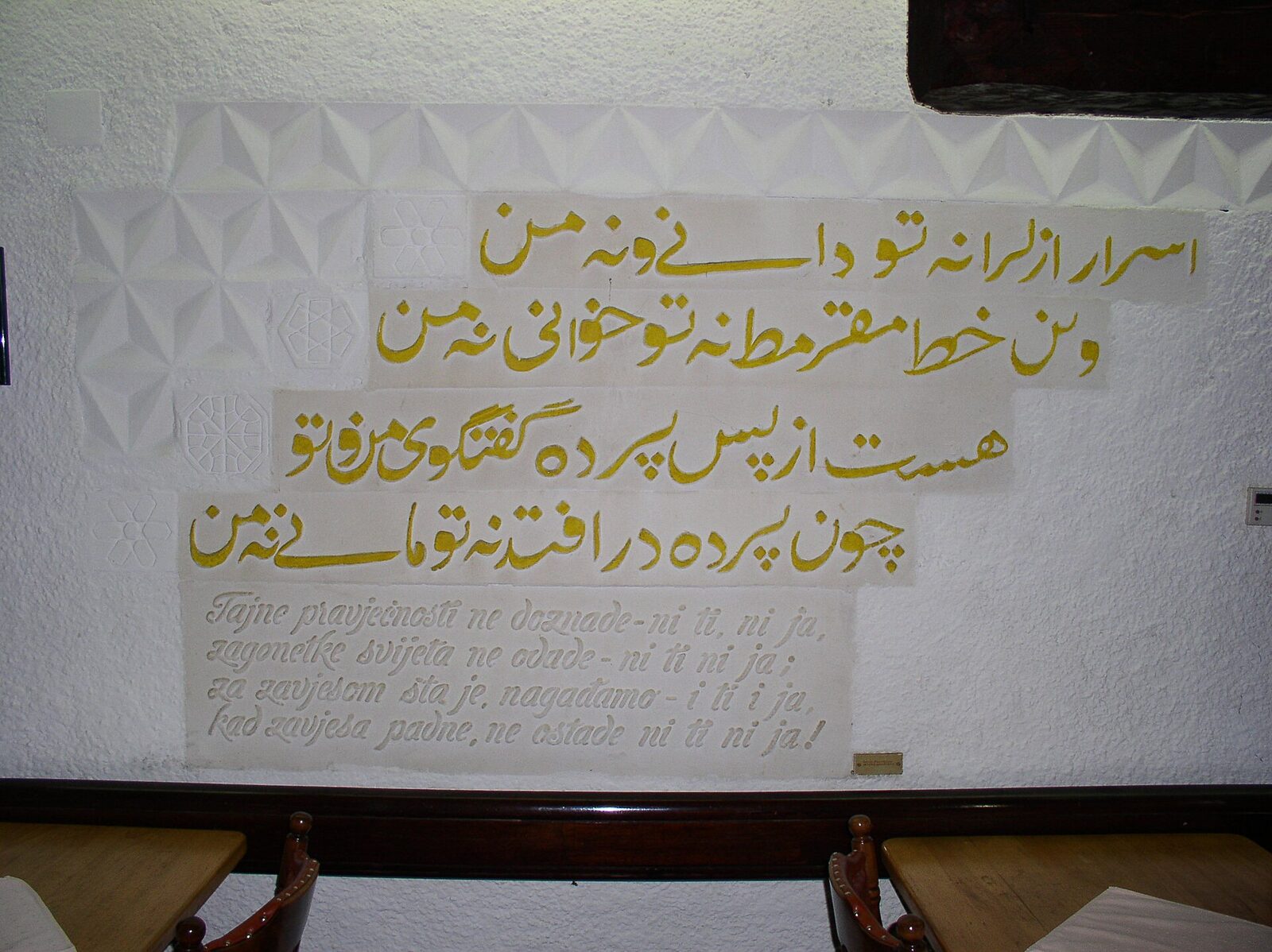
The proportions are Ottoman. The materials are Ottoman. Look up under the arcades on the walls and you will see Persian calligraphy inscriptions from poems by Omar Khayyám — one of the many small details a first visit will miss.
.JPG)
What to order
A Bosnian coffee in the traditional service — small džezva (long-handled copper pot), fildžan (small handleless cup), sugar cube, water glass. About 3 BAM. The kitchen also serves a long list of teas, some traditional (mint, rose, rosehip) and some imported (a serious selection of black and herbal). In summer a lemonade or a sherbet are honest orders. There is no full kitchen; this is a place to drink, not eat.
If you have a choice of seating, take a low cushion seat along the arcade rather than a chair at the centre tables. The upholstered benches are cooler in summer and warmer in winter, and the view across the courtyard is better from the arcade line.

How to use it
Walk west from the Sebilj along Sarači for about a hundred metres. The entrance to Morića Han is on the right, a heavy arched gateway in carved stone, with the courtyard visible beyond. Walk in. The café is the courtyard.
Order a coffee. Sit. Stay an hour.
Caffe Divan is not a destination in the way Park Prinčeva is. There is no view, no tasting menu, no event. It is simply one of the calmest, oldest, most beautifully proportioned small rooms in central Sarajevo, available for the price of a Bosnian coffee. That is enough.
Sources & further reading
Keep wandering
Nearby & related.

Sarajevo Ashkenazi Synagogue
Sarajevo’s working synagogue, built in 1902 in pseudo-Moorish style by the Austro-Hungarian administration for the Jewish community that had grown...

Sarajevo Avaz Twist Tower
The Avaz Twist Tower is Sarajevo’s tallest building (142 metres, completed 2008). A small public observation deck on the 35th...

Sarajevo Baščaršija
The 1462 Ottoman bazaar of Sarajevo, still a working bazaar. Copper workshops on Kazandžiluk, Bosnian coffee at Morića Han, and...