Explore Sarajevo / Hidden Gems / Sarajevo Ministry of Ćejf
Hidden Gem · Kovači, Stari Grad · 6 min read
Sarajevo Ministry of Ćejf
Bosnia's first third-wave specialty coffee café — opened by an Australian-Bosnian actor, named after the local word for slow, intentional pleasure, and ranked the top coffeehouse in Sarajevo.
- Established
- 2018
- By
- Founded by Rešad Strik

At a glance
Address
Kovači 26, Stari Grad
Hours
Typically 07:00–23:00 daily (Kovači and Marijin Dvor branches; check for the newer locations)
Price
Espresso 3 BAM; flat white 5 BAM; Bosnian coffee 3.50 BAM
Getting there
6 min uphill walk from the Sebilj
Time needed
An hour
Best time
Mid-morning, before the terrace fills
Coordinates
43.8603° N 18.4323° E
Navigate
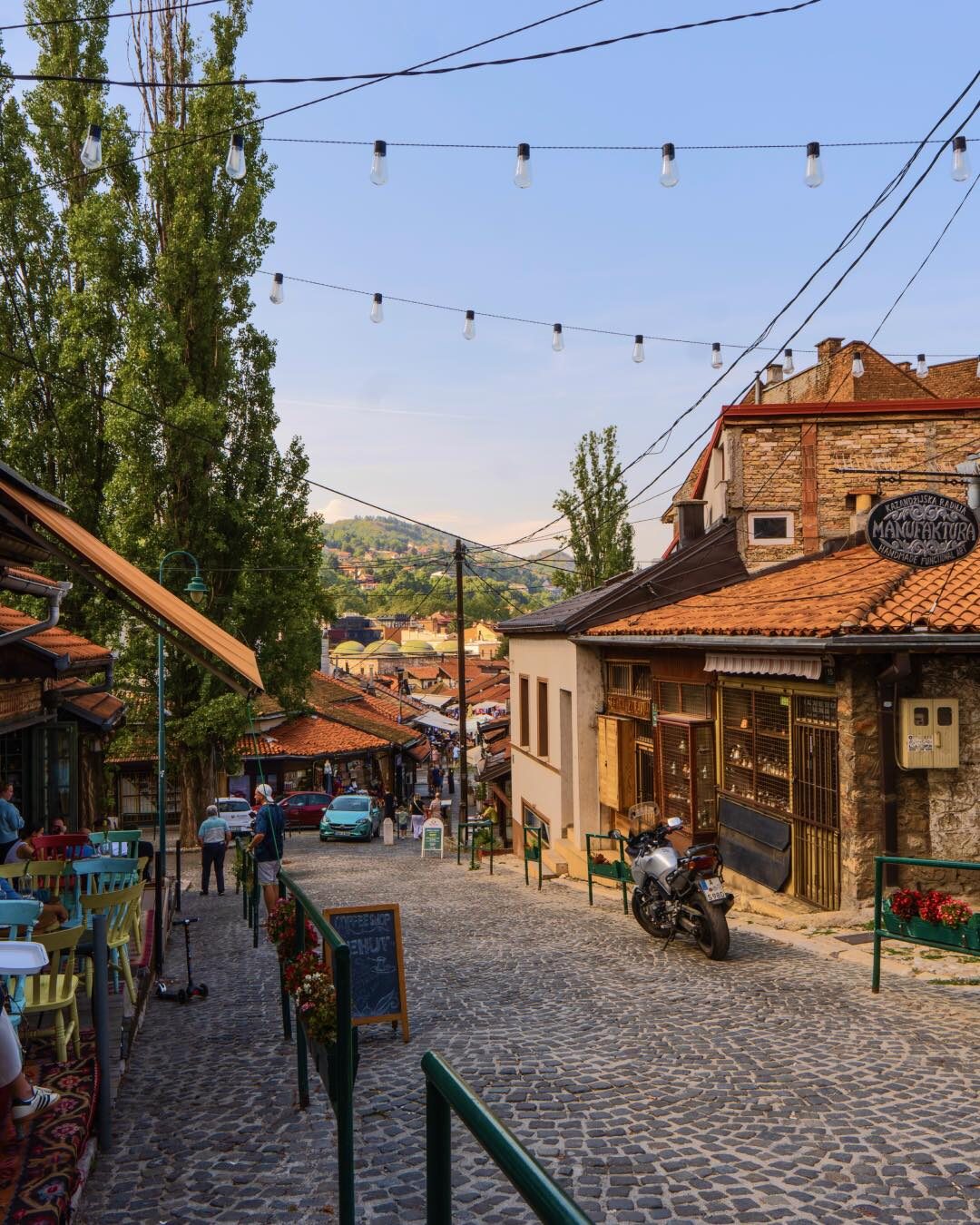
A short, steep climb above the Sebilj fountain, up the cobbled street of Kovači, where the bazaar starts to thin and the old residential houses begin, there is a café that calls itself Ministry of Ćejf. It opened in 2018. It is Bosnia’s first third-wave specialty coffee shop — ranked number one of 648 coffeehouses in Sarajevo on Restaurant Guru, rated 4.7 on Google, and now expanded to four branches across the city. It was opened by a man who had previously appeared in a Hollywood horror film and a Turkish television series watched across sixty countries.
The founder
Rešad Strik (born 22 June 1981, Canberra) is an Australian-Bosnian actor turned coffee roaster. His Bosnian father left Sarajevo for Australia in the early 1970s, married an Australian, and raised four sons. Rešad, the youngest, trained at the Australian Academy of Dramatic Art (graduated 2004), landed a lead role in the Australian TV series headLand (58 episodes, 2005–2006), moved to Los Angeles, and appeared in The Hills Have Eyes 2 (2007), Newcastle (2008), and later the Turkish mega-series Diriliş Ertuğrul and Filinta.
In 2009 he came to Sarajevo to visit his father’s city. His father phoned him every day with instructions: try the boza at this place, eat the tulumbe at that one, find the best zeljanica here. Strik extended his stay, came back, and did not return to LA.
He built Ministry of Ćejf because it was what he missed in Sarajevo — serious specialty coffee, the kind he had been drinking on the other side of the world, made with the same attention and the same hour that Bosnians already gave to their traditional džezva. He and the staff do not just serve coffee — they want everyone who sits down to oćejfe, to take the slow pleasure the name promises (per Azra Magazine, June 2018). Strik is also the head roaster at the adjoining Ćejf Coffee Roasters. The business has since expanded from one location to four across the city.
The name
Ćejf (pronounced “chey-f”) is the Bosnian word — from the Turkish keyif, itself from the Arabic kayf — for the slow, deliberate enjoyment of a small pleasure, most often, but not always, a cup of coffee taken without hurry. The word is the philosophical foundation of all Bosnian coffee culture. Strik understood that the existing word already contained everything specialty coffee was trying to teach the West: that coffee was an hour, not a beverage; that the ritual mattered; that quality was a function of attention. He simply added an espresso machine, a roaster, and a serious bean-sourcing programme.
A clever naming choice. The café is not a Western intrusion on Sarajevo’s coffee tradition. It is, in name and in practice, a continuation of it, using different tools.
What they do
Roasting happens at the Ćejf Coffee Roasters roastery, located a short walk further along Kovači, where Strik roasts in small batches. The current sourcing list, per Day9.coffee, includes single-origin lots from Ethiopia (Kercha), Colombia, Kenya, Brazil, El Salvador (honey-processed), Guatemala (honey-processed), Costa Rica, and Burundi — the selection rotates with the season and the harvest.
The menu is what you would expect from a serious specialty café anywhere in Europe:
- Espresso, double espresso, macchiato. Pulled cleanly. Available in two or three rotating origins.
- Flat white, cortado, cappuccino, latte. The flat white is the local favourite. Discover Kava users rate the V60 highest.
- Hand-brewed filter coffee: V60, Chemex, AeroPress, depending on the day and what the barista is in the mood for.
- Cold brew in summer. Cakes, cheesecakes, breakfast oats, and a small lunch menu (including a vegan burger) round out the food side.
- And — importantly — a properly made Bosnian coffee in the traditional džezva, using their own beans. It is one of the few places in the city where you can directly compare a traditional Bosnian preparation and an espresso pulled from the same green coffee.
The space
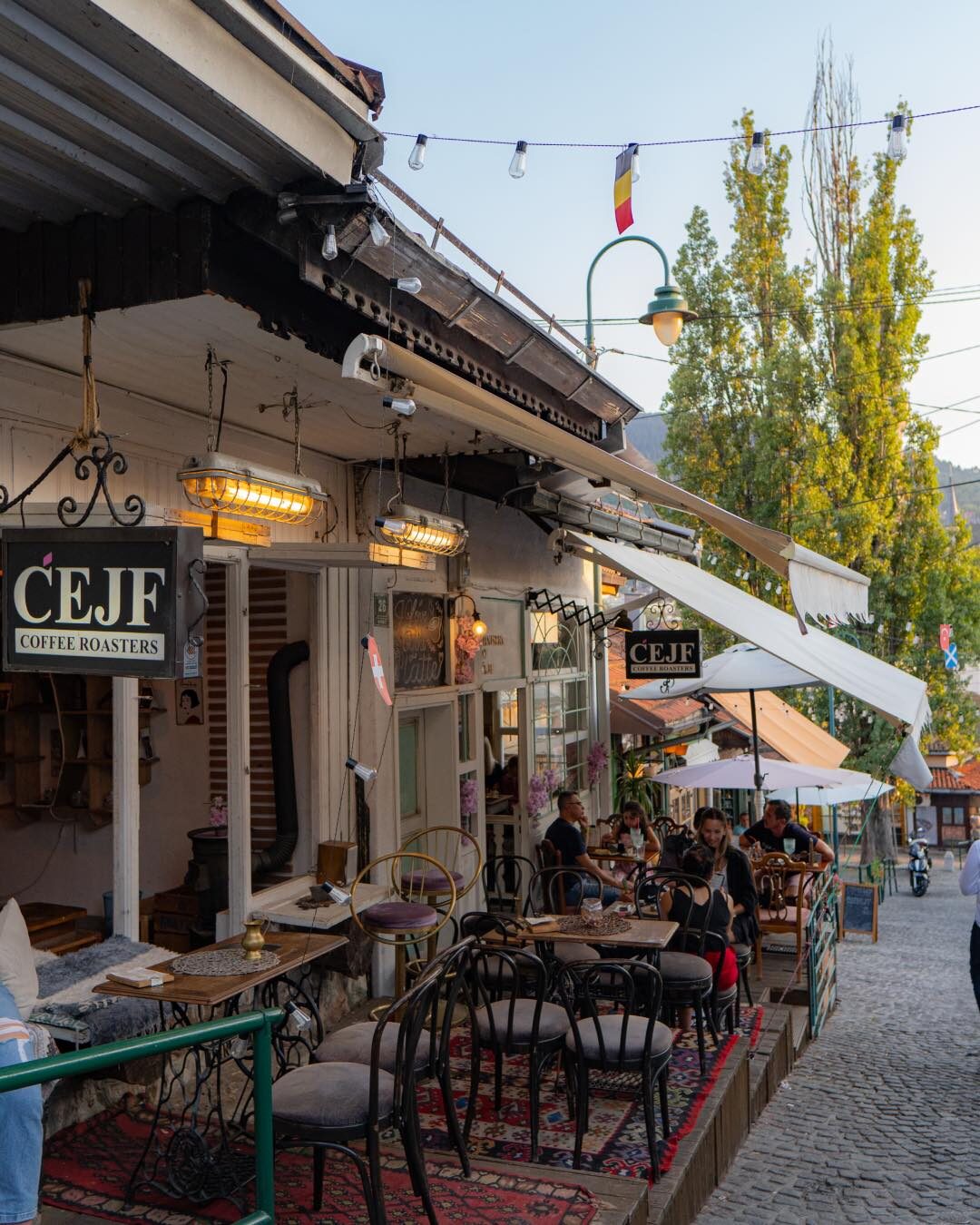
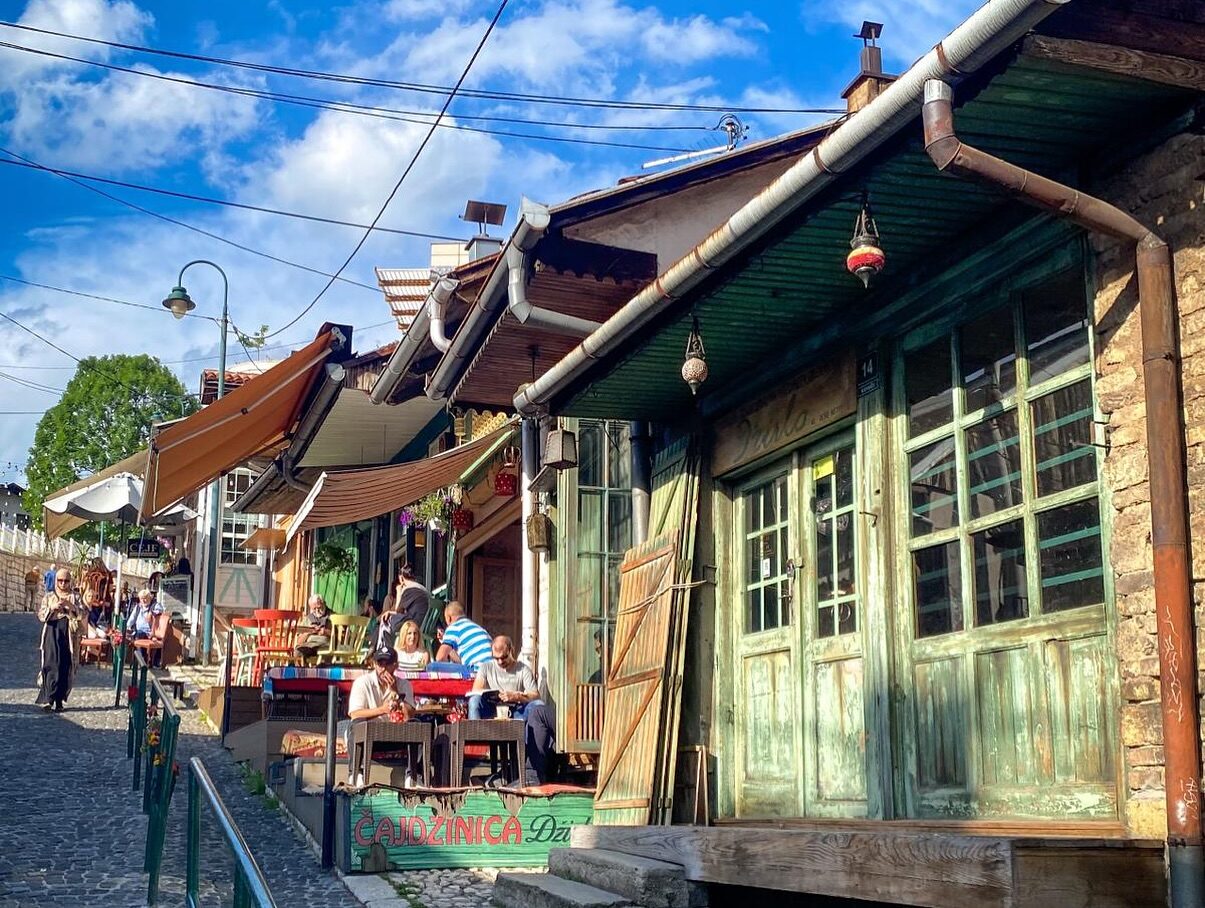
The café occupies a narrow building on Kovači, with a terrace at the front that overlooks the cobbled street and, just below it, the rooftops of Baščaršija. The interior is small, deliberately uncluttered, with tables made from antique sewing machine bases, a small Sarajevan-design touch that recurs across several of the city’s better cafés. Local art on the walls. Plants. Good music at a sensible volume. The space is laptop-friendly — wifi is reliable, the tables are generous, and nobody will ask you to leave.
Aim for the terrace, particularly in late afternoon, when the light comes down the valley and the minarets of the bazaar begin to glow. It is one of the most photographed coffee views in the city, for good reason.
The roastery
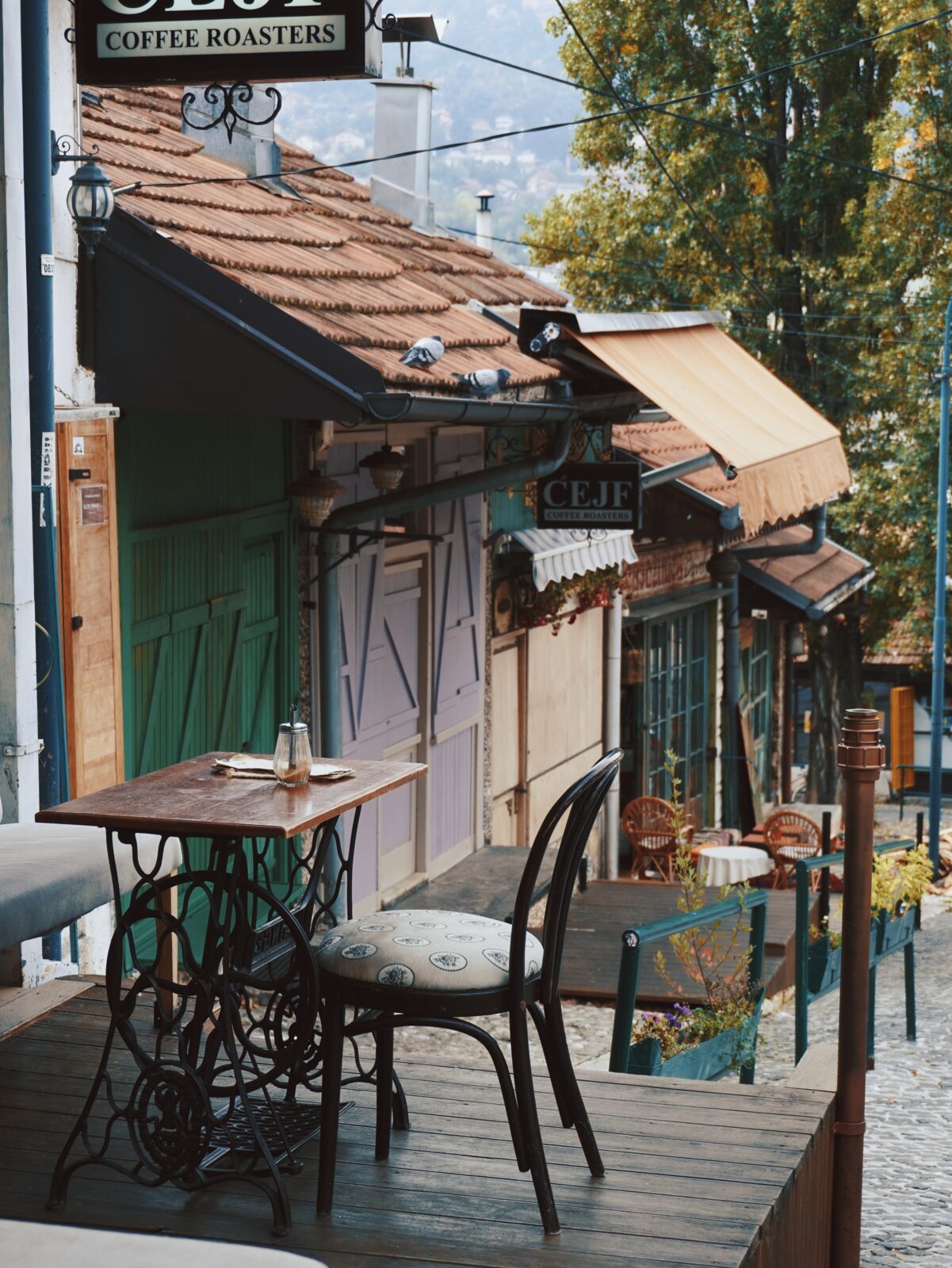
A few doors down from the café, Ćejf Coffee Roasters (Instagram: @cejfcoffeeroasters) is the working roastery and a small retail shop. You can buy whole beans (espresso roasts or filter roasts), grinder-ready bags, the equipment to make either style at home, and small batches of single-origin beans they only roast in limited quantities. Strik is often around and happy to talk about sourcing — he is the kind of roaster who will tell you which farm the beans came from and why he chose the processing method.
If you are travelling and care about taking something properly Sarajevan home, a 250g bag of their espresso roast is more meaningful than a souvenir Sebilj.
The other branches
The business has grown from one café to four. A second Ministry of Ćejf operates at Hiseta 2, Marijin Dvor — a flat, central location in Općina Centar, open daily. A third sits inside the SCC (Sarajevo City Center) mall at Vrbanja 1, and a fourth at Čizmedžiluk 11 in Baščaršija itself. All branches serve the same menu. If you cannot manage the Kovači climb, the Marijin Dvor or Baščaršija branches are the easiest alternatives.
Why it matters
Ministry of Ćejf opened in 2018 and became a small but real turning point in Sarajevo’s coffee scene. Before it, the city had espresso machines in hotels and ordinary cafés, but no dedicated specialty roaster-café — no shop where the beans were single-origin, the barista trained to specialty standards, and the roasting done on-site. Bosnian coffee, served the proper way, in a fildžan, slowly, was the only serious coffee tradition in town. After Ministry of Ćejf, the city had a specialty scene as well: Kawa (on Dženetića Čikma 16), Coffee Station Kovačići (on Zagrebačka), and Fabrika Coffee (Mostar-founded, now with three Sarajevo locations) followed. The Sarajevo specialty scene is still small — roughly five shops across the city — but it exists, and Ministry of Ćejf started it.
The two cultures coexist comfortably. Walk down the hill to Čajdžinica Džirlo for a traditional Bosnian coffee or a salep, then walk back up to Ministry of Ćejf for a flat white. The two cafés are three minutes apart on the same street, serving the same neighbourhood, answering different questions.
Ćejf is the same regardless of how the coffee was pulled. The hour matters. The cup matters less.
Ministry of Ćejf was important not because it replaced the old way — it did not, and did not try to — but because it argued, persuasively, that the old way and the new way could share the same room.
Climb the hill. Sit on the terrace. Order both kinds. Stay for an hour.
Sources & further reading
- Ministry of Ćejf — Facebook
- Ministry of Ćejf — Baščaršija.ba
- Discover Kava — Ministry of Ćejf
- European Coffee Trip — Bosnia & Herzegovina
- Azra Magazine — Reshad Strik interview (June 2018)
- Day9.coffee — Ministry of Ćejf roaster profile
- Sarajevo Times — Reshad Strik, an actor who replaced Hollywood with Bosnia
More views
From Sarajevo Ministry of Ćejf
Photographs: Ministry of Ćejf · source · Used with permission
Keep wandering
Nearby & related.

Sarajevo Ashkenazi Synagogue
Sarajevo’s working synagogue, built in 1902 in pseudo-Moorish style by the Austro-Hungarian administration for the Jewish community that had grown...

Sarajevo Avaz Twist Tower
The Avaz Twist Tower is Sarajevo’s tallest building (142 metres, completed 2008). A small public observation deck on the 35th...

Sarajevo Baščaršija
The 1462 Ottoman bazaar of Sarajevo, still a working bazaar. Copper workshops on Kazandžiluk, Bosnian coffee at Morića Han, and...