Explore Sarajevo / Hidden Gems / Sarajevo Čajdžinica Džirlo
Hidden Gem · Kovači, Stari Grad · 4 min read
Sarajevo Čajdžinica Džirlo
A tiny teahouse on a cobbled side street near the Sebilj — 53 teas, Bosnian coffee, salep in winter, and a 30-year husband-and-wife project.
- Established
- 1997
- By
- Restored by Husein & Dijana Džirlo

At a glance
Address
Kovači 16, Stari Grad
Hours
Typically 09:00–23:00
Price
Tea ~3 BAM; Bosnian coffee ~3 BAM
Getting there
3 min uphill walk from the Sebilj
Time needed
An hour, longer in winter
Best time
Cold afternoons; the warmth of the room is part of the appeal
Coordinates
43.8602° N 18.4321° E
Navigate
Sarajevo has larger restaurants, more famous ones, and plenty with longer queues. Čajdžinica Džirlo is none of those things. It is small, barely large enough for a dozen guests at a time. It is on a narrow side street that most visitors don’t think to walk up. It has been operating since 1997, and is currently the fourth-ranked restaurant in Sarajevo on Tripadvisor, out of 521. The rating is 4.9 stars. The reviewers are mostly travellers who had been told by a local where to find it.
It is, by most measures, the best teahouse in Bosnia.
The owners
The café was opened in 1997 by Husein Džirlo and his wife Dijana, who had recently returned to Sarajevo after spending the war years abroad. They found that the small building on Kovači street, just uphill from the Sebilj, had stood empty and unused for nearly 40 years. They took it. They restored it. They opened a teahouse.
Husein’s stated ambition at the time was modest and exact: “We wanted to create something Sarajevo didn’t have.” What Sarajevo didn’t have, at the end of the 1990s, was a serious specialist teahouse, a proper čajdžinica, focused on the slow, traditional rituals of tea-drinking in the Ottoman style, with an inventory broad enough to interest the curious. They built one.
Three decades later, they are still here. Almost every day. The café is still run by the family.
The teas
The teahouse maintains a working stock of 53 different teas, which is the kind of number that sounds like marketing copy until you read the menu. The selection breaks roughly into three categories:
- Traditional Bosnian and Balkan teas: čaj od mente (mint), čaj od ruže (rose), čaj od šipka (rosehip), čaj od kamilice (chamomile), various wild-mountain herbal infusions sourced from highland villages around Bosnia.
- Imported organic teas: a wider catalogue of South African, Indian, Chinese, and Mediterranean teas, brought in from a serious German specialist supplier.
- Seasonal specialities: particularly salep in winter, the thick, sweet, milk-and-orchid-root drink that has been associated with Sarajevo café culture for centuries.
The teas are served in proper Ottoman fashion: small glass cups on small saucers, with a sugar cube. The water is brought to the table separately.
The room
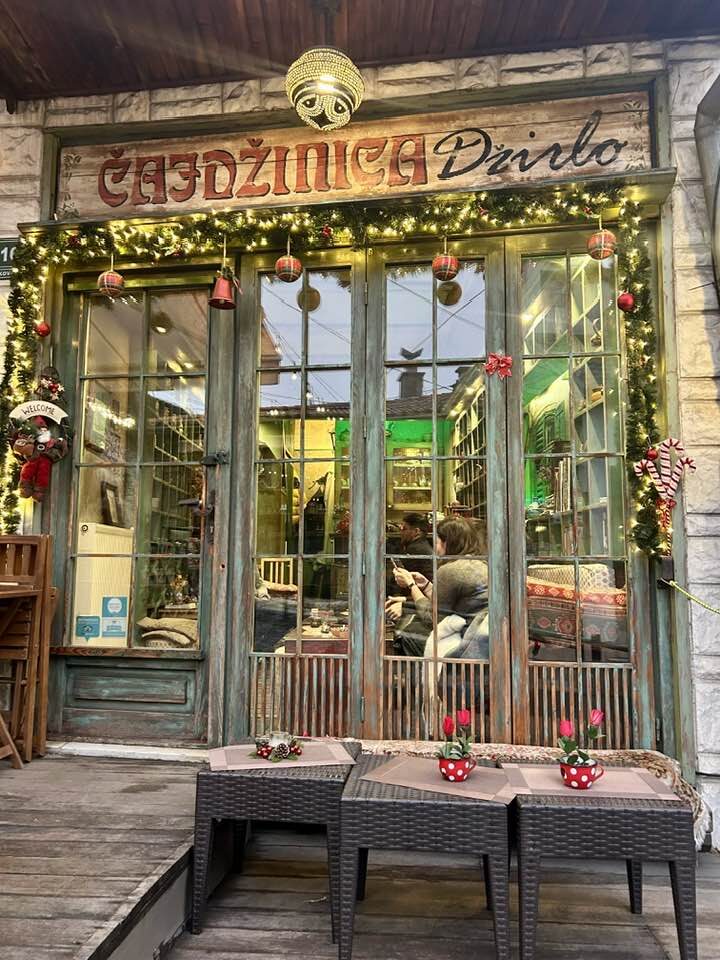
The teahouse occupies a single small room with an exposed timber ceiling, ornate wall hangings, and an arrangement of traditional low Bosnian cushions along benches around the walls. Persian-style rugs cover the floor. A few small tables sit in the middle for guests who prefer chairs. The light is soft. The acoustics absorb conversation.
From the window, or the small terrace, when the weather allows, there is a direct view down the cobbled street to the Sebilj fountain, framed between the low rooftops of the bazaar. It is one of the quietest sightlines in central Sarajevo and one of the reasons the room is hard to leave.
Bosnian coffee, too
While Džirlo is, in name and in spirit, a teahouse, it also serves Bosnian coffee prepared the proper way, in a small džezva, with a fildžan, sugar cube, and water glass. Many regulars come for the coffee rather than the tea; the quality is exact and the room is the right room for it.
In winter, the unbeatable order is a salep. Few cafés in the city still serve it in the old way, thick, hot, dusted with cinnamon, drunk slowly out of a small cup. It costs perhaps 3 BAM. It will warm you for an hour.
How to use it
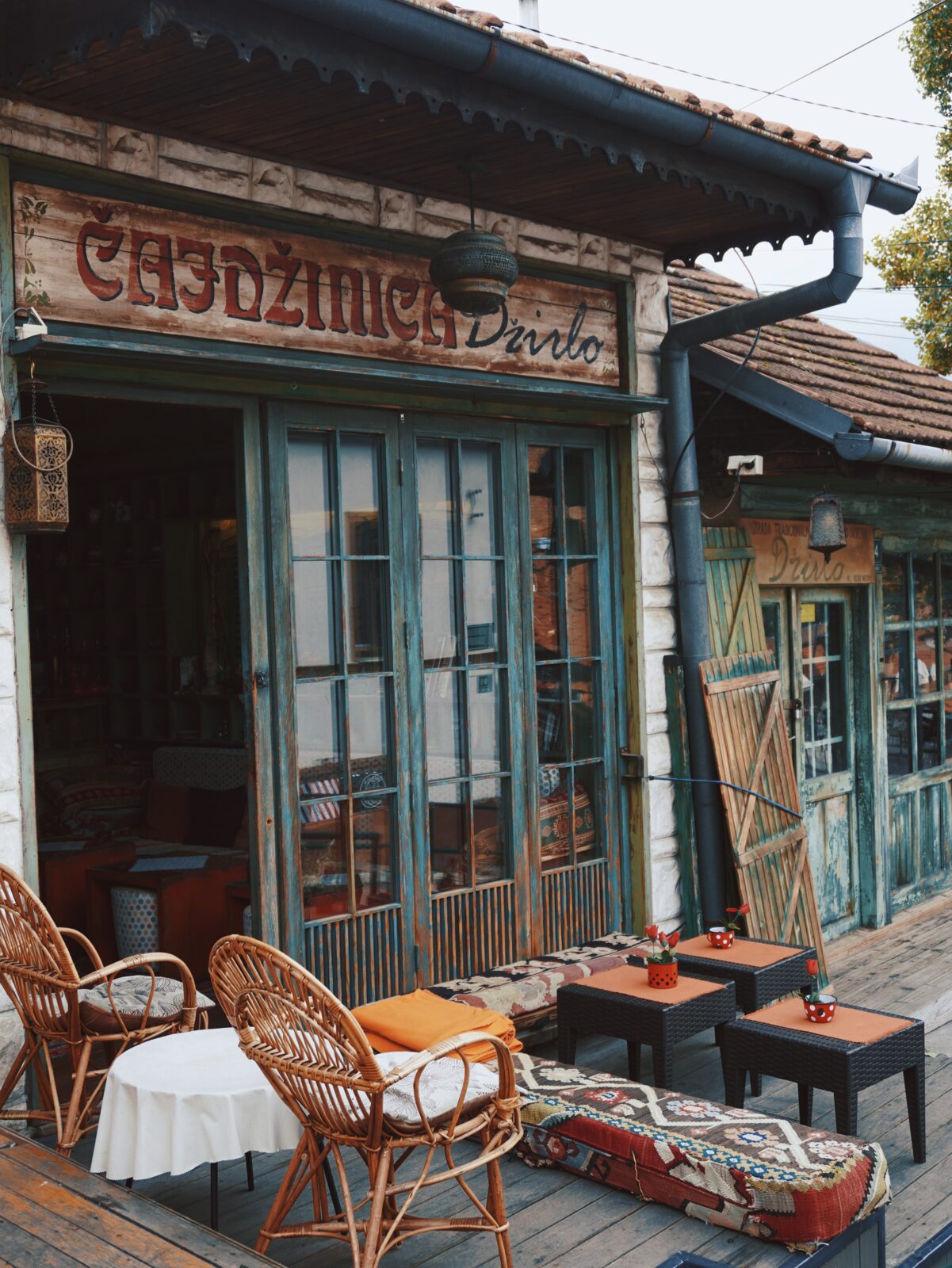
Walk up from the Sebilj on the cobbled lane toward Kovači. The teahouse will be on your right, behind a small, unmarked door. There may be a sign in Bosnian; there may not. Open the door. If a cushion is free, sit. If not, wait briefly outside, a table will open within minutes.
Order slowly. Ask the family what they recommend. Let the hour pass.
It is a place that exists in cities by accident: a small, perfect business run for the long term by people who love what they do. This guide exists to make sure you don’t miss it.
Sources & further reading
Keep wandering
Nearby & related.

Sarajevo Ashkenazi Synagogue
Sarajevo’s working synagogue, built in 1902 in pseudo-Moorish style by the Austro-Hungarian administration for the Jewish community that had grown...

Sarajevo Avaz Twist Tower
The Avaz Twist Tower is Sarajevo’s tallest building (142 metres, completed 2008). A small public observation deck on the 35th...

Sarajevo Baščaršija
The 1462 Ottoman bazaar of Sarajevo, still a working bazaar. Copper workshops on Kazandžiluk, Bosnian coffee at Morića Han, and...